Common Mistakes Buyers Make When Purchasing Sodium Sulphate and How to Avoid Them
Buying Sodium Sulphate may seem like a straightforward procurement activity. A purchase order is issued, the supplier delivers the material and production continues.
In reality, experienced procurement professionals know that successful purchasing involves much more than placing an order.
Every purchasing decision affects inventory levels, production planning, product quality and customer commitments. A small mistake during supplier selection or procurement planning can create operational challenges that are far more expensive than the original purchase price.
After working with manufacturers across industries such as detergent, glass, textile, paper, ceramics and chemical processing, certain procurement mistakes appear repeatedly. Fortunately, they are also among the easiest to prevent.
This guide explains the most common purchasing mistakes and the practical steps manufacturers can take to avoid them.
Mistake 1: Selecting a Supplier Only on Price
One of the most common procurement mistakes is choosing the supplier offering the lowest quotation.
Price is naturally an important factor.
However, the lowest purchase price does not always represent the lowest operating cost.
If inconsistent quality leads to production delays, additional inspections or rejected batches, the overall cost to the business increases significantly.
A better approach is to evaluate total value.
Consider quality consistency.
Delivery performance.
Packaging standards.
Technical support.
Business reputation.
Long-term reliability almost always provides greater value than short-term savings.
Mistake 2: Not Defining Internal Specifications
Some buyers request quotations without first discussing requirements with production and quality teams.
As a result, suppliers receive incomplete information.
This can create misunderstandings regarding quality expectations, packaging requirements or delivery schedules.
Before contacting suppliers, manufacturers should define clear internal specifications.
Required grade.
Packaging type.
Monthly consumption.
Delivery frequency.
Storage capacity.
Application requirements.
Clear specifications simplify procurement and improve supplier communication.
Mistake 3: Ignoring Supplier Experience
Not every supplier has experience serving every industry.
A supplier familiar with detergent manufacturing may not fully understand the requirements of a glass manufacturer.
Industry knowledge matters.
Suppliers who understand your manufacturing process are often better prepared to recommend suitable solutions and respond effectively when production requirements change.
Experience builds confidence.
Mistake 4: Overlooking Delivery Performance
A supplier may provide excellent product quality but struggle with delivery schedules.
For continuous manufacturing industries, delayed deliveries create unnecessary operational pressure.
Procurement teams should evaluate logistics capability before approving a supplier.
Ask about delivery planning.
Transportation arrangements.
Inventory availability.
Emergency supply capability.
Reliable logistics are essential for uninterrupted production.
Mistake 5: Not Reviewing Packaging Quality
Packaging protects the product throughout transportation and warehouse storage.
Poor-quality packaging increases the risk of handling damage and material loss.
During supplier evaluation, inspect packaging carefully.
Is it durable?
Is the product clearly identified?
Can it be handled efficiently using warehouse equipment?
Good packaging reduces operational problems after delivery.
Mistake 6: Failing to Build Long-Term Relationships
Some organisations frequently change suppliers to achieve minor price reductions.
While this may create short-term savings, it often reduces supply chain stability.
Long-term partnerships offer several advantages.
Improved communication.
Better planning.
Priority support.
Greater understanding of customer requirements.
Reliable service.
Strong supplier relationships create stronger manufacturing operations.
Mistake 7: Ignoring Quality Documentation
Quality documentation is not merely an administrative requirement.
It supports traceability, quality assurance and procurement records.
Before approving a supplier, verify that documentation is complete and professionally prepared.
Well-organised records simplify receiving inspections and future audits.
Professional suppliers understand the importance of accurate documentation.
Mistake 8: Ordering Without Proper Inventory Planning
Emergency purchasing is usually more expensive than planned purchasing.
It may also reduce supplier options.
Procurement teams should work closely with warehouse personnel to monitor inventory levels and forecast future demand.
Planned purchasing improves production continuity and reduces unnecessary operational pressure.
Good inventory management is one of the simplest ways to improve procurement efficiency.
Mistake 9: Poor Communication Between Departments
Procurement decisions should not be made in isolation.
Production managers understand manufacturing requirements.
Quality engineers evaluate material performance.
Warehouse teams understand storage limitations.
Finance departments manage budgets.
When departments communicate regularly, purchasing decisions become more balanced and effective.
Cross-functional collaboration reduces procurement risks.
Mistake 10: Treating Procurement as a One-Time Activity
Supplier selection should not end after the first successful delivery.
Performance should be reviewed regularly.
Delivery reliability.
Quality consistency.
Customer support.
Packaging.
Documentation.
Responsiveness.
Continuous supplier evaluation encourages improvement and helps manufacturers maintain a strong and reliable supply chain.
Creating a Better Procurement Strategy
Successful procurement is built on planning rather than reacting.
Organisations that achieve consistent manufacturing performance usually follow a structured purchasing process.
They define technical requirements before requesting quotations.
They evaluate suppliers carefully.
They communicate openly.
They monitor supplier performance.
Most importantly, they focus on long-term business value instead of short-term cost savings.
This disciplined approach supports stable production and sustainable business growth.
How Laxmi Enterprise Supports Professional Procurement
At Laxmi Enterprise, we understand that procurement professionals are responsible for much more than purchasing chemicals.
They are responsible for protecting production continuity.
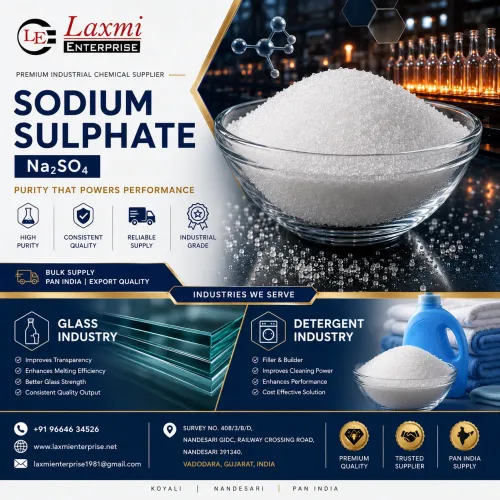
Operating from Nandesari GIDC, Vadodara, we supply Sodium Sulphate and other industrial chemicals to manufacturers across India with a strong focus on consistency, reliability and customer support.
We believe that every successful supplier relationship is built on dependable quality, transparent communication, organised logistics and long-term commitment.
Our objective is to become a trusted supply partner that helps customers improve procurement efficiency and manufacturing reliability.
Final Thoughts
Every procurement decision influences manufacturing performance.
Avoiding common purchasing mistakes helps manufacturers reduce operational risks, improve supplier relationships and strengthen production planning.
The most successful companies do not simply purchase raw materials.
They build supply chains that support long-term business success.
Choosing the right Sodium Sulphate supplier is one of the important steps toward achieving that goal.
Frequently Asked Questions
What is the biggest mistake when purchasing Sodium Sulphate?
Selecting a supplier based only on price without evaluating quality consistency, delivery reliability and long-term service is one of the most common procurement mistakes.
Why is supplier experience important?
Suppliers with experience in your industry better understand production requirements, logistics expectations and quality standards.
How can manufacturers reduce procurement risks?
By defining clear specifications, evaluating suppliers carefully, monitoring performance and maintaining strong communication between departments.
Why should procurement and production teams work together?
Collaboration ensures that purchasing decisions support manufacturing requirements, quality objectives and inventory planning.
Why do manufacturers across India trust Laxmi Enterprise?
Manufacturers trust Laxmi Enterprise because we combine consistent-quality Sodium Sulphate with dependable deliveries, professional documentation and responsive customer support. Based in Nandesari GIDC, Vadodara, we work closely with customers to build reliable long-term supply partnerships that support efficient industrial manufacturing.
About Laxmi Enterprise
Laxmi Enterprise is a trusted manufacturer, supplier and distributor of industrial chemicals based in Nandesari GIDC, Vadodara, Gujarat. Since 1981, we have supplied Sodium Sulphate, Sodium Nitrate, Sodium Acetate, Tri Sodium Phosphate and a wide range of industrial chemicals to detergent, glass, paper, textile, ceramic, construction, water treatment and chemical processing industries across India.
With more than four decades of experience, we are committed to delivering consistent product quality, dependable logistics and professional customer service. Our mission is to help manufacturers strengthen procurement, improve production efficiency and build reliable supply chains through high-quality industrial chemical solutions.
Buying Sodium Sulphate may seem like a straightforward procurement activity. A purchase order is issued, the supplier delivers the material and production continues.
In reality, experienced procurement professionals know that successful purchasing involves much more than placing an order.
Every purchasing decision affects inventory levels, production planning, product quality and customer commitments. A small mistake during supplier selection or procurement planning can create operational challenges that are far more expensive than the original purchase price.
After working with manufacturers across industries such as detergent, glass, textile, paper, ceramics and chemical processing, certain procurement mistakes appear repeatedly. Fortunately, they are also among the easiest to prevent.
This guide explains the most common purchasing mistakes and the practical steps manufacturers can take to avoid them.
Mistake 1: Selecting a Supplier Only on Price
One of the most common procurement mistakes is choosing the supplier offering the lowest quotation.
Price is naturally an important factor.
However, the lowest purchase price does not always represent the lowest operating cost.
If inconsistent quality leads to production delays, additional inspections or rejected batches, the overall cost to the business increases significantly.
A better approach is to evaluate total value.
Consider quality consistency.
Delivery performance.
Packaging standards.
Technical support.
Business reputation.
Long-term reliability almost always provides greater value than short-term savings.
Mistake 2: Not Defining Internal Specifications
Some buyers request quotations without first discussing requirements with production and quality teams.
As a result, suppliers receive incomplete information.
This can create misunderstandings regarding quality expectations, packaging requirements or delivery schedules.
Before contacting suppliers, manufacturers should define clear internal specifications.
Required grade.
Packaging type.
Monthly consumption.
Delivery frequency.
Storage capacity.
Application requirements.
Clear specifications simplify procurement and improve supplier communication.
Mistake 3: Ignoring Supplier Experience
Not every supplier has experience serving every industry.
A supplier familiar with detergent manufacturing may not fully understand the requirements of a glass manufacturer.
Industry knowledge matters.
Suppliers who understand your manufacturing process are often better prepared to recommend suitable solutions and respond effectively when production requirements change.
Experience builds confidence.
Mistake 4: Overlooking Delivery Performance
A supplier may provide excellent product quality but struggle with delivery schedules.
For continuous manufacturing industries, delayed deliveries create unnecessary operational pressure.
Procurement teams should evaluate logistics capability before approving a supplier.
Ask about delivery planning.
Transportation arrangements.
Inventory availability.
Emergency supply capability.
Reliable logistics are essential for uninterrupted production.
Mistake 5: Not Reviewing Packaging Quality
Packaging protects the product throughout transportation and warehouse storage.
Poor-quality packaging increases the risk of handling damage and material loss.
During supplier evaluation, inspect packaging carefully.
Is it durable?
Is the product clearly identified?
Can it be handled efficiently using warehouse equipment?
Good packaging reduces operational problems after delivery.
Mistake 6: Failing to Build Long-Term Relationships
Some organisations frequently change suppliers to achieve minor price reductions.
While this may create short-term savings, it often reduces supply chain stability.
Long-term partnerships offer several advantages.
Improved communication.
Better planning.
Priority support.
Greater understanding of customer requirements.
Reliable service.
Strong supplier relationships create stronger manufacturing operations.
Mistake 7: Ignoring Quality Documentation
Quality documentation is not merely an administrative requirement.
It supports traceability, quality assurance and procurement records.
Before approving a supplier, verify that documentation is complete and professionally prepared.
Well-organised records simplify receiving inspections and future audits.
Professional suppliers understand the importance of accurate documentation.
Mistake 8: Ordering Without Proper Inventory Planning
Emergency purchasing is usually more expensive than planned purchasing.
It may also reduce supplier options.
Procurement teams should work closely with warehouse personnel to monitor inventory levels and forecast future demand.
Planned purchasing improves production continuity and reduces unnecessary operational pressure.
Good inventory management is one of the simplest ways to improve procurement efficiency.
Mistake 9: Poor Communication Between Departments
Procurement decisions should not be made in isolation.
Production managers understand manufacturing requirements.
Quality engineers evaluate material performance.
Warehouse teams understand storage limitations.
Finance departments manage budgets.
When departments communicate regularly, purchasing decisions become more balanced and effective.
Cross-functional collaboration reduces procurement risks.
Mistake 10: Treating Procurement as a One-Time Activity
Supplier selection should not end after the first successful delivery.
Performance should be reviewed regularly.
Delivery reliability.
Quality consistency.
Customer support.
Packaging.
Documentation.
Responsiveness.
Continuous supplier evaluation encourages improvement and helps manufacturers maintain a strong and reliable supply chain.
Creating a Better Procurement Strategy
Successful procurement is built on planning rather than reacting.
Organisations that achieve consistent manufacturing performance usually follow a structured purchasing process.
They define technical requirements before requesting quotations.
They evaluate suppliers carefully.
They communicate openly.
They monitor supplier performance.
Most importantly, they focus on long-term business value instead of short-term cost savings.
This disciplined approach supports stable production and sustainable business growth.
How Laxmi Enterprise Supports Professional Procurement
At Laxmi Enterprise, we understand that procurement professionals are responsible for much more than purchasing chemicals.
They are responsible for protecting production continuity.
Operating from Nandesari GIDC, Vadodara, we supply Sodium Sulphate and other industrial chemicals to manufacturers across India with a strong focus on consistency, reliability and customer support.
We believe that every successful supplier relationship is built on dependable quality, transparent communication, organised logistics and long-term commitment.
Our objective is to become a trusted supply partner that helps customers improve procurement efficiency and manufacturing reliability.
Final Thoughts
Every procurement decision influences manufacturing performance.
Avoiding common purchasing mistakes helps manufacturers reduce operational risks, improve supplier relationships and strengthen production planning.
The most successful companies do not simply purchase raw materials.
They build supply chains that support long-term business success.
Choosing the right Sodium Sulphate supplier is one of the important steps toward achieving that goal.
Frequently Asked Questions
What is the biggest mistake when purchasing Sodium Sulphate?
Selecting a supplier based only on price without evaluating quality consistency, delivery reliability and long-term service is one of the most common procurement mistakes.
Why is supplier experience important?
Suppliers with experience in your industry better understand production requirements, logistics expectations and quality standards.
How can manufacturers reduce procurement risks?
By defining clear specifications, evaluating suppliers carefully, monitoring performance and maintaining strong communication between departments.
Why should procurement and production teams work together?
Collaboration ensures that purchasing decisions support manufacturing requirements, quality objectives and inventory planning.
Why do manufacturers across India trust Laxmi Enterprise?
Manufacturers trust Laxmi Enterprise because we combine consistent-quality Sodium Sulphate with dependable deliveries, professional documentation and responsive customer support. Based in Nandesari GIDC, Vadodara, we work closely with customers to build reliable long-term supply partnerships that support efficient industrial manufacturing.
About Laxmi Enterprise
Laxmi Enterprise is a trusted manufacturer, supplier and distributor of industrial chemicals based in Nandesari GIDC, Vadodara, Gujarat. Since 1981, we have supplied Sodium Sulphate, Sodium Nitrate, Sodium Acetate, Tri Sodium Phosphate and a wide range of industrial chemicals to detergent, glass, paper, textile, ceramic, construction, water treatment and chemical processing industries across India.
With more than four decades of experience, we are committed to delivering consistent product quality, dependable logistics and professional customer service. Our mission is to help manufacturers strengthen procurement, improve production efficiency and build reliable supply chains through high-quality industrial chemical solutions.
Keywords