
🧪 How Sodium Sulphate Replaces Sodium Chloride in Textile Dyeing
In reactive dyeing of cotton fabrics, electrolytes are required to push dye molecules from the dye bath onto the fiber. Traditionally, Sodium Chloride (NaCl) has been used. However, many textile processors are shifting to Sodium Sulphate (Na₂SO₄) as a better alternative in controlled dyeing processes.
🔬 Why Salt Is Needed in Reactive Dyeing
Cotton fiber and reactive dyes both carry negative charges in water.
This causes repulsion.
Electrolytes like NaCl or Sodium Sulphate:
✔ Reduce electrostatic repulsion
✔ Increase dye exhaustion
✔ Improve dye fixation
🔄 How Sodium Sulphate Replaces Sodium Chloride
Sodium Sulphate performs the same electrolyte function but with more controlled ion release.
Key Difference:
NaCl → 2 ions (Na⁺ + Cl⁻)
Na₂SO₄ → 3 ions (2 Na⁺ + SO₄²⁻)
Because of different ionic behavior, Sodium Sulphate provides:
✔ Slower dye uptake
✔ Better level dyeing
✔ Reduced patchiness
✔ Improved shade uniformity
This is especially useful in premium fabric processing.
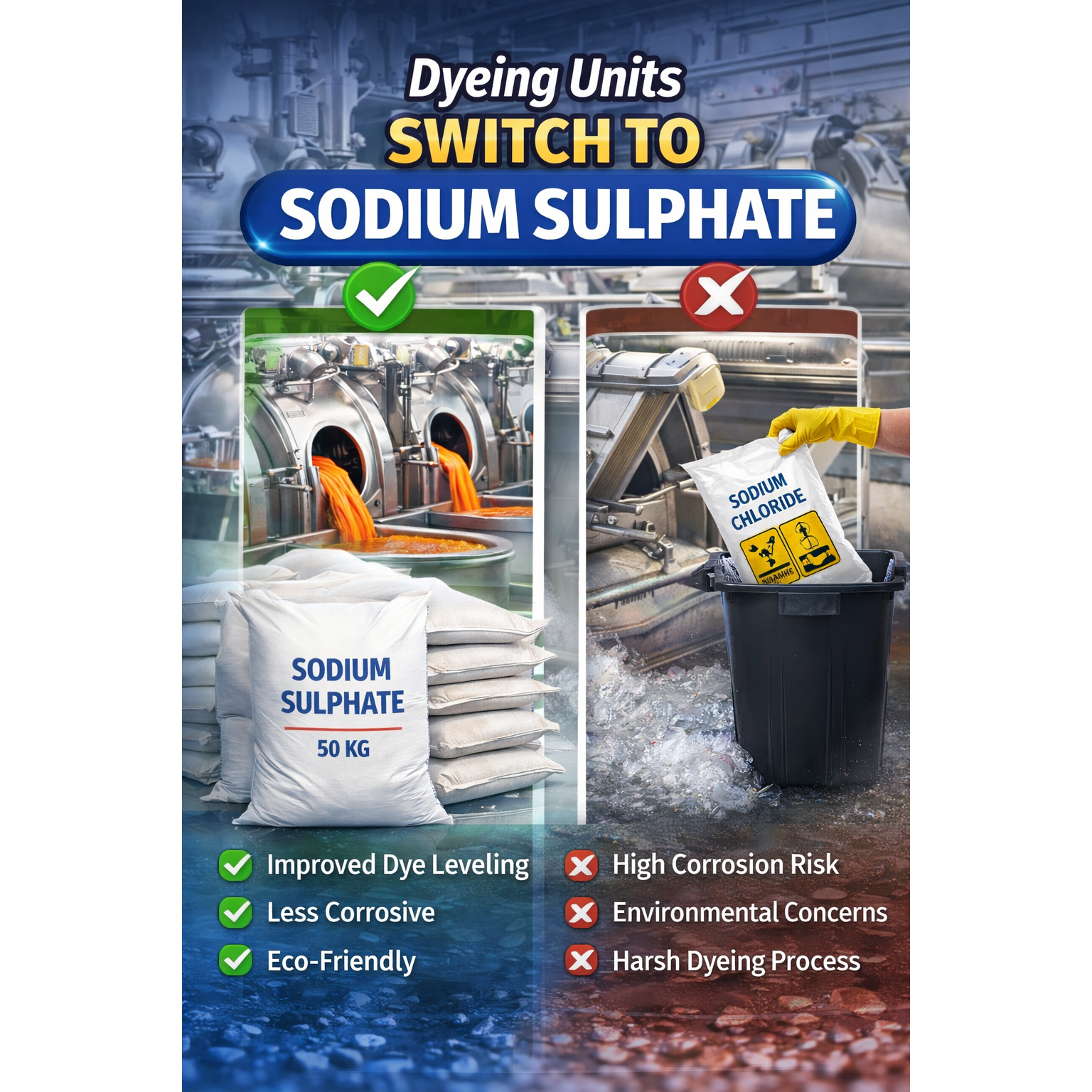
✅ Advantages of Sodium Sulphate Over Sodium Chloride
1️⃣ Better Leveling Effect
More controlled dye absorption reduces uneven shades.
2️⃣ Less Corrosion
Chloride ions are highly corrosive to dyeing machines.
Sulphate ions are comparatively less aggressive.
3️⃣ Reduced Effluent Chloride Load
Helps meet environmental discharge norms.
4️⃣ Improved Fabric Quality
Less harsh interaction improves final finish consistency.
5️⃣ Suitable for Light & Medium Shades
Provides better control in sensitive dyeing programs.
⚠ Disadvantages of Sodium Chloride in Textile Dyeing
❌ High Corrosion Risk
Chloride ions attack stainless steel and pipelines.
❌ Environmental Concerns
High chloride in effluent creates disposal issues.
❌ Faster Dye Exhaustion
Can cause uneven dyeing in some cases.
❌ Harder to Control Shade Variation
Quick strike rate increases reprocessing risk.
⚖ When Sodium Chloride May Still Be Used
• For dark shades requiring rapid exhaustion
• When cost is primary concern
• In older dyeing setups optimized for NaCl
However, modern textile processors increasingly prefer Sodium Sulphate for improved control and compliance.
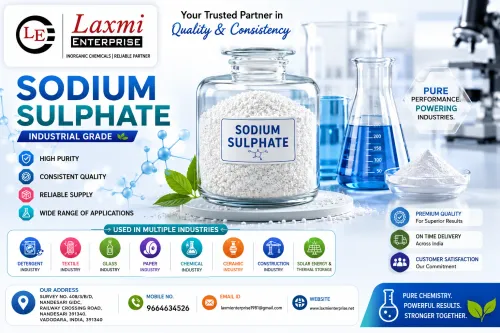
🏭 Industrial Supply for Textile Dyeing
High Purity Sodium Sulphate
Consistent Quality
Bulk Availability
Pan India Dispatch