
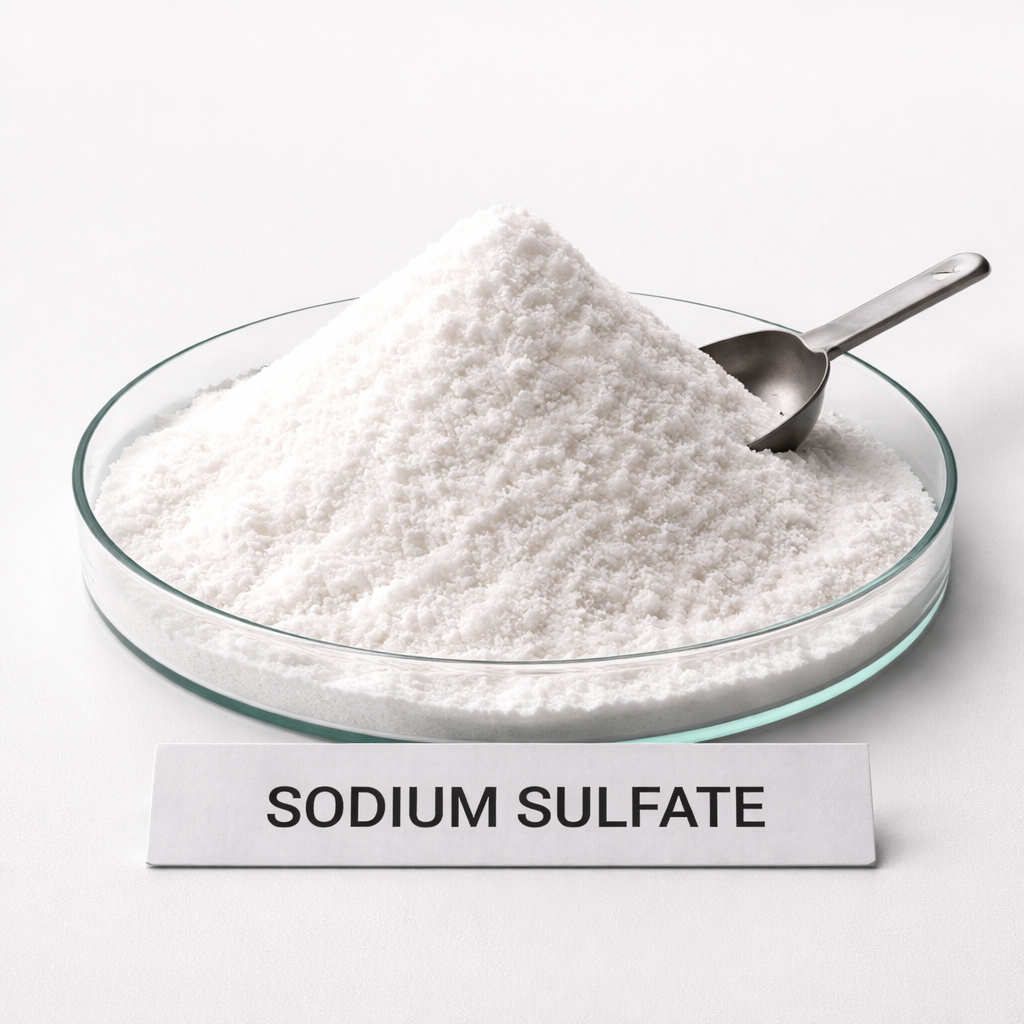
Sulfate concentration measurement in effluent is crucial in wastewater monitoring, environmental compliance, and industrial discharge control. Below is a detailed guide covering analytical methods, principles, sample preparation, instrumentation, interferences, and regulatory aspects.
Filter sample (0.45 µm membrane).
Dilute if concentration exceeds calibration range.
Run on IC with appropriate eluent (e.g. Na2CO3/NaHCO3).
Use calibration curve from standard sulfate solutions.
Add BaCl2 to acidified sample.
Form turbidity under controlled conditions.
Measure absorbance at 420 nm (UV-Vis Spectrophotometer).
Compare with calibration curve.
Add BaCl2 to acidified sample.
Form turbidity under controlled conditions.
Measure absorbance at 420 nm (UV-Vis Spectrophotometer).
Compare with calibration curve.
Sulfate Concentration = XX mg/L (SO₄²⁻)
Method Used: IC/Turbidimetric/Gravimetric
Sample ID, Date, Analyst, Calibration Batch No.
Industrial water treatment sulfate analysis involves the monitoring, quantification, control, and removal of sulfate ions (SO₄²⁻) in process water, boiler feed, cooling towers, and effluent streams. Excess sulfate leads to
scaling, corrosion, biological sulfate reduction (H₂S formation), and regulatory non-compliance, making systematic analysis essential.
Sulfate must be monitored in:
- Effluent discharge (environmental compliance)
- Boiler & cooling water (avoids scale & corrosion)
- Desalination & RO systems (prevents membrane fouling)
- Power plants & refineries (process integrity)
- Mining & chemical industries (high sulfate wastewaters)
Principle: Sulfate + BaCl₂ → BaSO₄ turbidity measured at 420 nm.
Reagents:
- Barium chloride crystals
- Conditioning reagent (buffer, stabilizer)
- Standard sulfate solutions (e.g., K₂SO₄)
- Filter sample (0.45 µm).
- Pipette 10 mL sample into cuvette.
- Add 1 mL conditioning reagent, mix.
- Add BaCl₂ crystals or solution.
- Wait 5–10 min, measure absorbance @ 420 nm.
- Use calibration curve to determine SO₄²⁻ mg/L.
Column: Anion exchange column
Eluent: Na₂CO₃ / NaHCO₃
Flow Rate: 1.0 mL/min
Detector: Suppressed conductivity
Run Time: 10–20 minutes
Lime softening
Barium precipitation
Ion exchange (strong base resins)
Reverse Osmosis / NF membranes
Sulfate-Reducing Bacteria (SRB)
Anaerobic digestion → H₂S control required
Electrodialysis
Zero-Liquid-Discharge (ZLD) integration
Parameter: Sulfate (SO₄²⁻)
Method: IC / Turbidimetric / Gravimetric
Result: XXX mg/L
Sample Location: Cooling Tower Blowdown / Effluent / Process Water
Compliance Limit: 1000 mg/L (CPCB discharge standard)
Remarks: Pass/Fail
- High selectivity for divalent ions (SO₄²⁻, Ca²⁺, Mg²⁺)
- Lower operating pressure vs RO (6–20 bar)
- Retains sulfate while allowing Na⁺ & Cl⁻ to pass partially
Feed TDS < 10,000 mg/L (ideal)
pH 3–10
Recovery: 70–90%
- Cooling tower blowdown recycling
- Mine water treatment
- Desalination-pretreatment to avoid gypsum scaling
Maximum removal of sulfate, TDS, metals
Suitable for high-pressure system integration
Used for ZLD, power plant blowdown, petrochemical effluents
- Pressure: 15–70 bar (depending on TDS)
- Recovery: 50–85%
- Scaling controlled with antiscalants
Challenge: High energy & concentrate handling
- Blending + discharge if within limits
- Chemical precipitation (BaCl₂ + SO₄²⁻ → BaSO₄)
- Evaporation + crystallization (ZLD)
- Membrane brine concentrator (MBR)
Sulfate removal in power plant wastewater is essential due to high sulfate loads generated from FGD systems, cooling tower blowdown, ash pond leachates, and boiler feed treatment effluent. Excess sulfate leads to scaling (CaSO₄, BaSO₄, SrSO₄), corrosion, membrane fouling, and regulatory discharge violation, hence targeted treatment and continuous monitoring are critical.
Lime Softening
Reduces Ca/Mg and partial sulfate removal.
Gypsum Precipitation
Useful in high calcium environments.
Magnesium-Aluminum Salts / Ferric Dosing
Helps co-precipitate sulfate but moderate removal.
Sulfate ions are separated from other anions on an anion-exchange column, transported by a carbonate/bicarbonate eluent, and detected by suppressed conductivity detection.
Sulfate peak retention is based on its interaction strength with the resin.
Eluent: Na₂CO₃/NaHCO₃ or KOH eluent (with eluent generator)
Standards: Certified sulfate standard (1000 mg/L stock)
Dilutions: 0.1–50 mg/L for drinking water, 10–500 mg/L for wastewater
Mobile phase water: DI water >18 MΩ
LOD: 1–10 µg/L
LOQ: 5–20 µg/L
Range capability: ppb to thousands mg/L with dilution
Calibration verification every 10 samples
Blank & duplicate every batch
Spike recovery target: 80–120%
Check column efficiency & peak symmetry
Sample ID: WTP-CTBD-01
Method: Ion Chromatography (IC)
Result: XX mg/L SO₄²⁻
Retention Time: 12.4 min
Calibration: R² = 0.998
Desulfovibrio
Desulfotomaculum
Desulfobulbus
UASB (Upflow Anaerobic Sludge Blanket)
Anaerobic Fixed Film Reactor (AFFR)
CSTR (Completely Stirred Tank Reactor)
Anaerobic Membrane Bioreactor (AnMBR)
Expanded Granular Sludge Bed (EGSB)
Cost-effective for large sulfate loads
Low energy demand vs RO/evaporation
Handles very high TDS streams
Simultaneously removes metals (as sulfides)
Can be integrated into resource recovery systems
Analyze feed (SO₄²⁻, COD, metals, TDS, pH, temperature)
Ensure COD/SO₄ > 2.5 (external carbon if needed)
Select reactor type & size using loading rate
Provide anaerobic environment, nutrient dosing (N,P,S)
Gas handling & corrosion-resistant materials
Provide post-treatment for H₂S management
Monitor performance and sludge management
Then polishing with:
- Iron salts precipitation (FeS)
- Air stripping + biofilter
- Sulfur recovery
Best for very high sulfate wastewater (>8000 mg/L).
Scaling Control
- Maintain Ca²⁺/SO₄²⁻ index below saturation
- Dose antiscalants:
- Polymaleic acid derivatives
- Phosphonates (HEDP/ATMP)
- pH control to suppress precipitation
- Online LCI/RSI saturation index monitoring
- SDI <3 prior to NF/RO
- Flux control 12–25 LMH
- Recovery staging increases efficiency
- CIP triggers:
- ΔP increase >15%
- Flux drop >10%
- Conductivity breakthrough
NF permeate: <1500 mg/L SO₄
RO permeate: <50 mg/L → reuse as cooling tower makeup
Solid gypsum/Barite for disposal or sale
- Sulfate removal efficiency (%)
- Membrane recovery ratio
- Antiscalant dosing optimization factor
- Evaporator steam usage (kg/kl water)
- Cost per m³ of treated brine
Target cost in ZLD: $0.8–3/m³ depending on technology
Prevents scale formation (CaSO₄, BaSO₄)
Reduces corrosion of pipelines/boilers
Minimizes ecological toxicity
Regulatory discharge compliance (typically <250–1500 mg/L depending region)
Barium Precipitation
SO₄²⁻ + Ba²⁺ → BaSO₄ ↓ (very low solubility)
✔ Highly effective even at high sulfate levels
✘ Barium is expensive, sludge generation
Use case: polishing step to achieve low discharge limits.
Strong base anion resins exchange sulfate ions.
✔ High removal efficiency
✘ Resin fouling, regeneration brine handling needed
Used as polishing or selective recovery step.
High TDS & scaling risk
Metal load variability in mine drainage
Large sludge volumes
Brine disposal post-membrane treatment
Cost optimization in remote mine sites
High TDS water (5,000–200,000+ mg/L) is common in:
- Oil & gas produced water
- Mining & mineral processing effluent
- Sea/brackish water streams
- Desalination brines & RO reject
- Power plant blowdown
Applications:
- Power plant cooling tower blowdown
- Brackish water treatment
- Industrial reuse schemes
Works for relatively lower brine TDS after NF/pretreatment
Product water with very low sulfate (<10–50 mg/L)
Needs antiscalants, softening
Recovery limited for very high salinity
Recovers salts including Na₂SO₄, MgSO₄
Used in:
- coal mines
- seawater RO brine reduction
- fertilizer industry
- sodium sulphate supplier
- sodium sulphate manufacturer
- sodium sulphate exporter
- bulk sodium sulphate
- industrial sodium sulphate
- sodium sulphate price
- sodium sulphate supplier in Vadodara
- sodium sulphate manufacturer in Gujarat
- buy sodium sulphate in India
- sodium sulphate exporter Asia Pacific