

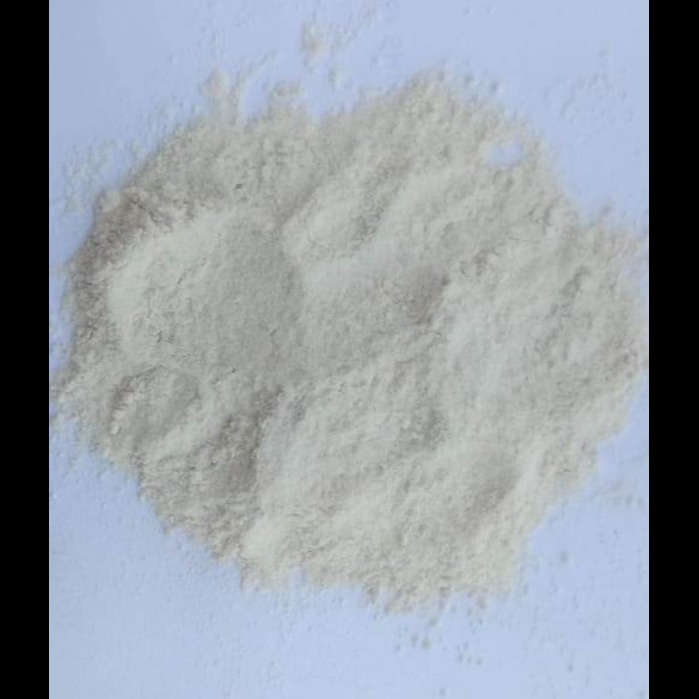
Sodium Sulphate as a Food Additive
What is Sodium Sulphate?
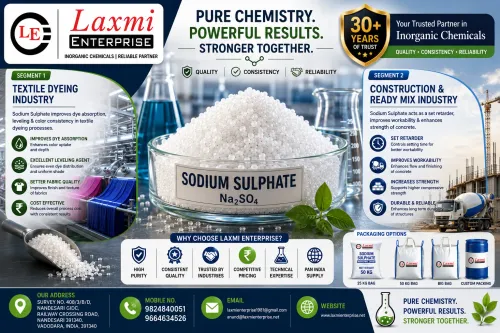
Sodium sulphate (Na₂SO₄) is an inorganic salt commonly used in detergents, glass manufacturing, paper,
In food applications,
it is much less common but still has specific regulated uses.
Processing Aid
It can be used in very small quantities during certain food manufacturing processes.
Helps in controlling ionic strength,
moisture content,
or pH balance in some applications.
Uses of Sodium Sulphate in Food
Although not widely used in large quantities,
Sodium Sulphate can serve in the food industry in the following ways:
Ingredient in Modified Starches
Some modified food starches use sodium sulphate during production;
final product may contain trace amounts.
Food-Grade Salt Manufacturing
Occasionally used in certain specialized salt refinement processes.
USA (FDA)
Classified as Generally Recognised As Safe (GRAS) only when used in accordance with good manufacturing practice.
Mostly restricted to processing uses.
European Union (EFSA)
Not listed as an approved direct food additive with an E-number.
Permitted only in process-related applications.
Toxicity Notes
Large amounts can cause:
Diarrhea
Dehydration
Electrolyte imbalance
Food-grade sodium sulphate is safe in trace levels permitted by regulations
Should Food Manufacturers Use It?
Use only if:
It is specifically allowed for your application under local regulations.
It serves a technical purpose and does not remain in significant amounts in the final food product.
You maintain documentation proving its use as a processing aid, not an additive.
If You Want, I Can Also Provide:
A compliant Product Description Sheet
SDS summary
HS Code details
SEO-optimized website content
Bulk buyer pitch & email templates
Safety & Toxicology
Acceptable Daily Intake (ADI):
No ADI required when used as a processing aid (because negligible residues remain).
In higher doses (not food-related), sodium sulphate acts as a strong laxative.
Toxicity Notes
Large amounts can cause:
Diarrhea
Dehydration
Electrolyte imbalance
Food-grade sodium sulphate is safe in trace levels permitted by regulations.
Sodium Sulphate as a Processing Aid
What is a Processing Aid?
A processing aid is a substance used during the manufacture or processing of food for a technical function,
but it is not intended to be present in the final product or is present only at insignificant levels.
Sodium sulphate (Na₂SO₄) fits this category in several food-related processes
Why Sodium Sulphate is Used as a Processing Aid
1. Control of Ionic Strength
Sodium sulphate can adjust ionic balance in reaction mixtures.
This helps stabilize chemical reactions in:
Caramel colour production
Modified starch processing
Certain enzymatic reactions
. Precipitation Aid
In some food ingredient industries, sodium sulphate helps:
Precipitate unwanted impurities
Separate proteins or other compounds
Enhance purification steps
. pH and Reaction Control
It stabilizes reaction conditions to ensure:
Uniform colour development (e.g., caramel colours)
Controlled heating reactions
Limited Technical Uses of Sodium Sulphate (Na₂SO₄)
Sodium sulphate is a versatile but moderately used inorganic salt.
Its applications are important but limited to specific industrial and processing functions,
especially where its solubility, ionic properties, and stability are useful.
1. Chemical Processing Aid (Food & Non-Food)
Used in controlled chemical reactions for:
Ionic strength regulation
Moisture control (dehydrating salt)
Precipitation and separation of impurities
Stabilizing reaction conditions
Mainly used in:
Caramel colour manufacturing
Modified starch processing
Enzyme & extract purification
2. Glass & Ceramics Industry
Sodium sulphate is used in:
Glass refining to remove small air bubbles
Ceramic glaze formulation as a flux
This is one of its largest technical applications.
3. Detergent Manufacturing
A major use but still technical:
Serves as a filler in detergent powders
Helps maintain flowability and viscosity
4. Kraft Pulp & Paper Industry
Used as a component of:
Kraft pulping process (sulphate process)
Helps regenerate sodium sulphide from black liquor
5. Textile Dyeing & Finishing
Used to:
Control ionic strength in dye baths
Improve dye uptake for cotton and other fibers
6. Pharmaceutical Processing (Limited Use)
Used as a laxative in specific formulations
Employed as a processing salt in certain drug manufacturing steps
7. Leather Processing
Assists in salting hides
Acts as a dehydrating salt during preservation
8. Laboratory & Analytical Use
Limited analytical purposes:
Standard reagent in chemical labs
Used in dehydration and sample preparation
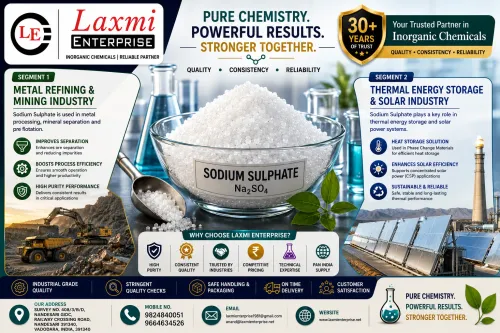
9. Thermal Storage Applications
Its decahydrate form (Glauber’s salt) is sometimes used in:
Phase change materials (PCM)
Solar thermal storage
But applications remain niche.
10. Specialty Applications
Occasionally used in:
Fire retardants
Ceramic whitewares
Fertilizer fillers
Oilfield chemicals (drilling fluid viscosity modification)
Summary – Why Uses Are “Limited”
Although widely produced globally, sodium sulphate has:
Narrow but essential industrial roles
Minimal direct consumer-facing applications
Restricted use in food (mostly processing aid only)
If you want, I can also prepare
Technical Data Sheet (TDS)
Processing Aid Certificate for FSSAI
SEO Product Description for Laxmi Enterprise
Industry-wise demand analysis
Just tell me!