

Manufacturing of Sodium Acetate — practical industrial guide
Below is a compact but detailed overview you can use as a process guide: common routes, step-by-step operations, equipment, process conditions, safety / environmental points, quality checks and an example mass balance for a 1-tonne batch of anhydrous sodium acetate.
1) Common chemical routes (industrial)
Neutralisation of acetic acid with sodium hydroxide (NaOH)
CH₃COOH + NaOH → CH₃COONa + H₂O
— Simple, high purity, produces only water as by-product.
Neutralisation with sodium carbonate (Na₂CO₃) (often used when CO₂ off-gas is acceptable)
2 CH₃COOH + Na₂CO₃ → 2 CH₃COONa + H₂O + CO₂↑
— CO₂ is released (vent/scrub). Economical if Na₂CO₃ is cheaper.
Neutralisation with sodium bicarbonate (NaHCO₃)
CH₃COOH + NaHCO₃ → CH₃COONa + H₂O + CO₂↑
Most plants use route (1) or (2). Route (1) gives easiest control and fewer gases.
2) Product forms
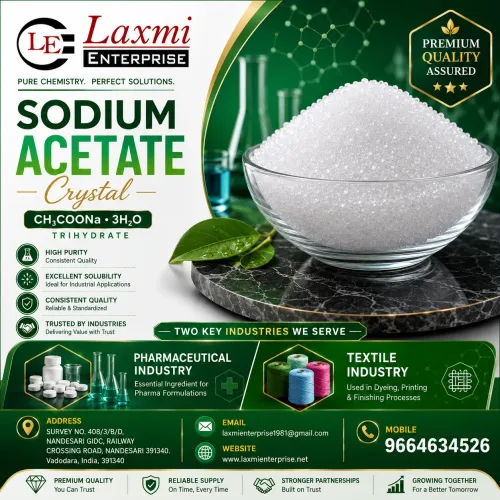
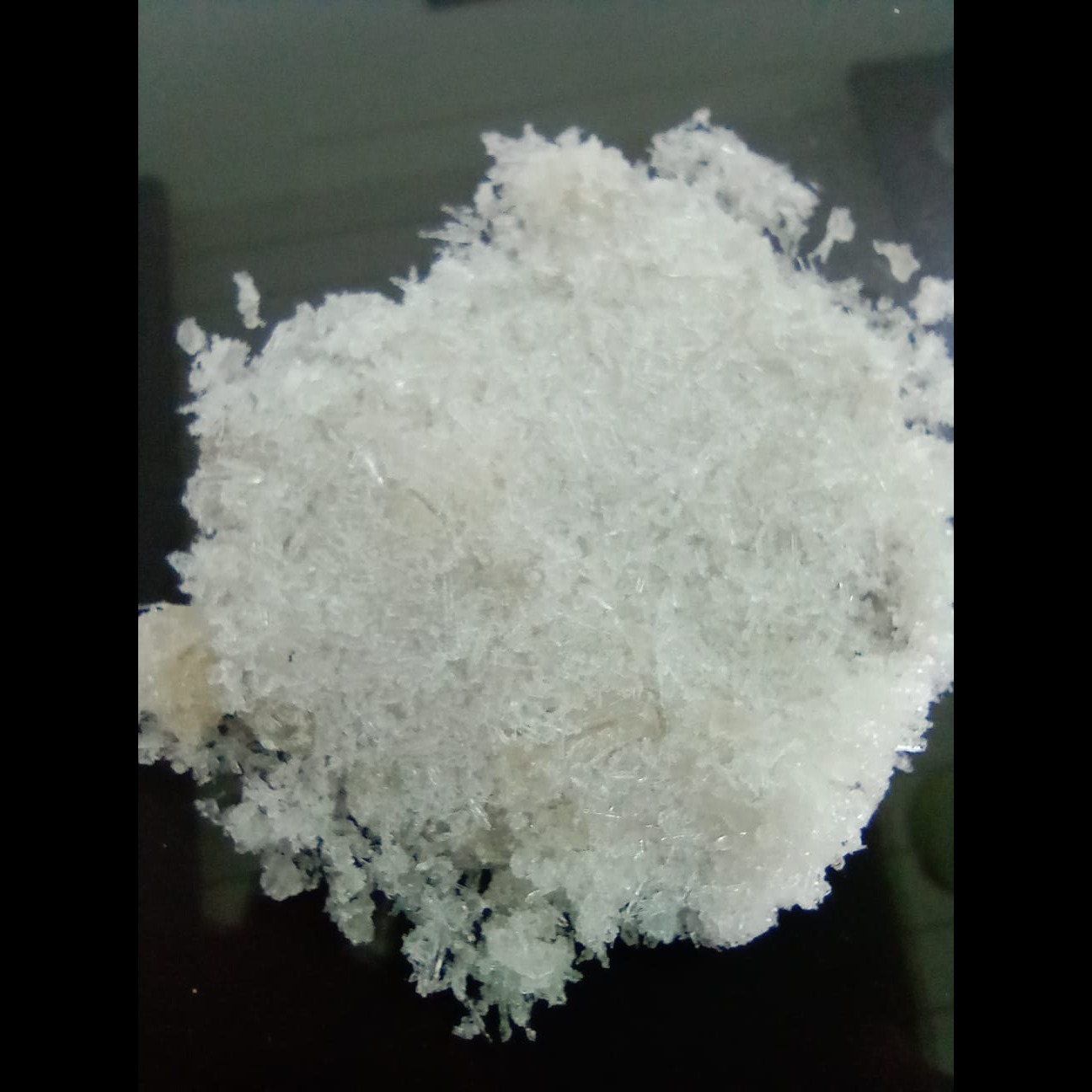
Sodium acetate trihydrate (NaCH₃COO·3H₂O) — common crystalline product from aqueous crystallization.
Anhydrous sodium acetate (NaCH₃COO) — obtained by drying/dehydration of trihydrate (heat + optional vacuum).
Which to make depends on end-use (e.g., food buffer, textile, de-icer, heat storage medium).
3) Typical industrial process flow (continuous or batch)
Feed preparation
— Acetic acid (glacial or aqueous), NaOH or Na₂CO₃ (dissolved if solid) prepared to required concentrations.
Neutralization reactor (stirred tank)
— Controlled dosing of reactants, temperature control (exotherm). Monitor pH; target near neutral (pH ~7–8 depending on downstream).
CO₂ venting / scrubbing (if carbonate/bicarbonate used)
— Scrubber or gas handling for CO₂ and entrained acid vapors.
Filtration (if solids present)
— Remove insoluble impurities / salts (rare) or catalyst residues.
Concentration / Evaporation
— Evaporate water to reach supersaturation for crystallization (vacuum or atmospheric evaporator / falling film). Temperature control important to avoid decomposition.
Crystallization
— Seed and cool (or evaporative crystallization) to form trihydrate crystals. Typical operations: cooling crystallizer, controlled agitation, use of seed crystals to control size.
Solid–liquid separation
— Centrifuge or filter press; wash crystals with cold water or alcohol (if required) to remove mother liquor (reduces residual sodium acetate concentration on cake).
Drying (for anhydrous product)
— Tray dryers, fluid bed dryers or vacuum dryers. Dry trihydrate at moderate temperatures under vacuum to get anhydrous form.
Milling / sizing (if required)
Packaging
— Bags, drums, bulk containers; protect from moisture for anhydrous product.
Effluent treatment & off-gas handling
— Neutralize washings, treat for COD/BOD if organics present; CO₂ usually vented or scrubbed if acid vapors are present.
4) Typical operating conditions & practical tips
Neutralization temperature: ambient to ~40–60 °C to control exotherm (NaOH neutralisation is exothermic).
pH control: use pH meter and controlled dosing; target slightly basic to avoid free acetic acid carryover.
Evaporation/crystallization: crystallization temperature and concentration depend on whether you target trihydrate or anhydrous. Seed crystals encourage uniform size. Cooling crystallization commonly used.
Drying temperatures: dry trihydrate carefully — excessive heat can cause caking or slight decomposition. Vacuum drying at 60–120 °C is common for anhydrous product (conditions depend on dryer and desired residual moisture).
Solubility note: sodium acetate trihydrate is the common crystalline form — designing crystallization around its solubility curve is essential.
5) Equipment list (typical)
Storage tanks for acetic acid and sodium hydroxide / solids silos for carbonates.
Dosing pumps / solids feeders.
Stirred neutralization reactor (acid-resistant alloy or lined).
Evaporator (rising film / falling film or forced circulation) or vacuum concentrator.
Crystallizer (cooling or evaporative).
Filter press or centrifuge.
Dryer (vacuum tray, rotary, fluid bed as needed).
Gas scrubber for off-gas (if carbonate route yields acid vapor/CO₂ concerns).
Wastewater treatment (neutralization, biological/physico-chemical).
pH meters, conductivity, titration lab for QA.
6) Quality control — common tests
Assay (wt% NaCH₃COO) — titrimetric or ion chromatography.
Moisture content — Karl Fischer or loss on drying.
pH of solution — dissolved sample.
Chloride, sulfate, heavy metals — ensure within spec (ICP/ion chromatography).
Appearance, particle size distribution, residual acetic acid.
Microbiological (if food grade) — follow food regulations.
7) Safety & environmental considerations
Hazards: acetic acid (corrosive, vapors irritating), NaOH (caustic), dust hazard for dry product. Provide PPE, local exhaust, acid/alkali resistant equipment.
CO₂ handling: if Na₂CO₃ or NaHCO₃ used, CO₂ off-gas must be vented safely; if acidic vapors present, use scrubbers.
Effluent: mother liquor contains acetate — generally biodegradable; still treat for COD if discharged.
Storage: anhydrous product is hygroscopic; store sealed and dry.
8) Example mass balance — making 1 tonne (1, 000 kg) of anhydrous sodium acetate (NaCH₃COO)
Molar masses (approx.):
NaCH₃COO (anhydrous) = 82.036 g·mol⁻¹
Acetic acid (CH₃COOH) = 60.052 g·mol⁻¹
NaOH = 39.997 g·mol⁻¹
Na₂CO₃ = 105.99 g·mol⁻¹
Moles of NaCH₃COO needed for 1, 000, 000 g:
1, 000, 000 g ÷ 82.0358 g·mol⁻¹ ≈ 12, 189.8 mol
Route A — using NaOH (1:1 mole ratio):
Acetic acid required ≈ 12, 189.8 mol × 60.052 g/mol ≈ 732.0 kg acetic acid
NaOH required ≈ 12, 189.8 mol × 39.997 g/mol ≈ 487.6 kg NaOH
Route B — using Na₂CO₃ (1 mol Na₂CO₃ produces 2 mol sodium acetate):
Na₂CO₃ required = 12, 189.8 mol ÷ 2 ≈ 6, 094.9 mol
Mass Na₂CO₃ ≈ 6, 094.9 × 105.99 g/mol ≈ 646.0 kg Na₂CO₃
CO₂ generated ≈ 6, 094.9 mol × 44.01 g/mol ≈ 268.1 kg CO₂ (vent/scrub)
(The actual plant feed will include excess water, make-up, wash volumes, and small stoichiometric excesses for pH control.)
9) Typical impurities & how to control them
Chloride from feed impurities — control raw material quality; wash cake.
Heavy metals — use high purity reagents and maintain corrosion control.
Residual acetic acid — ensure neutralization and proper washing; control pH.
Moisture — controlled via drying and packaging.
10) Packaging & storage
Trihydrate can be packed but is bulkier; anhydrous needs moisture-proof packaging (sacks with liners, big bags, drums). Store in dry environment.
11) Uses (why manufacturing matters)
Textile dyeing and printing, food additive (sodium acetate E262—food grade rules apply), buffering agent in labs, concrete sealants, de-icer, heat packs (phase change when trihydrate melts), chemical intermediate.
12) Regulatory & food/technical grade notes
If producing food grade, follow local food safety standards (FSSAI in India, EU/US specs), certified raw materials, stricter heavy metal and microbial limits, GMP.
Want next steps?
I can:
produce a simple process flow diagram or P& ID-style checklist (text form),
write a standard operating procedure (SOP) for a neutralization + crystallization batch, or
prepare a compact QC specification sheet (assay, moisture, chloride, heavy metals limits) tailored to an application (technical vs food grade).
Tell me which of those you want and I’ll generate it right away.
SODIUM ACETATE AS A CORROSION INHIBITOR
1. Overview
Sodium acetate is a mild, eco-friendly, and water-soluble corrosion inhibitor, primarily used in:
Cooling-water systems
Concrete reinforcement protection
Metal treatment baths
De-icing formulations (as a less corrosive alternative to sodium chloride)
It works by forming a protective film and buffering the solution pH, thereby minimizing metal oxidation and acid attack.
2. Chemical Identity
Property Description
Chemical Formula CH₃COONa
Molecular Weight 82.03 g/mol (anhydrous)
Appearance White crystalline or granular solid
Solubility Highly soluble in water, alcohol
pH (1% soln) 7.5 – 9.0 (alkaline buffer)
3. Mechanism of Action
Sodium acetate functions through two main corrosion inhibition mechanisms:
a) pH Buffering and Neutralization
It maintains a slightly alkaline environment (pH ≈ 8), reducing the corrosive effect of acidic ions on metal surfaces.
Acetate ions neutralize H⁺ ions that promote corrosion (especially in carbon steel and iron systems).
b) Protective Film Formation
Acetate ions adsorb onto metal surfaces (Fe, Zn, Cu, Al) forming a thin passivation layer of metal-acetate complex.
This film acts as a barrier, blocking oxygen and moisture, thus minimizing oxidation and pitting corrosion.
4. Applications in Industry
Application Description Concentration Range
Cooling water treatment Prevents rust and scaling in recirculating cooling systems. 50–200 ppm
Concrete additive Inhibits corrosion of steel reinforcement bars (rebar). Works synergistically with calcium nitrite or sodium benzoate. 0.2–1% of cement weight
Metal surface cleaning Used in alkaline degreasing solutions to protect metal surfaces during cleaning. 0.5–2% in solution
De-icing formulations Sodium acetate de-icer (NAAC) causes less corrosion to metals than chloride-based salts. Used as bulk solid
Boiler & heat exchanger systems Maintains neutral pH, reduces oxygen corrosion. 100–500 ppm (with oxygen scavengers)
5. Advantages
.
Eco-friendly & biodegradable — does not introduce heavy metals or toxic residues.
. Non-aggressive — less corrosive than chloride or nitrate salts.
. pH stabilization — maintains system alkalinity for long-term protection.
. Compatible with other inhibitors (e.g., sodium benzoate, molybdate, nitrite).
. Safe for concrete — used in combination with calcium or sodium nitrite to prevent chloride-induced corrosion.
• sodium acetate
• sodium acetate anhydrous
• sodium acetate trihydrate
• sodium acetate buffer
• sodium acetate CAS 127-09-3
• sodium acetate E262
• sodium ethanoate
• sodium salt of acetic acid
• sodium acetic acid
• sodium CH3COO
• natrii acetas
• hot ice (trihydrate)
• sodium acetate hydrate
• sodium acetate CAS 127-09-3 (anhydrous)
• sodium acetate CAS 6131-90-4 (trihydrate)
• sodium acetate EC 204-823-8
• E number E262
6. Limitations
. Less effective at high chloride concentrations (e.g., seawater).
. May increase total dissolved solids (TDS) in closed systems if overdosed.
. Not suitable alone for highly acidic or strongly oxidizing environments.
. Requires blending with other inhibitors (e.g., phosphate, molybdate, or organic film-formers) for optimal protection in industrial systems.
7. Typical Corrosion Inhibitor Formulations
A. For Cooling Water Systems
Component Function Range (%)
Sodium acetate Buffering & mild inhibitor 0.5–1.0
Sodium benzoate Synergistic organic inhibitor 0.3–0.5
Sodium molybdate Passivator for steel 0.2–0.3
Polyphosphate Scale control 0.1–0.2
pH maintained at 7.5–8.5 —
B. For Concrete Corrosion Protection
Component Role Typical Dosage
Sodium acetate Rebar protection & pH stabilizer 0.2–0.5% of cement
Calcium nitrite Active anodic inhibitor 1–2% of cement
Lignosulfonate (optional) Water reducer —
8. Laboratory Evaluation (Typical)
Test Observation
Metal used Mild steel (coupon test)
Test medium 3.5% NaCl solution
NaCH₃COO added 100–500 ppm
Result Corrosion rate reduction by 60–80% at optimum dosage
9. Storage & Handling
Store in a dry, moisture-free environment.
Avoid contact with strong acids (can release acetic acid fumes).
For aqueous inhibitor blends, use stainless steel or plastic tanks.
10. Environmental & Safety Notes
Biodegradable and non-toxic — ideal for green chemistry formulations.
Safe to handle with basic PPE (gloves, goggles, apron).
Spillages can be neutralized with dilute acid and washed with water.
11. Key Takeaway
Property Value
Type Anodic/Film-forming organic inhibitor
Effective Metals Iron, mild steel, zinc, aluminum
Best Use Neutral-to-alkaline aqueous systems
Eco Impact Biodegradable, low toxicity
Synergistic Additives Sodium benzoate, sodium molybdate, calcium nitrite
[SODIUM ACETATE FOR LAXMI ENTERPRISE, VADODRA, GUJARAT, INDIA.]