
SODIUM NITRATE — ROLE, RISKS & REGULATORY NOTES FOR PYROTECHNICS (SAFE, NON-ACTIONABLE)
Below is a concise, industry-grade, non-actionable overview you can use in product literature or an informational page for Laxmi Enterprise. I’m explicitly not providing any recipes, formulations, mixing instructions, or other procedural details that could enable making pyrotechnics or explosives — I can’t help with that. What follows is safe, factual, and focused on chemistry, legitimate uses, hazards, storage/transport, testing and compliance.
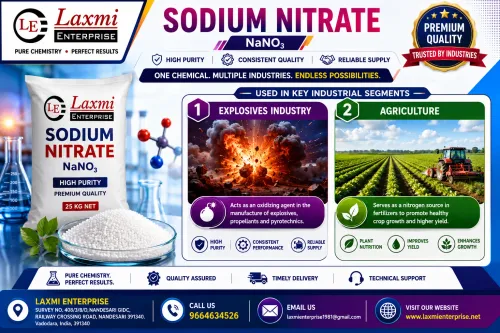
Chemical name: Sodium nitrate
Formula: NaNO₃
CAS number: 7631-99-4
Molecular weight: ~85.00 g·mol⁻¹
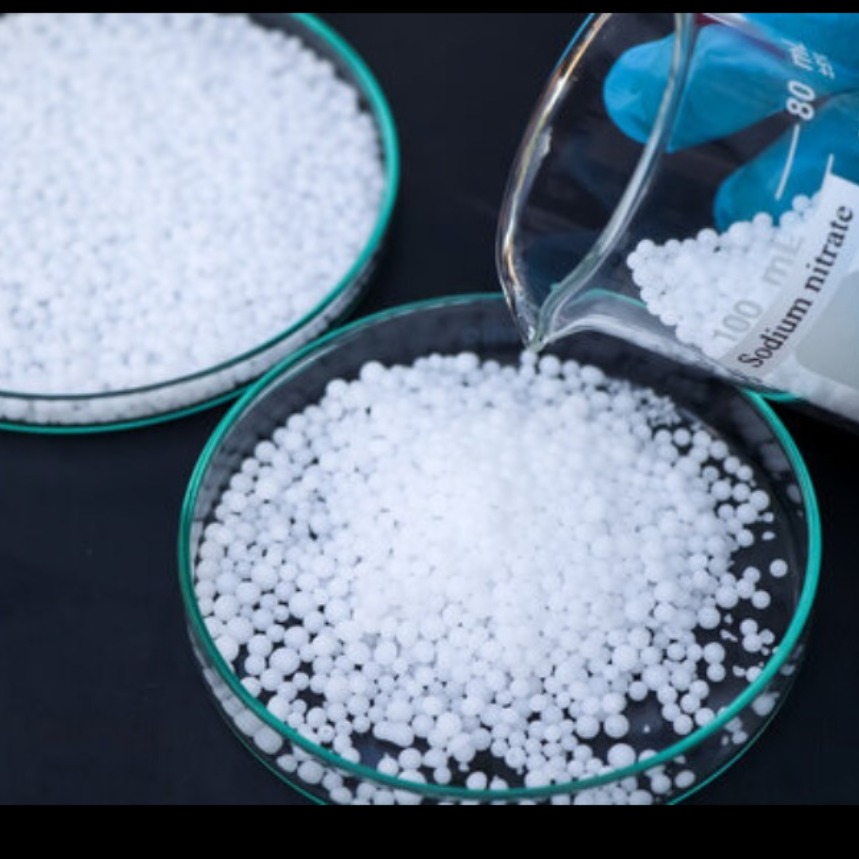
Physical form: White crystalline or granular solid; highly soluble in water
Primary industrial role: oxidizer / source of available oxygen for chemical reactions (used legitimately in fertilizers, metallurgy, glass, some pyrotechnic compositions under strict regulation)
SODIUM NITRATE — ROLE AS OXIDIZING AGENT & OXIDATION PROMOTER/CATALYST (INDUSTRIAL SUMMARY)
Below is a concise, industry-ready write-up you can use in product literature, technical pages, or catalog copy for Laxmi Enterprise. It focuses on safe, high-level chemistry, industrial uses, material specs, and handling. I avoid procedural or weaponizable details.
Quick overview
Name: Sodium nitrate
Formula: NaNO₃
CAS: 7631-99-4
Appearance: White crystalline or granular solid
Primary chemical role: strong oxidizing agent in solid and molten phases; in some processes it functions as an oxidation promoter or component of catalytic systems (often as a nitrate source or molten-salt medium rather than a classic surface catalyst).
How it functions (high level)
Oxidizing agent. Nitrate anion (NO₃⁻) is an oxygen donor in many thermal and chemical oxidation processes; it oxidizes reducing species and is reduced to nitrite (NO₂⁻), nitrogen oxides or nitrogen depending on conditions.
Promoter / component of catalytic systems. Sodium nitrate can act as a promoter or co-component in heterogeneous catalysts (for example within molten-salt media, supported nitrate systems, or mixed-oxide catalysts) where it:
supplies labile oxygen for oxidative conversions,
modifies redox properties of catalytic phases, and/or
enhances mass transfer in high-temperature molten or slurry systems.
Molten-salt medium. At elevated temperatures NaNO₃ forms low-melting mixtures (often with other nitrates) that facilitate homogeneous oxidation, phase transfer, or contact between oxidant and substrate — useful in industrial oxidative roasting, heat-transfer fluids, or salt-bath processing.
Typical industrial applications (non-procedural)
Metallurgical oxidative roasting / desulfurization: used as an oxidant or promoter in processes that remove sulfides/organics from ores or concentrates.
Catalyst promoter in selective oxidation: as an additive in some supported catalyst formulations it can help tune oxygen availability and improve selectivity in bulk oxidation reactions.
Heat-transfer / molten-salt oxidation media: used in thermal oxidative processing and some thermal regeneration cycles.
Chemical intermediate source of “labile oxygen”: in specialty chemical manufacture where controlled oxidative steps are required at scale (industry applications — not stepwise formulations).
Waste treatment / off-gas conditioning (industrial contexts): as part of oxidizing or conditioning streams (always subject to regulatory controls).
Note: in many of the above roles NaNO₃ behaves as an oxidant or oxygen carrier/promoter rather than as a classic surface catalyst that cycles unchanged. Its usefulness often lies in its safe storage/handling form, oxygen content, and redox behavior in the process environment.
Typical grades & specs for industrial use
Industrial grade (technical): 95–99% NaNO₃ — bulk crystalline or granular
High-purity / reagent grade: ≥99.5% for specialty chemical uses
Form factors: bulk bags (Jumbo), 25–50 kg bags, loose bulk (depending on customer needs)
Key QC parameters: assay (% NaNO₃), moisture, chloride/halide content, insolubles, particle size
Safety, handling & storage (concise)
Oxidizer hazard: strong oxidizing properties — keep away from combustible organic materials, reducing agents, and contaminants that can ignite.
Storage: cool, dry, well-ventilated area in suitable containers; segregation from incompatible materials (fuels, organics).
Spills & disposal: treat as oxidizer — avoid organic sorbents that may react; follow local hazardous waste rules.
Regulatory: subject to transportation and hazard classification rules for oxidizers; check local/regional regulations for storage limits and reporting.
Environmental & regulatory notes
Reduction products (nitrite, NOx) and effluents must be managed — many industrial uses require off-gas treatment or wastewater controls.
Sodium nitrate itself is widely used commercially, but applications that generate emissions or reactive by-products must comply with local environmental and safety regulations.
Why source sodium nitrate from Laxmi Enterprise
Reliable industrial grades and bulk supply from Vadodara, Gujarat
QC testing: assay, moisture, halide limits and particle sizing available on request
Custom packaging and logistic support for industrial customers
Why source sodium nitrate from Laxmi Enterprise
Reliable industrial grades and bulk supply from Vadodara, Gujarat
QC testing: assay, moisture, halide limits and particle sizing available on request
Custom packaging and logistic support for industrial customers
SODIUM NITRATE — ROLE AS AN OXIDATION CATALYST / PROMOTER (INDUSTRIAL, NON-ACTIONABLE)
Below is a concise, industry-grade, non-procedural write-up you can use in product literature, technical pages, or a catalog for Laxmi Enterprise. I avoid operational recipes, formulations, or step-by-step process details that could be misused.
Quick snapshot
Name: Sodium nitrate
Formula: NaNO₃
CAS: 7631-99-4
Appearance: White crystalline/granular solid
Primary industrial role: strong oxidizing agent that can act as an oxidation promoter or component of catalytic systems (often as a nitrate source, molten-salt medium or promoter rather than a classic surface catalyst).
How it functions (high level — non-operational)
Oxygen donor / redox participant: The nitrate ion (NO₃⁻) supplies labile oxygen in thermal and chemical oxidation steps; it is reduced (to nitrite, NOx or nitrogen species) while oxidizing the substrate.
Promoter or co-component: In heterogeneous catalysts or supported systems NaNO₃ can modify catalyst redox behavior, increase oxygen availability at reaction sites, or alter surface properties to improve selectivity. It typically promotes oxidation indirectly rather than acting as a reusable surface catalyst that remains chemically unchanged.
Molten-salt medium: At elevated temperatures NaNO₃ (often in mixtures) forms low-melting salts that improve mass/heat transfer and provide a homogeneous oxidative environment useful for roasting, salt-bath oxidation, or thermal regeneration cycles.
Phase transfer / solubilization: In some systems the nitrate enhances solubility or mobility of oxygen-rich species, enabling better contact between oxidant and substrate without changing core catalyst architecture.
Typical industrial applications (descriptive, non-procedural)
Selective oxidation processes (as promoter in supported catalysts to tune oxygen availability and selectivity).
Metallurgical oxidative roasting & desulfurization (as oxidant/promoter in ore and concentrate treatments).
Molten-salt oxidation / heat-transfer media for thermal processing and regeneration cycles.
Chemical manufacture where controlled oxidative steps require an oxygen source or promoter (specialty chemicals, intermediates).
Waste treatment & off-gas conditioning as part of oxidative streams (subject to emissions controls).
Typical grades & form factors
Industrial/technical grade: ~95–99% NaNO₃ (crystalline or granular) — used for bulk industrial applications.
High-purity/reagent grade: ≥99.5% for specialty chemical uses.
Packing: 25–50 kg bags, jumbo bags, or loose bulk depending on logistics and customer needs.
QC parameters: assay (% NaNO₃), moisture, chloride/halide content, insolubles, particle size distribution.
Advantages and limitations (overview)
Advantages: reliable oxygen content, easy handling as a stable solid, useful in molten salt systems, can improve selectivity/oxidation performance when used as a promoter.
Limitations: behaves as a consumable oxidant (is reduced during oxidation), can generate nitrite/NOx by-products that require off-gas and effluent control, and must be managed to avoid unwanted side reactions with organics or reducing species.
Comparison with related salts (high level)
Potassium nitrate (KNO₃): similar oxidizing behavior; choice often dictated by melting point, solubility, cost, and ionic effects in specific molten-salt or catalytic systems.
Sodium nitrite (NaNO₂): stronger reducing/oxidation intermediate in some contexts; more reactive and sometimes used when nitrite behavior is specifically desired.
Mixed nitrate systems: combining nitrates (Na⁺/K⁺/Ca²⁺) can adjust melting point, oxygen availability, and thermal stability for tailored molten-salt applications.
Safety, handling & environmental notes (concise)
Oxidizer hazard: keep away from combustible materials, organics, and strong reducing agents.
Storage: cool, dry, ventilated storage; segregate from incompatible substances.
Emissions & effluent: processes using NaNO₃ may form nitrite and NOx — proper off-gas treatment and wastewater controls are essential.
Regulatory: transportation and storage are subject to oxidizer classification; follow local/regional regulations and SDS guidance.
Use-case positioning for procurement/sales copy
Selling points: dependable industrial grade, controlled QC (assay, moisture, halide limits), flexible packaging and bulk supply from Vadodara.
Customer targets: metallurgical processors, specialty chemical manufacturers, thermal process houses, environmental treatment firms, and catalyst formulators looking for oxidation promoters.
If you want, I can produce one of the following next:
An SEO-optimized product page (meta title, meta description, target keywords) for “Sodium Nitrate — Oxidation Promoter/Industrial Grade”.
A short technical datasheet (PDF) listing typical specs, safety icons and handling bullets.
A comparative whitepaper (NaNO₃ vs KNO₃ vs NaNO₂) focused on molten-salt oxidation and catalyst promotion (non-procedural).
Which of these would you like me to prepare?
SODIUM NITRATE — USES IN WASTEWATER & INDUSTRIAL WASTE TREATMENT (INDUSTRIAL, NON-PROCEDURAL)
Below is a concise, industry-ready summary you can use in product literature, technical pages, or a catalog entry for Laxmi Enterprise. It focuses on legitimate, high-level roles of sodium nitrate in waste treatment and avoids operational recipes or step-by-step dosing instructions.
Quick overview
Name: Sodium nitrate
Formula: NaNO₃
Appearance: White crystalline or granular solid
Primary role in waste treatment: oxidant / electron-acceptor source and process promoter used to control sulfide formation, support certain biological processes, and condition waste streams for downstream treatment.
How sodium nitrate is used (high level)
Control of sulfide / H₂S in sewers and wastewater systems:
Adding nitrate can encourage nitrate-reducing bacteria to outcompete sulfate-reducing bacteria; this reduces hydrogen sulfide generation in sewers, holding tanks and anaerobic zones (thereby lowering odor, corrosion and safety hazards).
Support for biological processes:
In some treatment configurations nitrate serves as an alternative electron acceptor in biological oxidation/reduction pathways (e.g., in denitrifying zones or when manipulating redox conditions).
Off-gas and odor management:
By altering redox chemistry of the waste stream, nitrate dosing can reduce formation of reduced S-species and certain malodorous compounds.
Preconditioning of streams for downstream treatment:
Nitrate addition can shift microbial communities or chemical speciation to make subsequent treatment (aerobic, anaerobic, or chemical) more effective.
Salt / nutrient source in engineered biological systems:
Occasionally used as a controlled nitrate source in engineered bioreactors where nitrate concentration must be maintained for microbial metabolism (industrial and municipal systems).
Note: In most waste treatment uses NaNO₃ functions as a process chemical that changes redox balance or supplies oxidizing equivalents — it is not a universal remedy and its use must be integrated into an overall treatment strategy designed by process engineers.
Typical advantages (why facilities use it)
Effective sulfide control without reliance solely on oxygenation (helps where aeration is limited or costly).
Improved worker safety and reduced corrosion from lower H₂S concentrations in conveyance and storage systems.
Relatively stable solid form for storage, transport and handling compared with some liquid oxidants.
Flexible supply and packaging for industrial customers (bulk bags, smaller sacks).
Limitations & considerations (high level)
By-products & downstream impacts: nitrate itself is a nitrogen species — excessive nitrate in effluent can cause regulatory or environmental issues (e.g., eutrophication) and may require downstream removal (biological or physico-chemical).
Not a standalone treatment: sodium nitrate is a tool to manage redox and sulfide risk; it must be used as part of a designed treatment train.
Potential for nitrite/NOx formation: depending on process conditions, intermediate nitrogen oxyanions or gaseous products may form and need management.
Compatibility & safety: as an oxidizer, keep away from incompatible organic concentrates and combustibles during storage and handling.
Safety, handling & storage (concise)
Oxidizer hazard: store segregated from fuels, organics and reducing agents.
Storage: cool, dry, ventilated area in compatible containers.
Spill & disposal: avoid mixing spilled material with organic sorbents that could react; dispose per local hazardous-waste regulations.
Regulatory: subject to oxidizer classification for transport and storage; follow local regulations and SDS guidance.
Typical industrial grades & supply options
Technical/industrial grade: ~95–99% NaNO₃ — crystalline or granular.
High-purity/reagent grade: ≥99.5% where required for sensitive processes.
Packaging: 25 kg / 50 kg bags, jumbo bags, or bulk (based on customer needs).
QC parameters available on request: assay, moisture, chloride/halide limits, insolubles, particle size.
Selling/marketing copy for Laxmi Enterprise
“Sodium Nitrate — Industrial grade for wastewater conditioning, sulfide control and process conditioning. Reliable bulk supply from Vadodara with QC testing (assay, moisture, halides) and flexible packaging. Technical support available to help integrate nitrate dosing into waste-treatment systems.”
If you’d like, I can next provide one of the following (no operational dosing or recipes included):
An SEO-optimized product page (meta title, description, target keywords) for “Sodium Nitrate for Wastewater Treatment”.
A short technical datasheet (PDF) listing specs, handling icons, and regulatory headers suitable for clients.
A high-level comparison (pros/cons) of sodium nitrate vs common alternatives for sulfide control (e.g., nitrate salts vs aeration vs chemical oxidants) for procurement discussions.