

Sodium Sulphate in Kraft Pulp and Paper Manufacturing: Complete Technical Guide, Chemical Recovery Process, Quality Standards, and Industrial Applications
Introduction
The pulp and paper industry is one of the world's largest manufacturing sectors, producing hundreds of millions of tonnes of paper, paperboard, tissue products, specialty papers, and packaging materials every year. From books and newspapers to food packaging, corrugated boxes, medical papers, and industrial packaging, paper remains an essential material supporting modern economies.
Behind every sheet of high-quality paper lies a sophisticated chemical manufacturing process. Modern pulp mills are highly integrated chemical plants where wood is transformed into cellulose fibers through carefully controlled cooking, washing, bleaching, chemical recovery, and papermaking operations. Among these processes, the Kraft pulping process has become the dominant technology worldwide because of its ability to produce strong pulp while efficiently recovering and recycling process chemicals.
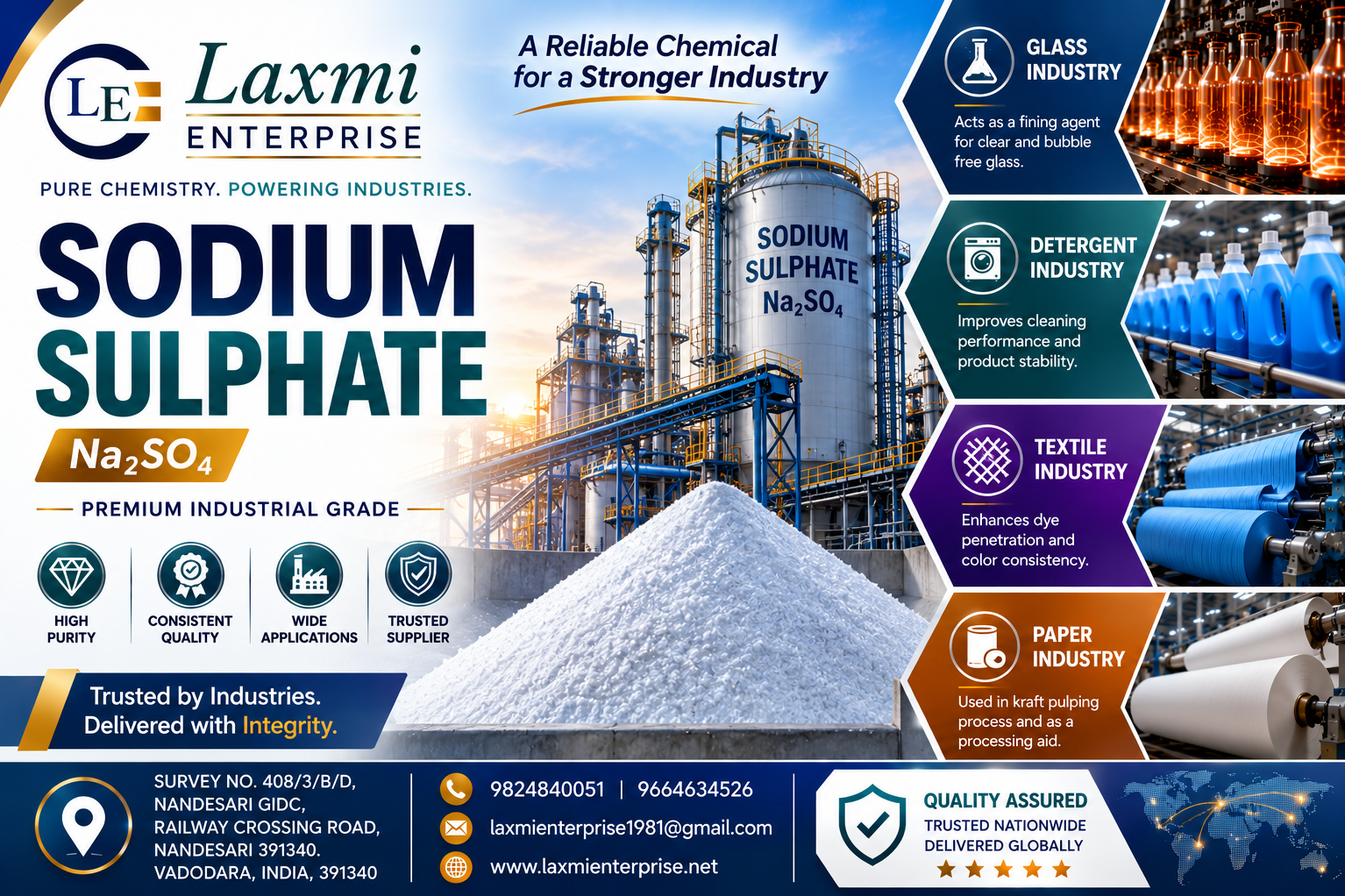
One of the important chemicals used in the Kraft recovery cycle is sodium sulphate (Na₂SO₄). Unlike its role in detergents or glass manufacturing, sodium sulphate in Kraft pulping serves as a make-up chemical within the chemical recovery system. During recovery boiler operation, sodium sulphate is reduced to sodium sulphide, one of the principal active chemicals used in white liquor for digesting wood chips.
Because the recovery cycle continuously recovers and regenerates process chemicals, only relatively small quantities of make-up sodium sulphate are required to compensate for process losses. Nevertheless, the quality and consistency of this make-up chemical remain extremely important for maintaining sulphidity balance, recovery efficiency, and stable mill operation.
For pulp mills operating twenty-four hours a day throughout the year, supplier reliability, product consistency, and chemical purity are often more valuable than simply obtaining the lowest purchase price. Reliable sodium sulphate helps maintain predictable recovery chemistry, supports uninterrupted production, and contributes to efficient chemical management across the entire recovery cycle.
This comprehensive guide explains how sodium sulphate functions within Kraft pulp manufacturing, its chemical role, quality requirements, procurement considerations, and the technical factors industrial buyers should evaluate before selecting a supplier.
Overview of the Kraft Pulping Process
Kraft pulping is the most widely used chemical pulping process in the world because it produces strong cellulose fibers suitable for a wide range of paper grades.
The process converts wood chips into pulp by dissolving lignin, the natural polymer that binds cellulose fibers together.
Major production stages include:
Wood preparation
Debarking
Chipping
Chip screening
Cooking (digestion)
Brown stock washing
Screening
Bleaching (when required)
Chemical recovery
Pulp drying or papermaking
Each stage is carefully controlled to maximize fiber yield while minimizing chemical consumption and environmental impact.
Understanding the Kraft Chemical Recovery Cycle
One of the greatest advantages of the Kraft process is its highly efficient chemical recovery system.
Instead of discarding spent cooking chemicals after digestion, modern pulp mills recover, regenerate, and reuse them repeatedly.
The recovery cycle generally consists of:
Black liquor collection
Evaporation
Recovery boiler combustion
Smelt formation
Green liquor preparation
Causticizing
White liquor production
Return to the digester
This closed-loop system significantly reduces chemical consumption while improving environmental performance and mill economics.
Where Sodium Sulphate Fits into the Process
Many people assume sodium sulphate is directly added to the digester during cooking. In reality, its primary role is different.
Fresh sodium sulphate is generally introduced into the chemical recovery cycle as a make-up chemical to replace sodium and sulphur lost during normal mill operation.
Within the high-temperature environment of the recovery boiler, sodium sulphate undergoes chemical reduction to form sodium sulphide. The regenerated sodium sulphide ultimately becomes part of the white liquor used during Kraft cooking.
This recovery mechanism makes sodium sulphate an important component of long-term chemical balance within the mill.
Why Chemical Recovery Is So Important
Without chemical recovery, Kraft pulping would become economically impractical because of the enormous quantity of cooking chemicals required.
Modern recovery systems provide several major advantages.
Reduced Chemical Consumption
Recovering sodium-based chemicals minimizes the need for fresh chemical purchases.
Improved Energy Efficiency
Recovery boilers generate steam and electricity while simultaneously recovering valuable process chemicals.
Lower Environmental Impact
Chemical recovery significantly reduces waste discharge and supports sustainable manufacturing practices.
Stable Cooking Chemistry
Consistent regeneration of cooking chemicals helps maintain predictable pulping performance.
Cost Optimization
Chemical recovery contributes substantially to the economic competitiveness of Kraft pulp production.
Understanding White Liquor
White liquor is the primary cooking solution used inside the digester.
Its principal active chemicals include:
Sodium hydroxide (NaOH)
Sodium sulphide (Na₂S)
Together, these chemicals dissolve lignin while preserving cellulose fibers, allowing the production of strong Kraft pulp.
Maintaining proper white liquor composition is essential because variations in sulphidity or active alkali concentration can influence pulp quality, yield, and production efficiency.
The Role of Sodium Sulphide
Sodium sulphide performs an important function during Kraft pulping by enhancing lignin removal while helping preserve cellulose strength.
Rather than adding sodium sulphide directly in large quantities from external sources, mills regenerate it internally through the recovery cycle.
One important source for this regeneration is sodium sulphate introduced as make-up chemical.
This integrated chemical cycle contributes to the remarkable efficiency of modern Kraft mills.
Chemical Reduction Inside the Recovery Boiler
The recovery boiler performs two critical functions simultaneously:
It generates thermal energy from black liquor combustion.
It regenerates valuable inorganic pulping chemicals.
During combustion under reducing conditions, sodium sulphate is converted into sodium sulphide through high-temperature chemical reactions within the recovery furnace.
This regenerated sodium sulphide later returns to the white liquor preparation system after passing through the remaining recovery stages.
Because this conversion occurs under carefully controlled furnace conditions, recovery boiler operation remains one of the most technically sophisticated areas within a modern pulp mill.
Importance of High-Purity Sodium Sulphate
Although sodium sulphate represents only the make-up portion of total mill chemicals, its quality can influence recovery system performance.
Pulp mills generally specify material with:
High Na₂SO₄ content
Low chloride levels
Low iron content
Low insoluble matter
Controlled moisture
Uniform particle size
Consistent bulk density
Reliable packaging
Maintaining consistent product quality helps reduce variability within the recovery cycle.
Typical Technical Profile
Property Typical Specification*
Chemical Formula Na₂SO₄
Molecular Weight 142.04 g/mol
Appearance White crystalline material
Purity High
Moisture Low
Water Insoluble Matter Low
Chlorides Controlled
Iron Low
Particle Size Uniform
Storage Stability Excellent
*Actual purchasing specifications vary between pulp mills and should always be agreed upon between buyer and supplier.
Why Pulp Mills Emphasize Supplier Reliability
Large Kraft pulp mills often produce thousands of tonnes of pulp every day.
Production interruptions can result in significant financial losses.
For this reason, procurement teams evaluate suppliers based on more than price.
Important considerations include:
Product consistency
Batch-to-batch uniformity
Manufacturing capability
Quality assurance systems
Technical documentation
Delivery performance
Long-term supply reliability
Responsive customer support
A dependable supplier becomes an important partner in maintaining stable mill operations.