
Why the Cheapest Sodium Sulphate Is Sometimes the Most Expensive Purchase a Manufacturer Can Make
Every procurement manager likes to negotiate.
It is part of the job.
Reducing purchasing costs improves profitability and demonstrates effective procurement management. There is nothing wrong with looking for better commercial terms.
The problem begins when the entire purchasing decision is reduced to one number.
The price per tonne.
At first, buying the lowest-priced Sodium Sulphate may appear to be a financial success. A few months later, the same decision may begin creating challenges that nobody anticipated.
Production starts taking longer than expected.
Quality teams spend more time checking incoming material.
Warehouse personnel report damaged packaging.
Urgent purchases become more frequent because deliveries are inconsistent.
None of these expenses appear in the quotation.
Yet every one of them affects the real cost of manufacturing.
This is why experienced manufacturers often say that the cheapest purchase and the most economical purchase are not always the same thing.
Every Factory Pays Two Prices
The first price appears on the supplier's invoice.
The second price appears inside the factory.
The invoice records how much was paid for the material.
The factory records how much it actually cost to use that material.
If production slows down, the factory pays.
If operators spend additional time making adjustments, the factory pays.
If customer deliveries are delayed, the factory pays.
If quality investigations increase, the factory pays.
These costs rarely appear under the raw material budget, but they are very real.
Experienced business owners understand this difference.
They evaluate purchasing decisions from the factory floor rather than only from the quotation sheet.
When Small Problems Become Large Expenses
Imagine a manufacturing plant producing hundreds of tonnes every month.
One delivery of raw material performs differently from previous shipments.
Production operators adjust machine settings.
Quality personnel increase inspections.
Warehouse teams separate material for additional checks.
Management begins reviewing production reports.
None of these activities were part of the original purchasing plan.
A small variation has now involved multiple departments.
The purchase price may have been lower.
The overall manufacturing cost has become much higher.
Good Procurement Protects Production
The purpose of procurement is often misunderstood.
Many people believe purchasing departments exist only to negotiate prices.
Their actual responsibility is much broader.
They protect production.
They support inventory planning.
They reduce operational risk.
They help ensure that manufacturing continues without unnecessary interruptions.
Price remains important.
Reliability is equally important.
The most successful procurement teams understand both.
Consistency Creates Predictable Manufacturing
Factories perform best when conditions remain stable.
Operators become familiar with machine behaviour.
Quality teams establish reliable benchmarks.
Production planning becomes more accurate.
Customers receive consistent products.
This stability depends heavily on consistent raw materials.
Manufacturers value suppliers who deliver the same quality every month because predictable inputs create predictable outputs.
Consistency is one of the least visible advantages of a dependable supplier.
It is also one of the most valuable.
Reliable Deliveries Save More Than Transport Costs
Late deliveries create more problems than delayed inventory.
Production schedules change.
Purchase departments arrange emergency orders.
Warehouse teams reorganise storage.
Sales departments adjust dispatch commitments.
Customers receive revised delivery dates.
A dependable supplier helps prevent these situations before they develop.
Reliable logistics reduce hidden costs throughout the organisation.
Why Long-Term Suppliers Often Create Greater Value
Many manufacturers continue working with the same supplier for years.
This is not because they never receive lower quotations.
It is because they understand the value of predictability.
A long-term supplier becomes familiar with production cycles.
They understand seasonal demand.
They know customer expectations.
Communication becomes easier.
Planning becomes more accurate.
Business becomes more efficient.
The relationship gradually creates value that extends well beyond pricing.
The Difference Between a Trader and an Industrial Supply Partner
There are many businesses capable of selling industrial chemicals.
Far fewer understand what happens after those chemicals enter a manufacturing plant.
An industrial supply partner understands production pressure.
They appreciate delivery commitments.
They recognise the importance of consistency.
They communicate honestly when situations change.
Their objective is not simply to complete a sale.
It is to support long-term manufacturing success.
Manufacturers notice this difference very quickly.
Questions Every Business Owner Should Ask
Before approving a new supplier, it is worth asking a few practical questions.
Will this supplier still support our business five years from now?
Can they maintain quality as our production increases?
Will they respond quickly during urgent situations?
Do they understand our industry?
Can we rely on them during periods of high demand?
The answers usually reveal much more than a quotation ever will.
How Laxmi Enterprise Supports Long-Term Manufacturing Success
At Laxmi Enterprise, we understand that customers rarely remember the lowest quotation.
They remember dependable service.
They remember suppliers who delivered during difficult periods.
They remember businesses that consistently honoured their commitments.
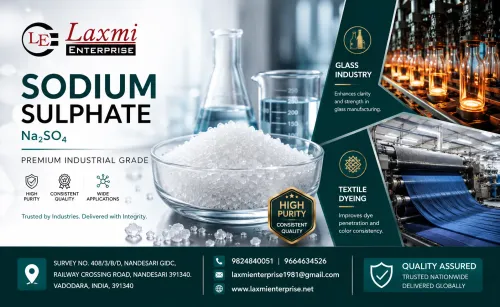
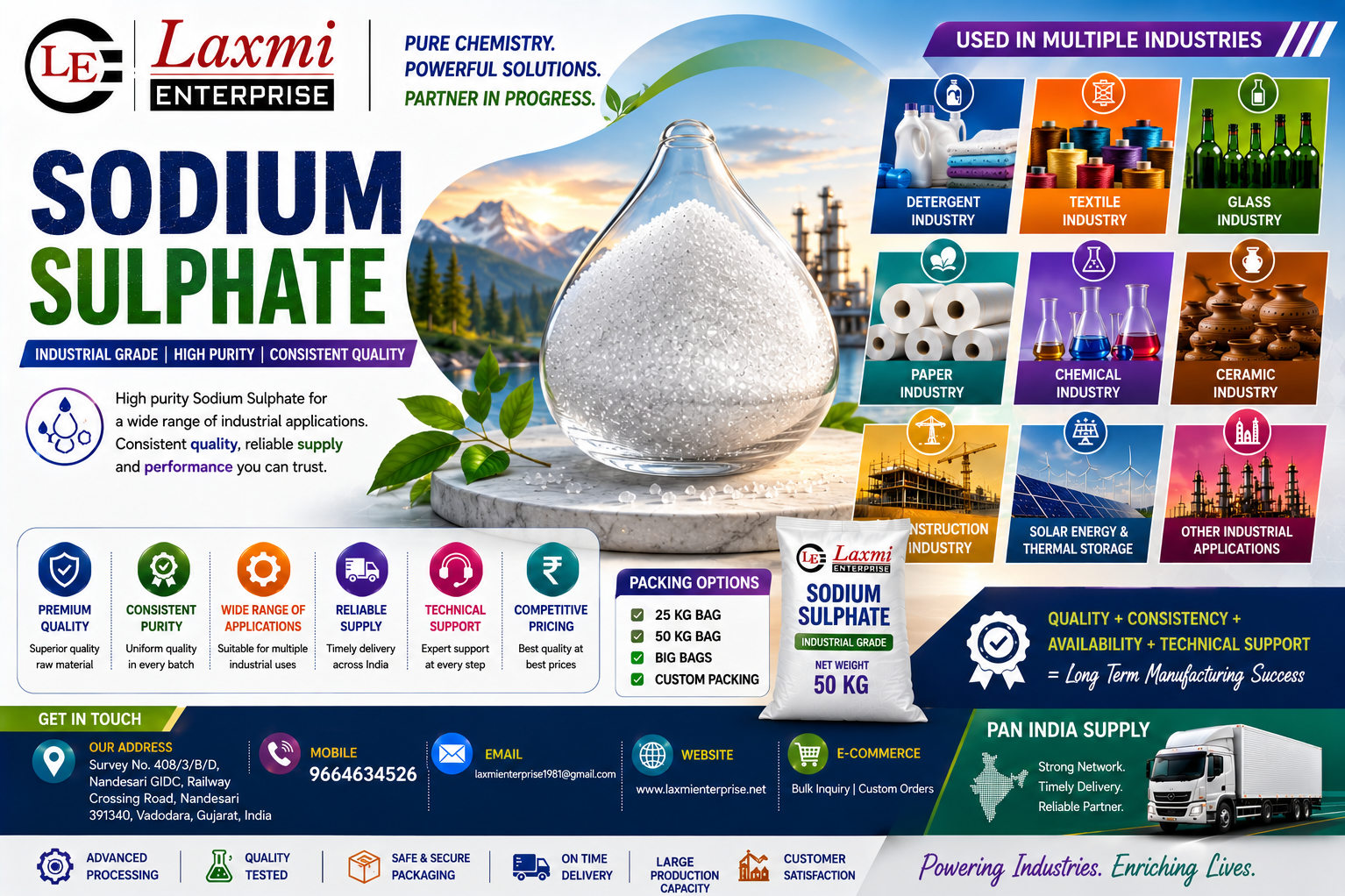
From our operations in Nandesari GIDC, Vadodara, we supply Sodium Sulphate and other industrial chemicals to manufacturers throughout India.
Our responsibility begins long before the truck reaches the customer's factory.
It begins with maintaining consistent inventory.
It continues through careful packaging, organised dispatch and responsive customer communication.
Most importantly, it continues after the delivery has been completed.
Our objective has always been to build relationships measured in years rather than individual purchase orders.
Looking Beyond Immediate Savings
Every business wants to improve profitability.
The strongest businesses understand that sustainable savings come from operational efficiency rather than simply purchasing at the lowest possible price.
Reliable suppliers contribute to that efficiency every day.
They reduce uncertainty.
They simplify planning.
They strengthen production.
They help manufacturers concentrate on growth instead of solving avoidable supply problems.
For this reason, the true value of a supplier is rarely measured by the price on today's quotation.
It is measured by the confidence they provide over many years of working together.
Frequently Asked Questions
Should manufacturers always buy the lowest-priced Sodium Sulphate?
Not necessarily. Price is important, but total manufacturing cost also depends on product consistency, delivery reliability, communication and long-term supplier performance.
Why can a cheaper raw material become more expensive?
Lower-priced material may create additional production adjustments, quality inspections, delayed deliveries or operational inefficiencies that increase overall manufacturing costs.
What should manufacturers evaluate besides price?
Manufacturers should consider supplier experience, consistency, logistics capability, packaging quality, communication, technical understanding and long-term business reliability.
How do dependable suppliers reduce operating costs?
Reliable suppliers help minimise production interruptions, improve inventory planning, reduce emergency purchases and maintain stable manufacturing conditions.
Why do manufacturers choose Laxmi Enterprise?
Manufacturers across India work with Laxmi Enterprise because we focus on long-term value rather than short-term transactions. Operating from Nandesari GIDC, Vadodara, we supply consistent-quality Sodium Sulphate and other industrial chemicals backed by dependable deliveries, professional communication and reliable customer support.
About Laxmi Enterprise
Laxmi Enterprise is a trusted manufacturer, supplier and distributor of industrial chemicals located in Nandesari GIDC, Vadodara, Gujarat. We supply Sodium Sulphate, Sodium Nitrate, Sodium Acetate, Tri Sodium Phosphate and other inorganic chemicals to manufacturers across detergent, textile, glass, paper, ceramic, construction, water treatment and chemical processing industries throughout India.
For decades, we have believed that successful partnerships are built through consistency, integrity and dependable service. Every customer relationship reflects our commitment to supporting Indian manufacturing with quality products, reliable supply and long-term business confidence.