


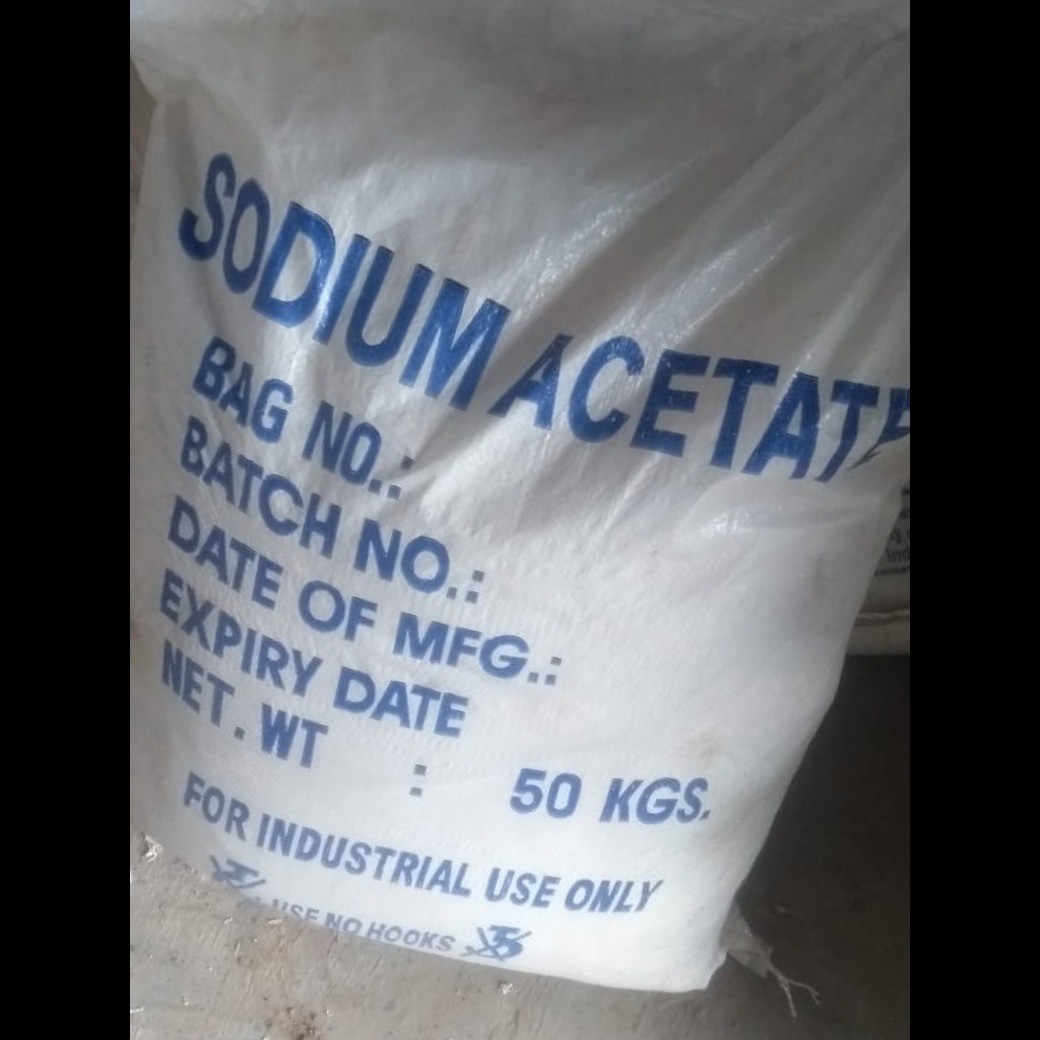
Here’s a complete, lab-ready guide for detecting acetate (CH₃COO⁻) in water or industrial effluent using Ion Chromatography (IC) with suppressed conductivity. This includes principle, sample pretreatment, eluent, column, calibration, interferences, QC, and calculations.
ACETATE (CH₃COO⁻) DETECTION BY ION CHROMATOGRAPHY (IC)
1. PRINCIPLE
Acetate is a small monovalent anion. In IC:
- Sample is injected into an anion-exchange column.
- Eluent (carbonate/bicarbonate or hydroxide) carries the anions through the column.
- Suppressor converts the eluent to water, reducing conductivity background.
- Conductivity detector measures acetate peak, proportional to concentration.
REAGENTS & STANDARDS
- Stock solution: Sodium acetate (NaCH₃COO), dried at 105°C if necessary.
- Working standards: 0.5, 1, 2, 5, 10, 25, 50, 100 mg/L CH₃COO⁻.
- Eluent: High-purity water + KOH via eluent generator or manual prep.
- Suppressor: Electrolytically regenerated; ensure proper current settings.
Parameter Typical Setting Column Dionex IonPac AS11-HC, AS14, AS19 (4 × 250 mm) Guard Column AG11-HC or AG14 Eluent 1–5 mM KOH (isocratic) or gradient 1–30 mM KOH Flow Rate 1.0 mL/min Suppressor AERS or ASRS (electrolytic), 30–70 mA Injection Volume 10–25 µL Detector Suppressed conductivity Column Temp 30°C (recommended) Run Time 10–15 min
CALIBRATION
- Prepare at least 5–7 calibration levels spanning expected sample concentrations.
- Inject each standard; record peak area vs. concentration.
- Linear regression (r² ≥ 0.999).
- Verify with continuing calibration check (CCV) every 10 injections.
REPORTING RESULTS
- Report as:
- Acetate ion (CH₃COO⁻) mg/L
- Sodium acetate (NaCH₃COO) mg/L, if required
- Include: sample ID, dilution factor, retention time, QC results, method, and instrument used.
OPTIONAL NOTES
- For high-precision work, use standard addition method for samples with complex matrices.
- For wastewater, consider matrix spike for recovery verification.
- Guard column replacement improves baseline stability for high-organic matrices.
Interference Effect Solution
High chloride Peak tailing Use gradient KOH; dilute
High nitrate Peak overlap Adjust eluent; check column
High organics Baseline rise, broad peak Activated carbon; dilution
High carbonate/bicarbonate Baseline drift Use degassed eluent; adjust suppression
Particulates Column blockage Filter 0.45 µm; centrifuge
Here’s a complete, practical guide for interpreting acetate (CH₃COO⁻) chromatograms in Ion Chromatography (IC), with tips on identifying peaks, assessing column and detector performance, troubleshooting, and QC evaluation. This is suitable for laboratory SOPs, analytical reports, or IC training guides.
If you want, I can generate a ready-to-use Excel template that:
- Accepts IC peak areas for nitrate and acetate
- Calculates sample concentration with dilution factor
- Converts NO₃⁻ to NaNO₃ and CH₃COO⁻ to NaCH₃C
IDENTIFYING THE ACETATE PEAK
- Check retention time: Compare sample peak RT with acetate standard.
- Check peak shape: Symmetric, sharp peak indicates good chromatography.
- Peak area or height: Proportional to acetate concentration.
- Baseline: Should be stable and flat; avoid drift or noise that interferes with integration.
PEAK CONFIRMATION METHODS
- Retention time matching: Use pure acetate standard under identical conditions.
- Standard addition: Spike sample with known acetate; peak area increases linearly, same RT.
- Co-elution check: If unknown peak overlaps, change eluent strength or column (gradient vs isocratic).
QUALITY CONTROL (QC) CHECKS
- Duplicate injection: RPD ≤ 10%
- Calibration verification standard: ±10% recovery
- Matrix spike: Recovery 80–120%
- Blank: No acetate peak
- Retention time consistency: ±2% variation per run
BEST PRACTICES
- Run blank, standard, and sample sequentially.
- Use guard column to prolong analytical column life.
- Record sample preparation details (filtration, dilution, carbon treatment).
- Use matrix-matched standards for high-TDS or high-COD samples.
- Maintain IC suppressor and eluent generator to ensure baseline stability.
OBJECTIVE
- To establish a reliable relationship between analyte concentration (mg/L) and IC detector response (peak area or height) for nitrate and acetate, enabling accurate quantification of unknown water or effluent samples.
REQUIRED MATERIALS
- IC system with anion-exchange column and suppressed conductivity detector
- Standard chemicals:
- Sodium nitrate (NaNO₃) for nitrate
- Sodium acetate (NaCH₃COO) for acetate
- High-purity deionized water (18 MΩ·cm)
- Volumetric flasks (10–100 mL)
- Pipettes (Class A)
- Syringe filters (0.45 µm, PTFE/Nylon)
INJECTION AND DATA ACQUISITION
- Inject each standard into the IC system (10–25 µL typical).
- Record peak area (or height) and retention time.
- Run blank (DI water) to check for contamination.
- Repeat duplicate injections for precision.
QC CHECKS DURING CALIBRATION
- Run continuing calibration verification (CCV) after every 10–15 samples.
- Re-inject mid-level standard to check drift.
- Use matrix spike for complex samples (high TDS, high COD).
- Duplicate injections: RSD ≤ 5% for standards.
REPORTING
Include in report:
- Calibration curve plot
- Regression equation (slope, intercept, r²)
- Sample peak area and calculated concentration
- Dilution factor
- QC verification (CCV, blanks, duplicates)
If you want, I can generate a ready-to-use Excel template that:
- Accepts IC peak areas for nitrate and acetate
- Calculates sample concentration with dilution factor
- Converts NO₃⁻ to NaNO₃ and CH₃COO⁻ to NaCH₃COO
- Automatically plots the calibration curve
Do you want me to create that?
- Acetate
- CH₃COO⁻
- Sodium acetate
- Sodium acetate anhydrous
- Sodium acetate trihydrate
- Sodium acetate powder
- Sodium acetate solution
- Acetate salt
- Acetic acid salt
- Acetate molecular weight
- Acetate chemical formula
- Sodium acetate properties
- Sodium acetate uses