

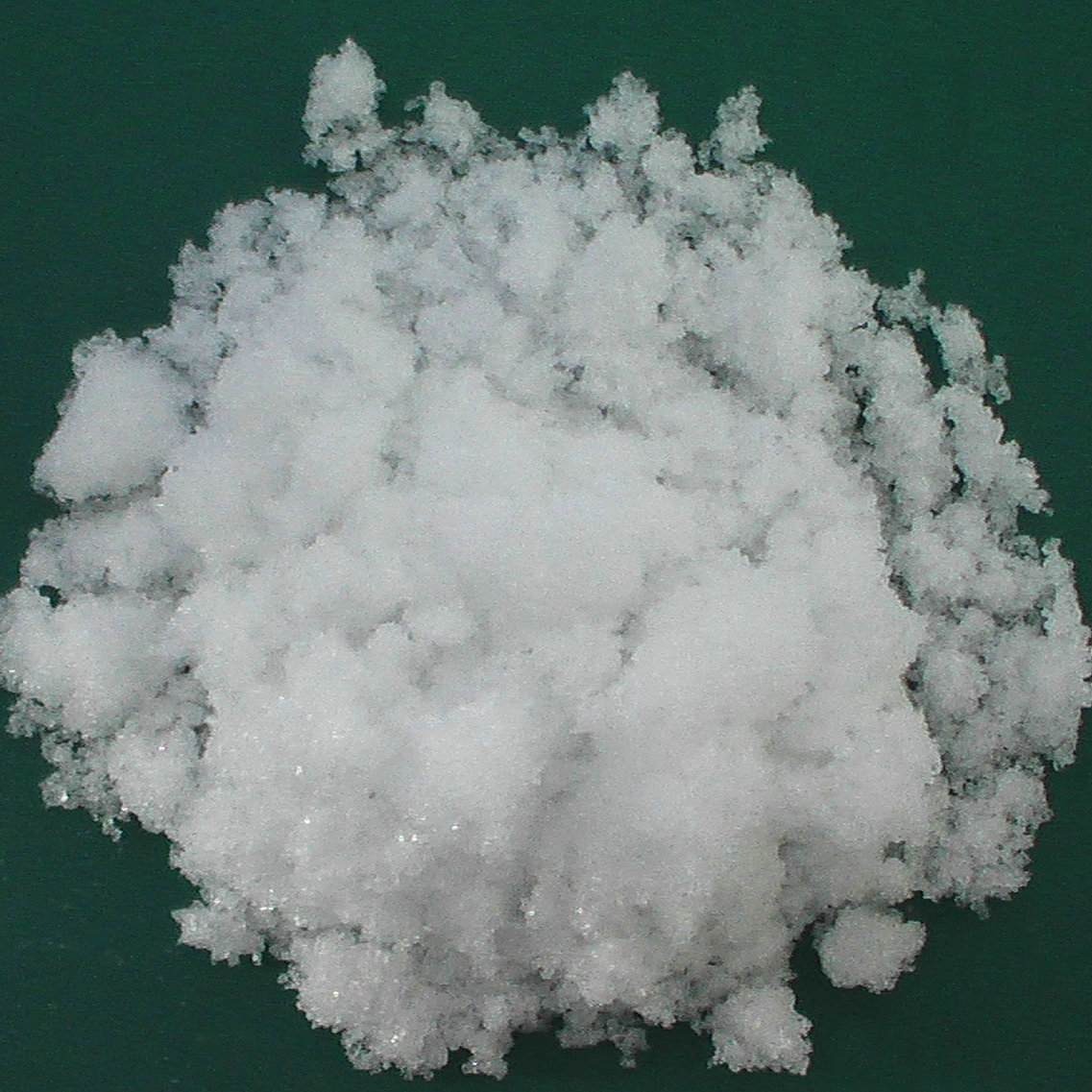
(Ion Chromatography–centric, with biopharma & high-salt matrices in mind) Acetate (CH₃COO⁻) is a weak acid anion with low equivalent conductivity and early elution, making it one of the most challenging anions to quantify accurately, especially in biopharma formulations and sulfate-rich matrices.
Low Conductivity Response
- Acetate has much lower molar conductivity than strong anions (Cl⁻, NO₃⁻, SO₄²⁻)
- Results in:
- Poor signal-to-noise (S/N)
- Higher LOQ compared to other anions
Elutes close to:
- Fluoride
- Formate
- System void / carbonate
Highly sensitive to:
- Eluent concentration
- Column aging
- Temperature variation
High Sulfate or High TDS
- Sulfate dominates suppressor capacity
- Elevates baseline conductivity
- Masks low-ppm acetate
- Acetate often present in buffered form (pH 4–6)
- Partial protonation alters response
- Matrix pH affects apparent concentration
- Non-linear calibration at low acetate levels
- Recovery suppression in concentrated salt matrices
Suppressor saturation reduces acetate response first
Baseline drift impacts early peaks most
Inconsistent regeneration leads to poor precision
Volatile as acetic acid at low pH
Microbial degradation in aqueous samples
Adsorption losses in low-level samples
ObservationLikely CausePoor repeatabilitySuppressor instabilityLow recoverySulfate masking / pH shiftBroad or split acetate peakColumn overload / carbonateNon-linear calibrationMatrix mismatch
Use columns optimized for organic acids
Lower eluent strength for early-peak resolution
Reduce injection volume (≤5–10 µL)
High-capacity suppressors
Frequent regeneration
Monitor background conductivity as SST
Adjust pH to neutral (6–8) to stabilize acetate
Filter with low-adsorption membranes
Avoid prolonged storage
IC-UV (after derivatization, niche)
HPLC with ion-exclusion
Capillary electrophoresis
Enzymatic acetate assays (bioprocess monitoring)
Acetate Buffering Capacity in Pharmaceutical & Biopharma Formulations
Acetate buffers are widely used in injectables, biologics, vaccines, and small-molecule formulations because they provide effective buffering in the weakly acidic pH range (≈3.6–5.6) and have good biocompatibility. Understanding buffering capacity is critical for pH stability, chemical stability, and analytical control.
Acetic acid ⇌ Acetate⁻ + H⁺
- pKₐ (25 °C) ≈ 4.76
- Maximum buffering capacity occurs at pH ≈ pKₐ
Buffering capacity (β) = resistance of a formulation to pH change upon addition of acid or base.
Key dependencies:
- Total acetate concentration (acid + salt)
- pH relative to pKₐ
- Ionic strength
- Temperature
pH RangeBuffer Performance3.6–4.0Moderate4.2–5.2Optimal buffering5.5–6.0Rapidly decreasing>6.0Poor (acetate mostly deprotonated)
- Increase ionic strength
- Affect osmolality
- Increase risk of analytical interference (IC)
Sodium vs potassium acetate alters:
- Ionic strength
- Compatibility with APIs
- Conductivity background
Chemical Stability
- Acetate buffers can catalyze:
- Hydrolysis of esters
- Deamidation in proteins (pH-dependent)
Affects:
- Protein aggregation
- Solubility of APIs
- Precipitation risk with divalent cations
High acetate buffering capacity:
- Elevates background conductivity
- Suppresses sensitivity for trace anions
- Requires:
- Controlled dilution
- Matrix-matched calibration
- Careful suppressor capacity management
- pH of acetate buffers decreases with increasing temperature
- Buffer capacity slightly decreases at elevated temperatures
- Important for:
- Freeze–thaw studies
- Accelerated stability testing
pH >6.0 requirements
Formulations sensitive to ionic strength
Systems with high sulfate or chloride background
Long-term high-temperature storage
Acetate buffers provide strong buffering near pH 4.5–5.0, but buffering capacity scales with concentration and ionic strength. In formulations, they must be balanced against stability, osmolality, and analytical detectability.
Use of acetic acid or acetate buffers during synthesis or purification
pH adjustment steps using acetic acid
Solvent residues from acetic acid–based crystallization
Cleaning agents containing acetate salts
Impurities in salts (NaCl, sulfate salts)
Water system contamination
Leachables from certain polymeric components
Hydrolysis of acetylated intermediates
Ester degradation in APIs
Oxidative degradation of certain excipients
Alters buffering capacity and pH
Increases ionic strength
Can affect API solubility and stability
Promotes deamidation or aggregation in proteins (pH-dependent)
Interacts with metal ions
Generally low toxicity, but:
- Excess acetate in injectables may cause local irritation
- Requires control in parenteral formulations
Dosage FormTypical Acetate Impurity LevelOral solids≤0.1–0.5%Oral liquids≤100–500 ppmParenterals≤50–100 ppmBiologicsAs low as reasonably achievable (ALARA)
- Low conductivity response (weak acid)
- Early elution in IC
- Suppressed sensitivity in high-salt matrices
- Co-elution with formate or carbonate
Suppressed conductivity detection
High-capacity columns for salt-rich matrices
Dilution and sulfate/chloride control essential
Useful when IC sensitivity is limited
Less affected by high sulfate
ICH Q3A/Q3B (impurities)
ICH Q6A/Q6B (specifications)
ICH Q2 (R2) (analytical validation)
USP / Ph. Eur. expectations for injectable products
IssueLikely CauseSolutionUnexpected acetate detectedCleaning residueReview CIP/SIPLow recoverySulfate maskingDilute / remove sulfatePoor repeatabilitySuppressor overloadRegenerate / reduce load
Acetate impurities are often process-derived and analytically challenging at low ppm levels. Robust control requires early process awareness, sensitive IC methods, and matrix-aware validation.
Sulfate Interference in Acetate Analysis
Sulfate (SO₄²⁻) is a divalent anion with high conductivity that can significantly interfere with acetate quantification in ion chromatography (IC) or other ionic analysis methods. This is particularly relevant in biopharmaceutical formulations, environmental samples, and industrial matrices where sulfate is present at high concentrations.
- Sulfate consumes a large portion of the suppressor capacity in suppressed IC systems.
- Consequence:
- Elevated baseline conductivity
- Reduced signal-to-noise ratio for weakly conductive anions like acetate
- Poor reproducibility
High sulfate load can cause column overloading, leading to:
- Peak tailing
- Broad acetate peaks
- Partial co-elution with formate, fluoride, or other early-eluting species
Sulfate elution can raise the baseline in the acetate retention region.
- Early-eluting acetate peaks may be masked or underestimated.
- Matrix TypeSulfate LevelEffect on AcetateBiopharma buffers50–200 mMSuppressed signal, poor LOQEnvironmental water500–5,000 mg/LBroad peaks, co-elutionIndustrial effluents>10,000 mg/LColumn overload, baseline drift
- Low or inconsistent acetate recovery
- High baseline noise in early retention time
- Split or distorted acetate peaks
- Poor method precision at low ppm levels
Reduce sulfate mass per injection to prevent:
- Suppressor overload
- Column saturation
Use columns optimized for high-TDS samples
- Ensure early anion resolution is preserved.
- BaCl₂ precipitation (offline)
- Inline sulfate traps / guard columns
- Only used when trace acetate quantification is required in sulfate-rich matrices
Injection Optimization
- Reduce injection volume (e.g., ≤5–10 µL)
- Prevent overloading the column and suppressor
Eluent & Gradient Optimization
- Adjust eluent strength or gradient to separate acetate from sulfate peak tail
- Sulfate is often the primary matrix ion limiting accurate acetate analysis. Controlling sulfate load through dilution, selective removal, and high-capacity columns is essential to achieve reliable and reproducible acetate quantification.
- Quantifying acetate at low ppm levels (trace analysis) is challenging due to its low conductivity, early elution, and interference from matrices like sulfate-rich buffers. Various analytical approaches are used depending on the sample type, sensitivity requirements, and matrix complexity.
High sensitivity with suppressor technology
Compatible with complex matrices
- Quantitative and reproducible
Early-eluting anion → co-elution risk (formate, fluoride, carbonate)
Suppressor overload if high TDS or sulfate present
- Requires matrix-matched calibration
High-capacity columns for early anion separation
Low injection volumes (≤5–10 µL) for high ionic strength samples
Dilution or selective sulfate removal if sulfate-rich matrices
Gradient elution to improve peak shape
- Spike recovery validation (80–120%)
- Separates weak acids using acidic cation-exchange columns
- Detection: UV (~210 nm) or conductivity
- Useful for acetate in high-salt or protein-rich samples
- Less affected by sulfate interference than IC
- Separation based on charge-to-size ratio
- Detects low µM levels of acetate
- Fast, low sample consumption
- Sensitive to buffer composition and ionic strength
Enzyme: acetate kinase or acetate oxidase
Reaction produces detectable product (colorimetric or fluorometric)
Simple, rapid, suitable for process monitoring
Limitations:
- Matrix interference possible
- Lower precision than IC
- ^1H NMR can detect acetate directly
- Advantages:
- Non-destructive
- Minimal sample prep
- Limitations:
- Requires high-concentration samples (low ppm is challenging)
- Instrument cost and complexity
- RequirementRecommended MethodTrace acetate in biopharma buffersSuppressed IC with high-capacity columnHigh-salt matricesIC with dilution / sulfate removalRapid process monitoringEnzymatic/colorimetric assayProtein-rich formulationsIon-exclusion HPLCStructural confirmationNMR
LOD / LOQ determination (ppm or sub-ppm level)
Spike recovery in relevant matrix
Linearity at low concentrations
Specificity: no interference from formate, fluoride, sulfate
- Precision / reproducibility
- Low-level acetate detection requires careful method selection and matrix management. Suppressed IC is the gold standard for most formulations, but alternatives like ion-exclusion HPLC or enzymatic assays are useful for specialized matrices or rapid monitoring.
· CAS (anhydrous): 127-09-3
· CAS (trihydrate): 6131-90-4
· E number: E262 (food additive)
- · EC number (anhydrous): 204-823-8
· Food industry: acidulant, preservative, flavoring (E262)
· Pharmaceuticals: buffer component, dialysis solutions, excipient
· Textile & dyeing: mordant/auxiliary
· Industrial chemistry: reagent/intermediate; pH control
· Environmental: carbon source for sewage treatment
- · Heating pads: sodium acetate trihydrate phase-change heat packs