

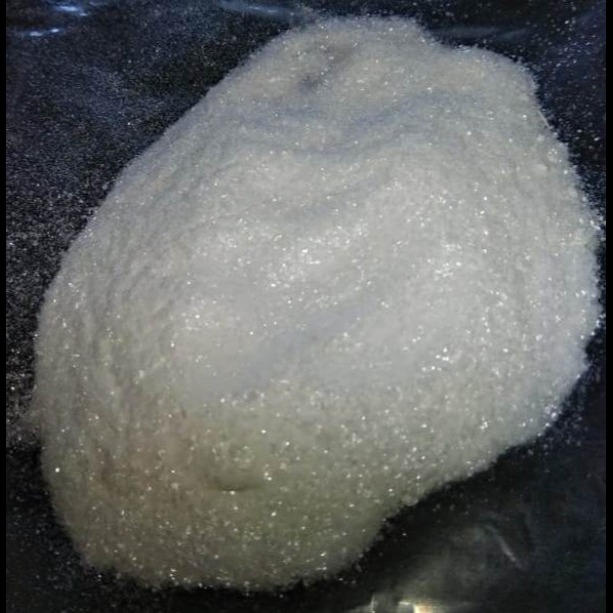
Role of Sodium Acetate in Wastewater Treatment
A. As a Carbon Source for Denitrification
In biological wastewater treatment, denitrifying bacteria convert nitrate
(NO₃⁻) → nitrogen gas (N₂) under anoxic (oxygen-free) conditions.
This process requires an organic carbon source as “food” for the microbes.
Sodium acetate provides a readily biodegradable source of organic carbon.
. In Biological Phosphorus Removal (EBPR)
Phosphate-accumulating organisms (PAOs) absorb and store phosphorus using energy from acetate metabolism.
In the anaerobic stage, PAOs take up acetate and store it as polyhydroxybutyrate (PHB).
In the aerobic stage, they use that energy to absorb phosphate from water.
Result: Phosphorus is removed biologically (not chemically) → less sludge & lower costs.
Sodium acetate advantages:
Non-toxic
Easy to handle
Safe for operators
Highly soluble
Predictable microbial uptake rate
11. Example: Denitrification Process with Sodium Acetate
Simplified process flow:
Influent wastewater with nitrates enters anoxic tank.
Sodium acetate is dosed via metering pump.
Denitrifying bacteria convert nitrate → nitrogen gas.
Treated water passes to aerobic zone for polishing.
N₂ gas is released harmlessly into the atmosphere.
End result: Reduced Total Nitrogen (TN) and compliance with discharge standards .
Function of Sodium Acetate in Electroplating Baths
A. pH Buffering
Electroplating baths often operate within a narrow pH range for optimal metal deposition.
Sodium acetate, in combination with acetic acid,
forms a buffer system that resists sudden pH shifts during plating.
Conductivity Improver
Sodium acetate increases ionic strength of the bath without introducing reactive anions (like chloride) that can corrode or attack anodes.
Improves current distribution and throwing power
leading to uniform metal deposition even on complex shapes.
Complexing / Buffering Metal Ions
Acetate ions form weak complexes with many metal ions
This moderates the free metal ion concentration, improving deposit smoothness and brightness.
pH Stabilizer During Current Flow
During electrolysis, hydrogen evolution or hydroxide formation near electrodes can shift pH.
The acetate buffer minimizes these fluctuations, ensuring consistent deposit quality and brightness.
10. Key Notes for Electroplaters
Maintain consistent pH (use acetate buffer system for control).
Avoid contamination with chlorides or sulfates (can affect deposit quality).
Filter bath regularly — acetate salts can precipitate impurities if overloaded.
Adjust concentration gradually; too high sodium acetate can reduce cathodic efficiency.
For decorative nickel or zinc plating — combine with boric acid for best results.
In summary:
Sodium acetate acts as a safe, effective, and versatile buffer and conductivity enhancer in electroplating baths — maintaining
stable pH
improving deposit smoothness
and preventing burning or pitting across nickel
zinc
copper
2. Sodium Acetate in Industrial Wastewater
Sodium acetate enters wastewater streams from:
Textile dyeing and printing: Used as a pH buffer and dye fixative
Pharmaceutical / API manufacturing: By-product from reactions using acetic acid and NaOH
Food and fermentation industries: Used as buffering or preservative agent
Electroplating & chemical plants: Used as electrolyte or additive
These effluents typically contain 1–10 g/L sodium acetate, along with organic impurities, color, and trace metals.
ZLD Objective
ZLD aims to:
Eliminate liquid discharge
Recover water for reuse
Recover valuable salts like sodium acetate, sodium sulfate, etc.
The goal is recycling both water and sodium acetate back into the process or for sale as a by-product.
4. Sodium Acetate Recovery Mechanism in ZLD
Typical Process Flow:
Pre-Treatment
Removal of suspended solids, color, oils, and organics (via coagulation, filtration, activated carbon, etc.)
Adjust pH to neutral.
Multiple Effect Evaporator (MEE) / Mechanical Vapor Recompression (MVR)
Concentrates sodium acetate solution to 30–50% solids.
Water vapor is condensed and reused as clean distillate.
Crystallizer
The concentrated mother liquor is cooled or further evaporated.
Sodium acetate crystallizes as trihydrate (CH₃COONa·3H₂O).
Centrifuge / Filter Press
Separates crystals from mother liquor.
Dryer
Dries crystals to 0.5–1% moisture.
Product: Recovered Sodium Acetate (Industrial Grade)
Mother Liquor Treatment
Residual liquor (containing other sodium salts) is either recycled or sent to incineration.
Crystallization Chemistry
The hydrated salt forms easily on cooling concentrated liquor.
Reuse and Applications of Recovered Sodium Acetate
Recovered sodium acetate (technical grade) can be reused in:
Textile dyeing & printing (as buffer)
Leather tanning
Electroplating baths
pH control in effluent treatment
De-icing or heat pack applications (after purification)
Example Material Balance (Approximation)
Input:
1000 L effluent with 3% sodium acetate (30 kg)
After ZLD:
Recovered sodium acetate: 25–27 kg (≈85–90%)
Recovered water: 950 L (for reuse)
Residual loss / impurities: 3–5 k
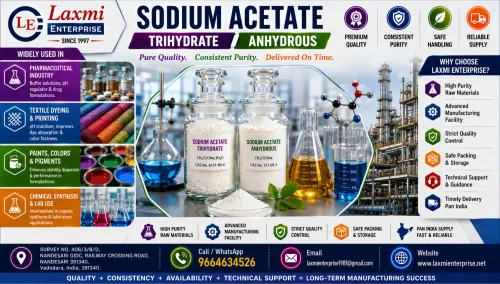
• sodium acetate
• sodium acetate anhydrous
• sodium acetate trihydrate
• sodium acetate buffer
• sodium acetate CAS 127-09-3
• sodium acetate E262
sodium ethanoate
sodium salt of acetic acid
sodium acetic acid
sodium CH3COO
natrii acetas
hot ice (trihydrate)
sodium acetate hydrate