

Nice — here are the commonly used thermal properties for sodium nitrate (NaNO₃), given as typical / literature ranges (I can refine any number if you want a specific data sheet or purity).
Quick facts
Chemical formula: NaNO₃
Molar mass: 85.00 g·mol⁻¹ (Na 22.99 + N 14.01 + O₃ 48.00)
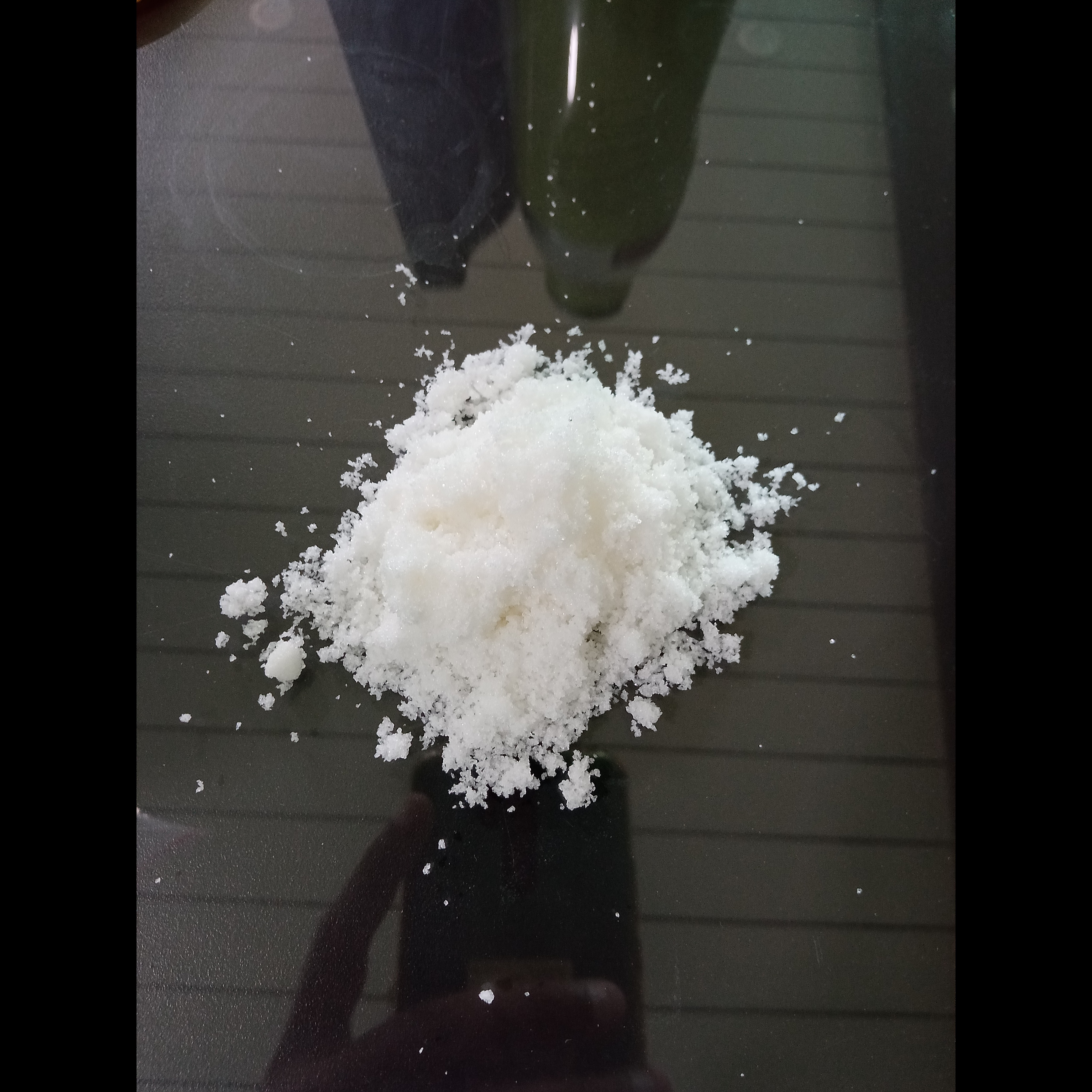
Appearance: white crystalline salt
Key thermal properties (typical values)
PropertyTypical value (units)Notes / rangeMelting point (solid → liquid)308 °C = 581.15 Kcommonly reported 306–309 °C depending on purityDensity (solid, ~20 °C)≈ 2.26 g·cm⁻³crystalline solidDensity (molten)≈ 1.9–2.1 g·cm⁻³depends on temperatureHeat capacity, Cp (solid)≈ 0.85–1.0 J·g⁻¹·K⁻¹ (≈ 850–1000 J·kg⁻¹·K⁻¹)increases slightly with THeat capacity, Cp (liquid)≈ 1.4–1.6 J·g⁻¹·K⁻¹ (≈ 1400–1600 J·kg⁻¹·K⁻¹)typical for molten nitrate saltsLatent heat of fusion (ΔH_fus)≈ 170–180 kJ·kg⁻¹ (≈ 14.5–15.5 kJ·mol⁻¹)used for thermal storage estimatesThermal conductivity (solid)≈ 0.5–0.7 W·m⁻¹·K⁻¹fairly low (insulating compared with metals)Thermal conductivity (liquid)≈ 0.4–0.6 W·m⁻¹·K⁻¹decreases modestly on meltingMelting / decomposition behaviorMelts at ~308 °C; begins to chemically degrade at higher Tdecomposition (partial nitrate → nitrite + O₂) accelerates above ~400 °C–500 °C depending on environmentSafe operating range (practical)~250–450 °C (application-dependent)for thermal storage, pure NaNO₃ limited vs binary mixtures (e.g., NaNO₃/KNO₃) used for higher stability
Practical notes
Purity matters. Trace impurities shift melting point, heat capacity, and decomposition behavior.
Decomposition: NaNO₃ may reduce to NaNO₂ or release oxygen at elevated temperatures; avoid prolonged exposure above ~400–500 °C in oxidizing/reducing atmospheres unless a datasheet says otherwise.
Use in thermal storage: Pure NaNO₃ is widely used in concentrated solar thermal systems but more commonly in mixtures (nitrate salts) to get lower melting points and higher thermal stability.
Units & conversions: melting point 308 °C → 581.15 K (308.00 + 273.15 = 581.15 K). Latent heat 170 kJ·kg⁻¹ = 170, 000 J·kg⁻¹.
Example formula (for calculations)
To find energy required to heat then melt mass m (kg) from initial temperature T₁ (°C) to fully molten at T_melt:
Q = m * [ Cp_solid * (T_melt - T₁) ] + m * Lf
where Cp_solid in J·kg⁻¹·K⁻¹, Lf is latent heat (J·kg⁻¹). If you then want to raise the liquid temperature add m * Cp_liquid * (T2 - T_melt).
If you want, I can:
produce a one-page datasheet with these numbers and converted units,
run a sample energy calculation for a given mass and temperature change, or
look up precise certified values from a specific supplier’s MSDS (I can do that too — tell me if you want me to fetch up-to-date datasheets). Which would help you most?
Great — here’s a practical, technical primer on nitrate–nitrite salt baths used for metal heat-treatment. I’ll cover chemistry, typical operating ranges, common applications, process control, pros/cons, safety, maintenance and alternatives so you can decide whether a salt bath fits your needs.
1) What they are — quick overview
A nitrate–nitrite salt bath is a molten salt heat-transfer medium made from alkali nitrates and nitrites (commonly sodium/potassium nitrate and sodium/potassium nitrite, and ternary mixtures). By choosing ratios you lower the melting point and tune thermal properties. These baths provide very high heat transfer coefficients and rapid, uniform heating or quenching compared with gas or furnace heating.
Common components
Sodium nitrate (NaNO₃)
Potassium nitrate (KNO₃)
Sodium nitrite (NaNO₂)
Potassium nitrite (KNO₂)
Mixtures are used rather than single salts (eutectics) to obtain lower melting points and improved stability (for example, NaNO₃–KNO₃ eutectic mixes are widely used).
2) Typical thermal / operating behaviour
Melting points: pure salts melt relatively high (NaNO₃ ≈ 308 °C, KNO₃ ≈ 334 °C). Binary/ternary mixtures often have much lower eutectic melting points — for example, NaNO₃–KNO₃ eutectic (“solar salt” type mixes) melt around ~220 °C. Commercial nitrite-containing quench baths (NaNO₂/NaNO₃/KNO₃ blends) can have melting points in the ~150–250 °C range depending on composition.
Usable temperature range: generally ~120–500 °C, depending on composition and stability. Nitrite-containing baths are best for low-to-moderate temperatures (e.g., 150–400 °C); nitrate-rich baths can be used at higher temperatures but begin to chemically decompose (forming nitrites/NOx) and oxidize at elevated temperatures, typically accelerating above ~400–500 °C.
Thermal properties: molten nitrate/nitrite salts have moderate heat capacity and low thermal conductivity compared with metals, but they deliver very high convective heat transfer coefficients to parts immersed in the bath — hence fast, uniform heating and controlled quenching rates.
Decomposition: at high temperatures nitrites/nitrates decompose to give nitrite/nitrate interconversions and can release NO/NO₂/O₂; long exposure above decomposition thresholds shortens bath life.
3) Typical heat-treatment uses & temperature windows
(Temperatures are indicative and depend on exact salt composition and part requirements.)
Bright hardening / quench (rapid cooling following austenitizing) — many salt-quench baths operate ~450–550 °C for preheating or intermediate tempering and 250–450 °C for quenching/peening stages (specifics depend on alloy and process).
Tempering — 150–600 °C (most tempering is done between 150–600 °C; lower-temperature nitrite baths are commonly used for bright tempering).
Annealing / stress relieving — 200–600 °C (salt baths can give extremely uniform soak temperatures).
Carburizing / carbonitriding — specialized salt baths (less common than gas/solid pack methods) with carefully controlled atmospheres are used occasionally.
Normalizing / preheating / brazing — salt baths can be used where rapid, uniform heating is required.
Note: exact temperature selection must match the alloy metallurgy (phase diagrams, austenitizing temps, quench sensitivity). Always verify with material specifications.
4) Advantages
Excellent and uniform heat transfer — faster, more uniform heating and quenching than air/gas furnaces.
Good process consistency — tight temperature control and rapid response.
Bright/clean surfaces — certain salt baths give bright, scale-free finishes when properly controlled.
Compact equipment — smaller footprint than large atmosphere furnaces for similar throughput.
5) Disadvantages & limits
Corrosivity — salts are corrosive to many alloys and to furnace components if contaminated or if proper alloys aren’t used (use compatible containment materials such as certain stainless steels or alloy liners).
Decomposition & life — nitrites/nitrates slowly degrade (forming nitrites, oxides, NOx); bath chemistry drifts with time and use.
Environmental & disposal — spent baths and rinse waters contain nitrates/nitrites and require proper treatment/disposal (regulatory issues).
Safety hazards — molten salts are strong oxidizers and can cause violent reactions with organics or water; spills and fires risk. Also NOx generation during decomposition.
Maintenance & monitoring cost — requires filtration, skimming, density/chemistry checks and periodic replenishment.
6) Bath management & process control (practical tips)
Temperature control: use immersed thermocouples or well-calibrated probes; aim for uniformity within a few °C for critical processes. PID control with good insulation.
Filtration & skimming: remove slag and dross; use mechanical filtration and skimmers to keep the liquid clean. Settling tanks and skimming of floating contaminants prolong bath life.
Chemistry monitoring: measure nitrite/nitrate ratio, alkalinity, and contaminants periodically (weekly/daily depending on usage) and adjust with make-up salts or additives.
Inhibitors: commercial inhibitors or formulated blends reduce oxidative corrosion and sludge formation — follow supplier guidance.
Material compatibility: use immersion baskets, hooks and furnace linings made of materials compatible with the salt and operating temp (special alloys or ceramic liners where needed).
Quench control: agitation and part orientation affect quench rates — design fixtures to ensure uniform cooling and avoid distortion.
Post-treatment cleaning: rinse parts in hot water (or recommended solvent) and neutralize/remove residual salts immediately to prevent corrosion (then dry and oil as required).
7) Safety & handling (non-negotiable)
Molten oxidizers: nitrates/nitrites are strong oxidizers — keep away from combustibles and organics. Do not allow molten salt to contact water or hydrocarbons.
Personal protective equipment (PPE): face shield, heat-resistant gloves, apron, splash-resistant clothing, and respiratory protection if NOx or fumes are present.
Spill & fire response: treat molten salt spills as chemical/thermal hazards; cool and solidify before cleanup where possible. Do not use water on hot molten salt spills. Have inert dry extinguishing agents and trained personnel.
Ventilation: local exhaust to remove NOx/acidic fumes; monitor air quality around the furnace.
Storage & transport: store dry salts in sealed, dry containers; avoid moisture to prevent splattering when melted.
Emergency planning: procedures for exposure, inhalation, skin contact, and containment. Wastewaters and sludges must be neutralized and disposed per local regulation.
8) Selection guidance — how to choose a bath
Define process temperatures (austenitize, quench, temper temps).
Pick salt composition that has a melting point comfortably below the lowest process temp and chemical stability above the highest process temp. (Eutectic nitrate/nitrite blends are common.)
Check metallurgy — some alloys will oxidize or decarburize in molten nitrate environments; confirm compatibility.
Evaluate contamination & maintenance — high throughput or dirty parts increase maintenance and shorten bath life.
Safety & environmental — ensure you have ventilation, effluent treatment, and emergency procedures.
Consider alternatives: polymer quenchant, oil quenches, gas-furnace controlled atmospheres, or vacuum furnaces if salt handling/permits are a problem.
9) Typical commercial bath examples (illustrative, composition by weight)
Nitrate eutectic (NaNO₃ + KNO₃) — low-melting, stable for thermal storage/heating and some heat treatment.
Nitrite-rich quench baths (NaNO₂ + NaNO₃ + KNO₃ blends) — lower melt point and commonly used for bright hardening/quenching and tempering at moderate temps.
(Exact formulations vary by vendor — suppliers provide MSDS, technical sheets and recommended operating windows. If you want, I can prepare a table of supplier formulations if you want me to look them up.)
10) Disposal & environmental
Spent salts and rinse waters contain nitrates/nitrites — regulated in many jurisdictions. Neutralize and treat effluents; engage a licensed chemical waste handler. Avoid releasing NOx or nitrate-rich waters to sewers without treatment.
11) Alternatives & when to avoid salt baths
Use salt baths when you need high heat-transfer rates, excellent temperature uniformity, and bright parts.
Avoid if you cannot safely manage oxidizer hazards, lack effluent treatment, or need very high vacuum/controlled-atmosphere metallurgy (vacuum furnaces preferred for critical aerospace/medical parts).
If you want, I can next:
provide example commercial salt formulations and typical operating temp windows (I can assemble a short table from supplier datasheets),
create a process checklist (equipment, controls, PPE, waste handling) tailored to your shop, or
run a heat-transfer / quench rate estimate for a specific part geometry and a chosen salt composition (you provide part size, material, and desired quench curve).