

How Sodium Nitrate Supports Stable Glass Furnace Operations
Glass manufacturing is one of the few industries where production never really stops.
Once a furnace reaches operating temperature, it is expected to run continuously for months and sometimes even years. Every decision made inside the plant is focused on keeping that furnace operating as efficiently as possible because an interruption is not only expensive but can also affect production schedules, customer commitments and overall plant efficiency.
For this reason, glass manufacturers pay close attention to every raw material entering the batch. Each material has a specific purpose, and every shipment must perform consistently. Even when a raw material represents only a small part of the overall batch, inconsistent quality can create unnecessary challenges for production teams.
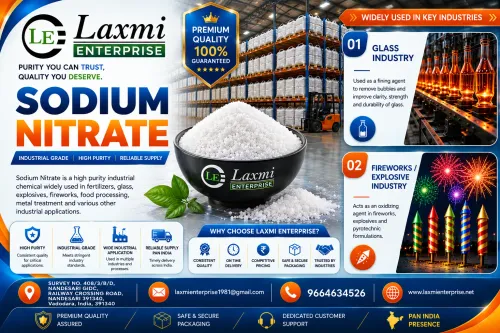
Sodium Nitrate is one of the materials used in selected glass manufacturing processes. Production engineers expect it to perform consistently so that furnace conditions remain predictable and manufacturing continues without avoidable interruptions.
Why Furnace Stability Is Important
A glass furnace is designed to operate under carefully controlled conditions.
Raw materials are charged according to planned formulations.
Temperature is monitored throughout production.
Fuel consumption is controlled.
Finished glass is inspected continuously.
When these conditions remain stable, manufacturers are able to produce glass with consistent quality while improving production efficiency.
Maintaining this stability requires dependable raw materials supplied according to planned schedules.
Production Planning Begins Before Manufacturing
Many people think production begins when raw materials enter the furnace.
In reality, successful production starts much earlier.
Purchase departments estimate future requirements.
Warehouse teams maintain inventory.
Quality departments verify incoming materials.
Production engineers prepare manufacturing schedules.
Reliable suppliers become part of this planning process because consistent deliveries allow manufacturers to operate with confidence.
Why Consistent Raw Materials Matter
Glass manufacturers develop production parameters after extensive operational experience.
Once these parameters have been established, production teams prefer to avoid unnecessary changes.
Consistent Sodium Nitrate helps maintain predictable manufacturing conditions because operators become familiar with how the material performs over time.
This reduces unnecessary adjustments and supports smoother production.
Managing Inventory Efficiently
Continuous manufacturing requires continuous material availability.
Running out of an important raw material can place significant pressure on production planning.
For this reason, many manufacturers prepare monthly or quarterly procurement schedules instead of relying on emergency purchasing.
Organized inventory management allows production to continue without unnecessary interruptions while improving warehouse efficiency.
Packaging Makes a Difference
Industrial packaging is more important than many buyers realize.
Well packed material is easier to transport.
Warehouse handling becomes more efficient.
Storage becomes more organized.
Packaging damage during transportation is reduced.
Manufacturers generally prefer suppliers who consistently provide strong packaging because it simplifies receiving and warehouse operations.
Communication Between Supplier and Customer
Successful manufacturing depends on communication.
Production schedules sometimes change.
Customer demand may increase unexpectedly.
Transport conditions may require adjustments.
When suppliers communicate clearly and respond quickly, manufacturers can plan more effectively.
Professional communication often becomes one of the strongest reasons customers continue working with the same supplier for many years.
Looking Beyond Price
Every procurement department aims to purchase competitively.
However, experienced buyers understand that the overall value of a supplier cannot be measured only by comparing quotations.
Reliable deliveries.
Consistent quality.
Professional documentation.
Responsive communication.
Organized logistics.
These factors contribute directly to manufacturing efficiency and frequently provide greater long term value than a small difference in purchase price.
Building Long Term Manufacturing Partnerships
Many successful glass manufacturers maintain long standing relationships with trusted suppliers.
These partnerships develop over time.
The supplier gains a better understanding of production requirements.
The customer gains confidence in product quality and delivery performance.
Planning becomes easier for both companies.
This cooperation creates operational stability that benefits everyone involved.
Final Thoughts
Glass manufacturing depends on discipline, planning and consistency.
Reliable raw materials help production teams maintain established operating conditions while supporting efficient furnace performance.
Manufacturers who choose dependable Sodium Nitrate suppliers are not simply purchasing a chemical.
They are investing in production stability, predictable manufacturing and long term operational success.
Frequently Asked Questions
What is the role of Sodium Nitrate in glass manufacturing
Sodium Nitrate is used in selected glass manufacturing processes where consistent raw material quality supports stable production and dependable furnace operation.
Why is consistency important in glass production
Consistent raw materials help manufacturers maintain established production conditions and reduce unnecessary process adjustments.
Why do glass manufacturers prefer long term suppliers
Long term suppliers improve planning, communication, delivery reliability and production confidence.
Can inconsistent raw materials affect manufacturing
Yes. Variations in raw material quality may require additional monitoring, production adjustments or quality investigations depending on the manufacturing process.
How should Sodium Nitrate be stored inside a glass manufacturing plant
It should be stored in a clean, dry and well organized warehouse with packaging kept sealed until required for production.
What packaging is commonly supplied
Industrial customers generally purchase Sodium Nitrate in twenty five kilogram bags, fifty kilogram bags, one thousand kilogram jumbo bags or bulk quantities according to production requirements.
Can bulk deliveries be arranged
Yes. Supply schedules can be planned according to customer consumption and manufacturing requirements.
What should procurement managers evaluate before approving a supplier
Product consistency, delivery reliability, packaging quality, documentation, inventory availability and customer support should all be considered.
Does regular supplier communication improve production planning
Yes. Clear communication allows manufacturers to plan inventory, deliveries and production schedules more effectively.
Why do manufacturers choose Laxmi Enterprise
Manufacturers choose Laxmi Enterprise because of consistent product quality, dependable deliveries, professional service and long term commitment to supporting industrial manufacturing.
## About Laxmi Enterprise
Laxmi Enterprise is a trusted manufacturer, supplier and distributor of industrial chemicals based in Nandesari GIDC, Vadodara, Gujarat. We supply Sodium Nitrate, Sodium Sulphate, Sodium Acetate, Tri Sodium Phosphate and other industrial chemicals to manufacturers across glass, engineering, specialty chemicals, ceramics, heat treatment, paper, textile, construction, water treatment and allied industries throughout India.
Our commitment is to deliver reliable product quality, dependable logistics and responsive customer support that helps customers maintain efficient manufacturing and long term business growth.