Sodium Acetate in Mineral Premixes & Feed Concentrates
Micro-Ingredient Blending, Manufacturing Science, Quality Assurance, Feed Safety, Traceability & Commercial Premix Production
Mineral premixes and feed concentrates form the foundation of modern commercial animal nutrition. Although they represent only a small percentage of the final feed formulation, they are among the most critical components because they distribute vitamins, minerals, trace elements, amino acids, functional ingredients, and other micro-ingredients uniformly throughout every batch of feed.
Unlike commodity feed ingredients, premix manufacturing requires exceptional precision. Even minor variations in ingredient quality, particle size, density, flowability, or blending performance can affect product uniformity and manufacturing efficiency.
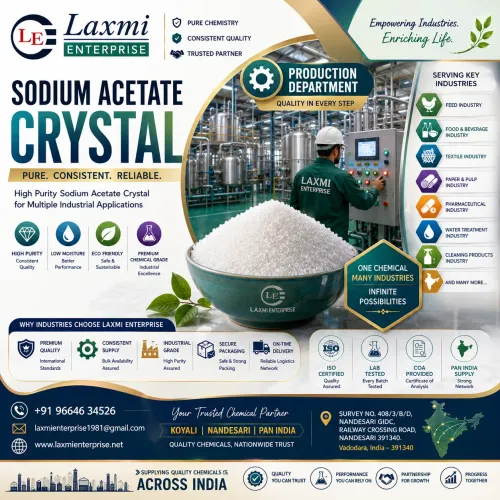
Feed-grade Sodium Acetate may be evaluated in selected mineral premixes and feed concentrate formulations because of its functional properties. Depending on formulation objectives and applicable regulations, it may contribute to buffering systems, formulation consistency, ingredient compatibility, and manufacturing stability. Its use should always be determined by qualified animal nutritionists and comply with applicable feed regulations.
This article explains the science of premix manufacturing, ingredient selection, blending technology, quality assurance, supplier qualification, and the factors that determine consistent commercial production.
What Is a Mineral Premix?
A mineral premix is a carefully blended combination of micro-ingredients designed to be added to compound feed in controlled quantities.
Typical premixes may include:
Macro minerals
Trace minerals
Vitamins
Amino acids
Organic acids
Functional feed ingredients
Carriers
Processing aids (where appropriate)
Each ingredient is selected based on nutritional objectives and manufacturing compatibility.
What Is a Feed Concentrate?
A feed concentrate contains concentrated nutritional components that are later mixed with grains or other raw materials to produce complete animal feed.
Feed concentrates are commonly produced for:
Poultry
Dairy cattle
Beef cattle
Swine
Sheep
Goats
Aquaculture
Pet food
Specialty livestock
Because concentrates are diluted into large feed batches, ingredient accuracy is essential.
Why Uniform Blending Matters
Uniform distribution is one of the most important quality indicators in premix manufacturing.
Manufacturers aim to ensure that every kilogram of finished feed contains the intended proportion of each approved ingredient.
Poor blending may result in:
Product inconsistency
Feed quality variation
Manufacturing inefficiency
Increased quality investigations
Customer complaints
Uniformity depends on ingredient characteristics, equipment performance, and validated manufacturing procedures.
Feed Engineering Insight
Premix manufacturing is often described as 'precision nutrition engineering.' The objective is not simply to mix ingredients together but to distribute every micro-ingredient consistently throughout the entire production batch.
Where Sodium Acetate Fits
Feed-grade Sodium Acetate may be evaluated for inclusion in selected premix or concentrate formulations because of its functional properties.
Depending on the formulation, it may contribute to:
Buffering systems
Manufacturing consistency
Ingredient compatibility
Stable formulation performance
Reliable processing characteristics
Its role should always be assessed as part of the complete formulation developed by qualified animal nutritionists.
The Science of Micro-Ingredient Blending
Commercial premix plants often handle ingredients that represent less than 1% of the total formulation.
Achieving uniform distribution requires attention to:
Particle Size
Ingredients with similar particle sizes generally blend more consistently.
Bulk Density
Differences in density may influence ingredient segregation during handling.
Flowability
Good flow characteristics support accurate dosing and efficient processing.
Moisture Content
Excess moisture may reduce handling efficiency and influence storage stability.
Mixing Time
Both under-mixing and excessive mixing can reduce blend uniformity.
Manufacturers validate mixing procedures through quality testing rather than assumptions.
Manufacturing Process
Commercial premix production generally follows these stages:
Raw material receiving
Incoming quality inspection
Ingredient identification
Precision weighing
Pre-blending of micro-ingredients (where required)
Main blending
Blend uniformity verification
Packaging
Warehouse storage
Distribution
Every stage is documented within the quality management system.
Engineering Insight
Modern premix plants rely on automated weighing systems, validated mixing sequences, and standardized operating procedures to minimize human error and improve production consistency.
Quality Standards
Professional premix manufacturers establish specifications covering:
Product identity
Physical appearance
Moisture
Particle characteristics
Packaging
Batch traceability
Documentation
Storage recommendations
Incoming materials are verified before production begins.
Supplier Qualification
Manufacturers commonly assess suppliers based on:
Product consistency
Manufacturing capability
Technical documentation
Batch reliability
Traceability
Packaging quality
Delivery performance
Technical support
Long-term supplier partnerships improve manufacturing stability.
Procurement Insight
In premix manufacturing, consistency often delivers greater value than low purchase cost. A reliable supplier reduces production interruptions, minimizes quality investigations, and supports long-term customer confidence.
Incoming Quality Control
Before ingredients enter production, quality teams typically perform:
Documentation Review
Including:
Certificate of Analysis (COA)
Product specification
Batch number
Supplier documentation
Packaging Inspection
Checking:
Package integrity
Moisture protection
Label accuracy
Physical condition
Identity Verification
Confirming that incoming material matches the approved purchase specification.
Storage Verification
Ensuring materials have been transported and stored correctly before use.
Blend Uniformity Testing
One of the defining characteristics of professional premix manufacturing is verification of blend uniformity.
Manufacturers commonly evaluate:
Mixing consistency
Process repeatability
Sampling procedures
Batch documentation
Quality records
Testing methods should be scientifically validated and consistently applied.
Laboratory Insight
Representative sampling is just as important as laboratory analysis. Even accurate analytical methods cannot compensate for poor sampling practices.
Packaging & Storage
Feed-grade Sodium Acetate should generally be:
Stored in a clean and dry warehouse.
Protected from moisture.
Kept in original sealed packaging.
Managed using inventory rotation procedures.
Handled according to the manufacturer's recommendations.
Traceability
Complete traceability connects:
Raw material supplier
Incoming batch
Production records
Finished premix batch
Customer delivery
Traceability supports quality assurance, feed safety, and regulatory compliance.
Feed Safety & Regulatory Compliance
Premix manufacturers should ensure that ingredients:
Meet applicable feed regulations.
Are appropriate for the intended application.
Are supported by complete documentation.
Are used according to approved formulations.
International suppliers should also verify export-market regulatory requirements.
Compliance Insight
Regulatory requirements vary between countries. Manufacturers should periodically review applicable feed regulations and maintain updated technical documentation for all approved ingredients.
Sustainability
Modern premix manufacturers increasingly evaluate suppliers based on:
Manufacturing consistency
Supply reliability
Packaging efficiency
Responsible sourcing
Waste reduction
Environmental performance
Reducing ingredient variability also reduces manufacturing waste and improves resource efficiency.
Illustrative Industrial Example
A mineral premix manufacturer observes that laboratory uniformity results vary between production batches despite using the same mixing equipment.
A detailed investigation reveals that one incoming ingredient exhibits greater variability in particle size than previously recognized.
After tightening supplier specifications and introducing additional incoming quality checks, blend uniformity improves, production becomes more predictable, and customer complaints decrease.
The investigation demonstrates that consistent raw material quality is essential for precision premix manufacturing.
Common Manufacturing Challenges
Challenge Possible Cause Business Impact Recommended Action
Blend inconsistency Variable raw materials Product variability Strengthen supplier qualification
Ingredient segregation Particle size or density differences Reduced uniformity Optimize formulation and blending procedures
Documentation gaps Incomplete records Audit observations Standardize document management
Packaging damage Warehouse handling Reduced storage stability Improve packaging and storage controls
Supply interruptions Procurement planning Production delays Develop qualified secondary suppliers
Best Practices for Premix Manufacturers
Leading manufacturers typically:
Purchase ingredients from qualified suppliers.
Review Certificates of Analysis before production.
Verify incoming ingredients through documented inspection procedures.
Validate blend uniformity.
Maintain complete traceability.
Store ingredients according to manufacturer recommendations.
Monitor supplier performance continuously.
Best Practices for Procurement Teams
Before selecting a Sodium Acetate supplier, ask:
Is the product manufactured as feed-grade Sodium Acetate?
Is a Certificate of Analysis provided for every batch?
How is batch consistency demonstrated?
What quality management systems support production?
How is traceability maintained?
What packaging protects the material during storage and transport?
Can the supplier provide long-term technical and commercial support?
Key Takeaways
Mineral premix manufacturing requires precision, consistency, and rigorous quality management. Feed-grade Sodium Acetate may be considered in selected formulations because of its functional properties and manufacturing consistency, but successful premix production depends on validated formulations, reliable suppliers, effective blending technology, complete traceability, and disciplined quality assurance. Companies that invest in these systems are better positioned to deliver consistent products that support modern animal nutrition programs.
Frequently Asked Questions (FAQ)
1. What is a mineral premix?
A mineral premix is a precisely blended mixture of vitamins, minerals, trace elements, and other approved micro-ingredients designed to be incorporated into complete animal feed.
2. What is the difference between a premix and a feed concentrate?
A premix primarily supplies micro-ingredients in small inclusion rates, whereas a feed concentrate contains a broader range of concentrated nutritional components that are later combined with grains or other feed materials to produce complete feed.
3. Is industrial-grade Sodium Acetate suitable for premix manufacturing?
No. Only feed-grade Sodium Acetate that complies with applicable feed regulations and quality specifications should be considered for approved feed applications.
4. Why is blend uniformity important?
Uniform blending helps ensure that every portion of the finished feed contains the intended distribution of approved ingredients, supporting consistent manufacturing and product quality.
5. Why do manufacturers evaluate particle size?
Particle size influences blending efficiency, segregation risk, and overall manufacturing consistency. Similar physical characteristics often support better blend performance.
6. What quality documents should accompany each shipment?
Manufacturers commonly review the Certificate of Analysis (COA), product specification, batch identification, and supporting technical documentation.
7. Why is supplier qualification important?
Qualified suppliers help ensure consistent ingredient quality, reliable documentation, dependable deliveries, and stable manufacturing performance.
8. How should feed-grade Sodium Acetate be stored?
Store it in a clean, dry environment, protected from moisture, in sealed packaging, and according to the manufacturer's recommendations.
9. What should procurement teams evaluate besides price?
Evaluate product consistency, documentation, traceability, quality systems, technical support, packaging quality, manufacturing capability, and long-term supply reliability.
10. Can changing suppliers affect blend uniformity?
Yes. Differences in particle size, bulk density, moisture, or other physical characteristics may influence blending performance. New suppliers should be technically evaluated before commercial approval.
11. Why is traceability important in premix manufacturing?
Traceability connects incoming raw materials with finished production batches, supporting quality investigations, regulatory compliance, and customer confidence.
12. What defines a reliable Sodium Acetate supplier for premix manufacturers?
A reliable supplier consistently provides feed-grade material meeting agreed specifications, supplies complete documentation, maintains effective traceability, delivers reliably, and offers strong technical support.
Expert Conclusion
Mineral premix manufacturing is one of the most precision-driven areas of the feed industry. Success depends on accurate formulation, validated blending, consistent raw materials, disciplined quality systems, and reliable supplier partnerships. Feed-grade Sodium Acetate may have a role in selected formulations where scientifically justified and permitted by applicable regulations, but long-term manufacturing excellence is achieved through integrated quality management rather than any single ingredient. Manufacturers that focus on precision, traceability, and continuous improvement are best positioned to supply high-quality premixes to the global animal nutrition market.
Keywords