How to Buy Sodium Sulphate in India: A Complete Procurement Guide for Industrial Buyers, Purchase Managers, and Manufacturers
Buy Sodium Sulphate India
Sodium Sulphate Bulk Purchase
Sodium Sulphate Price India
Sodium Sulphate Supplier Near Me
Industrial Sodium Sulphate Supplier
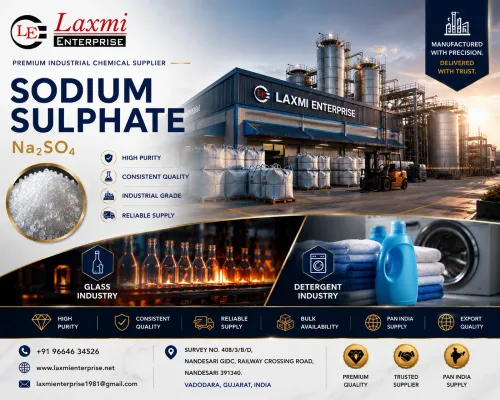
Sodium Sulphate for Detergent Industry
Sodium Sulphate for Glass Industry
Technical Grade Sodium Sulphate Supplier
Sodium Sulphate Dealer Gujarat
Sodium Sulphate Wholesaler India
Introduction
Purchasing sodium sulphate for industrial use is not simply about finding a supplier with the lowest quotation. For manufacturers, every raw material directly affects production efficiency, product consistency, inventory planning, and customer satisfaction.
A procurement decision that appears economical in the short term can become expensive if it leads to inconsistent quality, delayed deliveries, production interruptions, or increased rejection rates.
Today's purchase managers evaluate suppliers using a combination of technical, commercial, and operational criteria. Beyond price, they consider laboratory documentation, logistics capability, inventory availability, packaging quality, after-sales support, and the supplier's ability to maintain consistent quality over time.
This guide explains how industrial buyers in India can make informed purchasing decisions while reducing supply-chain risks and building long-term relationships with dependable sodium sulphate suppliers.
Step 1: Define Your Industrial Application
The first step is understanding how the sodium sulphate will be used.
Different industries often prioritize different product characteristics.
For example:
Detergent Manufacturing
Typical considerations include:
Consistent particle size
Free-flowing material
Reliable moisture control
Batch consistency
Packaging suited for bulk handling
Glass Manufacturing
Typical considerations include:
Product consistency
Controlled impurity levels
Reliable documentation
Stable long-term supply
Textile Processing
Common priorities include:
Consistent dissolution characteristics
Reliable batch-to-batch quality
Technical documentation
Timely deliveries
Paper and Pulp
Procurement teams may evaluate:
Consistent specifications
Packaging quality
Inventory availability
Delivery reliability
Understanding the application helps buyers prepare an accurate purchase specification and communicate requirements clearly to suppliers.
Step 2: Select the Right Product Grade
Industrial buyers should confirm the required grade before requesting quotations.
Common commercial descriptions include:
Technical Grade
Industrial Grade
Commercial Grade
Customer-Specific Grade
Rather than assuming one grade suits every application, buyers should discuss their production process with the supplier to identify the most appropriate option.
Step 3: Request Technical Documentation
Before placing a purchase order, buyers should request essential technical documents.
These commonly include:
Certificate of Analysis (COA)
Confirms the laboratory results for the supplied batch.
Technical Data Sheet (TDS)
Provides general technical information, product characteristics, and recommended handling guidance.
Safety Data Sheet (SDS)
Supports safe handling, storage, transportation, and workplace safety.
Product Specification
Defines the agreed quality requirements between the buyer and supplier.
Reviewing documentation before purchase helps reduce misunderstandings and supports smoother incoming inspection.
Step 4: Evaluate the Supplier
A reliable supplier offers more than product availability.
Important evaluation criteria include:
Product Quality
Batch consistency
Quality documentation
Traceability
Laboratory support
Inventory Availability
Can the supplier support your regular production schedule?
Logistics Capability
Consider:
Delivery lead times
Packaging quality
Transportation coordination
Geographic reach across India
Technical Support
A supplier that can answer technical questions and provide documentation often adds long-term value.
Business Stability
Long-term supply relationships are easier to build with suppliers that demonstrate consistent service, organized documentation, and responsive communication.
Step 5: Understand What Influences Sodium Sulphate Pricing
Instead of focusing only on the quoted price, buyers should understand the factors that typically influence the total cost of procurement.
These may include:
Product grade
Order quantity
Packaging type
Delivery location
Transportation costs
Inventory availability
Documentation requirements
Market supply and demand
Freight conditions
Long-term supply agreements
Evaluating these factors helps buyers compare quotations more effectively.
Important: Market prices change over time. Procurement decisions should be based on current quotations and the overall value offered by the supplier rather than historical price references.
Common Buying Mistakes
Many procurement challenges arise from avoidable mistakes.
Examples include:
Choosing Only the Lowest Price
The lowest quotation does not always represent the lowest overall procurement cost.
Ignoring Documentation
Incomplete or missing technical documentation can delay incoming inspection and production approval.
Not Confirming Inventory
Always confirm stock availability and expected delivery schedules before finalizing large purchase orders.
Overlooking Packaging Requirements
Packaging should be suitable for transportation, storage, and handling within your facility.
Failing to Define Specifications
Clear product specifications reduce misunderstandings and improve supplier performance.
Frequently Asked Questions
How do I choose a sodium sulphate supplier in India?
Evaluate product quality, documentation, delivery capability, inventory availability, technical support, and consistency—not price alone.
What documents should I request before placing an order?
Most industrial buyers request a COA, TDS, SDS, and a product specification sheet before approving a supplier.
Does the cheapest supplier always offer the best value?
Not necessarily. Total procurement value includes quality consistency, reliable deliveries, documentation, technical support, and long-term supplier performance.
Should I purchase from a manufacturer or a distributor?
The best option depends on order volume, delivery requirements, geographic location, and the level of technical support you need.
What information should I provide when requesting a quotation?
Providing details such as your application, required grade, quantity, packaging preference, delivery location, and expected delivery schedule helps suppliers prepare accurate quotations.
Keywords