Sodium Acetate in Reactive Dyeing of Cotton
Complete Technical Guide to Buffer Systems, pH Control, Dye Fixation, Process Optimization, Quality Control, Troubleshooting & Industrial Best Practices
Reactive dyeing is the most widely used dyeing process for cotton fabrics because it produces brilliant shades, excellent wash fastness, and outstanding color durability. It is extensively used for apparel fabrics, home textiles, towels, denim, knitwear, woven fabrics, medical textiles, and technical textiles.
Despite its advantages, reactive dyeing is also one of the most technically demanding textile processes. Even small changes in pH, temperature, electrolyte concentration, dye quality, liquor ratio, or chemical dosing can affect dye fixation, shade reproducibility, and production efficiency.
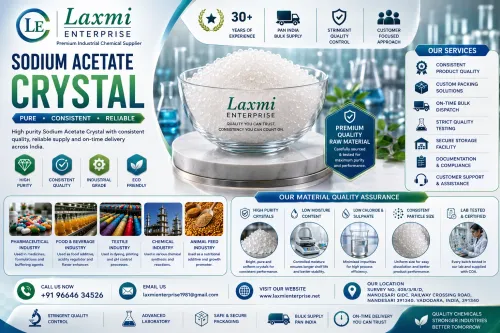
One of the key process chemicals used in many reactive dyeing systems is industrial-grade Sodium Acetate, which functions primarily as a buffering agent. Rather than directly fixing the dye to the fiber, Sodium Acetate helps maintain a more stable pH environment during specific stages of the dyeing process, reducing process variability and supporting consistent color development.
This comprehensive guide explains the chemistry behind reactive dyeing, the role of Sodium Acetate, laboratory testing methods, common process challenges, quality assurance procedures, procurement considerations, and best practices followed by leading textile manufacturers.
What Is Reactive Dyeing?
Reactive dyeing is a textile coloration process in which reactive dyes form a chemical (covalent) bond with cellulose fibers, such as cotton, viscose, modal, lyocell, and linen.
Unlike direct or vat dyes, reactive dyes become chemically attached to the fiber, resulting in excellent color fastness when the process is properly controlled.
Reactive dyeing is commonly used for:
Cotton woven fabrics
Cotton knitted fabrics
Terry towels
Denim garments
Bed sheets
Medical textiles
Fashion apparel
Home furnishing fabrics
Textile Science Insight
Reactive dyes are unique because they chemically bond with cellulose fibers instead of merely depositing color on the fabric surface. This chemical bonding is one reason reactive-dyed cotton exhibits excellent wash durability when processed correctly.
Why pH Is Critical in Reactive Dyeing
Among all dyeing parameters, pH control is one of the most important.
The dye reaction depends on maintaining appropriate chemical conditions throughout the dyeing cycle.
Improper pH can contribute to:
Uneven dye uptake
Shade variation
Reduced dye fixation
Increased hydrolysis of reactive dyes
Additional washing requirements
Higher production costs
Maintaining a controlled pH helps improve process consistency.
Understanding Buffer Systems
A buffer is a chemical system that helps resist rapid changes in pH when acids or alkalis are added.
In textile dyeing, buffer systems help create a more controlled chemical environment during specific process stages.
Industrial-grade Sodium Acetate is commonly used as part of such buffering systems because it helps moderate pH fluctuations under appropriate process conditions.
Engineering Insight
A buffer does not lock the pH at a single value. Instead, it reduces the speed and magnitude of pH changes, allowing dyeing conditions to remain more stable and predictable.
Why Sodium Acetate Is Used
Textile manufacturers commonly select Sodium Acetate because it offers:
Reliable buffering capacity
Good water solubility
Consistent industrial quality
Easy handling
Good compatibility with many dyeing systems
Stable storage characteristics
The exact formulation and dosage depend on the dye manufacturer’s recommendations and the textile mill’s validated process.
Typical Reactive Dyeing Workflow
A commercial cotton dyeing process generally includes:
1. Fabric Preparation
The fabric is prepared to remove impurities and improve dye penetration.
Typical pretreatment may include:
Desizing
Scouring
Bleaching
Neutralization
Washing
2. Dye Bath Preparation
The dye solution is prepared according to the approved recipe.
Process parameters generally include:
Liquor ratio
Water quality
Temperature
Dye concentration
Auxiliary chemicals
Buffering system
3. Salt Addition
Depending on the dye system, electrolytes such as sodium chloride or sodium sulfate may be used to support dye exhaustion.
4. Controlled Chemical Addition
Auxiliary chemicals are introduced according to validated operating procedures.
Controlled dosing helps improve repeatability.
5. Dye Fixation
The dye reacts with cellulose under controlled processing conditions.
Process variables are continuously monitored.
6. Washing
Unfixed dye is removed using multiple washing stages.
7. Soaping
Proper soaping improves wash fastness by removing hydrolyzed dye remaining on the fabric surface.
8. Final Rinsing
Residual chemicals are removed before drying.
9. Drying & Finishing
The finished fabric proceeds to drying and any required finishing operations.
Water Quality Matters
Many dye houses focus on dyes while overlooking water quality.
Important parameters include:
Hardness
Conductivity
pH
Total dissolved solids (TDS)
Iron content
Chloride content
Poor water quality can influence dye reproducibility and process stability.
Laboratory Insight
Many export-oriented textile mills analyze incoming water daily because consistent water quality contributes directly to consistent dyeing performance.
Laboratory Quality Control
Professional textile laboratories commonly evaluate:
Incoming Sodium Acetate
Appearance
Purity
Solubility
Moisture
Batch consistency
Dye Quality
Shade consistency
Solubility
Batch reproducibility
Finished Fabric
Shade accuracy
Wash fastness
Rubbing fastness
Perspiration fastness
Light fastness
Color uniformity
Common Dyeing Problems
Shade Variation
Possible contributing factors include:
Inconsistent pH
Variable chemical quality
Poor mixing
Uneven temperature distribution
Low Dye Fixation
May result from:
Improper process control
Incomplete chemical addition
Recipe deviations
Color Difference Between Batches
Potential causes include:
Water quality variation
Chemical inconsistency
Dye lot variation
Equipment differences
Uneven Dyeing
May be associated with:
Inadequate circulation
Fabric preparation issues
Process inconsistency
Troubleshooting Guide
Problem Possible Cause Recommended Investigation
Shade difference pH variation Verify buffer system and process controls
Poor reproducibility Chemical inconsistency Review incoming raw materials
Excess re-dyeing Recipe variation Standardize operating procedures
Uneven shades Mixing or circulation issues Evaluate equipment performance
Customer rejection Batch inconsistency Strengthen laboratory quality control
Quality Parameters Buyers Should Evaluate
Before approving Sodium Acetate for production, textile mills commonly review:
Purity
Appearance
Water solubility
Moisture content
Batch consistency
Packaging quality
Certificate of Analysis (COA)
Technical Data Sheet (TDS)
Supplier Qualification
Professional textile companies typically evaluate suppliers based on:
Manufacturing capability
Consistent product quality
Technical documentation
Batch traceability
Packaging quality
Delivery reliability
Technical support
Commercial stability
Reliable suppliers contribute to reproducible manufacturing.
Procurement Insight
One inconsistent batch of processing chemicals can lead to costly re-dyeing, production delays, increased water and energy consumption, and customer complaints. Consistency often provides greater value than the lowest purchase price.
Packaging & Storage
Industrial Sodium Acetate is commonly supplied in:
25 kg HDPE bags with liner
50 kg bags
Jumbo bags (500–1000 kg)
Storage recommendations:
Keep in a dry warehouse.
Protect from moisture.
Store in original sealed packaging.
Avoid contamination.
Follow FIFO inventory practices.
Traceability
A complete traceability system links:
Supplier
Batch number
Incoming inspection
Production lot
Finished fabric
Customer shipment
Traceability supports ISO 9001 quality systems and customer audits.
Sustainability in Textile Dyeing
Improved process consistency contributes to:
Lower water consumption
Reduced chemical waste
Lower steam consumption
Fewer re-dye operations
Reduced wastewater generation
Better production efficiency
Consistent chemicals support more sustainable textile manufacturing.
Sustainability Insight
Reducing one unnecessary re-dye cycle saves not only dyes and auxiliaries but also significant quantities of water, energy, labor, and production time.
Industrial Case Study
A large export-oriented cotton dye house experiences recurring shade variation in navy blue reactive dyeing.
After reviewing equipment calibration, dye quality, and operator procedures, engineers identify inconsistent buffering chemical quality as one contributing factor.
The company:
Qualifies a single approved Sodium Acetate supplier.
Strengthens incoming laboratory inspections.
Standardizes process recipes.
Implements continuous pH monitoring.
Results achieved:
Improved shade reproducibility.
Reduced re-dye frequency.
Lower chemical consumption.
Improved customer acceptance.
Reduced production costs.
This illustrates how supplier consistency and process discipline can improve textile manufacturing outcomes.
Best Practices for Textile Mills
Leading textile manufacturers typically:
Purchase chemicals from qualified suppliers.
Verify every batch with a COA.
Perform incoming laboratory testing.
Monitor pH throughout dyeing.
Maintain standardized dye recipes.
Calibrate laboratory equipment regularly.
Audit supplier performance periodically.
Frequently Asked Questions (FAQ)
1. What is the primary function of Sodium Acetate in reactive dyeing?
Its primary function is to act as a buffering agent, helping maintain more stable pH conditions during specific stages of the dyeing process.
2. Does Sodium Acetate fix reactive dyes to cotton?
No. Dye fixation occurs through the chemical reaction between the reactive dye and the cellulose fiber under controlled processing conditions. Sodium Acetate supports the process by contributing to pH stability rather than acting as the fixing agent itself.
3. Why is pH control important?
pH influences dye reaction rates, dye fixation, reproducibility, and final shade consistency. Stable pH contributes to more predictable processing.
4. Can poor-quality Sodium Acetate affect dyeing?
Differences in purity, consistency, or handling characteristics may influence process repeatability. Textile mills typically evaluate incoming chemicals before production.
5. What quality documents should accompany each shipment?
A Certificate of Analysis (COA), Technical Data Sheet (TDS), batch identification, and product specifications are commonly reviewed.
6. Why is water quality important?
Water chemistry can affect dye behavior, chemical reactions, and process consistency. Many mills routinely monitor hardness, conductivity, pH, and dissolved solids.
7. How should Sodium Acetate be stored?
Store it in sealed packaging in a clean, dry warehouse, protected from moisture and contamination.
8. What should procurement teams evaluate besides price?
Evaluate product quality, batch consistency, technical documentation, packaging, traceability, delivery reliability, and supplier support.
9. Can changing suppliers affect dyeing consistency?
Yes. Differences in raw material consistency or manufacturing processes may influence dyeing performance. New suppliers should be technically evaluated before routine production.
10. Why is traceability important?
Traceability connects incoming chemicals with production batches, supporting quality investigations, audits, and continuous process improvement.
11. Which textile sectors commonly use Sodium Acetate?
It is used in selected cotton dyeing, yarn dyeing, textile printing, laboratory color matching, and other wet-processing applications where buffering systems are required.
12. What defines a reliable Sodium Acetate supplier?
A reliable supplier consistently delivers product meeting agreed specifications, provides complete technical documentation, maintains batch traceability, offers dependable deliveries, and supports customers with technical expertise.
Expert Conclusion
Reactive dyeing is a precision-controlled chemical process in which process stability is just as important as dye quality. Industrial-grade Sodium Acetate contributes to many reactive dyeing systems by supporting buffering and helping maintain controlled pH conditions during specific process stages. However, achieving consistent textile quality requires much more than selecting the right chemical. Successful dye houses integrate high-quality raw materials, qualified suppliers, disciplined process control, laboratory verification, operator training, and continuous quality improvement. This systems-based approach enables manufacturers to improve shade reproducibility, reduce waste, enhance sustainability, and consistently meet the demanding quality standards of domestic and international textile markets.
Keywords