

Key thermal data (typical values)
Melting point: ≈ 306–308 °C (≈ 579–581 K)
Enthalpy of fusion (latent heat): ≈ 170–190 kJ/kg (≈ 170–190 J/g)
Specific heat capacity (solid, at ~25 °C): ≈ 0.9–1.0 J·g⁻¹·K⁻¹ (≈ 900–1000 J·kg⁻¹·K⁻¹)
Specific heat capacity (molten, near melting): ≈ 1.3–1.6 J·g⁻¹·K⁻¹ (≈ 1300–1600 J·kg⁻¹·K⁻¹)
Thermal conductivity (solid): ≈ 0.4–1.0 W·m⁻¹·K⁻¹ (depends on porosity and temperature)
Thermal conductivity (liquid): ≈ 0.5 W·m⁻¹·K⁻¹ (order of 10⁻¹ W·m⁻¹·K⁻¹)
Decomposition/thermal stability: Stable up to a few hundred °C; on strong heating it can partially reduce to sodium nitrite (NaNO₂) and release oxygen — decomposition/oxidation behaviour becomes significant at higher temperatures (several hundred °C). Exact decomposition onset depends on atmosphere and heating rate.
Useful formulas
If you want heat required to heat and melt a mass
Want exact certified numbers or a calculation?
Tell me:
whether you need solid or molten properties,
which property you need to be precise (e.g., ΔH_fus from a particular source, cp at a specific T, or thermal conductivity), or
a mass and temperature range and I’ll compute the heating energy using the typical values above.
If you need authoritative, up-to-date database values (NIST/CRC/MSDS), I can look them up — I don’t have web access at the moment, so I’d need you to allow me to fetch sources or paste a spec/MSDS and I’ll extract the exact numbers.
. Purpose
Nitrate–nitrite salt baths are molten mixtures of alkali metal nitrates (NaNO₃, KNO₃) and nitrites (NaNO₂, KNO₂) used as heat transfer media in metal heat treatment.
They provide uniform, controllable heating for processes such as:
Tempering
Austempering
Martempering
Nitriding
Bright hardening
• sodium nitrate
• NaNO3
• sodium nitrate CAS 7631-99-4
• sodium nitrate chemical formula
• sodium nitrate properties
• sodium nitrate specification
• sodium nitrate SDS
• sodium nitrate MSDS
Buy Sodium Nitrate
Sodium Nitrate for Sale
Sodium Nitrate Supplier
Sodium Nitrate Manufacturers
Sodium Nitrate Wholesale
Industrial Grade Sodium Nitrate
Food Grade Sodium Nitrate
High Purity Sodium Nitrate
Sodium Nitrate Fertilizer
Nitrogen Fertilizer Supplier
Nitrate-Based Fertilizers
2. Typical Composition
Salt Type Common Components Approx. Ratio Working Temp (°C)
Low-temperature bath NaNO₃ + NaNO₂ 50:50 or 60:40 150–450 °C
Medium-temperature bath NaNO₃ + KNO₃ + NaNO₂ 50:25:25 250–550 °C
High-temperature bath NaNO₃ + KNO₃ 60:40 450–650 °C
NaNO₃ (Sodium nitrate) → raises melting point and stability
KNO₃ (Potassium nitrate) → lowers melting point and viscosity
NaNO₂ (Sodium nitrite) → improves heat transfer, lowers melting point but less stable at high T
3. Thermal Characteristics
Property Typical Range
Melting range 220–250 °C (depending on composition)
Working temperature 150–650 °C
Heat capacity (molten) ~1.3–1.6 J/g·K
Thermal conductivity ~0.5 W/m·K
Density (molten) ~1.8–2.0 g/cm³
The salts offer high heat transfer and uniform heating, minimizing temperature gradients and distortion.
Viscosity is low in molten state → excellent quenching and temperature control.
4. Common Applications
Process Typical Bath Temp (°C) Notes
Tempering 200–400 Produces uniform hardness
Martempering 250–400 Quenching medium to reduce cracking
Austempering 300–400 For bainitic steels
Nitriding / Cyaniding 500–600 Surface hardening, with nitrogen diffusion
5. Decomposition and Safety
Thermal decomposition:
At >600 °C, nitrates → nitrites → oxides and release O₂, NOₓ gases
The released oxygen can oxidize metals or even ignite oils/organic contaminants.
Safety precautions:
Avoid contamination with oil, grease, carbon, or water — explosion risk.
Maintain dry and clean metal parts.
Use stainless steel or nickel bath containers.
Provide good ventilation to remove NOₓ gases.
Regularly analyze and rejuvenate the salt (oxidation causes imbalance between nitrate/nitrite).
6. Regeneration & Maintenance
Over time, nitrite content decreases due to oxidation; the bath becomes more oxidizing.
Add sodium nitrite periodically to restore balance.
Remove slag (oxides) from surface regularly.
Analyze nitrate/nitrite ratio using titration (ferrous ammonium sulfate or permanganate methods).
7. Environmental & Health Considerations
NOₓ gases are toxic — exhaust ventilation is essential.
Avoid discharge of spent salts into drains; neutralize chemically.
Handle nitrates/nitrites as oxidizers (store away from combustibles).
8. Example Bath Composition for Martempering
Component % by Weight
Sodium nitrite (NaNO₂) 40%
Sodium nitrate (NaNO₃) 60%
Melting point: ~220 °C
Usable range: 250–540 °C
Applications: Martempering of tool steels, tempering, austempering.
Food applications
Primary role: preservative/curing agent (indirectly, via conversion to nitrite), color and flavor stabilizer, and inhibitor of certain bacteria (notably Clostridium botulinum when used properly).
Curing salts / meat processing
Historically used for long-cure meats (dry-cured hams, some salamis) because nitrate converts slowly to nitrite by microbial action — useful for long maturation where a sustained nitrite source is needed.
More often used where long ripening/fermentation occurs and immediate nitrite is not desired.
Dosage: depends on product and regulation — manufacturers typically formulate to deliver tens to a few hundred mg/kg (ppm) of available nitrate/nitrite equivalents in the final product. Exact permitted levels vary by jurisdiction and product type.
Note: many modern operations use sodium nitrite (NaNO₂) or pre-made curing mixes (Prague powder, pink salt) for predictable immediate curing; NaNO₃ is used when a slow-release source is desired.
Shelf life and color
Nitrite (from nitrate conversion) helps create and stabilize the characteristic pink/red cured color (nitrosyl-heme complexes) and contributes to cured-meat flavor.
Food safety and health considerations
Nitrosamines: Reaction of nitrite with amines at high temperatures can form nitrosamines (carcinogenic). Manufacturers mitigate this by:
Using ascorbic acid (vitamin C) or erythorbate to inhibit nitrosamine formation.
Controlling nitrite/nitrate levels and processing conditions (pH, temperature).
Regulation: Maximum permitted levels and allowed uses differ by country and product class. Always follow local food-safety regulations and labelling rules.
Labeling: Some jurisdictions require labeling if nitrates/nitrites are used (or have special rules for 'naturally cured' products using celery powder, etc.).
Industrial applications
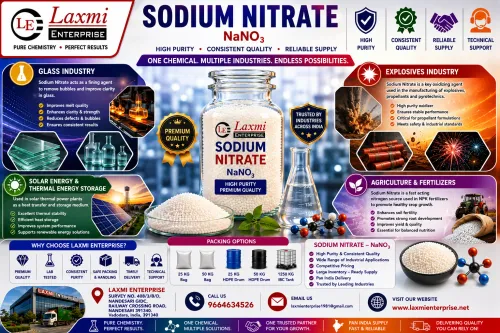
Sodium nitrate is a versatile industrial chemical — major uses include:
Fertilizers
Source of soluble nitrogen for agriculture (particularly in arid regions historically — e.g., Chilean nitrate deposits).
Often blended into NPK fertilizers or used where fast N-release is desired.
Heat-transfer and molten salt baths
Component of nitrate/nitrite salt mixtures used for metal heat treatment and thermal energy storage (solar thermal plants, concentrated solar power) because of favorable melting behavior and heat capacity.
Oxidizer in pyrotechnics and explosives
Used as an oxidizing agent in fireworks, explosives, and propellants (often combined with fuels and binders).
Compared with potassium nitrate, sodium nitrate has similar oxidizing properties but different hygroscopicity and crystal behavior.
Corrosion inhibitor and heat treatment
In some metal finishing and heat-treatment formulations (e.g., bright annealing, salt baths) where controlled oxidizing/reducing environments are needed.
Glass and ceramic manufacture
Fluxing and refining agent in certain glass/ceramic processes.
Laboratory and chemical manufacture
Reagent for nitration reactions, oxidations, and for making other sodium salts (e.g., sodium nitrite through thermal decomposition).
Chemical de-icing (limited)
Less common than chlorides; used in specific formulations because it supplies nitrate rather than chloride.
Preservation/antimicrobial uses outside food
In specific industrial formulations where an oxidizing, antimicrobial component is needed (e.g., some wood treatments), though use is niche.
Typical physical / handling notes (industrial)
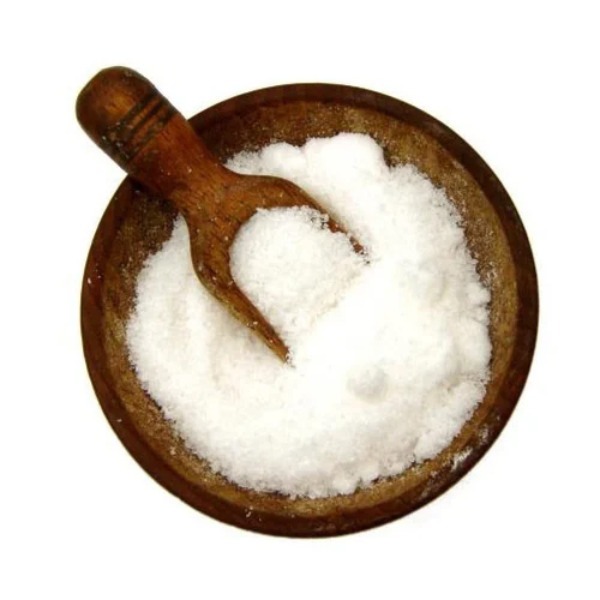
Appearance: white crystalline solid, highly soluble in water.
Hygroscopicity: moderate; store dry in sealed containers away from moisture.
Reactivity: strong oxidizer — keep away from organic materials, reducing agents, oils, and combustibles. Contamination can cause spontaneous ignition or violent reaction.
Decomposition: when heated vigorously or contaminated, can produce nitrogen oxides (NO, NO₂) and oxygen — requires good ventilation.
Materials of construction: store in compatible containers (stainless steels, polyethylene drums); avoid reactive metals where inappropriate.
Safety, environmental, and regulatory highlights
Health risks: ingestion at food-level doses is generally regulated and considered safe when used within legal limits; concentrated exposures (industrial) present inhalation/eye/skin risks and oxidizing hazards.
Environmental: nitrates are water-soluble and can contribute to eutrophication if released to waterways; wastewater controls and proper disposal are required.
MSDS / PPE: use gloves, eye protection, and avoid dust inhalation. Have spill protocols and fire control measures suitable for oxidizers.
Regulatory: permitted uses and maximum residual levels in foods are jurisdiction-specific (EU, USA FDA/USDA, Codex, India FSSAI, etc.). Always check local food safety standards before use in edible products.
Substitutes and alternatives
Sodium nitrite (NaNO₂) — immediate curing action; used where quick nitrite availability is needed.
Potassium nitrate (KNO₃) — similar uses, sometimes preferred for lower hygroscopicity or specific melting behavior in salt baths.
Natural nitrate sources (celery powder, beetroot extract) — used in “naturally cured” formulations but still supply nitrate/nitrite; regulatory treatment varies.
Non-nitrite preservation strategies — refrigeration, modified atmosphere packaging (MAP), high-pressure processing (HPP), or starter cultures — used to reduce reliance on chemical nitrite/nitrate, but they don’t always provide the same color/antimicrobial profile.
Practical recommendations
For food processors: always follow local maximum residue limits (MRLs), use nitrite/nitrate-reducing strategies (ascorbate/erythorbate), and document formulations and testing.
For industrial users: store dry, segregate from organics, use corrosion-resistant equipment, and maintain ventilation and effluent controls.
For waste management: avoid drain disposal; work with a licensed chemical waste handler.
Would you like:
handling, and an example curing calculation?
Or a short table comparing sodium nitrate vs sodium nitrite vs potassium nitrate for specific applications (food, heat baths, pyrotechnics)?