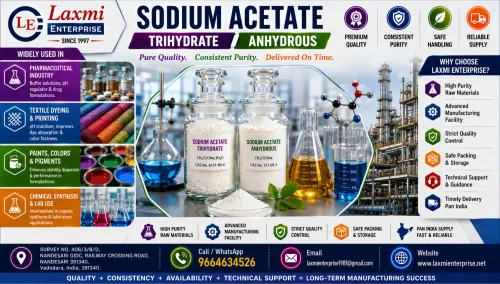


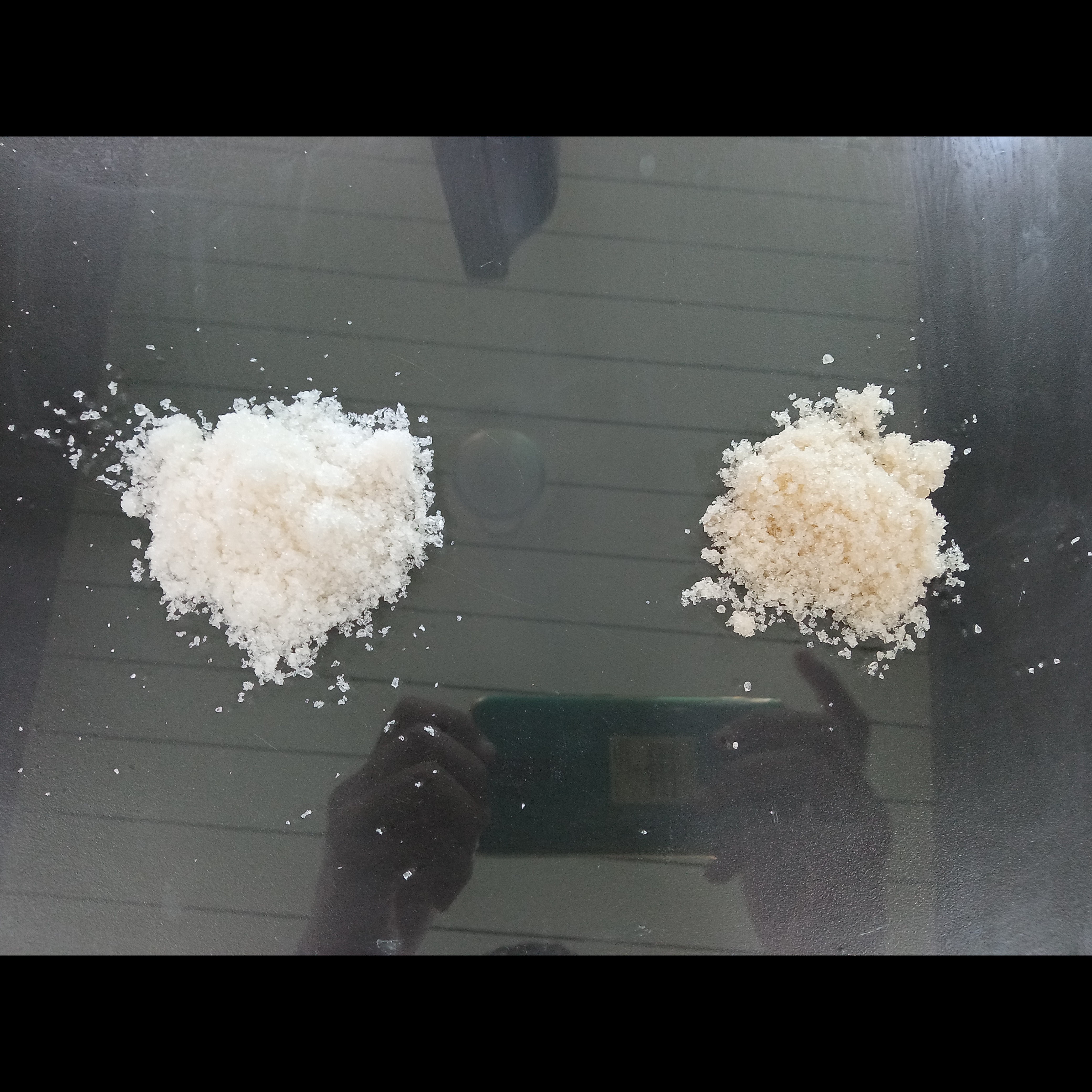
Sodium Acetate in Textile and Detergent Manufacturing
Sodium acetate (CH₃COONa) is a versatile sodium salt of acetic acid, used in various industrial processes due to its buffering, neutralizing, and stabilizing properties. In textile and detergent manufacturing, it serves key functional and process roles that improve product quality, dyeing consistency, and environmental performance.
1. Role of Sodium Acetate in Textile Industry
A. Dyeing Process
pH Buffering Agent:
Sodium acetate maintains a mildly acidic to neutral pH (around 4.5–6.5) during dyeing operations, which is critical for uniform color development.
Acetic Acid Substitute / Buffer Partner:
It’s commonly used along with acetic acid to form an acetate buffer system. This controls the dye bath pH, particularly in reactive, vat, and disperse dyeing processes.
Prevents Color Variation:
Stable pH ensures consistent dye uptake, preventing patchy or uneven coloring on cotton, polyester, and blended fabrics.
Protects Fibers:
Prevents harsh acidic or alkaline conditions that could weaken cellulose fibers or damage synthetic polymers.
B. Finishing and Printing
Used in textile printing pastes to stabilize pH and improve color yield.
Helps in fixing agents for pigments or reactive dyes.
Enhances hand feel and appearance by preventing fiber damage during finishing baths.
C. Desizing and Neutralization
Used to neutralize residual alkali after scouring or bleaching.
Prevents yellowing and improves brightness before dyeing or finishing steps.
2. Role of Sodium Acetate in Detergent Manufacturing
A. pH Buffer and Stabilizer
Maintains optimal pH in liquid and powder detergents to enhance cleaning efficiency and enzyme stability.
Protects surfactants and active ingredients from decomposition under acidic or basic conditions.
Ensures mildness for skin-contact formulations (handwash detergents).
B. Builder / Water Softener Support
Though not a primary builder like sodium tripolyphosphate, sodium acetate helps bind hardness ions (Ca²⁺, Mg²⁺) mildly.
Improves detergency by preventing precipitation of surfactants in hard water.
C. Solubility Enhancer
Enhances solubility of surfactants and perfumes in liquid detergent formulations.
Prevents clouding and phase separation in concentrated liquid detergents.
D. Anti-redeposition Agent
Minimizes redeposition of dirt on fabrics during washing by stabilizing dispersed particles.
3. Typical Concentrations and Uses
Application Purpose Typical Dosage / Concentration
Reactive dyeing bath Buffer with acetic acid 1–3 g/L
Textile printing paste pH stabilizer 0.5–1.0%
Bleaching neutralization Alkali neutralizer 1–2 g/L
Liquid detergent pH buffer / stabilizer 0.5–2%
Powder detergent Process aid / anti-redeposition 0.5–1%
4. Chemical and Physical Properties (for Formulation Reference)
Property Value
Chemical formula CH₃COONa
Molecular weight 82.03 g/mol
Appearance White crystalline powder
Solubility in water Very high
pH (1% solution) ~8–9
Melting point 324 °C (anhydrous)
Hygroscopic Slightly
5. Environmental and Safety Aspects
Biodegradable and environmentally safe.
Non-toxic at typical industrial concentrations.
Can reduce effluent acidity, helping wastewater pH adjustment.
Storage: Keep dry and sealed; sodium acetate absorbs moisture from air.
6. Industrial Benefits Summary
Industry Function Key Benefit
Textile pH control, dye uniformity Improved color fastness & fiber protection
Textile Alkali neutralization Prevents fiber damage and yellowing
Detergent Buffer / stabilizer Enhances enzyme and surfactant performance
Detergent Solubility & formulation aid Prevents separation in
Sodium Acetate — A Multifunctional Industrial Chemical
Chemical Formula: CH₃COONa
Molecular Weight: 82.03 g/mol
Appearance: White crystalline powder or hygroscopic granules
CAS No.: 127-09-3
* Overview
Sodium Acetate is a versatile sodium salt of acetic acid, valued for its buffering, neutralizing, and stabilizing properties across a wide range of industrial applications. It plays a key role in textiles, detergents, tanning, food, pharmaceuticals, and heat treatment industries. Its multifunctionality lies in its ability to control pH, neutralize acids or bases, enhance process stability, and act as a source of acetate ions in various reactions.
1. Key Industrial Applications
A. Textile Industry
Buffering Agent in Dyeing:
Maintains stable pH during dyeing operations, ensuring uniform shade development for cotton, polyester, and blends.
Acetic Acid Substitute:
Used along with or in place of acetic acid to create acetate buffers, preventing fiber damage.
Neutralizer after Bleaching or Scouring:
Neutralizes alkali residues and prevents yellowing.
Printing and Finishing Aid:
Improves color fixation and enhances final fabric softness.
B. Detergent Manufacturing
pH Stabilizer and Buffer:
Maintains ideal pH in liquid and powder detergents for enzyme stability and cleaning efficiency.
Formulation Aid:
Prevents clouding or phase separation in concentrated detergent formulations.
Water Softening Support:
Helps control hardness ions, improving surfactant performance.
Anti-redeposition Agent:
Prevents soil redeposition during washing.
C. Leather Tanning
pH Control Agent:
Regulates the acidity during chrome tanning and retanning processes.
Buffering and Masking Agent:
Helps achieve uniform chrome fixation and prevents over-tanning.
Improves Leather Quality:
Ensures smooth texture and consistent color.
D. Food and Beverage Industry (Food Grade)
pH Regulator and Flavor Enhancer:
Used in food processing as an acidity regulator (E262).
Preservative Function:
Inhibits microbial growth and prolongs shelf life in sauces, bakery items, and dairy products.
Anti-caking Agent:
Prevents clumping in powdered food formulations.
E. Pharmaceutical and Laboratory Use
Buffer Component:
Commonly used in biological and chemical buffer systems.
Electrolyte Source:
Provides sodium and acetate ions in infusion and dialysis solutions.
Intermediate in Synthesis:
Used in the production of acetates and organic intermediates.
F. Heat Treatment Industry (Metallurgical Use)
Carburizing and Heat-Treating Salt Mixtures:
Acts as a component in heat-treatment salts (with sodium nitrate/nitrite) to improve heat transfer and surface hardening uniformity.
Dehydrating and Fluxing Agent:
Enhances the performance of molten-salt baths used for case hardening, tempering, and annealing steels.
2. Chemical and Physical Properties
Property Value / Description
Chemical formula CH₃COONa
Molecular weight 82.03 g/mol
Appearance White crystalline solid
Solubility Freely soluble in water, ethanol
pH (1% solution) 8.0–9.0
Melting point 324 °C (anhydrous)
Bulk density 0.8–0.9 g/cm³
Stability Stable under normal storage; hygroscopic
3. Environmental and Safety Profile
Low toxicity and biodegradable.
Non-corrosive and safe to handle under normal industrial conditions.
Storage: Keep in airtight containers, away from moisture and strong oxidizers.
Handling: Use gloves and eye protection when preparing solutions or handling large quantities.
4. Packaging and Availability
Packaging: 25 kg / 50 kg HDPE bags with inner liner or jumbo bags
Grades Available:
Industrial Grade — for textile, detergent, and tanning industries
Food Grade — conforming to E262 standards
Technical Grade — for heat treatment and general use
5. Key Advantages
Versatile and cost-effective pH control agent
Enhances process consistency and product quality
Environmentally friendly and safe
Compatible with a wide range of formulations and industrial processes
Typical End-Use Industries
Textile Dyeing & Finishing
Detergent & Cleaning Products
Leather Tanning
Food & Beverage Processing
Pharmaceuticals & Biotech
Metal Heat Treatment
Chemical Manufacturing
Would you like me to format this into a ready-to-print Product Data Sheet (PDS) or catalog page (with specification table and branding for Laxmi Enterprise)?
I can make it in PDF or Word format, suitable for your product brochure or website
Sodium Acetate in the Fabric Finishing Industry
Overview
Sodium acetate (CH₃COONa) is widely used in the textile and fabric finishing industry due to its buffering, neutralizing, and dye fixation properties. It helps achieve uniform dyeing, color fastness, and improved fabric texture.
Key Industrial Applications
1. Dye Fixation Agent
Acts as a mild buffering agent during dyeing with reactive dyes, maintaining the pH around 4.5–5.5.
Enhances dye uptake and color fixation on cotton, silk, and blended fabrics.
Prevents color bleeding and improves wash fastness and shade consistency.
2. Fabric Finishing Aid
Used in neutralizing residual alkalinity after scouring and bleaching.
Improves fabric hand feel and ensures better finishing results in post-treatment processes.
Helps prevent fiber damage from acidic or alkaline residues.
3. Buffering Agent in Textile Baths
Stabilizes pH during dyeing and printing, especially in processes using acetic acid.
Provides a controlled acidic environment ideal for high-quality finishes.
Advantages
Eco-friendly and biodegradable.
Non-corrosive and easy to handle.
Compatible with most dyeing auxiliaries.
Economical alternative to other buffering agents.
Common Specifications
Parameter Typical Value
Chemical Formula CH₃COONa·3H₂O
Appearance White crystalline powder
Purity 98–99% min
Solubility Freely soluble in water
pH (5% solution) 7.5–9.0
Packaging & Storage• sodium acetate
sodium acetate anhydrous
sodium acetate trihydrate
sodium acetate buffer
sodium acetate CAS 127-09-3
sodium acetate E262
Available in: 25 / 50 kg HDPE bags with inner liner.
sodium ethanoate
sodium salt of acetic acid
sodium acetic acid
sodium CH3COO
natrii acetas
hot ice (trihydrate)
sodium acetate hydrate
Storage: Keep in a cool, dry place away from moisture.