
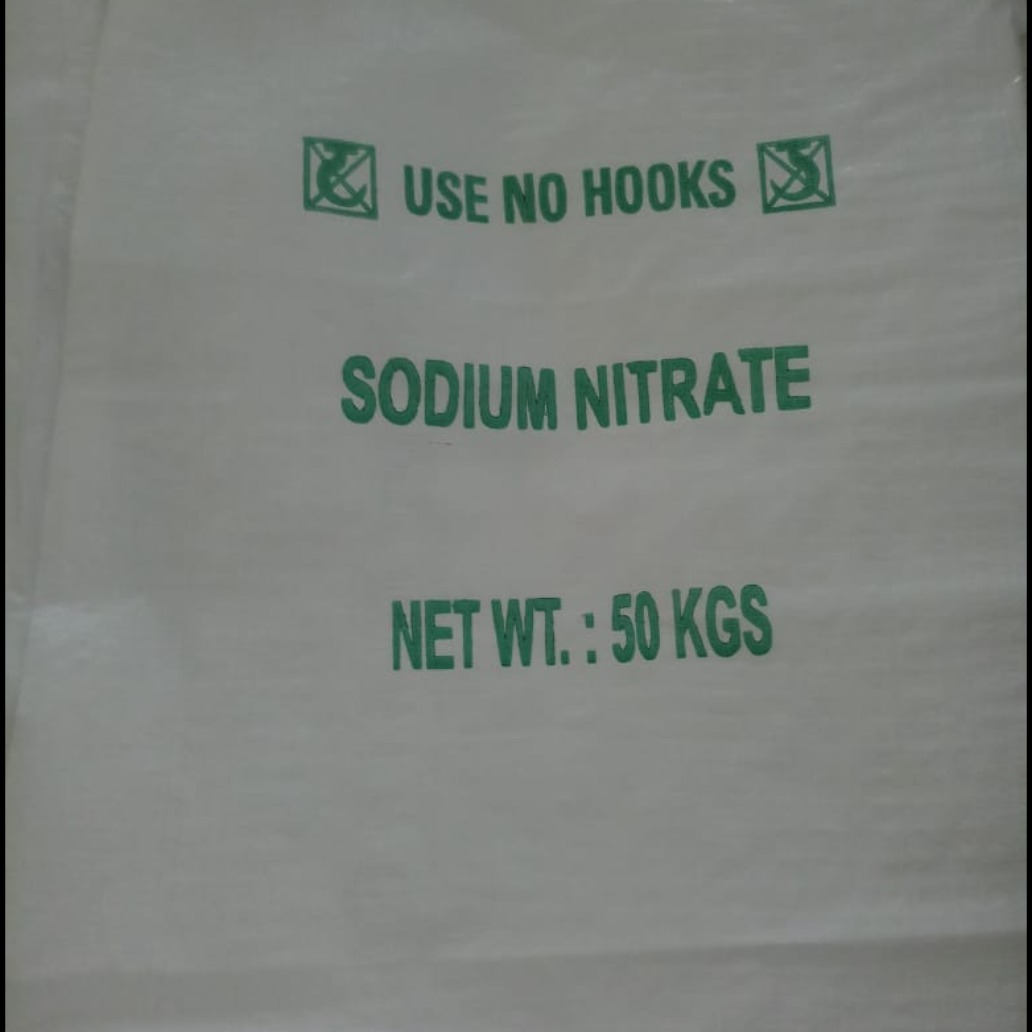
What sodium nitrate is used for in heat treatment
Molten salt baths / salt-quench media — NaNO₃ (often with NaNO₂ and/or KNO₃) is used as the working fluid for salt-bath annealing, hardening, tempering and bright-annealing because it transfers heat quickly and provides a controlled, repeatable thermal environment.
Bright annealing /scale control — the oxidizing but clean salt atmosphere can produce relatively bright surfaces with less scale than open-air anneals.
Rapid, uniform quenching — nitrate/nitrite salt-quench baths give faster, more uniform cooling than oil for some steels (lower distortion than oil in some cases).
Tempering and stress-relief baths — for repeatable temperature control and fast heat transfer.
Heat-transfer medium in furnaces and industrial baths — used where stable molten salts are required at moderate temperatures.
Note: sodium nitrate itself is an oxidizing salt. It is not the same as nitriding (thermo-chemical introduction of nitrogen into steel — typically done with ammonia, plasma, or cyanide/nitride salts). Don’t confuse NaNO₃ salt baths with nitriding processes.
Key physical / chemical notes (practical)
Melting point (pure NaNO₃): ~307 °C (580 °F).
Common working range for nitrate/nitrite salt baths: roughly 300–600 °C depending on mixture and application.
Sodium nitrate decomposes at higher temperatures (and can convert to nitrite/produce NOₓ gases) — avoid prolonged operation well above recommended ranges.
Mixtures: NaNO₃ is frequently mixed with KNO₃ and/or NaNO₂ to lower the melting point and tune properties (e.g., NaNO₃/KNO₃ eutectics). A commonly known “solar salt” is ~60% NaNO₃ / 40% KNO₃ (melting point ≈220 °C) — similar mixtures are used in industry to get lower melting points and better stability.
Typical temperature bands & uses
Bright anneal / stress relief: ~350–550 °C depending on alloy.
Quench / hardening salts (nitrate/nitrite blends): commonly 400–550 °C (preheat, austenitizing is done in furnace then quench in molten salt at appropriate temp).
Tempering: 150–600 °C depending on steel/spec — salt baths provide very accurate control of temper temperature.
Advantages
Very good heat transfer (faster, more uniform heating/cooling than oil or gas convection).
Repeatable, controllable temperatures → consistent metallurgical results.
Can produce cleaner surfaces / reduced scale for some alloys.
Baths can be designed to give specific cooling curves (by composition & temperature).
Limitations & cautions
Oxidizing environment — not suitable where you must avoid oxidation or where surface chemistry must be reducing.
Corrosion — aggressive to some alloys and containment materials; suitable tank linings and alloys required.
Decomposition & NOₓ — thermal decomposition or contamination can release toxic gases (nitrogen oxides) — proper ventilation/abatement required.
Salt contamination — pick-up of salt residues on parts requires post-treatment cleaning (water wash, steam or hot dipping) to prevent corrosion.
Disposal/environment — spent salts and rinse water are regulated; disposal must follow local hazardous waste rules (salts may contain heavy metals if used with contaminated parts).
Safety — oxidizer: keep away from organics and combustible materials; contamination can cause violent reactions.
Typical bath formulations (examples — for orientation only)
Simple nitrate bath: 100% NaNO₃ — melts ~307 °C; used where higher melt point is acceptable.
Lower-melting blended bath: NaNO₃ / KNO₃ mixtures (example: 60/40 wt% NaNO₃/KNO₃) — lowers melting point to ~220–260 °C and improves stability.
Quench salts: ternary blends with NaNO₂ (NaNO₂ + NaNO₃ ± KNO₃) are used to tune cooling rate and liquid range.
(Exact recipes vary by supplier and application — test on representative parts before process rollout.)
Equipment & operational best practices
Use properly alloyed tanks/linings (e.g., nickel alloys or coated steels recommended by bath vendor).
Temperature control: digital control with over-temperature interlocks.
Filtration & skimming: remove dross/surface debris regularly.
Prevent contamination: avoid introducing oils/organics into the salt—these can produce carbonaceous residues or exotherms.
Ventilation: capture and treat any NOₓ/airborne fumes from the furnace area.
Part cleaning: plan a reliable post-bath cleaning (hot water dip, rinse, drying) to remove residual salts.
Monitoring: periodically test salt composition and replace or recondition when chemistry drifts (nitrite/nitrate ratio changes, contaminants build up).
Health, safety & environmental controls
Use PPE: acid/alkali resistant gloves, face/eye protection, heat-resistant clothing.
Local exhaust ventilation and gas monitoring for NOₓ.
Keep salt away from combustible/organic materials.
Dispose of spent salts and washwaters per local hazardous waste regulations.
Have emergency procedures for spills and contamination.
Alternatives (if NaNO₃ is unsuitable)
Oil quenches — common, lower cost, but more distortion and fire risk.
Polymer quenches — slower than oil, sometimes less distortion.
Gas/induction heating with controlled atmospheres — for oxidation-sensitive parts.
Other salt chemistries — chloride or cyanide based salt baths exist historically (but have severe toxicity/regulatory problems) — modern industry tends toward nitrates/nitrites when salts are needed.
Practical next steps (if you want to proceed)
If you tell me the material (steel grade or alloy) and the process you want (anneal, harden/quench, temper, bright anneal) I can:
Recommend a target temperature/time range and likely salt blend to trial, and
4. Corrosion & Maintenance Notes
Oxidizing nature: Sodium nitrate is a strong oxidizer—it will accelerate corrosion of carbon steel and non-noble metals.
Moisture + heat + impurities (chloride, sulfate, carbonaceous contamination) → greatly increase attack on steels.
Molten salt chemistry must be monitored: if nitrate decomposes to nitrite or oxide, corrosion rate increases.
Inconel 600/601 shows best long-term life in molten nitrate baths; many commercial salt-bath furnaces use it for liners and hardware.
Surface passivation (for stainless) before service reduces initial corrosion.
Avoid galvanic couples—don’t mix carbon steel and stainless/nickel parts in the same molten bath system.
6. Safety & Environmental Considerations
Sodium nitrate is a strong oxidizer – keep equipment free of oils, greases, organics to avoid fires/explosions.
Any leaks or residues on carbon steel will cause rust and pitting.
Ventilation required for molten systems (NOₓ gases possible).
Rinse and neutralize equipment with water before maintenance.
Do not mix nitrate salts with chlorides, cyanides, or reducing agents.
Where to look (fast)
B2B marketplaces: IndiaMART, TradeIndia, Alibaba, GlobalSources, Made-in-China.
National chemical distributors & merchants in your region (search for “sodium nitrate supplier [city/country]”).
Large chemical manufacturers / industrial chemical traders (global and regional) — look for companies with regulatory & MSDS info available.
Specialty salt producers and agricultural chemical suppliers (some also supply industrial grades).
Local chemical wholesalers and repackagers (for smaller MOQ).
Trade associations & industry directories (chemical associations, chamber of commerce).
Trade shows / exhibitions (local metallurgy/heat-treatment/chemical trade shows) for direct contacts.
2) Typical product / specification details to request
When contacting suppliers, ask for these specifics in your RFQ:
Product name & grade: Sodium nitrate (NaNO₃) — specify Industrial / Technical / Analytical / Food-grade / Electronic grade if relevant.
Purity (%) and main impurities (NO₂, NaCl, moisture, heavy metals).
Physical form: powder, granules, prills, flakes, or solution (e.g., 50% w/w aqueous).
Typical particle size / sieve spec (if solid).
Water content (%) and bulk density.
Packaging: bags (25 kg / 50 kg), big bags (FIBC), drums, IBCs, ISO tank for solution.
Minimum order quantity (MOQ) and palletization details.
Lead time, availability, and typical batch size.
Price terms: EXW / FOB / CIF / DDP and currency.
Payment terms: LC, TT, open account, credit days.
Shelf life and storage recommendations.
Safety data sheet (SDS/MSDS) and certificate of analysis (CoA) for each batch.
Transport classification and compatibility for shipping (oxidizer class).
Any customer-specific testing (e.g., heavy metals limit, nitrites).
3) Supplier vetting checklist (quick due diligence)
Are SDS and CoA available on request or posted?
Company registrations and local business license.
ISO certifications (e.g., ISO9001) if quality control matters.
References from other industrial buyers or case studies.
Factory photos or audit reports (for large volumes).
Onsite testing capability or third-party lab test results.
Packaging & storage competence (FIBC, coated bags for hygroscopic salts).
Logistics: experience shipping hazardous/oxidizing chemicals and export documentation.
Claims about environmental disposal / waste management for spent salts.
Insurance and claims handling — important for bulk shipments.
Minimum sample policy and sample testing turnaround.
4) Safety / transport / regulatory flags to check
Sodium nitrate is an oxidizer (usually UN 1498 or UN 1500 depending on form) — confirm the correct UN number and transport class with the supplier and carrier.
If shipping by sea/air, check IMDG/IATA rules for oxidizers and any packing group restrictions.
Local hazardous-waste rules for spills or contaminated rinse water.
Import permits: some countries require notifications/permits for oxidizers or fertilizers.
SDS must include first-aid, firefighting, and storage separation instructions (keep away from organics and combustibles).
5) Sample RFQ / email (copy, paste, edit)
Subject: RFQ — Sodium Nitrate (Industrial) — [Your Company Name]
Hello [Supplier name],
We are requesting a quotation for sodium nitrate (NaNO₃), industrial grade for supply to [city, country]. Please provide your best offer for the items below:
Product: Sodium nitrate (NaNO₃) — Industrial / Technical grade
Purity: _______% (please provide typical purity and impurity limits)
Physical form: ______ (granules / prills / flakes / powder / 50% solution)
Packaging: ______ (25 kg bags / 50 kg bags / FIBC / IBC / ISO tank)
MOQ and available monthly capacity
Price: [specify EXW, FOB, CIF port or DDP destination] — provide unit price (per kg) and currency
Lead time from PO and typical production lead time
Payment terms and validity of quotation
Provide SDS (MSDS), Certificate of Analysis (CoA) for the last batch, and any relevant ISO certificates
Transport classification (UN number) and special shipping instructions
Warranty / shelf life and storage recommendations
We may request a 1-2 kg sample for lab analysis before awarding the order. Please send your quotation by [date] to: [contact info].
Regards,
[Your name]
[Company, address, phone, email]
6) Questions to ask suppliers for technical / heat-treatment use
Do you supply salt blends or only pure NaNO₃? (e.g., NaNO₃/NaNO₂/KNO₃ blends for salt baths)
Can you provide low-chloride material and confirm chloride ppm? (chloride accelerates corrosion)
Do you provide pre-dried or low-moisture batches suitable for molten salt baths?
Can you supply certificates for heavy metals (Pb, As, Cd) and nitrite levels?
Do you offer repacking into smaller quantities and acid-free packaging?
7) Typical packaging & storage recommendations
Solid: 25 kg/50 kg poly-lined kraft bags or FIBCs for bulk. Keep sealed and dry; desiccant recommended in storage.
Solution: IBCs or ISO tanks for bulk aqueous solutions; check compatibility of tank material.
Store away from organics, acids, and combustible materials; separate from reducing agents.
8) Sample testing checklist (before full purchase)
Verify assay (wt% NaNO₃) by titration or vendor CoA.
Moisture content (Karl Fischer or loss on drying).
Chloride & sulfate (ppm).
Nitrite % or ppm (if relevant).
Heavy metals (Pb, As, Cd) if product used in sensitive processes.
Particle size / bulk density (if solid).
9) If you want help with negotiation or documentation
I can:
Draft a short purchase contract or terms & conditions (inc. hazardous goods clauses, inspection terms).
Draft phone/email templates to request samples and SDS/CoA.
Create a scoring matrix to compare 3–5 suppliers (price, lead time, purity, certificates, logistics).
Would you like any of the following now?
I draft a tailored RFQ and purchase-contract clause for India (with suggested Incoterms and local transport notes).
I produce a supplier-comparison spreadsheet template (you can paste quotes and I’ll score them).
I generate the short message to ask for samples + SDS/CoA that you can send by WhatsApp/Email.
Buy Sodium Nitrate
Sodium Nitrate for Sale
Sodium Nitrate Supplier
Sodium Nitrate Manufacturers
Sodium Nitrate Wholesale
Industrial Grade Sodium Nitrate
Food Grade Sodium Nitrate
High Purity Sodium Nitrate
Sodium Nitrate Fertilizer
Nitrogen Fertilizer Supplier
Nitrate-Based Fertilizers
Crop Nutrition Solutions
Agricultural Chemicals Supplier
Sodium Nitrate Food Additive
Curing Salt Additive
Food-Grade Nitrate Preservative
Meat Curing Ingredients
Preservatives for Processed Meat
Sodium Nitrate for Explosives
Oxidizer Chemicals Supplier
Pyrotechnic Grade Sodium Nitrate
Blasting Compound Ingredients
Mining Chemicals Supplier
What is Sodium Nitrate Used For?
Sodium Nitrate vs Sodium Nitrite
Is Sodium Nitrate Safe?
Tell me which and I’ll generate it right away.