

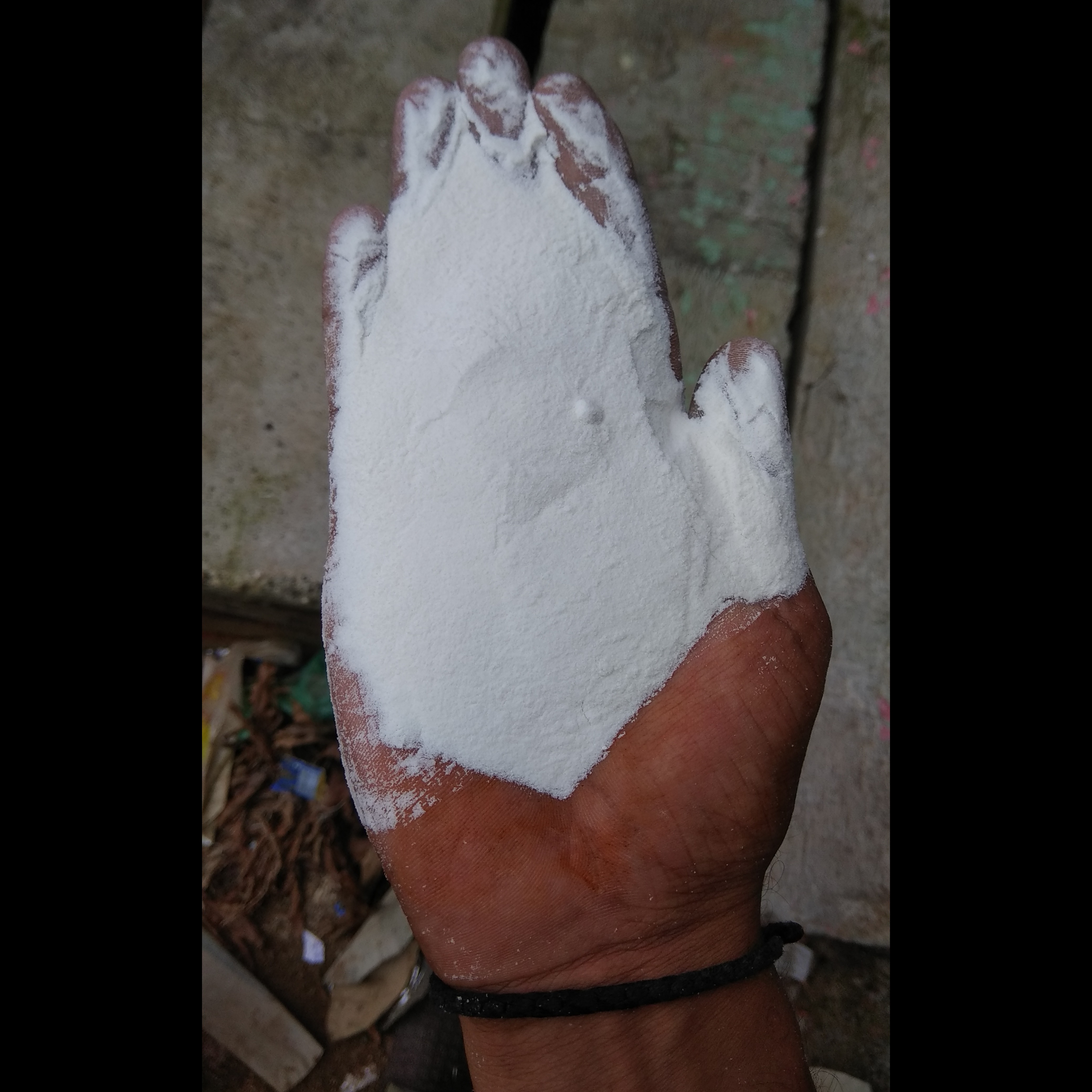
SODIUM SULPHATE FOR DETERGENT INDUSTRY
Overview
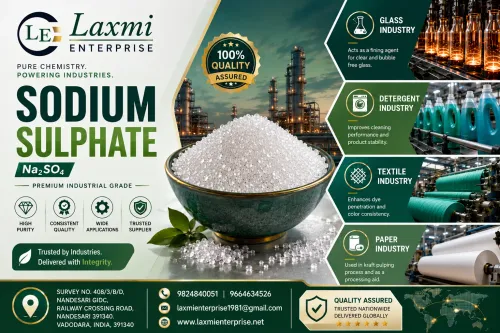
Sodium Sulphate (Na₂SO₄), also known as Glauber’s Salt or Anhydrous Sodium Sulphate, is a key raw material in the detergent and cleaning products industry. It serves as an economical filler and flow agent, improving the texture, density, and solubility of detergent powders.
Chemical Information
Chemical Name: Sodium Sulphate
Chemical Formula: Na₂SO₄
CAS Number: 7757-82-6
Molecular Weight: 142.04 g/mol
Appearance: White crystalline powder or granules
Solubility: Highly soluble in water
Purity: 99% min (Anhydrous Grade)
Role in Detergent Manufacturing
Sodium Sulphate is widely used in the formulation of synthetic detergents and washing powders due to its excellent compatibility with surfactants and other active ingredients.
Key Functions:
Filler and Volume Agent:
Adds bulk to detergent formulations, maintaining product volume while reducing cost per kilogram.
Free-Flowing Property:
Prevents detergent powder from clumping and improves handling and packaging efficiency.
Uniform Distribution:
Ensures even mixing of detergent ingredients, maintaining consistent product quality.
Enhanced Dissolution:
Helps detergent dissolve quickly in both hot and cold water.
Applications in the Detergent Industry
Laundry detergent powders (high and low foam types)
Household cleaning powders
Industrial washing and cleaning formulations
Soaps and washing bars (as a filler and texture stabilizer)
Advantages of Using Laxmi Enterprise Sodium Sulphate
High purity (≥99%) and consistent particle size
Excellent whiteness and flowability
Low moisture content for longer shelf life
Available in both anhydrous and decahydrate (Glauber’s salt) forms
Custom packaging options (25 kg / 50 kg / Jumbo bags)
Packaging & Supply
Packaging: HDPE bags with liner or jumbo bags
Typical Packing Size: 25 kg / 50 kg / 1 MT
Origin: Vadodara, Gujarat, India
Supply Capability: Bulk orders available across India and for export
HSN Code: 2833 11 00
Industry: Detergent, Textile, Glass, Paper, Chemical
SYNTHETIC SODIUM SULPHATE – MANUFACTURING PROCESSES
Overview
Sodium Sulphate (Na₂SO₄) is an essential inorganic chemical widely used in the detergent, glass, textile, and paper industries. While it occurs naturally as mirabilite and thenardite, a major portion of industrial sodium sulphate is now produced synthetically from various chemical reactions involving sodium chloride, sodium hydroxide, sulfuric acid, or sulfur dioxide.
1. Mannheim Process (Reaction of Sodium Chloride and Sulfuric Acid)
Chemical Reaction:
Process Description:
Raw Materials: Common salt (NaCl) and concentrated sulfuric acid (H₂SO₄).
Reaction:
The process takes place in a Mannheim furnace at 600–700°C.
Sodium chloride reacts with sulfuric acid in two stages:
Formation of sodium bisulfate (NaHSO₄).
Sodium bisulfate then reacts with additional NaCl to form sodium sulphate and release hydrogen chloride gas.
By-product: Hydrogen chloride gas is collected and converted into hydrochloric acid.
Product Handling: The sodium sulphate obtained is cooled, crushed, and purified.
Applications:
Produces high-purity anhydrous sodium sulphate ideal for detergents and glass industries.
2. Hargreaves Process (Sulfur Dioxide, Air, and Sodium Chloride Reaction)
Chemical Reaction:
Process Description:
A mixture of sulfur dioxide (SO₂), air, and water vapor reacts with sodium chloride at 500–550°C in a specially designed reactor.
The process directly forms sodium sulphate and hydrogen chloride gas.
The HCl gas is recovered for hydrochloric acid production.
Advantages:
Utilizes waste SO₂ from sulfuric acid or metallurgical plants.
Environmentally favorable due to SO₂ utilization and reduced emissions.
* 3. Neutralization of Sodium Hydroxide (Caustic Soda) with Sulfuric Acid
Chemical Reaction:
Simple neutralization process where sulfuric acid reacts with caustic soda or soda ash (Na₂CO₃) in an aqueous medium.
The resulting sodium sulphate solution is crystallized and dried.
Applications:
Produces Glauber’s salt (Na₂SO₄·10H₂O) or anhydrous sodium sulphate, depending on drying temperature.
Common in small- to medium-scale chemical plants.
* 4. Sodium Sulphate from By-Products or Waste Streams
Sources:
Viscose fiber plants (as a by-product of cellulose dissolution).
Caprolactam (nylon precursor) manufacturing.
Dye and pigment industries.
Process Description:
Waste liquors containing sodium and sulfate ions are treated, evaporated, and crystallized to recover sodium sulphate.
Often refined through filtration and drying.
Benefits:
Eco-friendly and cost-effective recovery process.
Supports zero liquid discharge (ZLD) initiatives.
5. Alternative Laboratory & Minor Industrial Routes
Oxidation of Sodium Sulfide or Sodium Sulfite
Neutralization using Sodium.
Process Name Raw Materials Main By-Product Typical Use
Mannheim NaCl + H₂SO₄ HCl gas Detergent, Glass
Hargreaves NaCl + SO₂ + O₂ + H₂O HCl gas Industrial bulk
Neutralization NaOH / Na₂CO₃ + H₂SO₄ Water / CO₂ Glauber’s Salt
By-product Recovery Industrial effluents — Sustainable source
Oxidation / Lab Na₂S or Na₂SO₃ — Specialty grades
* Environmental and Economic Considerations
Utilization of SO₂-rich waste gases reduces emissions.
Hydrochloric acid by-product improves process economics.
Recycling industrial effluents helps achieve sustainable sodium sulphate production.
* Conclusion
Synthetic sodium sulphate manufacturing plays a critical role in supplying high-purity material for detergents, glass, textiles, and other industries. Laxmi Enterprise ensures consistent quality through advanced processing and stringent quality control.