
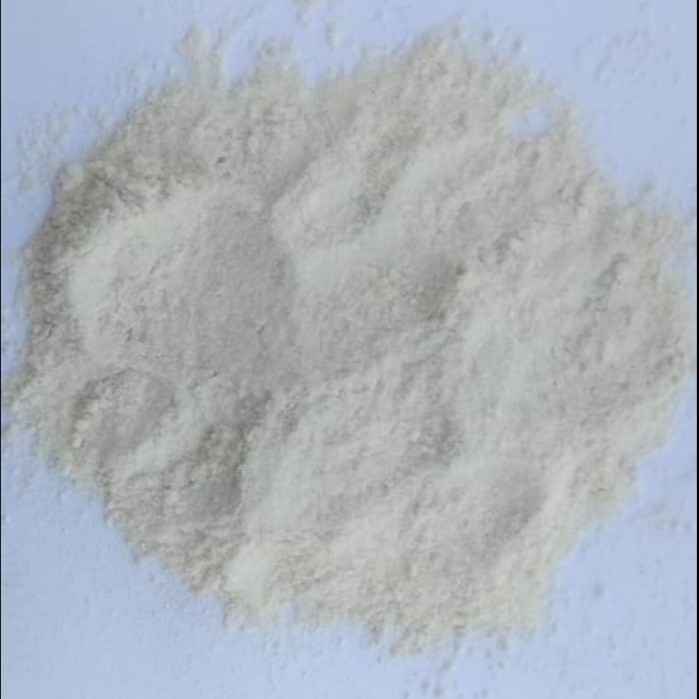
Chemical formula: Na₂SO₄·10H₂O
Crystallization temperature range: ~32–35 °C
Feed liquor concentration: typically 25–30 wt % Na₂SO₄
When the temperature drops below ~32.4 °C, sodium sulfate decahydrate crystallizes from solution; above this point, the anhydrous phase predominates.
Hence, precise temperature control is key.
1. Forced Circulation (FC) Crystallizer
Most widely used for sodium sulfate decahydrate in continuous industrial plants.
Working Principle:
Saturated solution is circulated by a high-flow pump through an external heat exchanger.
The cooled (or evaporated) liquor returns to the crystallization chamber where nucleation and crystal growth occur.
Crystals settle and are withdrawn continuously.
Key Parameters:
Parameter Typical Range
Operating temperature 25–35 °C
Pressure Atmospheric or slight vacuum
Circulation velocity 1.5–3 m/s
Crystal size 0.5–3 mm
Residence time 1–3 hours
Advantages:
Handles large throughputs.
Uniform crystal size distribution.
Effective for viscous or impure liquors.
Easy to integrate with downstream centrifugation.
Considerations:
Requires robust circulation pump.
Scaling control (anti-scalants or intermittent cleaning).
2. Draft Tube Baffle (DTB) Crystallizer
Preferred when crystal size uniformity and purity are crucial.
Working Principle:
Uses an internal draft tube and propeller for circulation.
Supersaturation is controlled in a defined zone to promote selective crystal growth.
Smaller crystals remain suspended, larger crystals settle and are withdrawn.
Key Parameters:
Parameter Typical Range
Temp. 28–33 °C
Supersaturation 2–5%
Crystal size up to 5 mm
Product form Large, well-formed Glauber’s salt crystals
Advantages:
Excellent crystal shape and purity.
Low fines generation → easier centrifuging and drying.
Steady-state operation for long campaigns.
Disadvantages:
More complex design and higher capital cost.
Sensitive to feed impurities (risk of fouling).
3. Oslo (Growth-Type) Crystallizer
A classified crystallizer designed to grow existing crystals rather than nucleate new ones.
Working Principle:
Supersaturated solution flows upward through a bed of crystals, promoting growth on existing seeds.
Overflow carries fine particles back to the feed for recycling.
Advantages:
Very narrow crystal size distribution.
Low energy consumption.
Excellent product clarity and separation ease.
Disadvantages:
Limited control over nucleation rate.
Requires pre-seeding and continuous monitoring.
4. Cooling Crystallizer (Surface- or Vacuum-Cooled)
Ideal when the process involves recovering sodium sulfate from warm process liquors (e.g., viscose or detergent effluent).
Working Principle:
Saturated solution is cooled gradually using heat exchangers or chilled brine jackets.
As temperature drops below ~32 °C, sodium sulfate decahydrate crystals precipitate.
Advantages:
Simple operation and low capital cost.
Excellent for batch or semi-batch operation.
Disadvantages:
Limited control over crystal size.
Slow operation; prone to scaling and encrustation.
⚙️ 5. Vacuum Evaporative Crystallizer
Used when sodium sulfate crystallization is coupled with water evaporation — typically in Zero Liquid Discharge (ZLD) or recovery systems.
Working Principle:
Feed liquor is concentrated under vacuum to reduce boiling point (60–70 °C).
Upon cooling, sodium sulfate decahydrate crystallizes out.
Mother liquor recycled to the next evaporator effect.
Advantages:
Energy-efficient (multi-effect configuration).
Integrated concentration and crystallization.
Effective for impure or dilute feeds.
Disadvantages:
Higher equipment cost.
Requires vacuum pumps and condensate recovery.
6. Batch Crystallizer (Jacketed Vessel Type)
Used for small-scale or laboratory production.
Working Principle:
Feed solution is cooled in a stirred, jacketed tank.
Temperature drop causes decahydrate crystallization.
Crystals are filtered, washed, and dried.
Advantages:
Simple and flexible.
Suitable for R& D, pilot, or specialty grades.
* Disadvantages:
Discontinuous operation.
Limited capacity.
🧭 Summary Table: Sodium Sulfate Decahydrate Crystallizer Types
Type Operation Temperature (°C) Crystal Size Energy Use Application
Forced Circulation Continuous 25–35 0.5–3 mm Medium Large plants, detergent grade
DTB Continuous 28–33 1–5 mm Medium High-purity or uniform size
Oslo Continuous 28–32 1–4 mm Low Seed-growth control
Cooling Batch / Continuous 25–32 Variable Low Waste liquor recovery
Vacuum Evaporative Continuous 60–70 (boiling), 25–32 (crystallization) 0.5–2 mm High ZLD & recovery systems
Jacketed Batch Batch 25–35 0.5–2 mm Low Lab/pilot operations
* Typical Process Flow
Feed liquor (Na₂SO₄ solution) → preheating & filtration.
Crystallizer (FC / DTB / Cooling) → decahydrate crystal formation.
Centrifuge → solid-liquid separation.
Mother liquor recycle → feed tank.
Crystals drying → anhydrous sodium sulfate (optional).
* Leading Indian Manufacturers
Chem Process Systems Pvt. Ltd. – Vadodara
Raj Process Equipments – Pune
Excel Plants & Equipment Pvt. Ltd. – Pune
Vapco Engineers Pvt. Ltd. – Mumbai
GEA Group – Germany (global supplier)
Would you like me to create a comparative datasheet (PDF or Excel-ready) showing design specs, MOC, utilities, and product output for:
Forced Circulation
DTB
Vacuum Crystallizer
(for sodium sulfate decahydrate, 1 TPH product capacity)?
It would be perfect for plant design or vendor discussions.
Chem Process Systems Pvt. Ltd.
Location: Manjusar GIDC, Vadodara, Gujarat
Website: www.chemprosys.com
Expertise:
Forced Circulation and DTB Crystallizers
Evaporative and Cooling Crystallization Systems
Complete Na₂SO₄ recovery plants from chemical and detergent effluents
Integrated Evaporation–Crystallization–Drying systems
Key Features:
Custom design for sodium sulfate decahydrate and anhydrous grades
Multi-effect evaporator + crystallizer combinations
Expertise in Zero Liquid Discharge (ZLD) applications
Typical Products:
Sodium sulfate crystallizer system
Forced circulation evaporative crystallizer
Vacuum crystallizer for Glauber’s salt recovery
2. Patel Enterprises (Process Equipment Division)
Location: Makarpura GIDC, Vadodara
Website: www.patelenterprisesindia.com
Expertise:
Cooling and Vacuum Crystallizers
Agitated vessel and batch-type crystallizers
Equipment in SS316L, duplex steel, or FRP-lined construction
Key Strengths:
Turnkey chemical process equipment manufacturing
Medium-scale crystallization units for sodium sulfate, sodium chloride, and other salts
Suitable for textile and detergent effluent recovery plants
3. M/s. Thermotech Systems Ltd.
Location: Por, Vadodara
Website: www.thermotechsystems.net
Expertise:
Evaporators, Crystallizers & Dryers for salt recovery
Forced circulation evaporative crystallizers
Steam economy design with multiple effects
Typical Applications:
Sodium sulfate recovery from viscose, detergent, or paper industry effluent
Integration with thermal and mechanical vapor recompression
4. Evaporation & Crystallization Engineers
Location: GIDC, Nandesari, Vadodara
Expertise:
Custom design of single-effect and multi-effect crystallizers
Process development for Na₂SO₄·10H₂O recovery
In-house fabrication of heat exchangers, crystallization vessels, and centrifuge systems
Notable Features:
Works with chemical, fertilizer, and inorganic salt producers
Offers pilot testing setups for crystallization process optimization
5. Equinox Engineers Ltd.
Location: Maneja, Vadodara
Website: www.equinoxengineers.com
Expertise:
Complete crystallization systems for inorganic salts
Cooling and forced circulation crystallizers
ZLD & ETP-based salt recovery systems
Capabilities:
In-house design + fabrication + automation integration
Turnkey installations for sodium sulfate recovery
Representative Project Applications in Vadodara
Detergent & surfactant plants: Sodium sulfate crystallization and drying.
Viscose fiber & cellulose process units: Glauber’s salt recovery.
Textile dyeing effluents: Sodium sulfate crystallization via cooling or vacuum crystallizers.
Chemical intermediates manufacturing: Anhydrous sodium sulfate by forced circulation crystallization followed by fluid bed drying.
🧭 Selecting the Right Vendor
When sourcing a Sodium Sulfate Crystallizer in Vadodara, evaluate:
Criterion Recommendation
Crystallizer Type Forced Circulation for bulk / DTB for high purity
Crystal Form Decahydrate (Na₂SO₄·10H₂O) or anhydrous
Capacity Define in TPH or m³/hr of feed liquor
Feed Characteristics Concentration, impurities, and temperature
Integration Evaporator, centrifuge, dryer compatibility
Material of Construction SS316L or duplex steel
Automation PLC/DCS system for temperature and supersaturation control