
How to Build a Reliable Supply Chain for Sodium Sulphate: A Practical Guide for Indian Manufacturers
Every successful manufacturing company has one thing in common.
Its supply chain works quietly in the background.
Production begins on time.
Raw materials arrive as expected.
Finished products are dispatched according to schedule.
Customers receive their orders without unnecessary delays.
When everything operates smoothly, very few people think about the supply chain.
However, when one part of the chain fails, every department feels the impact.
A delayed truck can postpone production.
An unexpected shortage can interrupt manufacturing.
Poor communication can force purchase departments to make emergency decisions.
The strength of a manufacturing business is often determined by the strength of its supply chain.
For companies using Sodium Sulphate, building a dependable supply chain is not simply about finding a supplier.
It is about creating a system that supports production every day of the year.
A Supply Chain Is More Than Transportation
Many people associate supply chains only with logistics.
Transportation is certainly important, but it is only one part of a much larger system.
A strong supply chain begins with forecasting.
It continues with procurement planning.
It depends on inventory management.
It relies on warehouse discipline.
It requires dependable suppliers.
It finishes only when the raw material enters production successfully.
Every stage must work together.
Improving one stage while ignoring the others rarely produces lasting results.
Forecasting Is the First Step
Reliable supply begins long before a purchase order is issued.
Manufacturers who understand their monthly consumption patterns make better procurement decisions.
Historical consumption provides valuable information.
Seasonal demand should also be considered.
Customer growth plans influence future requirements.
Production expansion changes purchasing volumes.
Good forecasting reduces uncertainty and gives suppliers enough time to prepare inventory.
The most successful factories rarely buy reactively.
They plan proactively.
Choosing the Right Supplier
Selecting a supplier is one of the most important decisions in the supply chain.
Price should always be considered.
However, it should never be the only consideration.
Ask practical questions.
Can the supplier maintain inventory?
Do they understand your industry?
Can they handle urgent orders?
How consistent is their delivery performance?
Do they communicate professionally?
Can they support your business as it grows?
The answers to these questions usually determine whether a supplier becomes a long-term partner.
Planning Inventory Wisely
Inventory is a valuable business asset.
It is also a significant investment.
Maintaining excessive stock increases warehouse costs and ties up working capital.
Maintaining insufficient stock increases production risk.
Successful manufacturers continuously review inventory levels based on production schedules and supplier performance.
Reliable suppliers make inventory planning much easier because deliveries become predictable.
Balance is the objective.
Neither shortage nor excess creates efficiency.
Warehouse Management Supports Production
Once material arrives at the factory, warehouse practices become extremely important.
Receiving procedures should be standardised.
Storage areas should remain organised.
Materials should be protected from moisture.
Inventory should follow first-in, first-out practices.
Regular inspections should become routine.
Good warehouse management prevents avoidable handling problems and supports efficient production.
A well-managed warehouse reflects a well-managed business.
Communication Keeps the Supply Chain Moving
Many supply chain disruptions begin with poor communication rather than poor planning.
Production schedules change.
Customer demand increases.
Transport conditions affect deliveries.
Unexpected situations occur.
When suppliers and customers communicate openly, solutions are usually identified quickly.
When communication stops, uncertainty grows.
Professional communication remains one of the simplest and most effective ways to strengthen supply chain performance.
Why Backup Planning Matters
Even the strongest supply chains occasionally face unexpected situations.
Extreme weather.
Transport delays.
Changes in customer demand.
Equipment maintenance.
Having a contingency plan helps businesses respond calmly rather than react under pressure.
This does not necessarily mean maintaining excessive inventory.
It means understanding alternative options before they become necessary.
Preparation reduces risk.
Risk reduction improves manufacturing confidence.
Technology Improves Visibility
Modern manufacturing increasingly depends on information.
Inventory systems provide better visibility.
Production planning software improves forecasting.
Warehouse management systems increase accuracy.
Digital communication speeds decision-making.
Technology does not replace good management.
It supports good management.
Companies that combine disciplined processes with modern systems usually develop stronger and more responsive supply chains.
Strong Relationships Make Supply Chains Stronger
The best supply chains are built on relationships rather than transactions.
Manufacturers understand supplier challenges.
Suppliers understand customer priorities.
Communication remains honest.
Planning becomes collaborative.
Both companies focus on long-term success instead of short-term gains.
This partnership approach creates flexibility that becomes especially valuable during periods of rapid business growth or unexpected market changes.
The Future of Industrial Supply Chains in India
Indian manufacturing continues to grow rapidly.
Export opportunities are expanding.
Infrastructure is improving.
Customer expectations continue to rise.
As competition increases, supply chains will become an even greater competitive advantage.
Factories that invest in dependable supplier relationships, disciplined inventory management and proactive planning will be better positioned to meet future demand.
The companies that treat procurement as a strategic business function rather than a routine purchasing activity will continue building stronger manufacturing businesses.
How Laxmi Enterprise Supports Reliable Supply Chains
At Laxmi Enterprise, we understand that supplying Sodium Sulphate involves much more than dispatching a truck.
Every order becomes part of our customer's production schedule.
Every delivery influences inventory planning.
Every shipment contributes to manufacturing continuity.
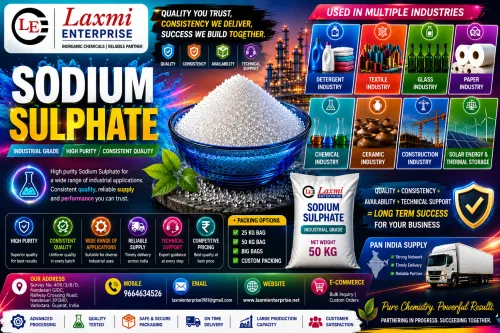
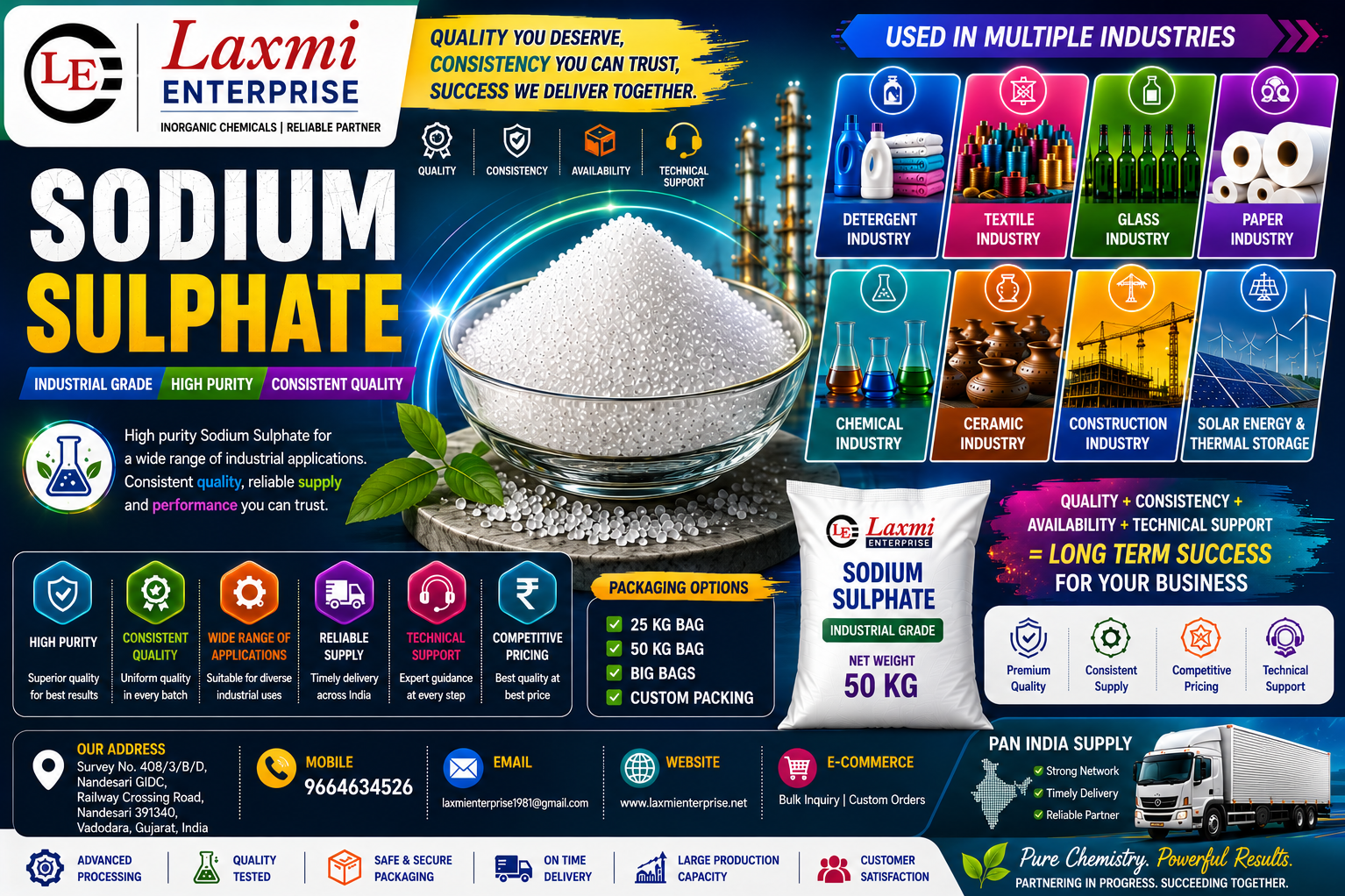
Operating from Nandesari GIDC, Vadodara, we supply Sodium Sulphate and other industrial chemicals to manufacturers across India.
Our focus is not limited to product quality.
We work to support dependable supply chains through consistent inventory, organised dispatch planning, reliable deliveries and responsive customer communication.
Many of our customers have worked with us for years because they know that reliability cannot be achieved through promises alone.
It must be demonstrated consistently through every shipment.
Final Thoughts
A reliable supply chain is rarely built by accident.
It develops through planning, communication, disciplined warehouse management, dependable suppliers and continuous improvement.
Every stage contributes to manufacturing success.
Businesses that strengthen their supply chain strengthen every part of their organisation.
For manufacturers using Sodium Sulphate, investing in reliable supply is ultimately an investment in production stability, customer satisfaction and sustainable business growth.
Frequently Asked Questions
How can manufacturers build a reliable Sodium Sulphate supply chain?
Strong forecasting, dependable suppliers, organised warehouse management, efficient inventory planning and clear communication all contribute to a reliable supply chain.
Why is forecasting important in procurement?
Forecasting helps manufacturers plan purchases according to production demand, reducing emergency orders and improving inventory management.
What role does warehouse management play?
Proper receiving, storage, inventory rotation and material protection help maintain product quality and improve manufacturing efficiency.
Why are long-term supplier relationships valuable?
Long-term partnerships improve communication, planning, consistency and operational flexibility, helping manufacturers reduce uncertainty.
Why do manufacturers across India choose Laxmi Enterprise?
Manufacturers trust Laxmi Enterprise because we understand that reliable supply chains are built on consistent quality, dependable deliveries and professional customer support. Operating from Nandesari GIDC, Vadodara, we help industries across India maintain stable production through reliable industrial chemical supply.
About Laxmi Enterprise
Laxmi Enterprise is a trusted manufacturer, supplier and distributor of industrial chemicals located in Nandesari GIDC, Vadodara, Gujarat. We supply Sodium Sulphate, Sodium Nitrate, Sodium Acetate, Tri Sodium Phosphate and other industrial chemicals to manufacturers across detergent, textile, glass, paper, ceramic, construction, water treatment and chemical processing industries throughout India.
Our commitment goes beyond supplying chemicals. We work alongside our customers to build dependable supply chains, improve manufacturing confidence and support long-term industrial growth through quality products, reliable logistics and professional service.