

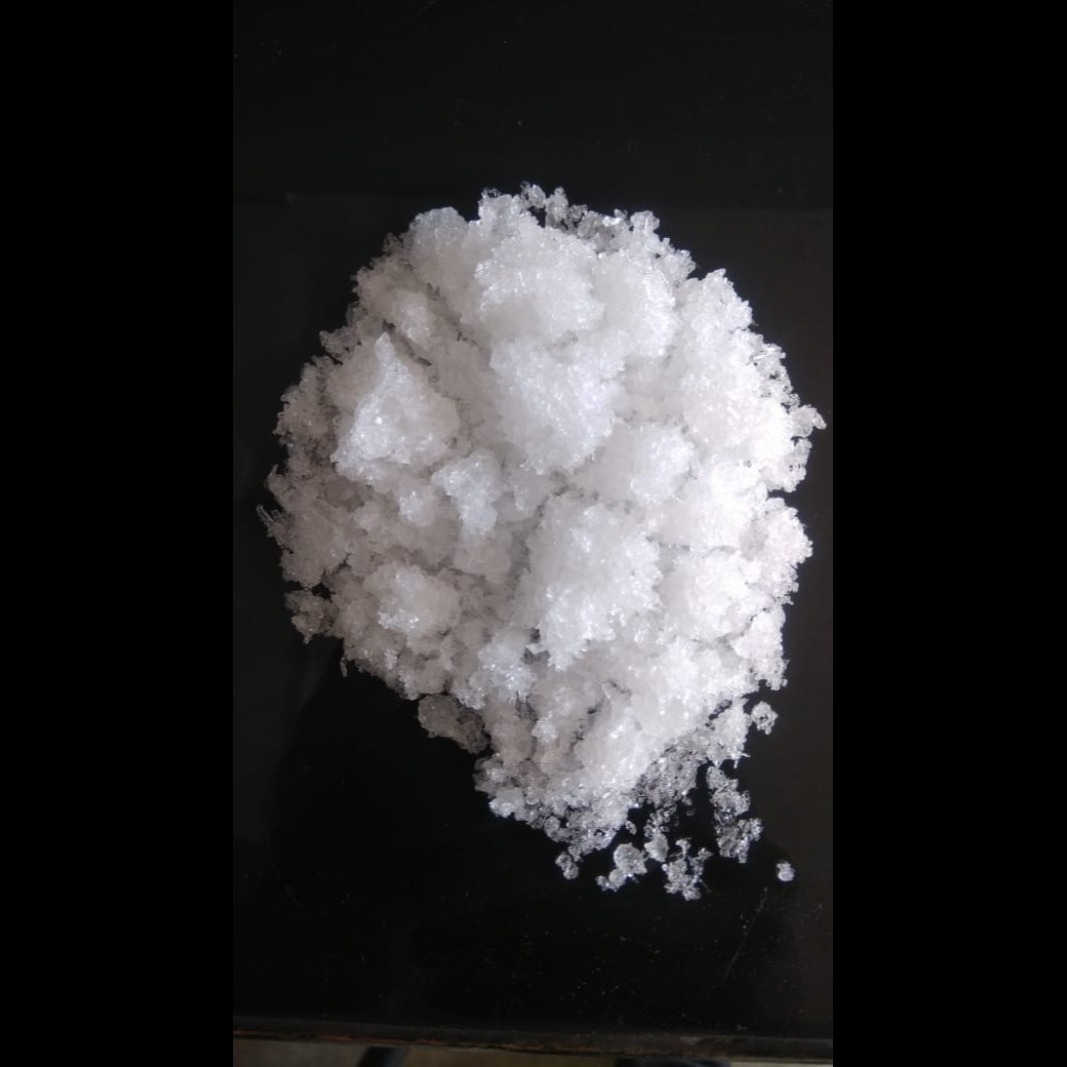
1. What Is a pH Buffer?
A buffer solution resists changes in pH when small amounts of acid or base are added.
Acidic component neutralizes added base.
Basic component neutralizes added acid.
A common buffer system is a weak acid and its conjugate base.
2. Sodium Acetate as a Buffer
Sodium acetate is the conjugate base of acetic acid (CH₃COOH).
When mixed with acetic acid, it forms a buffer system:
CH₃COOH (weak acid)
+
CH₃COONa (conjugate base)
CH₃COOH (weak acid)+CH₃COONa (conjugate base)
This buffer resists pH changes around the pKa of acetic acid, which is 4.76.
Useful for pH range 4–6.
3. How It Works
When acid is added (H⁺):
This equilibrium reaction keeps the pH relatively stable.
4. Preparing a Sodium Acetate Buffer
Example: pH 5.0 buffer
Choose acetic acid and sodium acetate concentrations using the Henderson-Hasselbalch equation:
Mix the calculated amounts of sodium acetate and acetic acid in water.
Adjust volume and check pH with a pH meter.
5. Applications of Sodium Acetate Buffers
Biochemistry & molecular biology: Enzyme reactions requiring pH 4–6.
Food industry: Maintaining pH in certain food products.
Pharmaceuticals: Stabilizing drugs in solution.
Laboratory experiments: Standard buffer for pH calibration.
Key Point: Sodium acetate acts as a pH buffer when combined with acetic acid, maintaining a stable pH in the acidic range (around pH 4–6)
Role of Sodium Acetate in Metal Treatment
Sodium acetate (CH₃COONa) is primarily used in metal finishing, corrosion control, and heat treatment processes. Its key functions include:
Corrosion Inhibition: Forms a protective film on metal surfaces to reduce oxidation and rust formation.
pH Buffering: Maintains stable pH in metal treatment baths, which is crucial for plating, cleaning, or etching processes.
Electroplating & Surface Treatment: Acts as a conductive electrolyte additive in some electroplating solutions.
Heat Treatment: Sometimes used as a neutralizing agent in quenching or metal cleaning solutions.
2. Specific Applications
Application Type Function of Sodium Acetate
Metal Cleaning & Pickling Buffers acidic cleaning solutions, reduces metal surface damage
Electroplating Enhances conductivity and stabilizes pH in plating baths
Corrosion Inhibition Forms protective acetate layer on steel or copper surfaces
Heat Treatment & Quenching Neutralizes acidic residues, prevents corrosion post-treatment
3. Advantages
Water-soluble and easy to handle in aqueous solutions.
Non-toxic and safer compared to strong chemical inhibitors.
Can improve surface finish and longevity of treated metals.
4. Typical Concentrations
Often used in 0.1–5% (w/v) range in metal treatment baths depending on process requirements.
Concentration and pH are adjusted based on metal type and treatment goals.
. Key Point: Sodium acetate in metal treatment acts mainly as a pH buffer, corrosion inhibitor, and electrolyte additive, improving the efficiency and safety of cleaning, plating, and heat treatment processes
What Is a Corrosion Inhibitor?
A corrosion inhibitor is a chemical that slows down or prevents the oxidation of metals (rusting or tarnishing) when exposed to air, water, or acidic/alkaline solutions.
2. How Sodium Acetate Works
Sodium acetate is a water-soluble, mildly alkaline salt.
It acts as a corrosion inhibitor mainly for steel, iron, and copper alloys.
Mechanism:
Forms a thin protective acetate layer on the metal surface.
Reduces contact between the metal and corrosive species (like O₂, H⁺, Cl⁻).
Buffers the pH of the solution, reducing acidic attack.
3. Applications in Industry
Application Role of Sodium Acetate
Cooling systems & boilers Prevents scaling and rust in water circulation systems
Metal cleaning solutions Reduces corrosion during acidic or alkaline cleaning
Electroplating baths Protects electrodes and deposited metal layers from oxidation
Heat treatment & quenching Neutralizes acidic residues, inhibits post-treatment corrosion
Storage of metal parts Applied in aqueous or vapor phase to prevent surface oxidation
4. Advantages
Environmentally friendly: Less toxic than many traditional inhibitors (e.g., chromates).
Water-soluble: Easy to apply in aqueous systems.
Dual function: Buffers solution pH while protecting metal surfaces.
Cost-effective: Readily available and inexpensive.
5. Typical Usage
Concentration: Usually 0.1–5% (w/v) in water-based systems.
Often combined with other inhibitors (e.g., nitrites or phosphates)
Buffering Agent
Function: Maintains stable pH in chemical reactions.
Application: Used in laboratory experiments, biochemical reactions, and industrial processes where a mildly acidic buffer (pH ~4–6) is needed.
2. Corrosion Inhibitor
Forms a protective layer on metals and buffers solution pH.
Used in: Boilers, cooling water systems, electroplating baths, and metal cleaning solutions.
3. Chemical Synthesis
Acts as a reactant or catalyst in organic and inorganic synthesis. Examples include:
Esterification reactions
Preparation of acetyl compounds
Formation of sodium salts of organic acids
4. Dyeing and Textile Industry
Serves as a pH buffer in dye baths.
Improves color fastness and even dyeing of fabrics.
5. De-icing and Neutralization
De-icing salts: Sometimes used for roads in combination with other salts (less common than NaCl).
Neutralizing agent: In acidic solutions or chemical effluents.
6. Laboratory Reagent
Used in titrations, buffer preparations, and analytical chemistry.
Acts as a source of acetate ions in various experiments.
7. Industrial & Miscellaneous Applications
Application Area Role of Sodium Acetate
Food industry pH buffer, preservative support
Biochemical labs Buffers for enzyme assays, DNA/RNA precipitation
Detergent industry Sometimes used to stabilize pH in formulations
Concrete/Construction As a setting accelerator in concrete additives
Role in Metal Finishing
Sodium acetate is widely used in metal finishing, electroplating, and surface treatment due to its ability to stabilize pH, inhibit corrosion, and improve surface quality.
Key functions include:
Corrosion inhibition: Forms a protective acetate layer on metal surfaces.
pH buffering: Maintains stable pH in metal cleaning, pickling, and plating baths.
Electrolyte additive: Enhances conductivity in electroplating solutions.
Neutralization: Neutralizes acidic residues after cleaning or heat treatment.
2. Specific Applications
Metal Finishing Process Function of Sodium Acetate
Electroplating (Cu, Ni, Zn, Cr) Improves bath conductivity and stabilizes pH; prevents oxidation of deposited layers
Metal Cleaning & Pickling Buffers acidic cleaning solutions; prevents metal surface damage
Heat Treatment / Quenching Neutralizes residual acids and prevents corrosion post-treatment
Surface Coating / Passivation Enhances adhesion and quality of protective coatings
3. Advantages in Metal Finishing
Water-soluble and easy to handle in aqueous solutions.
Non-toxic and safer compared to many strong chemical inhibitors.
Dual function: Buffers pH and protects against corrosion simultaneously.
Cost-effective and widely available.
4. Typical Usage
Concentration: 0.1–5% (w/v) in treatment baths depending on metal type and process.
Often used in combination with other inhibitors (e.g., phosphates, nitrates) for enhanced protection.
What Is a pH Buffer?
A buffer solution is one that resists changes in pH when small amounts of acid (H⁺) or base (OH⁻) are added.
Consists of a weak acid and its conjugate base.
Maintains stable conditions for chemical reactions, biological processes, or industrial applications.
Applications
Field Use of Sodium Acetate Buffer
Biochemistry / Molecular Biology Enzyme reactions, DNA/RNA precipitation, protein assays
Food Industry Maintaining pH in certain food formulations
Pharmaceutical Industry Stabilizing drugs in solution
Laboratory Experiments Standard buffer for pH calibration and reactions
: Sodium acetate acts as a mild acidic buffer when combined with acetic acid, maintaining a stable pH around 4.5–6, essential for chemical, biological, and industrial processes.
Role of Sodium Acetate in Electroplating
Sodium acetate is used in electroplating baths primarily for:
pH Buffering
Maintains stable pH in plating solutions, which is crucial for consistent metal deposition.
Prevents fluctuations that could lead to poor adhesion, rough deposits, or hydrogen evolution.
Corrosion Inhibition
Forms a protective acetate layer on the substrate and electrodes, reducing oxidation.
Electrolyte Additive / Conductivity Enhancer
Improves ionic strength and conductivity of the plating bath.
Supports uniform current distribution, leading to smoother and more even metal layers.
Advantages in Electroplating
Water-soluble and easy to handle in aqueous plating solutions.
Non-toxic and environmentally safer than strong chemical buffers.
Dual functionality: Buffers pH while protecting metal surfaces.
Cost-effective for industrial plating processes.
Typical Usage
Concentration: Usually 0.1–5% (w/v) depending on metal type and plating bath chemistry.
Often combined with other additives (brighteners, surfactants, or complexing agents) for optimized plating results.
What Is a Biodegradable Buffering Agent?
A buffering agent stabilizes the pH of a solution, and a biodegradable buffering agent:
Breaks down naturally in the environment.
Minimizes toxic residues in water or soil.
Is preferred in eco-friendly industrial processes, biotechnology, and pharmaceuticals.
Why Sodium Acetate Is Considered Biodegradable
Sodium acetate is a simple organic salt derived from acetic acid.
Easily metabolized by microorganisms into CO₂ and H₂O.
Non-toxic and environmentally safe, unlike phosphate or chromate buffers.
Advantages
Biodegradable and non-toxic
Water-soluble and easy to prepare
Dual function: Buffers pH and contributes minimal environmental impact
Cost-effective and widely available
Role as a Drying/Dehydration Agent
Sodium sulfate is commonly used in laboratories and industries to remove traces of water from solvents, chemicals, and food powders.
Anhydrous sodium sulfate (Na₂SO₄) is highly hygroscopic, meaning it can absorb water to form hydrates.
Used to dry organic solvents after extraction or chemical reactions.
Helps in maintaining low moisture content in powdered and granulated materials.
Mechanism of Drying
Sodium sulfate absorbs water to form its hydrated form (decahydrate: Na₂SO₄·10H₂O).
Water molecules are trapped in the crystal lattice, effectively removing moisture from the surrounding medium.
Reaction example in solvents:
Advantages
Non-toxic and inexpensive
Stable under normal conditions
Effective for a wide range of solvents and powders
Easy to remove from solutions by filtration
Advantages in Food Processing
Food-grade purity ensures safety in trace amounts.
Increases shelf life by reducing moisture content.
Enhances flowability, important for packaging and automated handling.
Non-toxic and considered GRAS (Generally Recognized As Safe) when used as a processing aid.