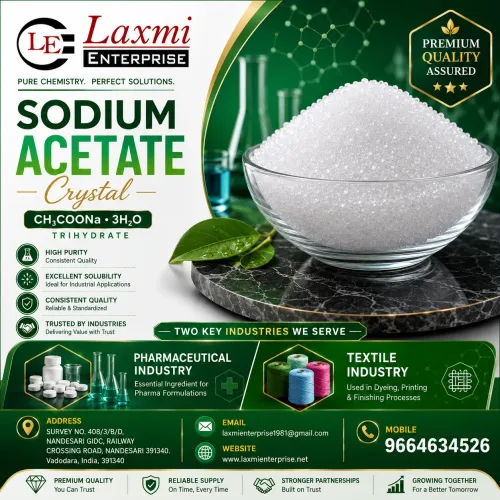


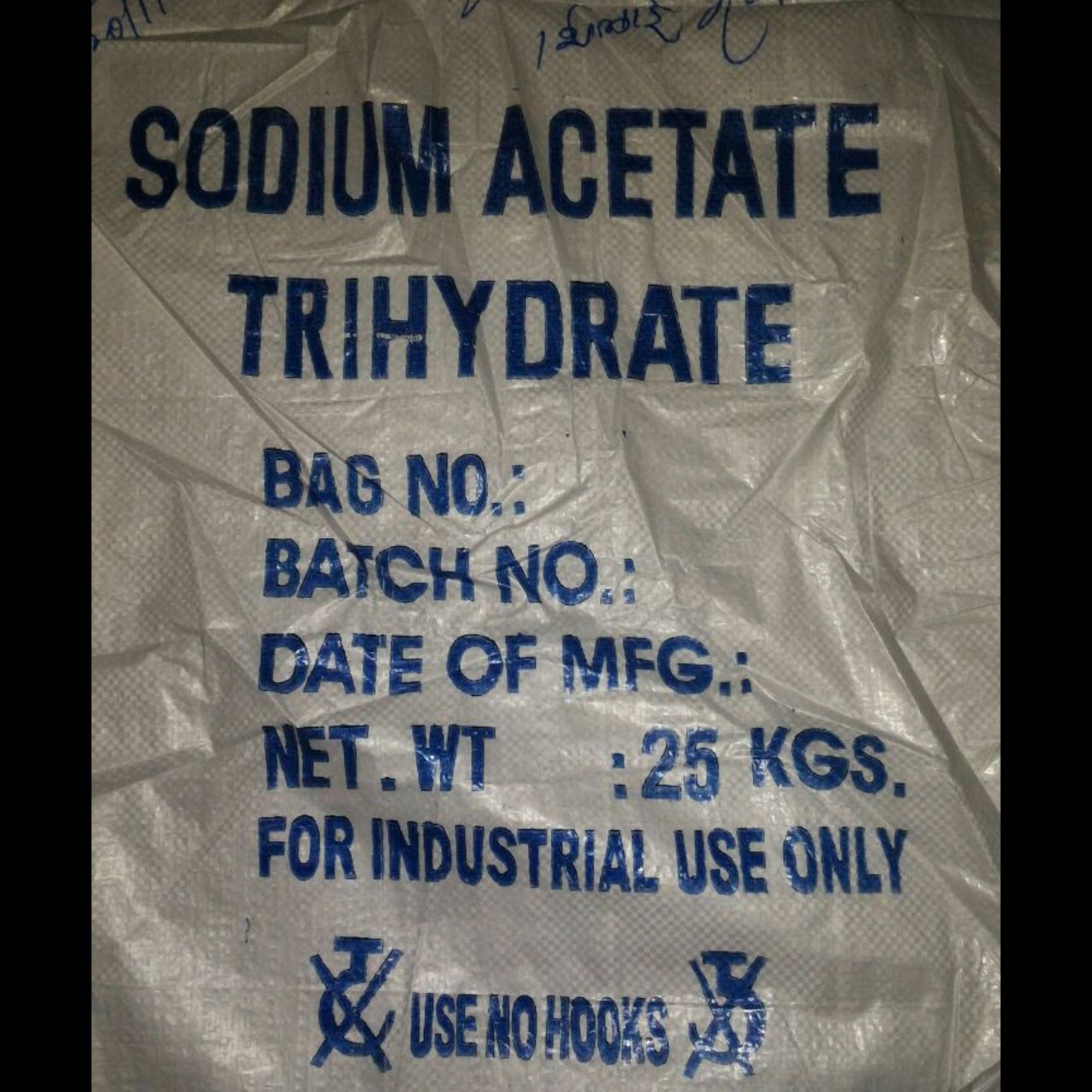
Alright, this sounds technical — but don’t worry, it’s actually pretty clean once you break it down. Let’s talk about Anion Exchange Chromatography (AEC) with acetate and then I’ll give you ready-to-use keywords (for SEO, research, or documentation).
Role of Acetate in AEC
* As a Buffer System
- Maintains stable pH (≈ 4.0–6.0)
- Common in protein, enzyme, nucleic acid purification
- Gentle and compatible with biological samples
As an Elution Ion
- Acetate ions compete with bound anions
- Increasing acetate concentration → elution of target molecule
- Alternative to chloride when:
- Chloride interferes with detection
- Volatile systems are preferred
Compatibility Advantage
- Volatile (especially ammonium acetate)
- Mass-spectrometry friendly
- Lower protein denaturation risk
Applications
- Protein purification
- Antibody polishing
- Enzyme separation
- Nucleic acids isolation
- Biopharmaceutical downstream processing
Typical Resins Used
- DEAE cellulose
- Q-Sepharose
- Mono Q
- Strong anion exchange columns
- Anion exchange chromatography acetate
- Acetate buffer anion exchange chromatography
- AEC acetate buffer
- Acetate based anion exchange chromatograph
Why acetate buffer is used in anion exchange chromatography
Sodium acetate buffer for protein purification
Acetate vs chloride buffer in anion exchange chromatography
- Ammonium acetate buffer AEC protocol
- Nice — I’ll give you (1) a compact, high-value list of search/indexing around acetate in anion-exchange chromatography, and (2) a practical, lab-ready
- method checklist you can use to identify an acetate peak (quick protocol + confirmation strategies and troubleshooting).
Ready-to-use.
acetate, acetic acid, CH₃COO⁻, sodium acetate, potassium
acetate,acetate ion, acetate peak, acetate retention time, anion exchange chromatography, ion chromatography (IC),
AEC, anion-exchange HPLC, suppressed conductivity, conductivity
detection, hydroxide eluent, KOH eluent, carbonate/bicarbonate eluent, eluent gradient, isocratic elution, ion chromatograph column, AS11/AS18 (IC column examples),
standard addition, spiking, calibration curve, LOD, LOQ, sample preparation, SPE desalting, matrix effects, co-elution, peak purity, UV 210 nm, Diode Array Detector (DAD), IC-MS, ESI(-) mass spec, m/z 59 (acetate anion)
derivatization (e.g., p-bromophenacyl), retention behavior, ion suppression, conductivity suppressor, recovery, method validation, system suitability, baseline noise.
Method for acetate peak identification — practical checklist & protocol
Overview — best practice
Use a reference standard + spike (standard addition) + orthogonal detection (suppressed conductivity and either UV/DAD or MS) to unambiguously identify acetate. Retention time alone is necessary but not sufficient in complex matrices.
Suggested instrument & detection
- Instrument: Ion Chromatograph (preferred) or anion-exchange HPLC.
- Column (examples): Anion exchange IC column suitable for small oxyanions (e.g., columns commonly sold as AS-series).
- Eluent: Strong base eluent (common: KOH delivered by eluent generator or gradient KOH 1–20 mM) or carbonate/bicarbonate gradient depending on column. (Either KOH/hydroxide eluent with suppressor or carbonate/eluent with suppression works.)
- Detector(s): Suppressed conductivity (primary) ± MS (ESI negative) for confirmation. UV/DAD at ~210 nm can help but acetate has weak UV.
System suitability & blank
- Run eluent blank to verify baseline and absence of acetate carryover.
- Run system suitability standard (mixture of common anions including acetate) to confirm expected retention order.
Run acetate standard
- Inject a pure acetate standard (single-analyte) to record retention time (RT_std), peak shape, and detector response.
Run sample
- Inject sample and note the candidate acetate peak RT_sample.
Retention-time match
- Confirm RT_sample ≈ RT_std (allow small window, e.g., ±0.1–0.2 min depending on system stability). Don’t rely on RT alone.
Standard addition (spike)
- Spike sample with known acetate (e.g., add standard to reach +1–5× expected sample conc.).
- Re-run: a correct acetate peak will increase in area and height proportionally and maintain RT (co-eluting interferences will also increase but spike confirms identity if only that peak grows).
Peak purity & orthogonal check
- If using DAD/UV, check spectral consistency across the peak (though acetate has weak UV, so DAD may be limited).
- If available, run IC-MS (ESI negative) or collect fraction and analyze by MS. Acetate anion expected at m/z 59 ([CH₃COO]⁻) in negative mode — this is strong confirmation.
- If MS not available, consider derivatization (e.g., convert acetate to a UV-active derivative) then HPLC-UV.
Quantitation & recovery
- Use calibration curve from standards.
- Compute spike recovery: acceptable typically 90–110% (adjust based on method validation).
Quick decision flow (one-liner)
Run standard → match RT → spike sample → check peak increases → confirm with MS (m/z 59) or suppressed conductivity + acceptable spike recovery = acetate identified.
Why acetate buffer is used in anion exchange chromatography
Sodium acetate buffer for protein purification
Biopharmaceutical anion exchange chromatography
Protein separation acetate buffer
Enzyme purification acetate buffer AEC
Mass spectrometry compatible acetate buffer