


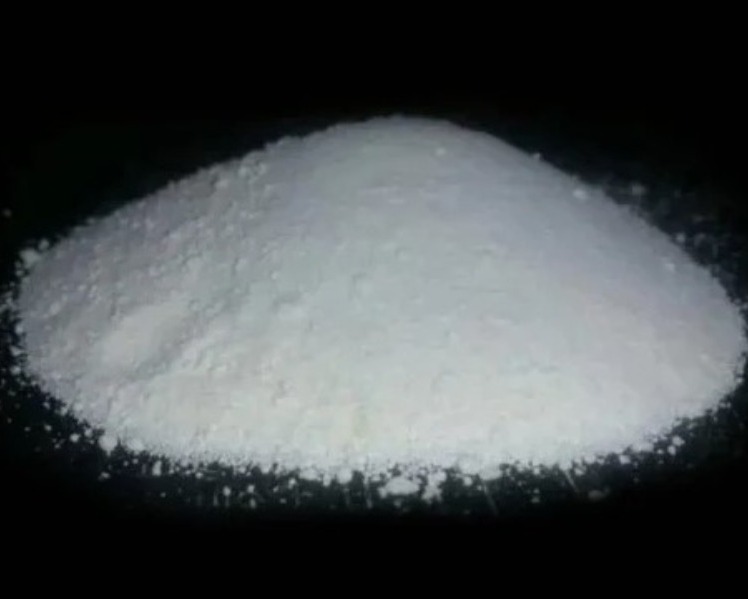
In anion ion chromatography with suppressed conductivity detection, sodium nitrate (NaNO₃) shows characteristic suppression behavior that directly affects signal intensity, baseline, and quantitation accuracy. Understanding this is critical when working in high-salt or sulfate-rich matrices, which you frequently encounter.
In suppressed IC:
- NaNO₃ → Na⁺ + NO₃⁻
- Suppressor action:
- Na⁺ is exchanged for H⁺
- NO₃⁻ is converted to HNO₃ (weakly conductive)
- Net result: dramatic reduction in background conductivity, while nitrate still gives a measurable signal.
HNO₃ has moderate molar conductivity
Nitrate response is:
- Lower than chloride
- Higher than sulfate post-suppression
High NaNO₃ concentration:
- Increases Na⁺ load
- Can exceed suppressor exchange capacity
Results in:
- Partial suppression
- Elevated baseline
- Reduced nitrate peak height
At high concentrations:
- Nitrate peak becomes:
- Broader
- Lower in height
- Caused by:
- Local suppressor exhaustion during peak elution
Sulfate competes strongly for suppressor capacity
Leads to:
- Reduced nitrate response
- Apparent nitrate “loss”
- Peak masking by sulfate tail
Nitrate peak area lower in sample vs standard
Non-linear calibration at high concentrations
Baseline rise during nitrate elution
- Improved response after dilution
Dilute samples (5–20×)
Remove sulfate before IC if present
- Lower injection volume
Increase suppressor current (within specs)
Ensure proper regeneration
- Replace aging suppressors
- Use high-capacity columns
- Increase eluent strength slightly
- Use gradient methods for high-salt samples
- Matrix-matched calibration for nitrate
- Standard addition in sulfate-rich waters
- Spike recovery acceptance: 90–110%
- Define maximum nitrate load per injection
- Sodium nitrate is highly sensitive to suppressor capacity and matrix load. In suppressed conductivity detection, high nitrate or competing ions (especially sulfate) can reduce nitrate signal through partial suppression and peak self-suppression.
(Anion IC with Suppressed Conductivity Detection)**
- Sodium nitrate (NaNO₃) can affect both suppression efficiency and peak visibility—especially in high-salt or mixed-anion matrices. While nitrate is usually easier to detect than sulfate, high nitrate load or competition from other salts can still cause self-suppression and masking of nearby ions.
At elevated NaNO₃ concentrations:
- Suppressor exchange sites become locally exhausted
- Leads to:
- Incomplete Na⁺ removal
- Elevated baseline
- Reduced nitrate peak height
- Nitrate peak smaller in sample vs standard
- Non-linear nitrate calibration at higher levels
- Baseline rise during nitrate elution
- Improved nitrate recovery after dilution
- Poor spike recovery in real samples
Dilute sample (5–20×)
Reduce injection volume
- Remove sulfate prior to IC (if present)
High-capacity anion-exchange column
Slightly stronger eluent or gradient
- Increase column temperature (improves peak shape)
Perform interference studies with:
- High nitrate alone
- High nitrate + sulfate
Acceptance criteria:
- Recovery 90–110%
- Rs ≥ 1.5 for nitrate vs adjacent ions
- Document suppressor capacity limits
- Sodium nitrate can both suppress its own signal and mask neighboring ions when present at high concentration or in sulfate-rich matrices. Managing total ionic load and suppressor capacity is essential for reliable nitrate quantitation.
sodium nitrate
NaNO3
sodium nitrate CAS 7631-99-4
sodium nitrate chemical formula
sodium nitrate properties
sodium nitrate specification
sodium nitrate SDS
sodium nitrate MSDS
Chile saltpeter
Peru saltpeter
nitrate of soda
nitric acid sodium salt
sodium salt of nitric acid
NITRATE SUPPRESSION EFFECTS IN CONDUCTIVITY DETECTION.LAXMI ENTERPRISE. VADODRA GUJARAT.INDIA