
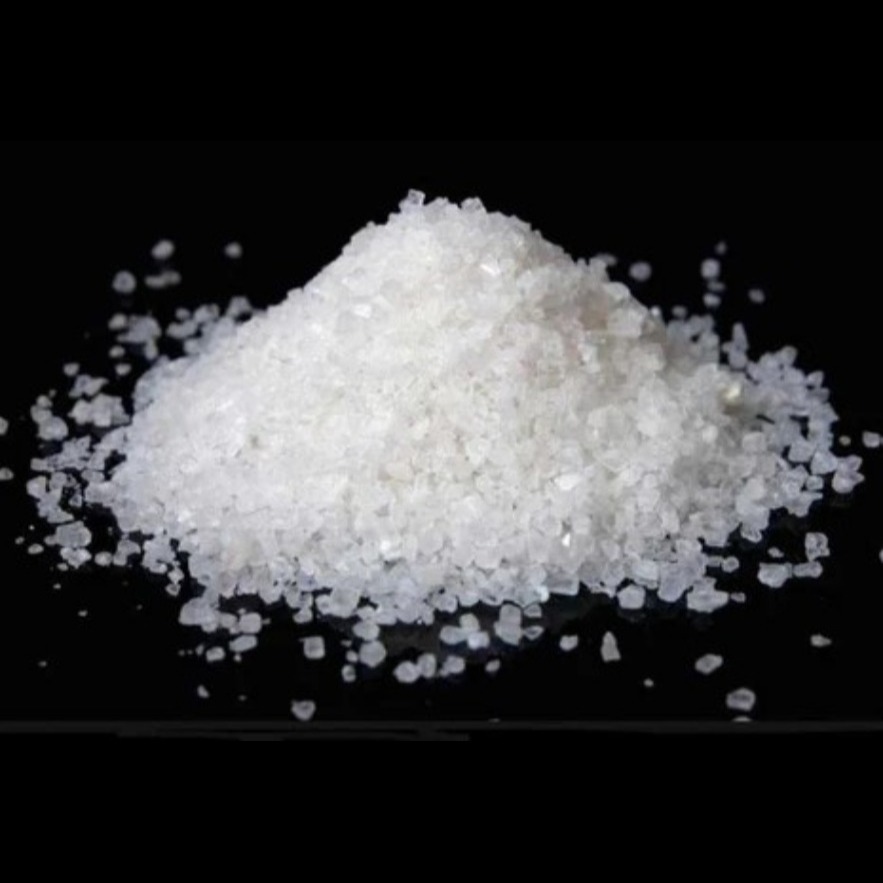
Primary points — sodium nitrate in detergents
Not a mainstream detergent ingredient. Sodium nitrate is not a common surfactant, builder, or bleaching agent in modern household detergents. When it is used, it’s for niche/auxiliary roles rather than as a primary cleaning active.
Auxiliary / niche uses include: corrosion inhibition, processing aid, stabiliser for some oxidising systems, and as a low-cost inert/crystal-forming filler in certain powdered products.
Possible uses & how it works
Corrosion inhibition (metal protection during storage/transport)
Nitrate ions can help form a mildly passivating layer on some metals, reducing corrosion of metal equipment or metal-containing packaging during storage.
Typical application is small: added to wash liquids or certain liquid builders at low concentration to avoid side reactions.
Stabiliser for oxidising bleaching systems
In some powder systems containing peroxides (e.g., sodium percarbonate), nitrate can influence the redox environment and slow unwanted decomposition under specific conditions. This is formulation-dependent and requires careful compatibility testing.
Warning: nitrate is an oxidiser itself — interactions with reducers, strong surfactants or binders can be hazardous if not tested.
Processing aid / crystal habit modifier
In powder manufacture, small amounts of salts can affect cake/crust formation, flow, and particle morphology. Sodium nitrate may be used experimentally to adjust these properties.
Filler / inexpensive inorganic component
It can act as a bulking or crystalline filler in some technical formulations where nitrate’s properties are acceptable — but cheaper and more inert fillers (sodium sulfate, sodium chloride) are usually preferred.
Compatibility & formulation cautions
Compatibility with enzymes: Nitrate is usually inert to enzymes, but any change to ionic strength or pH can impact enzyme performance — test with your enzyme system (proteases, amylases, lipases).
Oxidisers & reducers: Avoid uncontrolled mixes with reducing compounds. Nitrates are oxidising salts — there can be decomposition or heat if combined with organics or strong reducers at scale.
Bleach/peroxide systems: May stabilise or destabilise depending on pH, transition-metal content and moisture. Test for hydrogen peroxide loss, color changes and gas evolution.
Packaging: Avoid use with packaging that can be corroded by nitrates under humidity; choose compatible plastics or coated metals.
Safety, regulatory & environmental concerns
Health/safety: Sodium nitrate is an oxidiser. Handle with appropriate PPE, store away from reducing agents and organics, and control dust. Follow local MSDS guidance.
Environmental: Nitrates in effluent contribute to eutrophication and are regulated in many jurisdictions. If detergents containing nitrates are discharged to wastewater, biological denitrification or other treatment steps may be necessary. Check local wastewater discharge limits.
Labeling / chemical classification: Check national regulations for oxidiser classification and hazard labeling — important for transport and workplace safety.
Practical tests you should run before scaling
Formulation stability: accelerated aging (heat, humidity) looking for peroxide loss, colour, odour, caking.
Cleaning performance: compare surfactant/enzyme activity with and without nitrate.
Corrosion tests: expose common equipment metals and packaging to your wet/dry formulations.
Compatibility/reactivity screening: mixture screening with all other actives and fillers (especially percarbonate, silicates, zeolites).
Wastewater analysis: measure nitrate in wash effluent and model treatment / removal needs.
Safety assessment: ensure your MSDS and transport docs reflect any oxidiser classification.
Short example (hypothetical) powder detergent formulation
Anionic surfactant (LAS): 12–18%
Nonionic surfactant: 1–3%
Sodium carbonate (builder): 10–20%
Zeolite / fos. substitute: 10–25%
Sodium percarbonate (bleach): 5–10%
Sodium nitrate (stabiliser/corrosion aid): 0.2–0.8% (illustrative only)
Anti-caking / flow agents / enzymes / perfumes / fillers: balance to 100%
Bottom line
Sodium nitrate can be used in detergent manufacture, but only in niche/auxiliary roles and with caution because of its oxidising character and environmental impact. For most modern household and industrial detergents, safer and cheaper alternatives (sodium sulfate as filler, silicates/phosphates or commercial corrosion inhibitors) are preferred. If you plan to trial sodium nitrate, keep additions low (lab-scale first), run the compatibility and environmental tests listed above, and confirm legal/wastewater limits for nitrates in your region.
“High-Purity Sodium Nitrate Now Available – Get a Quote Today”
“Trusted Sodium Nitrate Supplier for Industrial & Food Applications”
Good — let’s look specifically at the regulatory framework governing sodium nitrate (NaNO₃) in India, with a focus on its manufacture, handling, environmental limits, and use in detergents or related products.
Below is the most up-to-date overview (as of 2025):
“Export-Ready Sodium Nitrate with Full Compliance Certifications”
“Download SDS & Product Specs”
“Request a Free Sample or Quote”
“Talk to a Product Specialist”
“View Our Export Documentation”
1. Classification & Chemical Regulation
* Governing Laws
Chemical classification:
Sodium nitrate is listed under the Manufacture, Storage and Import of Hazardous Chemicals (MSIHC) Rules, 1989 (as amended under the Environment (Protection) Act, 1986).
It is classified as an oxidising substance (oxidiser, Class 5.1).
Threshold quantities:
For isolated storage: ≥ 5000 kg requires Site Notification to the State Pollution Control Board (SPCB).
For full MSIHC applicability (on-site safety plan, emergency plan, etc.): ≥ 50, 000 kg.
In transport:
Covered under The Central Motor Vehicles Rules, 1989 and UN Recommendations on the Transport of Dangerous Goods.
UN Number: UN 1498
Hazard Class: 5.1 (Oxidising agent)
Packing Group: III
Label: Oxidizer (yellow flame over circle symbol)
2. Detergent-Specific Regulations
* No explicit BIS or CPCB restriction on sodium nitrate as an ingredient
Sodium nitrate is not prohibited for use in detergent formulations by:
Bureau of Indian Standards (BIS)
Central Pollution Control Board (CPCB)
Ministry of Environment, Forest and Climate Change (MoEFCC)
However:
It must comply with general chemical safety, labeling, and effluent norms.
Detergent ingredients are regulated under:
BIS 4955:2018 – Household laundry detergents
BIS 4956:2018 – Synthetic detergent powders
Both specify composition, performance, and safety requirements but do not list sodium nitrate as a required or restricted chemical.
Therefore, it can be used as a processing aid or additive, provided final product safety and discharge compliance are met.
3. Environmental / Effluent Discharge Limits (Nitrate & Nitrite)
* Under Schedule VI of the Environment (Protection) Rules, 1986:
Parameter Limit (mg/L) Applicable to
Nitrate (as NO₃⁻) 10 mg/L (max) Inland surface water discharge
Nitrate (as NO₃⁻) 20 mg/L (max) Public sewer
Nitrate (as NO₃⁻) 50 mg/L (max) Land for irrigation
* These are total nitrate concentrations in treated effluent, not ingredient limits in the product itself.
Therefore, detergent plants using sodium nitrate must ensure:
Effluent treatment plants (ETP) effectively remove or convert nitrate before discharge.
Biological denitrification or ion exchange systems may be required if levels exceed limits.
4. Import, Manufacture & Sale Compliance
Import Policy: Free import under the ITC (HS) Code 2834 29 10 (Sodium nitrate) — subject to labeling and storage compliance for oxidizers.
Hazard Communication: Must comply with GHS labeling:
Signal word: Warning
Pictogram: Oxidiser
Hazard statements:
H272: May intensify fire; oxidiser.
H319: Causes serious eye irritation.
H335: May cause respiratory irritation.
5. Food, Pharma & Cosmetic Restrictions (for reference)
While not directly detergent-related:
Sodium nitrate is permitted as a food additive (preservative E251) under FSSAI, but with strict ppm limits (used mostly in meat curing).
For detergents or cleaning products — no specific FSSAI involvement, as these are industrial chemicals.
6. Summary Table
Regulatory Aspect Governing Body Key Requirement / Limit
Storage threshold MoEFCC / SPCB 5000 kg (reporting), 50, 000 kg (full MSIHC compliance)
Transport CMVR / DGCA / UN Class 5.1, UN 1498
BIS detergent standards BIS No specific restriction, must meet safety/performance specs
Effluent nitrate limit CPCB / SPCB 10–50 mg/L depending on discharge type
Import classification DGFT HS Code 2834 29 10 (Free import)
Labeling & hazard GHS / MSIHC Oxidiser label, H272 hazard statement required
. Practical Compliance Tips for Detergent Manufacturers
Keep concentration low (generally <1% in final formulation).
Declare sodium nitrate in SDS and product technical data sheets.
Implement nitrate monitoring in ETP effluent to ensure below 10–20 mg/L limit.
Follow oxidiser storage protocol — separate from reducers, organics, or combustibles.
Update plant HAZOP and safety data if >5000 kg stored on site.
If you want, I can provide:
. A short compliance checklist (covering labeling, storage, ETP monitoring, documentation) — ready to attach to your detergent plant’s ISO or SPCB file, or
((REGULATORY LIMITS FOR SODIUM NITRATE IN INDIA.LAXMI ENTERPRISE.VADODRA.GUJARAT.INDIA.))
. A ready-to-use SDS template for sodium nitrate customized for detergent applications.