


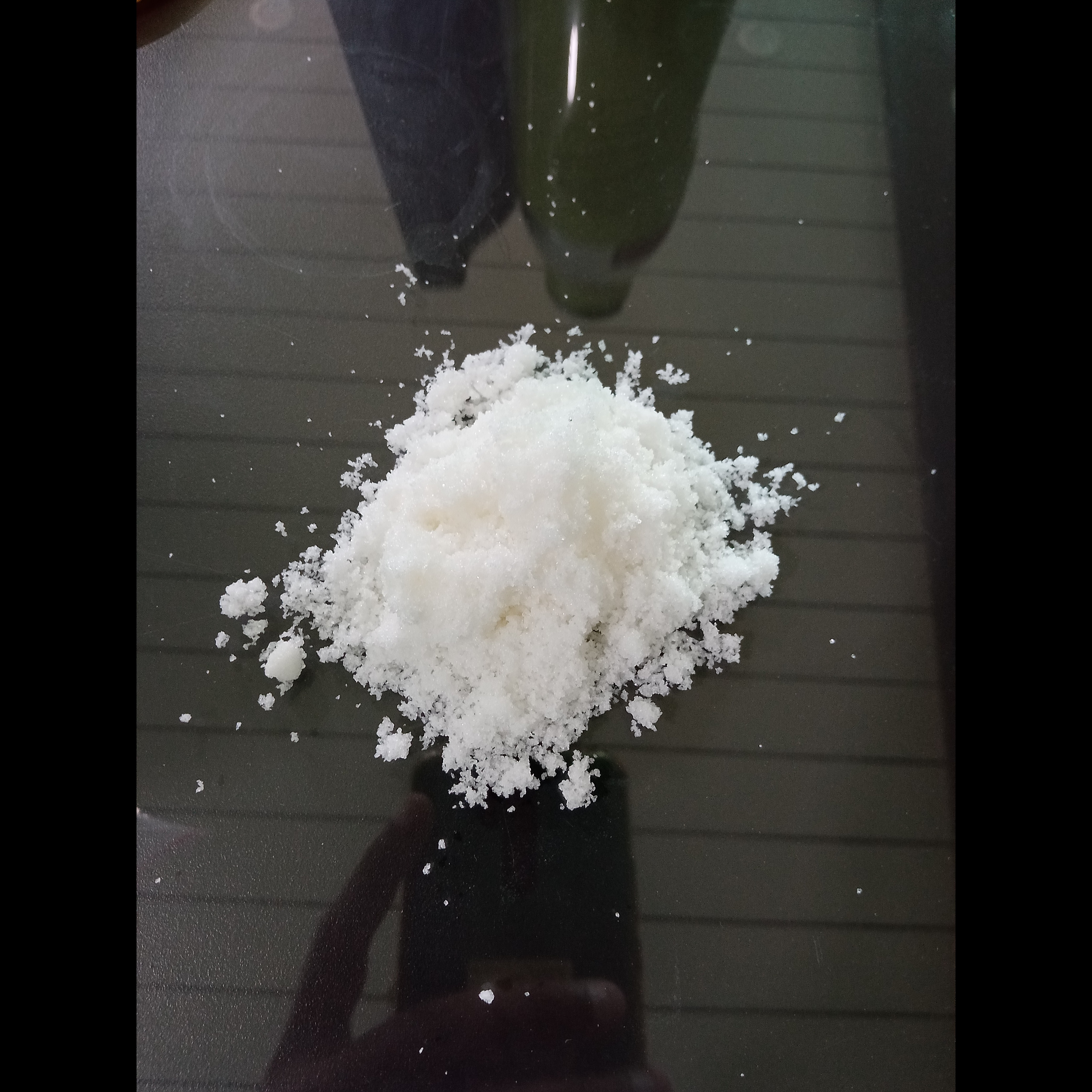
Typical Applications (2025)
- Drinking water nitrate compliance
- Groundwater & borewell analysis
- Fertilizer runoff monitoring
- Wastewater treatment control
Detector Response Characteristics for Nitrate
- Detector: Suppressed conductivity
- Peak shape: sharp, symmetrical
- Conductivity response: moderate–high
- Response factor: linear over wide range (0.1–100 mg/L typical
Peak Matching Principle
In sample chromatogram:
- Find peak with ±2% RT shift compared to nitrate in standard
- Check peak order (must be after nitrite)
RT varies with:
- column age
- eluent concentration
- temperature
- flow rate
- suppressor current
WATER SAMPLE COLLECTION AND FILTRATION PROTOCOLS
Purpose: collect representative samples for nitrate analysis with minimal contamination/alteration.
High-density polyethylene (HDPE) or borosilicate glass bottles (pre-cleaned)
Syringe filters (0.45 µm and 0.22 µm, PTFE or nylon depending on matrix)
Peristaltic or field pump (if sampling from depth)
Nitrile gloves, face shield (as needed)
Cooler with ice packs
Chain-of-custody form and sample labels
Field blank bottles, trip blanks, and duplicate sample bottles
pH meter or strips (optional), thermometer
Sampling procedure
- Pre-clean and label bottles (sample ID, date/time, location, sampler).
- Rinse: If using glass, rinse 3× with sample water (or as per lab SOP). For HDPE, pre-rinsing once or twice is common; follow lab SOP.
- Avoid contamination: wear gloves, avoid touching bottle mouths, cap inside surfaces.
- Grab samples (surface):
- Submerge bottle facing upstream (if in flowing water) and fill to ¾–full for unpreserved; leave little headspace if analysis for dissolved gases not required. For nitrate, minimize contact with air and sunlight.
- Depth sampling:
- Use a sampler or bottles on a line for subsurface samples. Avoid turbid bottom sediments unless intended.
- Filtration in field vs lab:
- If immediate filtration is possible (preferred for dissolved nitrate): filter through 0.45 µm (or 0.22 µm if required) syringe or in-line filter into final bottle to remove particulates. Use pre-rinsed filters and record filter type and pore size.
- If not possible in field: collect unfiltered sample and keep chilled; filter in lab ASAP (<24 hours).
- Preservation and storage:
- Chill to 4 °C immediately (ice in cooler). Do not freeze unless SOP directs (freeze can lyse cells and release nitrogen).
- Analyze within holding time recommended by method (typical for nitrate: 48–72 hours chilled; some methods allow up to 7 days but check method/authority).
- Add preservatives only if method requires (e.g., mercuric chloride is used by some protocols — follow regulatory SOP and safety practices). Many labs prefer chilling only.
- QC samples:
- Field blanks (bottles of deionized water opened at site), trip blanks (if volatile concerns), duplicates (10% of samples), and matrix spikes if required.
- Chain-of-custody: document sample transfer, dates, and temperatures. Record any deviations.
Filtration best-practices
- Pore size: 0.45 µm for “dissolved” fraction; 0.22 µm for stricter dissolved definition or when microbiological removal is required.
- Filter material: PTFE or nylon for aqueous nitrate — avoid cellulose acetate if interfering organics are present. Check solvent compatibility if samples contain organics.
- Minimize pressure: use low-pressure syringe or vacuum filtration with care — high pressure can cause sample heating or cell breakage.
- Rinse filters: discard first few mL if using new syringe/filter to remove preservatives from filter packaging.
- Record filter lot, pore size, and whether filtration was in-field or in-lab.
NITRATE KEYWORDS 2025
(SEO / content / metadata ideas grouped by intent)
High-level informational
- 'what is nitrate in water'
- 'nitrate toxicity human health 2025'
- 'nitrate safe drinking water limit [country/regulator]' (e.g., 'nitrate limit India 2025', 'EPA nitrate limit 2025')
- 'sources of nitrate contamination agriculture runoff'
Analytical / lab intent
- 'nitrate analysis methods ion chromatography'
- 'nitrate determination colorimetric vs ion chromatography 2025'
- 'IC nitrate retention time typical'
- 'nitrate detection limit ion chromatography'
- 'sample prep nitrate water filtration 0.45 µm'
Troubleshooting / technical how-to
- 'ion chromatography nitrate peak tailing fix'
- 'low nitrate response IC troubleshooting'
- 'nitrate peak identification in suppressed conductivity'
- 'IC column selection for nitrate'
Local / commercial / transactional
- 'nitrate testing lab near me'
- 'send water sample for nitrate testing India'
- 'portable nitrate tester for field 2025'
Long-tail & content-rich phrases (good for blogs / guides)
- 'how to collect and store water samples for nitrate testing'
- 'difference between nitrate and nitrite in water'
- 'reduce nitrate in drinking water reverse osmosis vs ion exchange'
- 'nitrate in groundwater mapping and monitoring 2025'
Meta + tag suggestions
- meta description: 'Nitrate testing & guidance: sample collection, filtration, ion chromatography peak ID, and troubleshooting for reliable water analysis (2025).'
- tags: nitrate, ion chromatography, water testing, sample collection, filtration, environmental monitoring
Use local modifiers (city, state, country) for PPC & local SEO. Pair with regulatory keywords: EPA, WHO, BIS, IS (Indian Standards), local authority names for authority-driven traffic.
NITRATE CHROMATOGRAM PEAK IDENTIFICATION IN ION CHROMATOGRAPHY
Goal: reliably identify the nitrate peak on an IC chromatogram (typically detected by suppressed conductivity; sometimes UV for nitrate at 210–220 nm with special methods).
Key checks to identify the nitrate peak
- Retention time (Rt) matching standard
- Run a nitrate standard (calibration solution) immediately before/after samples. Nitrate Rt should match within ±0.1–5% depending on system stability.
- Concentration ladder / multi-point standard
- Use at least 5-point calibration if quantifying; confirm linearity and Rt stability across concentrations.
- Peak shape & symmetry
- Nitrate typically gives a single symmetric peak in well-tuned systems. Tail or fronting suggests column or overload issues.
- Suppressor response
- For suppressed conductivity detection, nitrate peak is positive conductivity after suppression (check sign convention).
- Use retention time marker / internal standard
- Add a non-interfering anion standard (e.g., bromide or fluoride depending on method) to lock Rt if necessary.
- Confirm with spiking / standard addition
- Spike a sample with known nitrate: peak area should increase proportionally and co-elute with the suspected nitrate peak.
- Check isotopic or orthogonal confirmation (if needed)
- For forensic or ambiguous cases, confirm with another technique (e.g., IC-MS, colorimetric method with cadmium reduction for nitrate to nitrite then Griess reaction) if available.
- Column & eluent knowledge
- Know your column type (e.g., AS17, AS9-HC, IonPac series) and typical Rt order (fluoride/ chloride/ nitrite/ bromide/ nitrate varies by column and eluent). Consult column manual for expected elution order and Rt ranges.
- Use chromatogram overlays
- Overlay standard and sample chromatograms to visually confirm co-elution.
- Check sample matrix effects
- High ionic strength or unexpected anions may shift Rt; matrix-matched standards or standard additions help.
Typical retention behavior (general, system-dependent)
- Nitrate usually elutes later than small halides on many anion-exchange columns, but absolute Rt is method- and column-specific — always use standards.
QUICK REFERENCE — CHECKLIST YOU CAN PRINT
- Collect sample in clean HDPE/glass; label & cool to 4 °C.
- Filter 0.45 µm (or 0.22 µm if required) for dissolved nitrate; note filter type.
- Analyze within method holding time; run field blanks & duplicates.
- Run standard before samples; identify nitrate by Rt match + spike.
- If peak issues: run standard → check eluents/suppressor → inspect column/guard → check autosampler → adjust sample prep.
TROUBLESHOOTING ION CHROMATOGRAPHY NITRATE PEAKS
Quick checklist first (do these in order): check standards → injector/autosampler → eluents → suppressor → column → detector/electronics → sample prep.
Common problems & fixes
- No nitrate peak / very low response
- Causes: degraded eluent, depleted suppressor, detector fault, sample dilution/overfiltration, sample matrix suppression, incorrect injection.
- Fixes:
- Run standard to confirm instrument response. If standard absent: check eluents (freshly prepare/degass), replace or regenerate suppressor, check detector settings (gain, range).
- Ensure sample not over-diluted or filtered through reactive filter (some filters may adsorb nitrate slightly).
- Verify injection volume and autosampler rinse solvent.
- Peak shifted retention time
- Causes: eluent concentration or flow rate change, column temperature change, suppressor performance, blockages/leaks, matrix effects.
- Fixes:
- Check pump flow rate, pressure stability, and eluent concentration/prep. Replace eluent if old.
- Inspect fittings for leaks, check degassing of eluent.
- Run standard for new Rt; adjust method if small shift consistent.
- Peak tailing
- Causes: column contamination, particulate on column head, degraded column, suppressor issues, strong matrix components.
- Fixes:
- Clean or backflush column per manufacturer instructions (if allowed), or put in series a guard column and replace guard.
- Replace or regenerate suppressor.
- Use stronger cleanup (e.g., SPE) or precolumn to remove matrix interferents.
- Split peak / doublet
- Causes: sample overload, column contamination, poorly mixed standard, autosampler carryover, multiple nitrate-like species co-eluting.
- Fixes:
- Reduce injection volume or dilute sample.
- Clean autosampler needle and ports; increase rinse cycles.
- Run a high-resolution column or gradient method to separate co-eluting species; perform spiking to confirm.
- Broad peaks or reduced resolution
- Causes: column aging, voids, high backpressure, clogged frit, degraded packing.
- Fixes:
- Check column backpressure; if low and resolution poor, column may be damaged — replace.
- Replace guard column and frits; perform column performance test with standard mix.
- Baseline noise or drift
- Causes: air in eluent, ionic contamination, detector electronics, temperature fluctuations.
- Fixes:
- Degas eluent, replace eluent bottle, check degasser, inspect pump for cavitation, check grounding and connections, stabilize ambient temperature.
- Run blank to see if noise persists; replace conductivity cell if needed.
- Ghost peaks / carryover
- Causes: autosampler needle not cleaned, vial septa contamination, column memory from strong sample.
- Fixes:
- Increase autosampler wash/rinse, use stronger rinse solvent, use dedicated vials for strong samples, run blanks between high concentration samples.
- Negative peaks or inverted peaks (in suppressed conductivity)
- Causes: incorrect suppression settings, improper acid/base eluent, suppressor polarity issue.
- Fixes:
- Verify suppressor operation and reagent (if chemically regenerated suppressor). Check documentation for correct polarity and configuration.
- Unexpected extra peak at nitrate Rt
- Causes: interfering anion co-eluting (e.g., organic acids under some conditions), sample contamination.
- Fixes:
- Perform spiking (standard addition) to observe co-elution behavior, or use orthogonal detection (UV) or confirm with IC-MS if available.
Maintenance & preventative checklist
- Replace eluents regularly; label prep dates.
- Regenerate or replace suppressor per schedule or when baseline changes.
- Use guard columns and replace often (first defense against contamination).
- Filter and degas eluents; use fresh deionized water.
- Maintain pump seals and check tubing for leaks.
- Run QC standards, blanks, and system suitability at start of each run.
- Keep a logbook of column performance (theoretical plates, backpressure, Rt).
Example troubleshooting flow for a poor nitrate peak
- Run calibration standard. If good → problem is sample prep or matrix. If poor → instrument problem.
- If instrument: check eluent, suppressor, pump pressure, baseline.
- If sample: spike sample with standard. If spike recovers → matrix suppression; consider dilution or clean-up. If spike fails → check sample handling (e.g., preservative, microbial activity that consumed nitrate).
Use “nitrate in water” + location combos
Include WHO, BIS, EPA limits in content
Add tables + FAQs (Google loves it)
Target NO₃-N vs NO₃⁻ confusion — big search gap
nitrate testing lab India
nitrate water test Vadodara
nitrate analysis Gujarat
drinking water nitrate India
groundwater nitrate Gujarat
SAMPLE PRESERVATION AND STORAGE IN WATER TESTING.LAXMI ENTERPRISE.VADODRA,