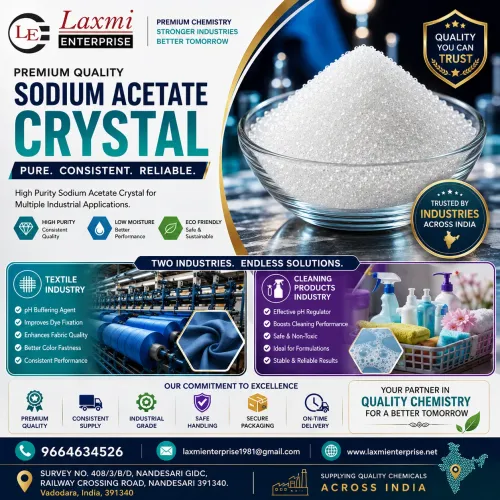


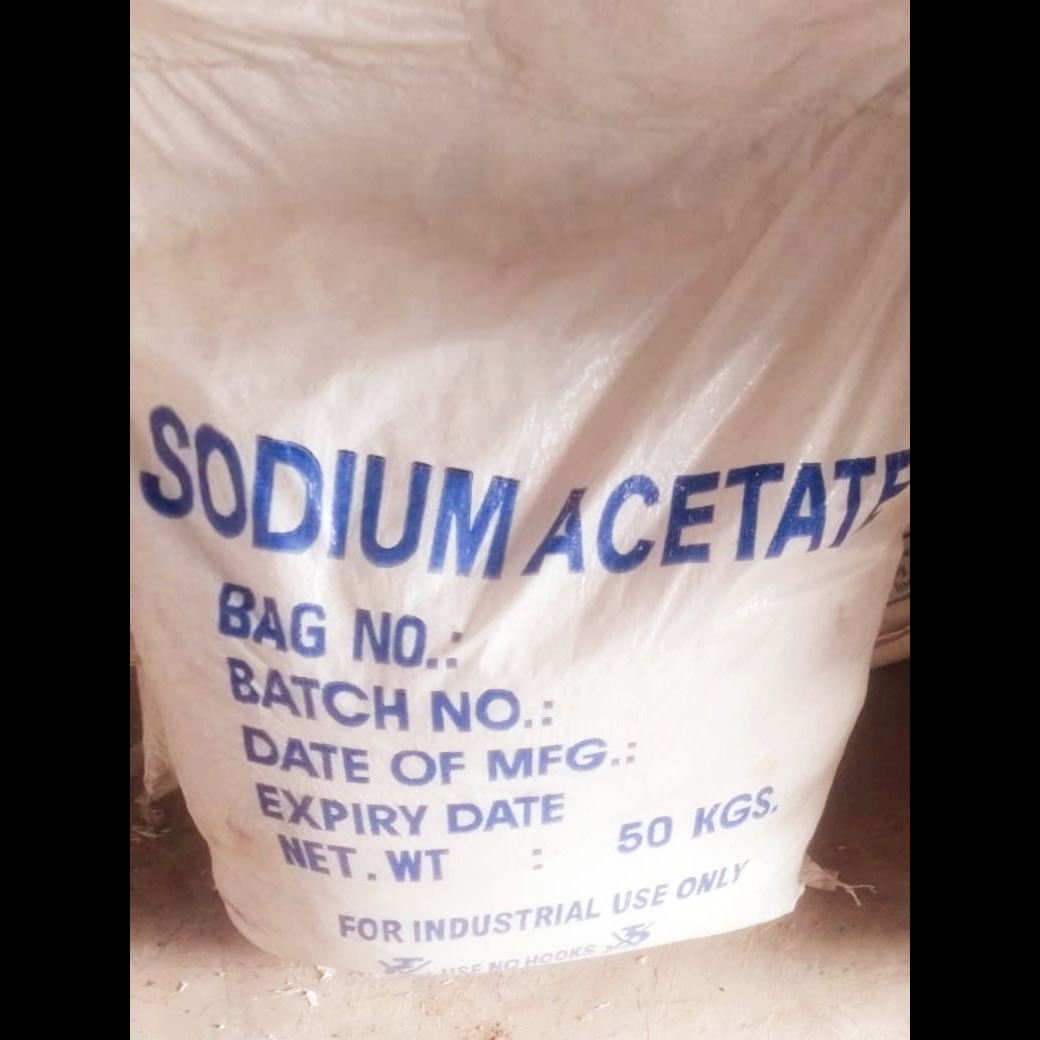
Product: Sodium Acetate
Packaging: 25 Kg HDPE Bags
Grade: Industrial / Technical / Laboratory (as applicable)
Appearance: White crystalline powder
Molecular Formula: CH₃COONa
CAS No.: 127-09-3
Applications:
Textile industry (as a buffering agent in dyeing)
Food industry (as a preservative and flavoring agent – E262)
Pharmaceuticals and laboratory reagents
Leather tanning and electroplating processes
Storage: Store in a cool, dry place away from moisture.
Shelf Life: 24 months from the date of manufacture (if stored properly).
Sodium Acetate as a Neutralization Agent
Overview:
Sodium acetate (CH₃COONa) is commonly used as a neutralization agent in various industrial and laboratory applications. It effectively neutralizes acidic solutions and helps maintain stable pH levels in chemical processes.
Mechanism of Action:
When sodium acetate is added to an acidic medium, it reacts with free hydrogen ions to form acetic acid and sodium salts. This reaction reduces acidity and brings the system closer to a neutral pH, making it safer for handling or further processing.
Applications:
Textile Industry: Used to neutralize sulfuric acid residues after dyeing and bleaching processes.
Pharmaceuticals: Helps control pH in formulations and buffer systems.
Food Processing: Serves as a mild buffer and acidity regulator (E262).
Water Treatment: Used to neutralize acidic effluents before discharge.
Electroplating and Metal Finishing: Stabilizes pH in bath solutions and reduces corrosion risks.
Advantages:
Provides gentle and controlled neutralization
Non-corrosive compared to strong bases
Environmentally friendly and easy to handle
Compatible with a wide range of industrial systems
• sodium acetate
• sodium acetate anhydrous
• sodium acetate trihydrate
• sodium acetate buffer
• sodium acetate CAS 127-09-3
• sodium acetate E262
• sodium ethanoate
• sodium salt of acetic acid
• sodium acetic acid
• sodium CH3COO
• natrii acetas
• hot ice (trihydrate)
• sodium acetate hydrate
Would you like me to write this section in a catalog-style format or optimized for your website SEO page
Sodium Acetate in Leather Tanning
Overview:
Sodium acetate (CH₃COONa) is widely used in the leather tanning industry as a buffering and neutralizing agent. It helps regulate the pH of tanning baths and ensures uniform penetration of tanning materials, resulting in smooth, high-quality leather.
Role in Leather Processing:
Neutralization: Sodium acetate neutralizes residual acidity from chrome tanning or pickling processes, protecting the leather fibers from acid damage.
Buffering Action: It maintains an optimal pH balance (usually between 4.5 and 6.0), allowing consistent absorption of tanning agents.
Improved Dyeing: By stabilizing the pH, it enhances color uniformity during the dyeing process.
Softness and Strength: Proper neutralization using sodium acetate leads to softer, more flexible, and durable leather.
Benefits:
Provides controlled neutralization without over-alkalizing
Enhances leather texture and color quality
Reduces risk of grain damage and uneven tanning
Safe, economical, and easy to handle
Recommended Packaging: 25 Kg HDPE Bags
Grade: Industrial / Technical
Sodium Acetate in Textile Dyeing Processes
Overview:
Sodium acetate (CH₃COONa) plays a crucial role in the textile dyeing industry as a buffering and neutralizing agent. It helps control the pH of dye baths, ensuring uniform color absorption and high-quality finishing of fabrics.
Function in Dyeing:
pH Control: Sodium acetate maintains a slightly acidic environment, essential for achieving consistent dye uptake and preventing uneven coloring.
Neutralization: It neutralizes residual acidity or alkalinity in fabrics after scouring or bleaching, preparing them for effective dyeing.
Buffering Agent: In reactive and vat dyeing, sodium acetate buffers the solution to prevent rapid changes in pH, ensuring better color fastness.
Improved Fabric Quality: It helps produce soft, bright, and evenly dyed textiles by stabilizing dyeing conditions.
Applications:
Cotton, wool, and silk dyeing
Reactive, direct, and acid dye processes
Finishing and after-treatment baths
Advantages:
Enhances dye consistency and brightness
Prevents dye hydrolysis and wastage
Environmentally safe and non-corrosive
Compatible with various textile chemicals
Product Overview
Sodium acetate is a versatile chemical compound widely used in textile dyeing, leather tanning, and various industrial processes. It acts as a buffering agent, pH regulator, and neutralizing compound, ensuring stability and efficiency across multiple applications.
Sodium Acetate in Textile Dyeing Processes
Sodium acetate plays a key role in dye bath pH control and color fixation. It maintains an optimal acidic environment during dyeing, allowing even dye penetration and superior shade uniformity.
Ensures consistent color tone and fastness
Prevents dye hydrolysis and patchy coloring
Used in reactive, acid, and direct dyeing of cotton, wool, and silk
Sodium Acetate for Dyeing and Color Fixation
In textile finishing, sodium acetate helps stabilize dyes, improving color brightness and wash durability. It minimizes color bleeding and enhances dye-fiber bonding.
Sodium Acetate Used in Leather Tanning
In the leather industry, sodium acetate serves as a neutralization and buffering agent after chrome tanning or pickling.
Neutralizes residual acids in hides and skins
Prevents grain damage and over-tanning
Produces soft, flexible, and high-quality leather
Buffering Agent for Chrome Tanning / pH Regulator for Leather Processing
Maintains tanning bath pH between 4.5 and 6.0
Ensures uniform chrome penetration
Enhances color and texture consistency in finished leather
Sodium Acetate as a Neutralization Agent
Sodium acetate reacts with acids to form acetic acid, providing mild and controlled neutralization in:
Textile effluents
Leather processing
Water treatment
Pharmaceutical formulations
It is safer and less corrosive compared to strong alkaline neutralizers.
Industrial Applications of Sodium Acetate
Textiles: Dyeing, printing, and finishing processes
Leather: pH regulation and acid neutralization
Pharmaceuticals: Buffering in formulations
Food Industry: Preservative and acidity regulator (E262)
Electroplating: pH control in plating baths
Water Treatment: Neutralization of acidic effluents
Storage and Handling Guidelines
Store in a cool, dry, and well-ventilated area away from moisture
Keep bags tightly sealed when not in use
Avoid contact with strong acids and oxidizing agents
Shelf life: 24 months under recommended storage conditions
Packaging
Standard Pack: 25 Kg HDPE Bags
Grades Available: Industrial / Technical / Textile