

INDUSTRIAL APPLICATIONS OF SODIUM ACETATE
;;;;;;;;;;;;;;;;;;;;; Overview;;;;;;;;;;;;;;;;;;;
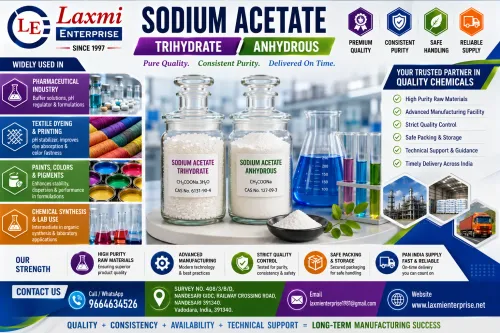
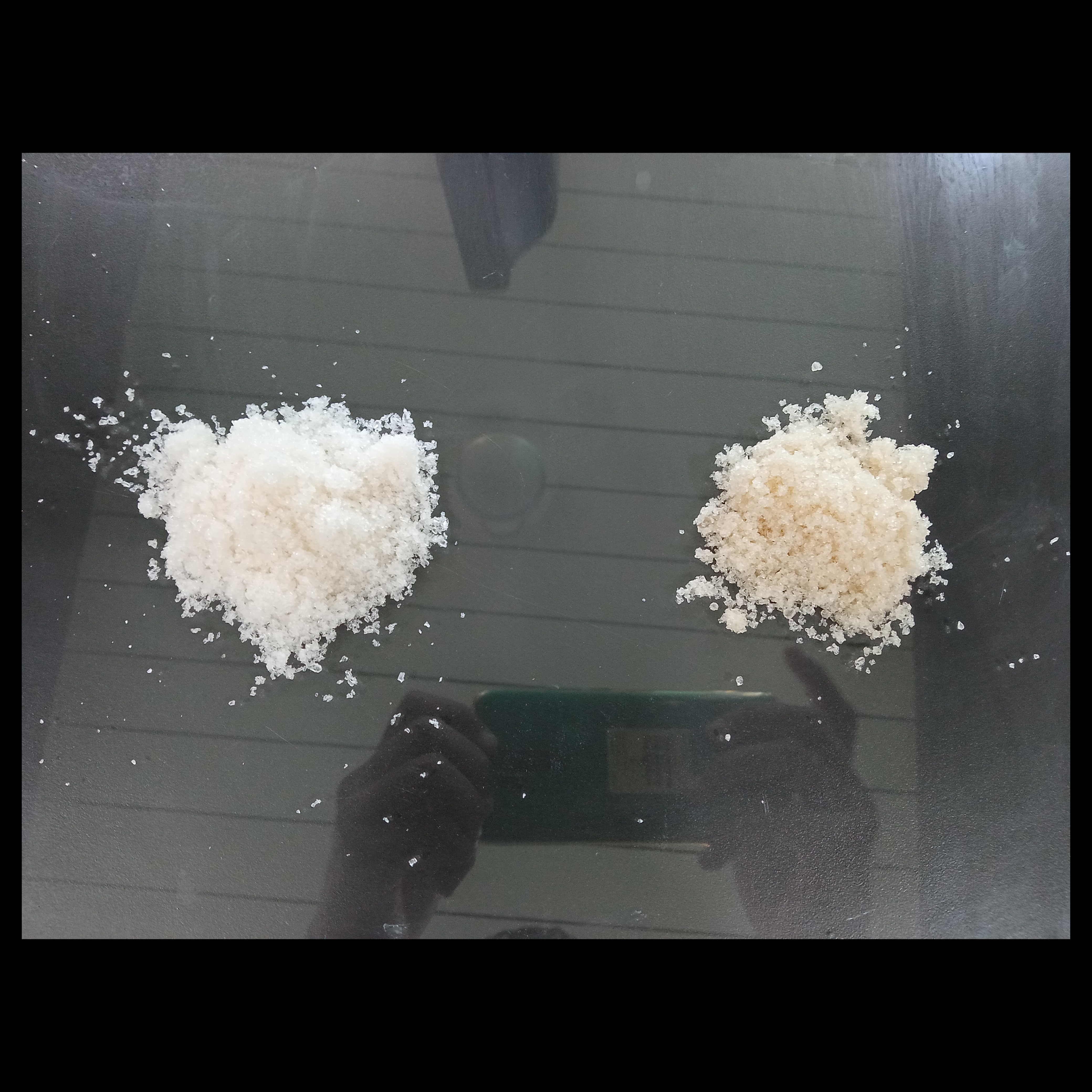
Sodium Acetate (CH₃COONa) is a white, water-soluble crystalline salt widely used across multiple industries.
It is valued for its buffering capacity, corrosion inhibition, and chemical stability. Industrial grades are commonly applied in textiles, food processing, pharmaceuticals, and construction.
1. Textile Industry
pH Buffering Agent: Maintains the correct pH in dye baths, preventing uneven dyeing.
Mordant Substitute: Assists in fixing dyes to fibers.
Neutralizing Agent: Neutralizes residual sulfuric acid after sulfate or reactive dyeing.
Benefits: Improves color uniformity, brightness, and fastness.
2. Food Industry
(Food-grade Sodium Acetate only)
Flavoring Agent: Adds a mild vinegar-like flavor in snacks, sauces, and condiments.
Preservative: Inhibits microbial growth, especially in pickles, baked goods, and packaged snacks.
Buffering Agent: Stabilizes pH in processed foods and beverages.
3. Pharmaceutical Industry
Used as a buffer in intravenous solutions.
Stabilizes protein formulations and biochemical reagents.
Acts as a pH regulator in pharmaceutical formulations.
4. Chemical Industry
Laboratory Reagent: Prepares buffer solutions for analytical and experimental use.
Catalyst / Reactant: Participates in esterification, acetylation, and other organic reactions.
Corrosion Inhibitor: Protects metal surfaces in industrial processes, especially in boilers and cooling systems.
5. Construction Industry
Concrete Sealant: Used in combination with other chemicals to improve surface finish and durability.
Corrosion Protection: Acts as an additive in anti-corrosion coatings for steel and metal structures.
6. Leather Industry
Maintains pH during tanning.
Helps in uniform penetration of tanning agents, improving leather quality.
7. Deicing and Heating Applications
Deicing Agent: Used on roads and airport runways in cold regions.
Heating Pads / Chemical Hand Warmers: Reacts with water and iron to release heat (exothermic reaction) for portable heating solutions.
. Key Benefits Across Industries
Water-soluble and stable
Non-toxic and safe in approved concentrations
Effective pH buffer and neutralizer
Enhances product quality, durability, and safety
Environmentally compatible when used appropriately
. Handling and Storage
Store in cool, dry, and ventilated areas.
Keep away from strong acids and oxidizing agents.
Use HDPE bags or lined containers for bulk storage.
Avoid dust inhalation; wear gloves and masks for industrial-scale handling.
Packaging
25 kg / 50 kg HDPE bags
Jumbo bags (1 MT) for industrial use
Available in powder or crystalline form
Grades: Industrial, Food, Pharmaceutical, Laboratory
Conclusion
Sodium Acetate is a versatile industrial chemical widely used for:
Textile dyeing and finishing
Food flavoring and preservation
Pharmaceutical buffers
Chemical processing and corrosion inhibition
Construction and leather applications
Its buffering, neutralizing, and stabilizing properties make it indispensable in modern industrial processes.
MANUFACTURING OF SODIUM ACETATE
* Overview
Sodium Acetate (CH₃COONa) is a white, crystalline salt widely used in textiles, food, pharmaceuticals, and chemical industries.
Industrial production focuses on high purity, controlled crystallization, and cost-efficiency.
* Raw Materials
Glacial Acetic Acid (CH₃COOH) – primary source of acetate ions
Sodium Carbonate (Na₂CO₃) or Sodium Hydroxide (NaOH) – neutralizing agent
Water (H₂O) – solvent for reaction and crystallization
Manufacturing Methods
1. Neutralization with Sodium Carbonate
Reaction:
Process Steps:
Dissolve sodium carbonate in water.
Add glacial acetic acid slowly under stirring.
CO₂ evolves and escapes; monitor pH until neutral.
Evaporate water to obtain sodium acetate crystals.
Dry and grade crystals for industrial use.
Advantages: Cost-effective and widely used in large-scale production.
2. Neutralization with Sodium Hydroxide
Reaction:
Process Steps:
Prepare NaOH solution in water.
Slowly add glacial acetic acid while stirring.
Maintain controlled temperature to avoid decomposition.
Evaporate water to crystallize sodium acetate.
Filter, dry, and pack as required.
Advantages: Produces high purity sodium acetate; preferred for food and pharmaceutical grades.
3. By-product from Acetic Acid Production
Some industrial sodium acetate is obtained as a by-product from acetaldehyde or acetic acid production.
After neutralization, the product is purified, crystallized, and dried for industrial use.
🔹 Crystallization and Drying
The saturated sodium acetate solution is cooled to induce crystallization.
Crystals are separated via centrifugation or filtration.
Drying is carried out at 60–80°C to remove moisture while maintaining heptahydrate or anhydrous forms.
🔹 Forms Produced
Sodium Acetate Trihydrate (CH₃COONa·3H₂O) – for food and chemical applications
Anhydrous Sodium Acetate – for industrial and laboratory uses
Powder or Granular Form – depending on application requirements
. Key Considerations
Purity Control: Critical for pharmaceutical, food, and laboratory grades.
pH Monitoring: Neutralization must reach pH 7–8 to avoid excess acetic acid or sodium hydroxide.
Temperature Control: Prevents decomposition and ensures proper crystallization.
Moisture Control: Avoids caking and ensures storage stability.
. Applications Post-Manufacturing
Textiles: Mordant and dye bath neutralizer
Food Industry: Flavoring, preservative, buffer
Pharmaceuticals: Buffer and reagent
Chemical Industry: Corrosion inhibitor, catalyst, and reagent
. Conclusion
Sodium Acetate manufacturing is a straightforward neutralization process using acetic acid and a sodium source, followed by crystallization and drying.
Choice of sodium source (carbonate vs hydroxide) depends on cost, purity, and intended application.
Proper control of pH, temperature, and crystallization ensures high-quality industrial, food, or pharmaceutical grade sodium acetate.