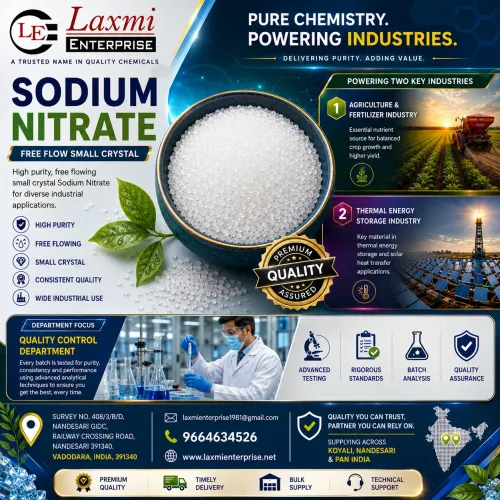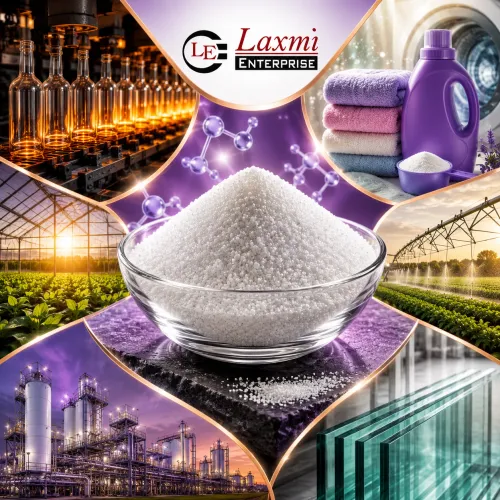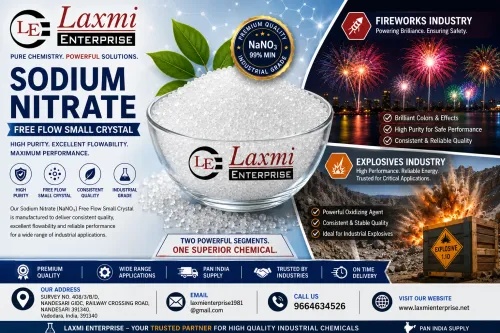
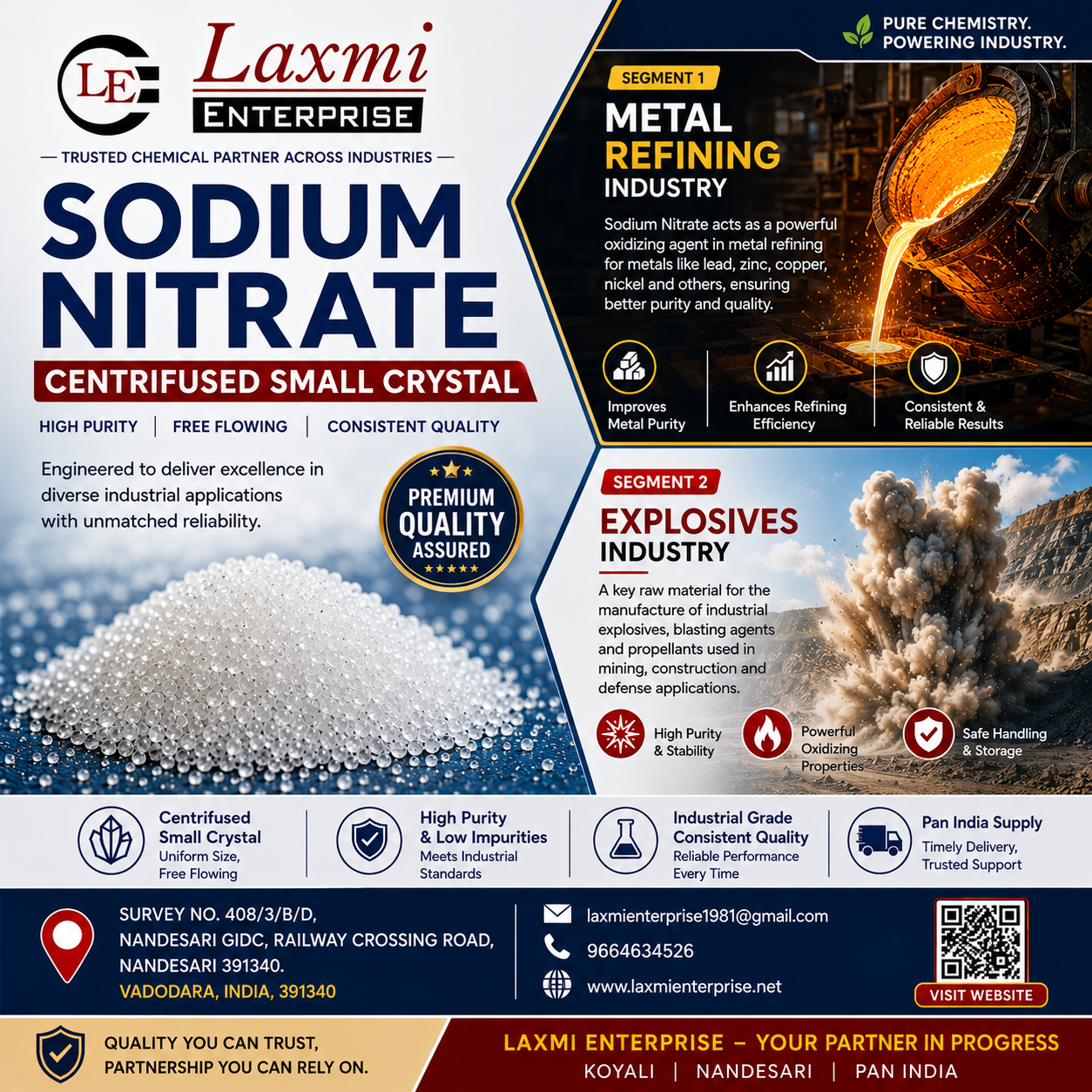
Sodium Nitrate Free Flow for Specialty Chemical Manufacturing Industry
The specialty chemical industry produces high-value chemical products designed for specific industrial applications where consistency, quality, and performance are critical. Unlike commodity chemicals, specialty chemicals are often manufactured according to precise formulations and customer-specific requirements.
Manufacturers in this sector typically evaluate every incoming raw material to ensure it aligns with product specifications, quality systems, and production objectives. Sodium Nitrate Free Flow is selected in applications where its chemical properties and consistent physical characteristics match the formulation and process requirements.
Because specialty chemical production often involves controlled manufacturing environments, procurement teams emphasize supplier reliability, documentation, and batch consistency alongside technical specifications.
Why Specialty Chemical Manufacturers Evaluate Sodium Nitrate
Technical teams generally review:
Product identity
Chemical purity
Batch consistency
Particle size distribution
Flowability
Moisture condition
Packaging quality
Documentation completeness
Supply reliability
Each organization establishes its own acceptance criteria based on product requirements and internal quality standards.
Engineering Considerations
During supplier qualification, manufacturers commonly assess:
Product Quality
Consistent specifications
Stable physical characteristics
Controlled impurity profile
Reliable batch performance
Documentation
Certificate of Analysis (COA)
Safety Data Sheet (SDS)
Product Specification Sheet
Batch identification
Supply Chain
Delivery reliability
Inventory support
Packaging consistency
Technical communication
Quality Requirements
Specialty chemical manufacturers often prioritize:
Batch repeatability
Product traceability
Reliable documentation
Stable packaging quality
Consistent physical appearance
Controlled storage conditions
Maintaining consistency helps support repeatable manufacturing and customer quality expectations.
Commercial Packing Options
Packing Size Typical Industrial Use
25 kg Bags Pilot production, laboratories, and smaller manufacturing batches
50 kg Bags Routine industrial manufacturing
500 kg Jumbo Bags Bulk handling and high-volume production
The most appropriate packaging depends on consumption, warehouse infrastructure, and material handling systems.
Procurement Checklist
Before approving a shipment, procurement and quality teams commonly verify:
✓ Product Name
✓ Batch Number
✓ COA
✓ SDS
✓ Product Specification Sheet
✓ Packaging Condition
✓ Correct Labeling
✓ Quantity Received
✓ Packing Size
✓ Purchase Order Compliance
Benefits for Specialty Chemical Manufacturers
Organizations may benefit from:
Consistent product quality
Reliable physical characteristics
Improved inventory traceability
Better documentation control
Standardized packaging options
Dependable supplier communication
Stable long-term supply planning
These benefits depend on selecting a product that matches the intended manufacturing process and quality requirements.
Specialty Chemical Industry FAQs
1. Why is Sodium Nitrate Free Flow used in specialty chemical manufacturing?
In certain specialty chemical applications, Sodium Nitrate serves as a raw material where its chemical and physical properties align with the process requirements. Suitability depends on the specific formulation and manufacturing objectives.
2. Why is batch consistency important in specialty chemicals?
Specialty chemical manufacturers often produce products with narrow quality tolerances. Consistent batches help maintain repeatable manufacturing performance and simplify quality control.
3. What technical documents should accompany each shipment?
Organizations commonly request:
Certificate of Analysis (COA)
Safety Data Sheet (SDS)
Product Specification Sheet
Packing List
Batch Identification
Commercial Invoice
Additional documents may be requested based on customer or regulatory requirements.
4. Why is documentation critical for specialty chemicals?
Documentation supports traceability, quality verification, supplier qualification, customer audits, and regulatory compliance. It also helps maintain consistent production records.
5. Which packing size is most suitable?
The appropriate packaging depends on production scale:
25 kg Bags – Research, development, and small production batches.
50 kg Bags – Regular industrial manufacturing.
500 kg Jumbo Bags – High-volume production with bulk handling systems.
6. What should quality teams inspect before accepting material?
Typical checks include:
Product identity
Batch number
Packaging condition
COA review
SDS availability
Quantity received
Label accuracy
Inspection procedures should follow the organization's internal quality system.
7. Why is supplier qualification important?
Supplier qualification helps verify a supplier's ability to provide consistent product quality, complete documentation, reliable deliveries, and technical support over the long term.
8. How should Sodium Nitrate Free Flow be stored?
The product should be stored according to the supplier's recommendations and applicable regulations. Generally, this means keeping it in its original packaging within a clean, dry, and well-ventilated warehouse while protecting it from unnecessary moisture exposure.
9. Why do specialty chemical manufacturers review the COA?
The COA provides batch-specific quality information that allows buyers to compare the supplied material with their internal purchasing specifications before release for production.
10. What makes a reliable Sodium Nitrate supplier for specialty chemicals?
Manufacturers often look for suppliers that provide:
Consistent product quality
Reliable documentation
Stable packaging quality
On-time deliveries
Responsive technical support
Long-term supply capability
Keywords