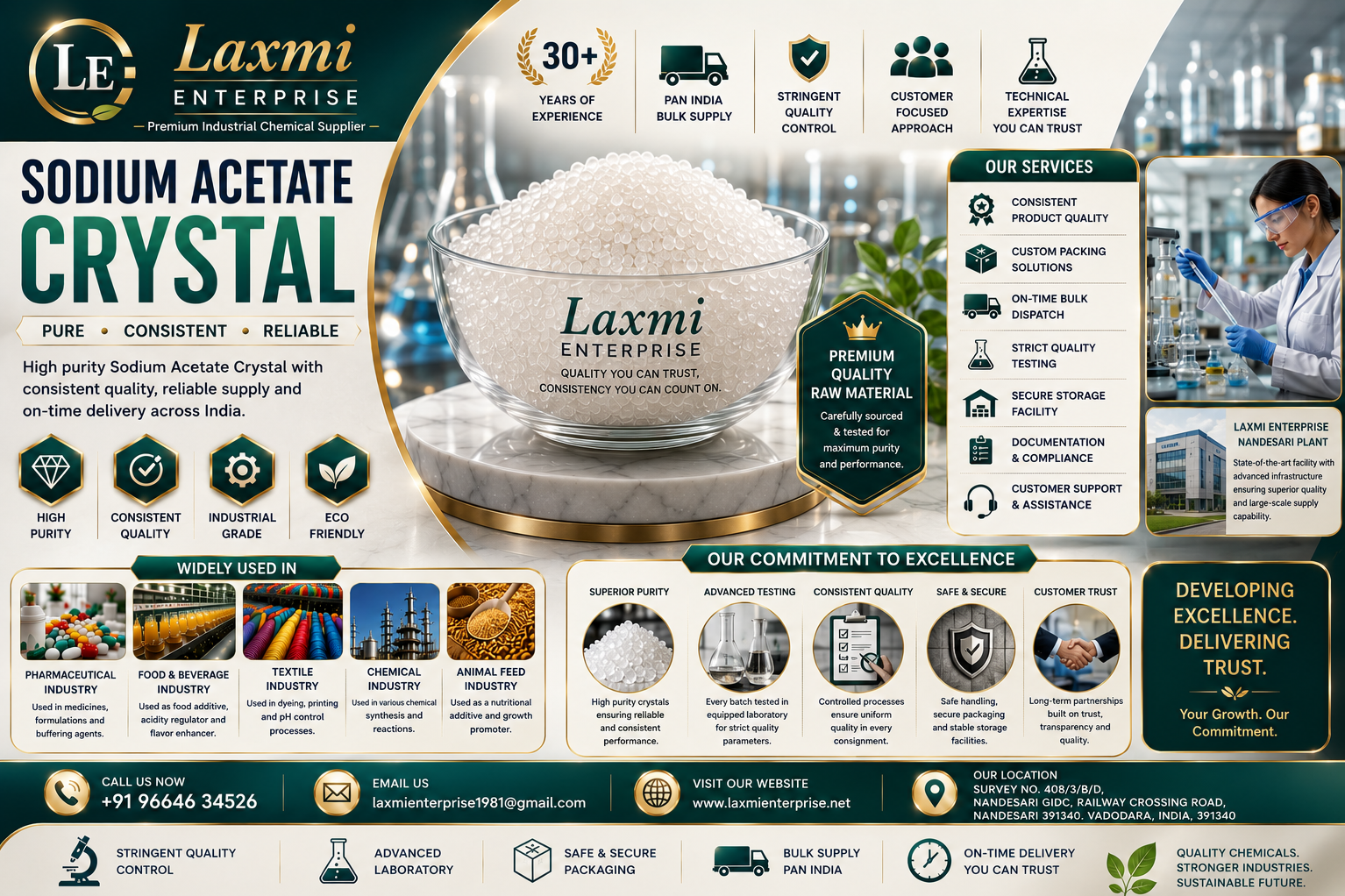
Sodium Acetate vs Acetic Acid in Textile Dyeing
Complete Scientific Comparison of Buffer Chemistry, pH Control, Reactive Dyeing, Cost Efficiency, Safety, Process Stability & Industrial Best Practices
Among all the chemicals used in textile dyeing, Sodium Acetate and Acetic Acid are two of the most frequently discussed process chemicals. Textile engineers often ask:
Which chemical should be used?
Are they interchangeable?
Why do some dye houses use both?
Which provides better pH control?
Which is more economical?
Which offers better process stability?
The answer is more complex than simply choosing one chemical over the other.
Although Sodium Acetate and Acetic Acid are chemically related, they perform different functions within textile processing. In many reactive dyeing processes, they are used together as part of a buffer system, helping maintain controlled pH conditions during specific stages of dyeing. In other applications, one may be selected over the other depending on the dye chemistry, process design, and mill operating procedures.
This comprehensive guide explains the chemistry behind both products, their roles in textile processing, technical differences, advantages, limitations, quality requirements, procurement considerations, and industrial best practices.
Understanding the Chemistry
What Is Acetic Acid?
Acetic Acid (CH₃COOH) is a weak organic acid commonly used in textile processing for pH adjustment and neutralization.
Industrial textile grades are available in different concentrations, such as:
Glacial Acetic Acid
Diluted Acetic Acid solutions
What Is Sodium Acetate?
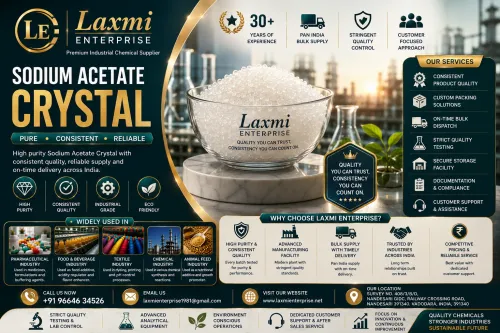
Sodium Acetate (CH₃COONa) is the sodium salt of Acetic Acid.
Commercially it is available as:
Sodium Acetate Anhydrous
Sodium Acetate Trihydrate
Unlike Acetic Acid, Sodium Acetate is not primarily used to lower pH. Its major role in many textile applications is contributing to buffering systems.
Textile Chemistry Insight
Acetic Acid provides acidity. Sodium Acetate contributes buffering capacity. When used together in suitable proportions, they can help create a buffer system that resists rapid pH changes within a defined operating range.
Why Textile Dyeing Needs pH Control
Reactive dyeing depends on carefully controlled chemical conditions.
Sudden pH changes may influence:
Dye exhaustion
Dye fixation
Hydrolysis
Shade reproducibility
Process consistency
Chemical consumption
Maintaining stable process conditions helps reduce production variability.
The Buffer System Explained
A buffer system consists of:
A weak acid
Its corresponding salt
In textile dyeing:
Acetic Acid + Sodium Acetate = Buffer System
The purpose is not to keep the pH perfectly constant but to reduce rapid fluctuations that may occur during processing.
Engineering Insight
Think of Acetic Acid as the driver that adjusts the direction, while Sodium Acetate acts like a shock absorber, helping smooth sudden changes in pH. Together they create a more stable processing environment.
Technical Comparison
Parameter Sodium Acetate Acetic Acid
Chemical Type Sodium salt of acetic acid Weak organic acid
Primary Role Buffering pH adjustment
Physical Form Powder or crystals Liquid
Handling Easy solid handling Requires acid handling procedures
Storage Dry warehouse Acid-resistant storage
Corrosiveness Low Higher than Sodium Acetate
Contribution to Buffer Systems Yes Yes (with Sodium Acetate)
Used Alone In selected applications Frequently used for neutralization and pH adjustment
Applications in Textile Processing
Reactive Dyeing
Many reactive dyeing systems use Acetic Acid, Sodium Acetate, or a combination depending on the dye manufacturer's process recommendations.
Neutralization
Acetic Acid is commonly used after alkaline treatments to neutralize residual alkalinity before subsequent processing.
Laboratory Dye Development
Textile laboratories often evaluate both chemicals during recipe development to establish reproducible dyeing procedures.
Textile Printing
Certain printing formulations require controlled pH conditions where buffer systems may be beneficial.
Specialty Dyeing
Specialty fibers and dyes may require customized chemical systems determined through laboratory trials.
Advantages of Sodium Acetate
Industrial users often value Sodium Acetate because it offers:
Stable buffering characteristics
Easy handling as a solid
Good storage stability
Consistent industrial quality
Reduced corrosion concerns compared with strong acids
Good compatibility with many textile processing systems
Advantages of Acetic Acid
Acetic Acid is widely used because it provides:
Effective pH adjustment
Rapid neutralization
High water solubility
Broad industrial acceptance
Versatility across multiple textile processes
Choosing the Right Chemical
The correct choice depends on several factors:
Dye chemistry
Process sequence
Required pH range
Equipment design
Water quality
Customer specifications
Mill operating procedures
Cost considerations
There is no universal answer for every textile process.
Technical Authority Insight
Professional dye houses rarely ask, 'Which chemical is better?' Instead, they ask, 'Which chemical system is most appropriate for this process?' The answer depends on validated laboratory trials and production experience.
Cost vs Process Economics
Purchasing cost is only one part of the equation.
A textile mill should also evaluate:
Re-dye costs
Water consumption
Steam consumption
Labor
Machine utilization
Production downtime
Export quality claims
A slightly higher-quality chemical may reduce overall manufacturing costs if it improves process consistency.
Quality Parameters to Evaluate
Before approving Sodium Acetate or Acetic Acid, textile companies commonly review:
Product Quality
Purity
Appearance
Concentration (where applicable)
Moisture (for Sodium Acetate)
Solubility
Batch consistency
Documentation
Certificate of Analysis (COA)
Technical Data Sheet (TDS)
Safety Data Sheet (SDS)
Batch number
Packaging
Correct labeling
Packaging integrity
Moisture protection
Safe transportation
Supplier Qualification
Professional textile companies commonly evaluate suppliers using:
Manufacturing capability
Product consistency
Technical documentation
Traceability
Packaging quality
Delivery performance
Technical support
Commercial reliability
Procurement Insight
Changing suppliers without technical validation may increase production risk. Even when products meet the same specification, differences in manufacturing consistency can influence dyeing performance.
Safety Considerations
Good chemical management includes:
Proper storage
Personal protective equipment (PPE)
Employee training
Spill response procedures
Safe chemical handling
Following the supplier's Safety Data Sheet (SDS)
Always follow your organization's health, safety, and environmental procedures.
Storage Recommendations
Sodium Acetate
Store in a dry warehouse.
Protect from moisture.
Keep sealed after opening.
Avoid contamination.
Acetic Acid
Store in appropriate chemical storage areas.
Use compatible containers.
Keep away from incompatible materials.
Follow supplier storage recommendations and local safety regulations.
Industrial Case Study
A textile export mill experiences inconsistent shade reproducibility on premium cotton fabrics.
Initially, engineers suspect dye quality.
After a technical review, they discover:
Variable Acetic Acid concentration from different suppliers.
Inconsistent Sodium Acetate purity.
Lack of standardized buffer preparation.
The company introduces:
One approved supplier for both chemicals.
Incoming laboratory verification.
Standard operating procedures (SOPs) for buffer preparation.
Continuous pH monitoring.
Results after implementation:
Improved shade consistency.
Lower reprocessing rates.
Reduced chemical waste.
Better export quality acceptance.
Improved production efficiency.
Common Mistakes
Mistake Consequence Best Practice
Selecting chemicals based only on price Increased production variability Evaluate total manufacturing cost
No incoming quality testing Batch inconsistency Verify each shipment
Poor chemical storage Product degradation Follow storage recommendations
Frequent supplier changes Process instability Maintain approved supplier programs
Ignoring pH monitoring Shade variation Monitor process conditions continuously
Best Practices for Textile Mills
Leading dye houses typically:
Qualify chemical suppliers.
Review COA, TDS, and SDS before approval.
Validate laboratory recipes before production.
Standardize buffer preparation procedures.
Continuously monitor pH during dyeing.
Maintain complete batch traceability.
Periodically audit supplier performance.
Frequently Asked Questions (FAQ)
1. Is Sodium Acetate the same as Acetic Acid?
No. Sodium Acetate is the sodium salt of Acetic Acid. Although they are chemically related, they perform different functions in textile processing.
2. Which chemical lowers pH?
Acetic Acid is primarily used for pH adjustment and neutralization. Sodium Acetate contributes buffering capacity rather than acting as the primary acidifying agent.
3. Why are both chemicals sometimes used together?
When used in suitable proportions, they form a buffer system that helps reduce rapid pH changes during specific textile processes.
4. Can Sodium Acetate replace Acetic Acid?
Not in every application. The choice depends on the dyeing process, formulation, and validated production procedures.
5. Which chemical is safer to handle?
Both require appropriate handling procedures. Acetic Acid generally requires greater attention because of its acidic nature, while Sodium Acetate should also be handled according to the supplier's Safety Data Sheet (SDS).
6. Does using higher-quality chemicals improve dyeing?
Consistent raw material quality can improve process repeatability and reduce production variability, but overall results also depend on equipment, recipes, water quality, and operator control.
7. What documents should suppliers provide?
Suppliers should provide a Certificate of Analysis (COA), Technical Data Sheet (TDS), Safety Data Sheet (SDS), batch identification, and product specifications.
8. How should Sodium Acetate be stored?
Store it in sealed packaging in a clean, dry warehouse, protected from moisture and contamination.
9. Why is pH monitoring important?
Continuous pH monitoring helps maintain consistent processing conditions and reduces the risk of shade variation or process deviations.
10. Can changing suppliers affect dyeing quality?
Yes. Differences in product consistency or manufacturing processes may influence dyeing performance. New suppliers should be technically evaluated before routine production.
11. What should procurement teams evaluate besides price?
Evaluate product consistency, documentation, packaging, traceability, technical support, manufacturing capability, and long-term supply reliability.
12. What defines a reliable textile chemical supplier?
A reliable supplier consistently delivers product meeting agreed specifications, provides complete technical documentation, maintains effective traceability, offers dependable deliveries, and supports customers with technical expertise.
Expert Conclusion
Sodium Acetate and Acetic Acid are complementary chemicals rather than direct competitors in many textile dyeing applications. Acetic Acid is commonly used to adjust pH, while Sodium Acetate contributes buffering capacity that helps stabilize process conditions. The most effective approach is not selecting one chemical over the other but developing a scientifically validated chemical system appropriate for the specific dyeing process. Textile manufacturers that combine qualified suppliers, disciplined laboratory testing, robust process control, and continuous pH monitoring are more likely to achieve consistent shade reproducibility, reduced reprocessing, improved sustainability, and higher product quality.
Keywords