


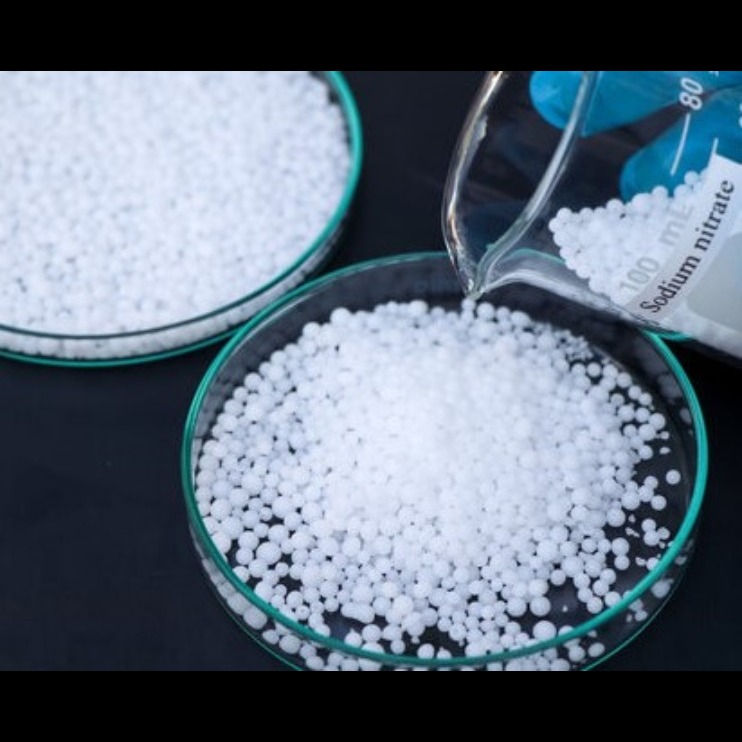
SODIUM NITRATE — ANION IC METHOD VALIDATION (QC-READY PROTOCOL)
Below is a complete, practical ICH-style validation protocol you can run in your QC lab for nitrate (as sodium nitrate) by ion chromatography with suppressed conductivity. I include suggested starting method parameters, acceptance criteria, step-by-step experiments, calculations (LOD/LOQ), sample prep notes for pharma matrices, and a validation checklist/table you can copy into your lab notebook or LIMS.
Important: these are lab-ready starting settings and acceptance limits commonly used in biopharma QC. Adjust exact eluent strengths, injection volumes, and concentration ranges to match your instrument, column, and expected sample concentrations — then re-verify during method development.
Analyte: Nitrate (NO₃⁻), quantified as sodium nitrate equivalent
Technique: Ion chromatography (anion) with suppressed conductivity detection
Column: IonPac AS11-HC (or AS15/AS23 if higher capacity/resolution needed) + matching guard
Suppressor: Anion suppressor (AERS 300/500 or vendor equivalent), recycle or single-pass per instrument
Eluent: KOH (recommended) — start with 10 mM isocratic for simple matrices; use gradient if co-elution occurs (see notes)
Flow: 1.0 mL/min (adjust to column spec)
Column temp: Ambient (~25 °C) or 30 °C if you prefer stability
Injection volume: 10 µL (adjust 5–25 µL depending on sensitivity and sample matrix)
Run time: 10–15 min (longer if gradient used)
Detection: Suppressed conductivity, standard cell settings per vendor
Standards: Sodium nitrate dissolved in ultrapure water
Demonstrate nitrate peak is baseline-separated (resolution ≥1.5) from nearby anions (chloride, sulfate, nitrite, formate, acetate).
No interfering peak at nitrate RT in blank matrix (≤LOD noise).
Calibration range: 0.1 – 100 ppm nitrate (adjust upper limit to expected sample level; extend to 200 ppm if needed).
Minimum 6–8 concentration levels (including LOQ).
Acceptance: r² ≥ 0.999 and residuals within ±10% (or your lab's criterion]
Repeatability (intra-day): n = 6 (same operator, same day). Acceptance: RSD ≤ 3% for peak area.
Intermediate precision (inter-day /different operator/different instrument): n = 6 over 2–3 days. Acceptance: RSD ≤ 5%.
Determine both by:
- Signal-to-noise (S/N): LOD = S/N = 3; LOQ = S/N = 10, and
- SD of low-level replicates: LOQ = 10·(SD)/slope; LOD = 3.3·(SD)/slope.
Stability of standards and prepared samples at room temp and refrigerated over expected hold times (0, 6, 24, 48 h). Acceptance: concentration change ≤ ±5%.
Deliberate small changes: eluent ±10%, flow ±0.1 mL/min, column temp ±5 °C, injection volume ±10%. Acceptance: no meaningful change in assay (≤5% difference) and no loss of specificity
Repeatability: area RSD ≤ 3% (n = 6 standard injections).
Retention time RSD ≤ 0.1 min.
Theoretical plates for nitrate ≥ column vendor spec (or ≥ 2000 as a generic target).
Tailor factor (asymmetry) ≈ 0.9–1.5.
- Install column + guard, flush with eluent at 1.0 mL/min until baseline stable (30–60 min for new columns).
- Inject blank (ultrapure water) and standard (e.g., 10 ppm) alternately until area RSD ≤ 3% and baseline stable. Record system suitability.
Acceptance: area RSD ≤ 3%, RT drift ≤ 0.1 min.
Inject individual anion standards: chloride, nitrite, nitrate, sulfate, acetate, formate, phosphate at concentrations (e.g., 10 ppm).
Inject a mixed standard to confirm resolution.
Inject blank matrix (sample diluent) and matrix blank (placebo formulation without nitrate) to confirm no interference.
- Prepare calibration standards (sodium nitrate) at: 0.1, 0.25, 0.5, 1, 2, 5, 10, 25, 50, 100 ppm (adjust as needed).
- Inject each in triplicate. Plot peak area vs. concentration. Fit by linear regression (weighting 1/x or 1/x² optional if heteroscedasticity observed).
Acceptance: r² ≥ 0.999; back-calculated concentrations within ±10% (±15% at LOQ).
- Prepare matrix blanks (formulation without nitrate). Spike at LOQ, 1 ppm, 10 ppm, 50 ppm (triplicates).
- Process as per sample prep and inject.
Acceptance: mean recovery 95–105% (may loosen for LOQ).
- Estimate by S/N: inject low-level standards (e.g., 0.05, 0.1, 0.2 ppm) and measure S/N.
- Calculate by SD method: inject n = 7 replicates of a low concentration (near expected LOD) → compute SD of responses; LOD = 3.3·(SD)/slope; LOQ = 10·(SD)/slope.
- Verify LOQ by injecting replicate LOQ samples (n = 6) and assessing precision/accuracy.
Acceptance: verified LOQ with RSD ≤ 10–15% and recovery within acceptance.
- Repeatability: n = 6 of a single QC level (e.g., 10 ppm) same day. Calculate %RSD.
- Intermediate precision: repeat same experiment across 2 additional days and/or another analyst / instrument (n = 6 each).
Acceptance: repeatability RSD ≤ 3%; intermediate ≤ 5%.
- Run standard (e.g., 10 ppm) under intentional small changes:
- Eluent ±10% (9 & 11 mM KOH), flow ±0.1 mL/min, temp ±5 °C, injection ±10%.
- Observe effects on retention time, peak shape, and assay result.
Acceptance: assay change ≤ 5%, no co-elution or major peak distortion.
Simple aqueous solutions (saline, buffers): Dilute sample (10–200× depending on expected nitrate) in ultrapure water; 0.22 µm filtration.
Protein formulations (mAbs, vaccines): Dilute (20–100×) then remove protein via 3–10 kDa MWCO centrifugal filtration; rinse filter device before use to remove leachable ions.
High salt/sugar matrices: Larger dilution (50–200×) or consider anion-exchange SPE cleanup to reduce background.
Notes: Avoid organic solvents in IC samples unless validated. Use low-ion labware and freshly boiled/CO₂-free water if carbonate is a concern.
Before a validation run, inject 6× standard (e.g., 10 ppm). Record:
- Mean area = ______
- %RSD area (n=6) ≤ 3%: ______ (PASS/FAIL)
- Mean RT = ______ min; %RSD RT ≤ 0.1 min: ______ (PASS/FAIL)
- Theoretical plates (N) for nitrate ≥ vendor spec: ______ (PASS/FAIL)
- Tailing factor = ______ (acceptable 0.9–1.5): ______ (PASS/FAIL)
- Concentration (sample) = (Area_sample / Slope) × (dilution factor) ± use regression intercept if significant.
- Back-calculated concentration (standard) = plug standard area into calibration equation; %bias = ((found − nominal)/nominal) × 100.
- LOD / LOQ (SD method):
- LOD = 3.3 × (SD of low concentration responses) / slope
- LOQ = 10 × (SD of low concentration responses) / slope
- S/N method: measure peak height (or area) vs noise baseline; LOD at S/N ≈3; LOQ at S/N ≈10.
- Method details (column, suppressor, eluent, flow, injection)
- System suitability results
- Calibration curve & regression eqn, r², residuals table
- LOD/LOQ calculations and verification data
- Specificity chromatograms (blank, mixed anion standard, matrix blank, spiked)
- Accuracy & precision data tables (means, SD, %RSD, %recovery)
- Robustness and stability results
- Conclusions: pass/fail per parameter and final method statement (including validated range)
Instrument conditioned, baseline stable
System suitability passed (n = 6)
Specificity: individual & mix injected; matrix blank clear
Linearity: n ≥ 6–8 points; r² ≥ 0.999
LOD/LOQ estimated and LOQ verified (precision/accuracy)
Accuracy: spike recoveries at LOQ, low, mid, high (triplicates)
Precision: repeatability (n=6) and intermediate (multi-day)
Robustness: eluent/flow/temp/volume changes tested
Stability: standards & samples tested over hold times
Validation report compiled with chromatograms & tables