

Sodium Nitrate in Metal Heat-Treating Processes
1. Overview
Sodium Nitrate (NaNO₃) plays a vital role in the metal heat-treating industry as a molten salt bath component. Its excellent thermal stability, oxidizing nature, and ability to maintain a clean surface make it ideal for operations that demand uniform heat transfer and controlled chemical atmospheres.
When molten, sodium nitrate provides an even and rapid heat distribution, allowing metal parts to reach desired temperatures without scaling, oxidation, or surface damage — ensuring superior metallurgical properties and surface finish.
. 2. Common Applications in Heat Treatment
Process Purpose / Function of Sodium Nitrate Temperature Range (°C) Remarks
Tempering Ensures uniform heating, prevents oxidation and discoloration 250–550 Used after quenching to relieve internal stresses
Martempering Provides slow, controlled cooling to reduce thermal shock 150–450 Improves toughness, minimizes distortion and cracking
Austempering Enables formation of bainitic structures via controlled cooling 260–400 Ensures high strength with good ductility
Nitriding / Nitrocarburizing Provides an oxidizing medium to form surface nitride layers 500–600 Enhances wear, fatigue, and corrosion resistance
Bright Annealing Maintains metal brightness by preventing surface oxidation 300–500 Produces a clean, reflective metal surface
. 3. Composition of Molten Salt Baths
Sodium nitrate is usually used in combination with other alkali nitrates or nitrites to form eutectic mixtures with desired melting points and oxidation characteristics.
Type of Bath Typical Composition Melting Point (°C) Application
Low-Temperature Bath 50–60% NaNO₃ + 40–50% NaNO₂ 220–260 Tempering, austempering
Medium-Temperature Bath NaNO₃ + KNO₃ 400–550 Martempering, annealing
High-Temperature Bath NaNO₃ + KNO₃ + Ba(NO₃)₂ (optional) 550–600 Nitriding, oxidation treatments
These mixtures maintain a stable molten phase with excellent heat transfer efficiency and minimal decomposition when operated within temperature limits.
. 4. Key Advantages
. Uniform Heat Transfer – Ensures consistent metallurgical results.
. Surface Protection – Prevents oxidation, scaling, and discoloration.
. Energy Efficiency – High heat capacity allows faster heat transfer than air or oil.
. Cleaner Operations – Produces less smoke or residue than oil-based quenching systems.
. Reusability – Salt baths can be regenerated and reused with minimal loss.
5. Safety and Handling
Classification: Oxidizing solid (UN 1498, Class 5.1).
Avoid contamination with organic or combustible materials (e.g., oil, carbon, sawdust).
Thermal decomposition above ~380°C releases toxic nitrogen oxides (NO₂).
Proper ventilation and temperature control are essential.
Storage: Keep in a cool, dry, and well-ventilated place away from reducing agents.
6. Environmental Considerations
Spent salts must be treated before disposal due to nitrate content.
Industrial effluents should undergo denitrification to prevent water pollution.
Recycled salts should be filtered and purified periodically to maintain performance.
7. Typical Properties
Property Value
Chemical Formula NaNO₃
Molecular Weight 84.99 g/mol
Melting Point ~308°C
Solubility (in water) 91 g/100 mL at 25°C
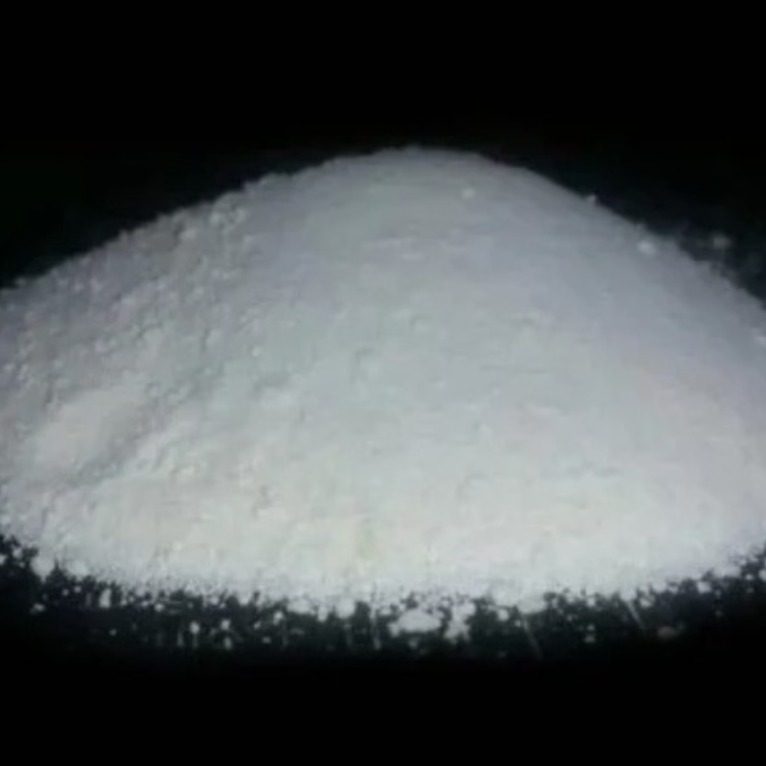
Appearance White crystalline powder
Nature Strong oxidizing agent
Grade Availability Technical / Industrial / Heat-Treating Grade
8. Summary
Parameter Details
Function in Heat Treatment Molten salt bath component, oxidizing medium
Benefits Uniform heating, surface protection, clean operation
Common Processes Tempering, Austempering, Martempering, Nitriding
Operating Range 250–600°C
Compatibility Mixes with NaNO₂, KNO₃, Ba(NO₃)₂
Safety Oxidizer – handle with care and proper ventilation
Sodium Nitrate for Surface Hardening
1. Overview
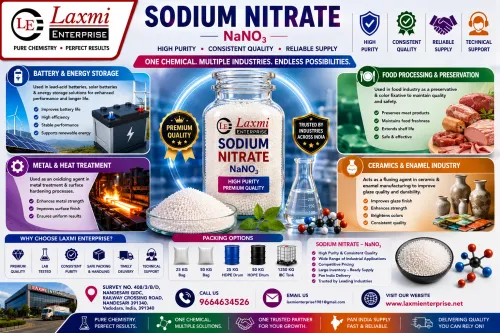
Sodium Nitrate (NaNO₃) is a key oxidizing salt used in surface hardening processes such as nitriding, nitrocarburizing, and oxidizing heat treatments.
In molten salt baths, it provides a controlled oxidizing–nitriding atmosphere that promotes the formation of hard, wear-resistant surface layers on ferrous metals without causing scale or distortion.
Its stable molten form and excellent heat transfer properties make it ideal for uniform and efficient heat treatment of metal components that require enhanced surface hardness, fatigue strength, and corrosion resistance.
2. Role of Sodium Nitrate in Surface Hardening
Function Description
Oxidizing Agent Supplies oxygen for surface oxidation and promotes formation of hard oxide or nitride films.
Nitrogen Source (Indirect) When used with nitrite salts (NaNO₂), decomposes to release nitrogen-bearing species that diffuse into steel surfaces.
Heat Transfer Medium Provides uniform heating during salt bath nitriding or nitrocarburizing processes.
Surface Cleaner Removes residual oxides or contaminants from the surface, ensuring better diffusion and layer uniformity.
3. Common Surface Hardening Processes Using Sodium Nitrate
Process Mechanism Operating Temperature (°C) Result / Benefits
Salt Bath Nitriding Nitrogen from nitrate/nitrite bath diffuses into steel surface 500–580 Forms hard nitride layers; increases wear and fatigue resistance
Salt Bath Nitrocarburizing Carbon and nitrogen diffusion from salt bath mixture 550–600 Produces compound layer with superior wear and corrosion resistance
Ferritic Nitriding Oxidizing–nitriding salt bath used at sub-critical temperatures 500–550 Improves hardness without distortion
Black Oxidizing / Bluing Oxidation in nitrate–nitrite salt bath 350–400 Produces decorative black oxide coating with mild corrosion protection
4. Typical Bath Compositions
Sodium nitrate is generally used in combination with sodium nitrite (NaNO₂) and sometimes alkali carbonates or cyanate-based salts (for advanced processes).
Bath Type Composition Temperature (°C) Purpose
Basic Nitriding Bath 50% NaNO₃ + 50% NaNO₂ 500–550 Standard surface hardening of steel
Nitrocarburizing Bath NaNO₃ + NaNO₂ + Na₂CO₃ 550–600 Enhanced wear and corrosion resistance
Black Oxidation Bath NaNO₃ + NaNO₂ (low ratio) 350–400 Produces black oxide coating
5. Key Advantages
. Improved Surface Hardness: Produces a hard nitride/oxide surface layer with enhanced wear resistance.
. Uniform Case Depth: Ensures consistent hardness profile and diffusion layer.
. Distortion-Free Process: No direct contact with gas or flame; minimal thermal shock.
. Excellent Surface Finish: Results in smooth, bright, or blackened surfaces as required.
. High Heat Transfer Efficiency: Uniform heating across all parts ensures predictable metallurgical properties.
6. Metallurgical Effects
Property Improved Effect
Surface Hardness Up to 1000 HV possible in nitrided steels
Wear Resistance Greatly increased due to hard nitride/oxide layer
Corrosion Resistance Enhanced, especially in nitrocarburized and black-oxidized parts
Fatigue Strength Improved by compressive residual stresses in surface layer
Dimensional Stability Maintained, since process occurs below critical transformation temperature
7. Safety & Handling
Chemical Class: Oxidizing solid (UN 1498, Class 5.1)
Precautions:
Avoid contamination with oil, grease, or organic matter.
Maintain bath temperature within recommended range to prevent nitrate decomposition.
Provide good ventilation — decomposition releases NOₓ gases.
Use protective clothing and face shield when handling molten salts.
Storage: Keep in a cool, dry, and well-ventilated area, away from reducing agents or combustibles.
8. Environmental & Disposal Guidelines
Spent salts should be neutralized and treated to remove nitrate and nitrite ions before discharge.
Recycling: Bath salts can be rejuvenated by filtration and replenishment.
Waste Treatment: Employ biological denitrification or chemical reduction for effluent control.
• what is sodium nitrate
• uses of sodium nitrate
• sodium nitrate chemical formula
• sodium nitrate vs sodium nitrite
• Commercial Keywords:
• sodium nitrate price per kg
• sodium nitrate suppliers comparison
• Transactional Keywords:
• buy sodium nitrate online
• bulk sodium nitrate for sale
• Long-Tail Keywords:
• pharmaceutical grade sodium nitrate supplier in India
• sodium nitrate for glass manufacturing
• sodium nitrate for heat storage applications
9. Summary Table
Parameter Details
Chemical Name Sodium Nitrate
Chemical Formula NaNO₃
Function Oxidizing agent and nitrogen donor in surface hardening
Common Processes Nitriding, Nitrocarburizing, Black Oxidation
Operating Temperature 350–600°C
Advantages Improved surface hardness, uniform diffusion, distortion-free finish
Form White crystalline powder
Purity Grades Technical / Industrial / Heat-Treating Grade
Sodium-Nitrate Molten Salt Baths — Technical Brief
1) What they are & why use them
Molten salt baths based on sodium nitrate (NaNO₃) — often mixed with sodium nitrite (NaNO₂) and/or potassium nitrate (KNO₃) — are liquid heat-transfer media used for tempering, austempering, martempering, nitriding, bright annealing and surface treatments. Benefits: excellent heat transfer, uniform temperature, clean surfaces (no scale), fast throughput and good dimensional control.
Key physical properties (important numbers)
NaNO₃ melting point: ≈ 308 °C
NaNO₂ melting point: ≈ 271 °C
KNO₃ melting point: ≈ 334 °C
Common NaNO₃–NaNO₂ eutectic baths: melt in the ~220–260 °C region (composition and exact melt point vary with ratio).
Decomposition onset (practical): significant decomposition and NOₓ formation increases above ~380 °C — avoid prolonged operation well above this without controls.
UN / Classification: Oxidizing solid in transport (NaNO₃: UN 1498, Class 5.1) — molten bath is an oxidizing medium.
Typical bath types & compositions (examples)
Useful starting formulations — adjust per process and supplier guidance.
Low-temperature tempering / austempering (fast heating, low oxidation):
~50–60% NaNO₃ + 40–50% NaNO₂ — operating 220–350 °C
General purpose medium temp salt bath (tempering / martempering):
NaNO₃ : KNO₃ blends (ratios 60:40 → 40:60) — operating 300–500 °C
Nitrocarburizing / high temp surface hardening:
NaNO₃ + NaNO₂ + Na₂CO₃ or proprietary additives — operating 500–600 °C (use only with proper process recipes)
Black oxidizing / decorative finishes:
Low nitrite ratio NaNO₃/NaNO₂ baths at 350–400 °C
Always validate exact recipe with metallurgist / bath supplier for the alloy and finish required.