

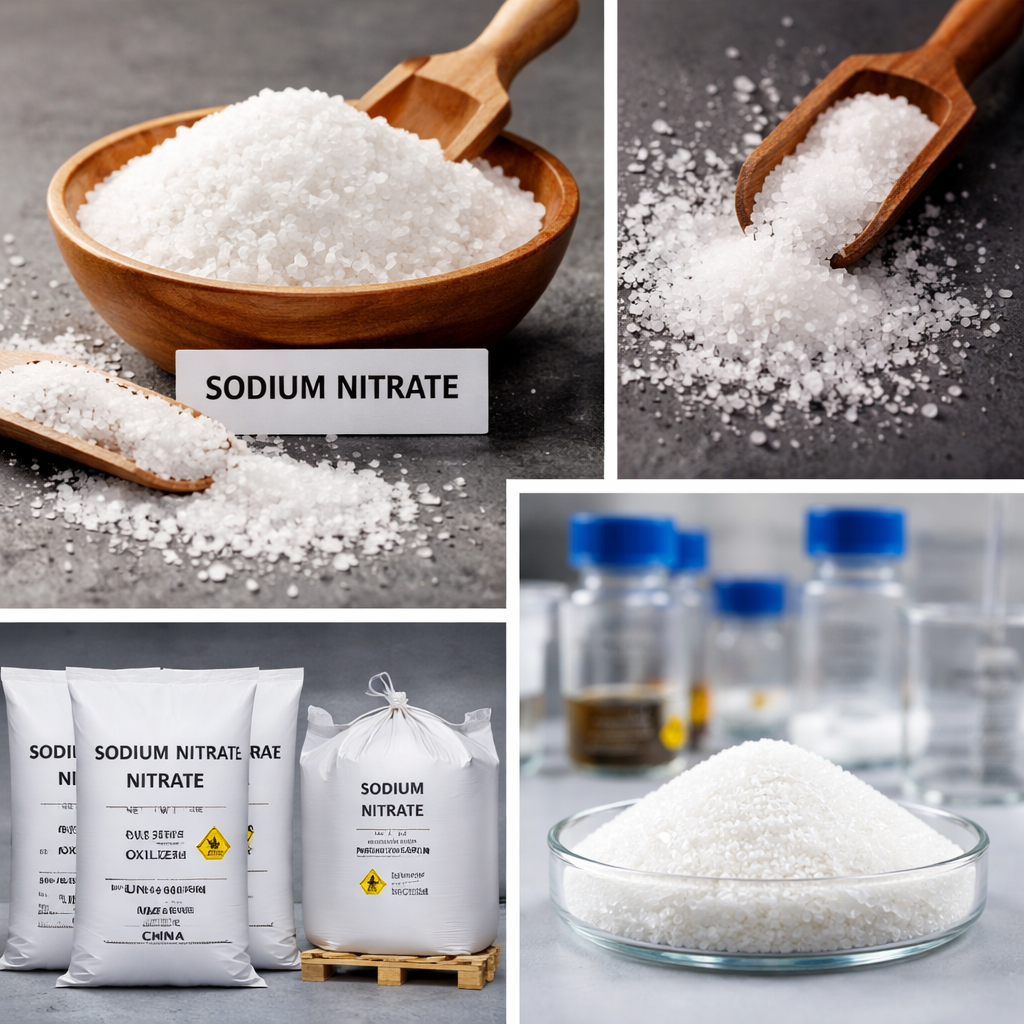
Here is a detailed technical breakdown of corrosion behaviour, decomposition pathways, and long-term stability challenges of Sodium Nitrate (NaNO₃)—especially relevant for molten salt TES, industrial heat treatment baths, and high-temperature systems.
Sodium nitrate is thermally stable up to moderate high temperatures, but above certain thresholds it begins to break down, producing species that increase system corrosion.
Primary decomposition reaction
Temperature RangeBehavior
< 300 °CStable (solid phase)
306–308 °CMelts
350–500 °CStable for long-term use, low decomposition
500–550 °CStart of slow NO₃⁻ → NO₂⁻ conversion>
600 °CRapid decomposition, strong O₂ release>
700–800 °CSecondary breakdown → Na₂O + NOₓ
Nitrite accumulation is the key indicator of decomposition age.
Typical molten salt TES systems maintain operation below ~550 °C to minimize nitrite formation.
Nitrite buildup → accelerates corrosion
Higher oxygen partial pressure in closed systems
Increased melt aggressiveness on steel surfaces
Viscosity and heat transfer property changes
Possible precipitation of oxide particles
Sodium nitrate is generally mild toward metals at moderate temperature, but becomes corrosive under:
- High NaNO₂ content
- High temperature (>500–550 °C)
- Moisture presence
- Poor oxygen control
- Contact with non-compatible metals
Corrosion Mechanism
Nitrate itself is oxidizing but stable; however, nitrite and nascent oxygen accelerate metal oxidation, destabilizing passive layers on steels.
Corrosion form:
- General oxidation
- Pitting (especially in nitrite-rich melt)
- Scale spallation during thermal cycling
FactorEffectTemperatureExponential rise in corrosion above 500 °C
Nitrite concentration>5–10% NO₂⁻ drastically increases corrosion
Material selectionStainless steels > carbon steelImpuritiesChlorides greatly accelerate pitting
AtmosphereReducing atmospheres worsen corrosion
MaterialBehaviour in NaNO₃
SS304/SS316Acceptable below 450–500 °C
Carbon SteelHigh corrosion above 350–400 °C
Inconel, HastelloyBest for high-T long-term molten use
Al & Zn surfacesReact and dissolve rapidly
Cu, brassNot recommended – oxidizes strongly
Ceramics/graphiteStable, used as protective coatings
Decomposition mitigation:
- Maintain operating temperature below 550 °C
- Avoid rapid heating/cooling cycles
- Limit oxygen/air ingress in circulation loops
- Remove nitrite periodically via:
- Controlled oxidation (Air bubbling → reconvert NO₂⁻ to NO₃⁻)
- Salt refresh/top-up
Use corrosion-resistant alloys
✔ Introduce inhibitors (where permissible)
✔ Maintain chemical composition balance
✔ Filter oxide scale periodically
✔ Keep salt dry and contaminant-free
SignInterpretationMelt turning yellow/brownHigh NaNO₂ formationFoaming or gas bubblesOxygen release under heatIncreased Fe/Cr/Ni ions in melt analysisOnset of corrosionDrop in heat transfer efficiencySalt fouling/scalingPresence of solid precipitatesStructural oxide products
NaNO₃ is stable but decomposes slowly to nitrite under high-T operation.
Nitrite is the primary cause of corrosion acceleration.
To ensure system longevity:
- Control temperature
- Monitor nitrate/nitrite ratio
- Use compatible materials
- Prevent moisture and impurities
Here is a comprehensive technical overview of Sodium Nitrate (NaNO₃) in molten salt applications, focusing on its role, operating conditions, design considerations, stability, blends, and industrial usage.
PropertyValueMelting point306–308 °CDensity (molten)~1.9 g/cm³ @ 300 °C, decreases with temperatureHeat capacity1.6–1.8 J/g·K (molten)Thermal conductivity~0.5–0.6 W/m·KOperating liquid range~300–550 °CDecomposition onset~550–600 °C
Concentrated Solar Power (CSP)
- Used for heat transfer & thermal energy storage
- Typically in solar salt mixture:
- 60% NaNO₃ + 40% KNO₃
- Operating window: 290–565 °C
- Stores energy during daytime → releases during night
Industrial waste heat recovery
Thermal batteries & heat reservoirs
Metal processing furnaces
- Used in parabolic trough, tower, and Fresnel CSP plants
Molten salt baths for annealing, nitriding, bluing
Oxidizing medium for uniform heating
- Used for stainless steel, tool steel treatments
Reaction medium in high-temperature oxidation
Nitrate molten salts used in catalytic & redox processes
- Used for synthesis of nitrites, oxides, pigments
- Blend TypeCompositionMP (°C)Use RangeNotesSolar Salt60% NaNO₃ + 40% KNO₃~220290–565°CMost common CSP saltHITEC Salt53% KNO₃ + 40% NaNO₂ + 7% NaNO₃~142up to ~450°CLow MP, good for low temp circuitsTernary Nitrate BlendsNaNO₃ + KNO₃ + LiNO₃/Ca(NO₃)₂120–200250–550°CWider liquid rangeChloride-Nitrate MixesNa/K Nitrates + NaCl/KCl150–180High >550°CHigher corrosion risk, lower cost
Issues during long-term operation:
- Nitrite buildup
- Gas evolution
- Color change to yellow/brown
- Increased corrosion of metals
Stable with stainless steels up to ~500°C, but corrosion increases when:
- Nitrite concentration increases (>5–10%)
- Temperature cycles frequently
- Chlorides or moisture contamination occurs
Best materials for long-life systems
- Inconel / Hastelloy / Ni-based alloys
- SS316/SS304 adequate for mid-range systems
- Carbon steel only for low temp + dry conditions
Thermal Management
- Tank & piping must stay above freezing point
- Heat tracing essential in CSP pipelines
- Slow heating/cooling to avoid thermal shock
Chemistry Control
- Monitor NO₃⁻ : NO₂⁻ ratio
- Periodic reoxidation (air/oxygen bubbling)
- Top-up with NaNO₃ to maintain composition
- Filtration of oxides
- Insulated piping
- Avoid contamination with organics or metals
- PropertyValueMelting Point~220 °CRecommended operating range290–565 °CExtended limit (short-term)≤ 580 °CDecomposition onset550–600 °C
Parabolic Trough / Tower / Linear Fresnel Systems
Flow path:
Solar field → Hot tank → Steam generator → Turbine → Cold tank → (repeat)
- Sodium nitrate blend circulates continuously, absorbing solar heat and storing as thermal energy.
Consequences in CSP operation:
- Nitrite formation (NaNO₂)
- Increased corrosion rate
- Oxygen release → accelerates oxidation of alloys
- Thermal efficiency decline over long lifecycle
- Typical nitrite buildup rate in commercial plants:
- MaterialSuitability in CSP molten saltInconel/Hastelloy/Ni-alloysBest for hot components (>550°C)
- SS304/316Good for <500°C ranges (cold tank, piping)
- Carbon steelAcceptable in cold loops only
- Cu, Al, ZnNot recommended – rapidly attacked
- CeramicsVery stable, used in liners/coatings
Corrosion accelerates when:
- Temperature > 550°C
- Nitrite > 5–10%
- Chlorides/moisture present
- Frequent thermal cycling occurs
To avoid salt freezing or degradation:
- Maintain minimum temperature above 220–250°C
- Heat tracing for piping and tank outlets
- Gradual heat ramping (avoid thermal shock)
- Continuous NO₃⁻/NO₂⁻ composition monitoring
- Nitrite oxidation treatment when needed
- PlantCapacityNotesGemasolar (Spain)19.9 MW15 hrs storage with molten salt tower systemCrescent Dunes (USA)110 MWHigh-storage tower, experienced freezing issuesNoor III (Morocco)150 MWTower system with solar salt storageAndasol I-III (Spain)~50 MW eachCommercial trough technology
Enables night-time electricity generation
High volumetric energy storage density
Non-flammable & safer vs thermal oils >400°C
Scalable to GWh-level storage
Proven technology in utility power plants
Sodium nitrate (as Solar Salt blend) is the backbone of CSP molten salt energy systems,
balancing performance, cost, and safety. For long-term reliable operation:
Temperature RangeBehavior< 300 °CStable solid, minimal thermal change
305–330 °CMelting point at ~306 °C → forms molten phase
380–450 °CStart of
slow decomposition under inert atmosphere
450–550 °CAccelerated decomposition → release of O₂>
550 °CRapid decomposition to NaNO₂ and O₂; further heating leads to Na₂O and NOx formation>
700 °CEnhanced nitrite → oxide conversion, significant mass loss, corrosive and unstable environment
FactorEffectAtmosphere (Air vs Inert)Decomposition faster in
inert/oxygen-poor
atmospheresImpuritiesMetal oxides & dust can
catalyze breakdownMoistureIncreases corrosivity & accelerates nitrite formation
Cyclic heatingRepeated melt-solidify cycles increase nitrite and oxide buildup
Mixed salt systemsIn binary/ternary salts (solar salt: NaNO₃-KNO₃), onset slightly reduces
In CSP (Concentrated Solar Power) systems:
- Typical working temperature: 260–565 °C
- Keep below ~580 °C to avoid runaway nitrite formation.
- Nitrite concentration increases over time → reduces heat capacity, increases corrosion risk.
In Thermal Energy Storage (TES):
- Maintain oxygen-rich headspace to suppress reduction to nitrite.
- Use inhibitors or periodic oxidation treatment to re-convert nitrite to nitrate.
Decomposition initiation: ~400–450 °C
Rapid decomposition: >550 °C
Releases O₂ and NO/NO₂, increases nitrite & oxide content over time.
Critical for CSP and molten salt heat storage applications to maintain operation below ~565 °C.
Global Sodium Nitrate Export & Supply Chain Overview
Sodium nitrate is widely traded as an industrial chemical used in fertilizers, molten salts for CSP/TES, glass & ceramics, metal treatment, pyrotechnics, pharma, food preservative (E251) and more. Its supply chain is globally distributed with major production centered in natural nitrate-bearing regions and chemical synthesis hubs.
RegionKey Producers/ExportersNotes
ChileSQM, CosayachLargest natural nitrate reserves (Caliche ore), global leader in technical & agricultural grades
ChinaMultiple large chemical plantsHuge production volume, competitive pricing, strong in industrial & technical grade export
IndiaGNFC, Deepak Nitrite (limited), tradersMore of an importer but re-export possible; active in pharma & industrial markets
USASmaller production; more specialty grade suppliersTechnical, explosive-grade supply
RussiaMajor in explosives, fertilizersExport geography affected by geopolitical restrictions
EU (Spain, Germany, UK)Specialty chemical productionFocus on high-purity food/pharma grades
Certified Sodium Nitrate Exporter
REACH Compliant Sodium Nitrate
“Looking for Bulk Sodium Nitrate? We’ve Got You Covered”
“High-Purity Sodium Nitrate Now Available – Get a Quote Today”
“Trusted Sodium Nitrate Supplier for Industrial & Food Applications”
“Export-Ready Sodium Nitrate with Full Compliance Certifications”
“Download SDS & Product Specs”
“Request a Free Sample or Quote”
“Talk to a Product Specialist”
“View Our Export Documentation”