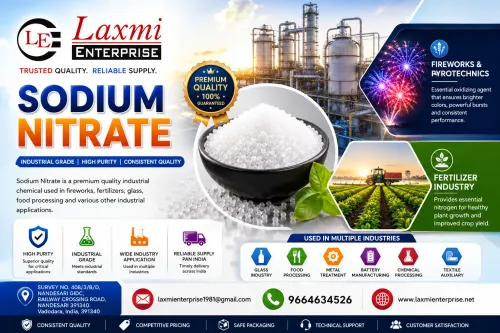

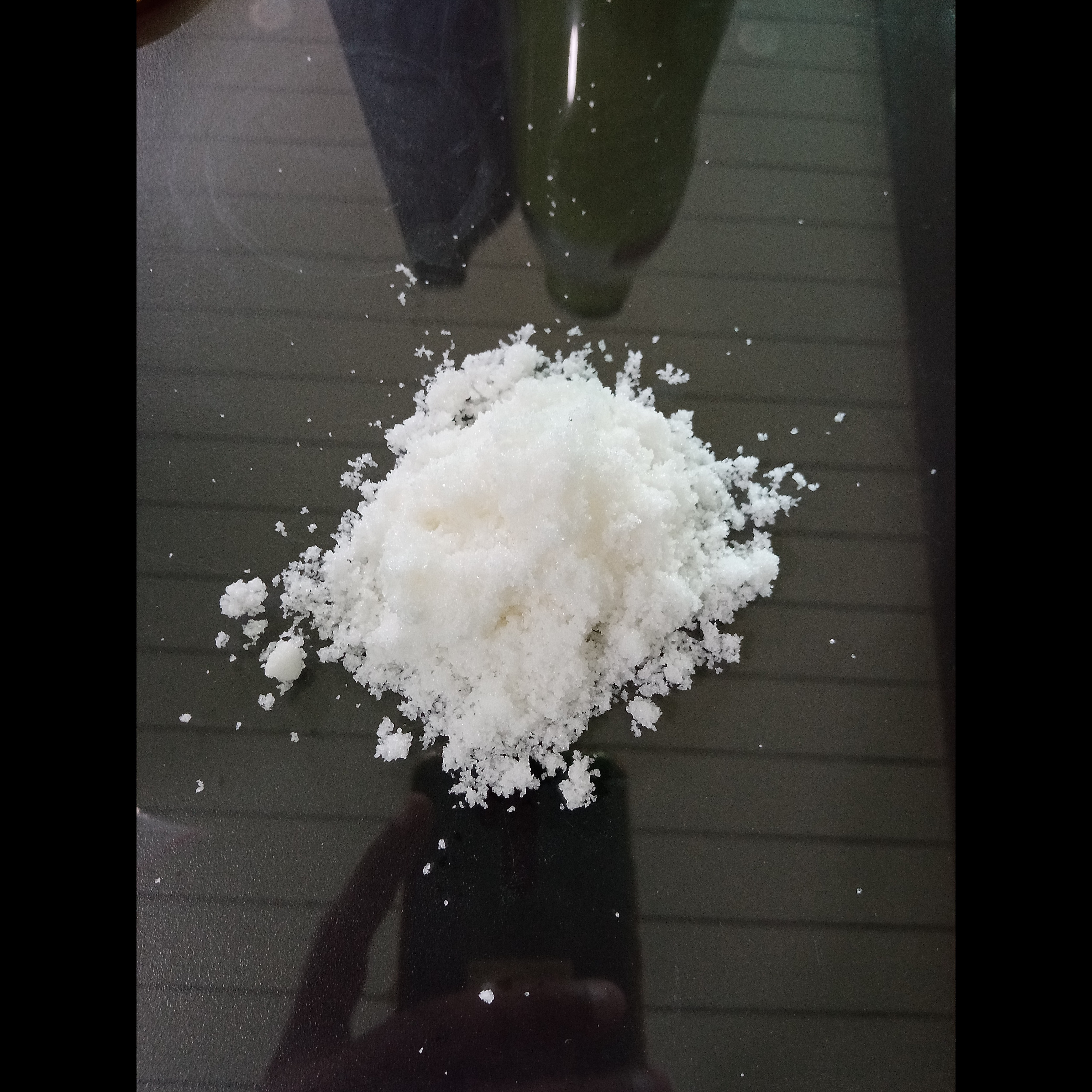
Nice — here’s a focused, practical brief on sodium nitrate (NaNO₃) and how (and whether) it’s used in detergent manufacturing
plus handling, quality and environmental notes you’ll need if you’re thinking of using it.
Quick summary
Sodium nitrate is not a common primary detergent ingredient (it’s not a surfactant, enzyme, bleach activator or builder by itself).
When it is used in detergent-type formulations, it’s typically a minor functional additive — e.g.,
as an oxidizing/nitrate source in specialty bleaching/stain-removal systems, for formulation stability in some powder systems,
or for niche processing roles — rather than a bulk ingredient.
If you plan to include it, expect low inclusion levels (typically trace to low % levels) and you must pay attention to SDS,
wastewater nitrate limits, and compatibility with other chemicals.
Processing: for powder detergents, check particle size and hygroscopicity — sodium nitrate can be moderately hygroscopic depending on grade.
Typical inclusion levels & formulation advice
Inclusion level: expect very low levels if used in a finished detergent
(eg. 0.1–1% w/w or even lower) — exact amount must be established by lab trials.
Compatibility checks: test with surfactants (anionic/nonionic), enzymes,
optical brighteners and common builders (zeolite, soda ash). Nitrate is ionic — may affect enzyme stability and certain brighteners;
always run accelerated stability
Safety & handling (practical)
SDS first. read the supplier Safety Data Sheet.
PPE: gloves, eye protection, dust control (mask/respirator if dusty).
Storage: cool, dry, in closed containers away from strong reducers,
organic matter, combustible materials. Avoid contamination with acids (releases NOx) or reducing agents.
Environmental / wastewater considerations
Nitrate in effluent → eutrophication risk. Detergent plants must control nitrate discharges; nitrates in receiving waters drive algal blooms.
Treatment options (choose based on scale & economics): biological denitrification (anaerobic treatment),
ion exchange, reverse osmosis/RO, and advanced physico-chemical processes.
Analytical & QC tests (manufacturing)
Assay — titrimetric or ion chromatography for NO₃⁻.
Moisture content — Loss on drying.
Impurities — Cl⁻, SO₄²⁻, heavy metals.
Particle size / bulk density — for powder blending behavior
Regulatory / trade notes
Sodium nitrate is an inorganic chemical — subject to chemical handling, transport
(hazard class: oxidizer-related restrictions), and environmental discharge laws.
If you need HSN/HS code or customs/tariff classification for import or tax:
it falls under inorganic chemicals chapters (chapter 28) in most tariff schedules,
but the exact code / subheading and GST/ duty rates vary by country and year — check current
Alternatives (for common detergent uses)
Oxygen bleaches: sodium percarbonate, sodium perborate (where allowed) — more effective and common than nitrates.
Bleach activators: TAED, NOBS (depending on region).
Builders / fillers: sodium sulfate, zeolites, sodium carbonate.
Overview
Sodium nitrate (NaNO₃) is a strong oxidizing agent and sodium source.
In glass and ceramic production, it’s mainly valued for its ability to:
Oxidize impurities and remove bubbles (refining agent)
Modify color and oxidation state of metal oxides
Serve as a sodium donor in certain frits, enamels, and glazes
Improve densification and sintering characteristics in ceramics
. Oxidizing Agent / Color Control
Controls valence states of colorants:
Converts Fe²⁺ (greenish tint) → Fe³⁺ (yellowish tint) for colorless glass.
Maintains oxidized state for Mn, Cr, Co, Cu oxides in colored glasses.
Used in optical, container, and specialty glasses to maintain clarity or achieve consistent color.
Flux & Sodium Source
Introduces Na₂O, a network modifier oxide that lowers melting temperature and viscosity of silica glass.
Can partially substitute for soda ash (Na₂CO₃) in batch formulations to fine-tune chemical balance.
However, because it’s an oxidizer and more expensive, use is limited to specific cases.
Role in Ceramics and Enamels
1. Oxidizing Agent in Frits and Glazes
Sodium nitrate provides both Na₂O and oxygen to oxidize colorants or metal ions in ceramic frits, tile glazes, and enamels.
Flux Function
As a sodium oxide contributor, it lowers melting point, enhancing flow and fusion of glazes.
Often used alongside borates, feldspars, or lithium compounds to optimize melting behavior.
Thermal Decomposition
Starts decomposing around 380–400 °C, releasing oxygen and NOx gases; by 600–700 °C, it fully converts to Na₂O.
This decomposition aids oxidation but must be controlled to prevent pinholes or blisters in glaze layers.
. Safety / Environmental Notes
Oxidizing solid – keep separate from organics, reducers, sulfides.
Emissions: NOx formation during firing — ensure proper ventilation or scrubbing.
Wastewater: avoid uncontrolled discharge; nitrate limits apply.
Storage: cool, dry, sealed; hygroscopic and can cake over time.
Sintering and Densification Aid
Small amounts can promote particle rearrangement and densification during ceramic firing by creating a transient liquid phase (through Na₂O formation).