

Sodium Nitrate (NaNO₃): Oxidation Behavior & Corrosion Prevention
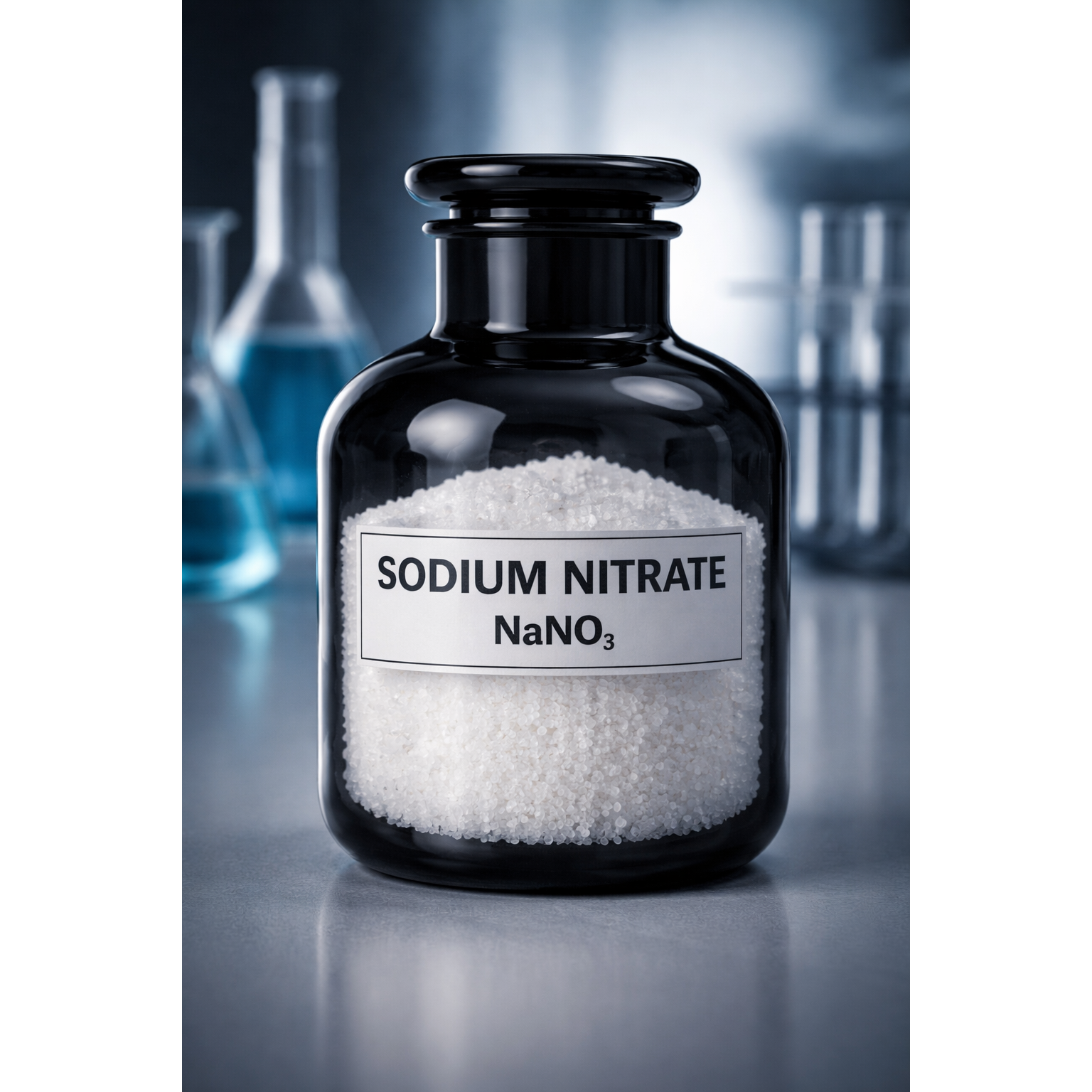
Sodium nitrate is a strong oxidizing salt, widely used in fertilizers, heat-transfer systems, explosives, glass, and chemical processing. While it is not corrosive by itself, its oxidizing nature can strongly accelerate corrosion of metals under certain conditions.
Oxidizing Properties
- NaNO₃ acts as an oxygen donor, especially at elevated temperatures.
- Upon heating:
- 2 Na
Oxidation-Induced Corrosion
- Oxygen liberated from nitrate promotes:
- Pitting corrosion
- Accelerated scaling
- Intergranular attack (carbon steel)
Moisture-Driven Corrosion
- NaNO₃ is hygroscopic
- Absorbed moisture → electrolyte formation → electrochemical corrosion
Chloride Contamination
- Even ppm-level chlorides dramatically increase:
- Pitting in stainless steel
- Crevice corrosion
Material Selection
- Use SS 316L or SS 347 for:
- Storage tanks
- Heat exchangers
- Process piping
- Avoid aluminum, copper alloys, and mild steel at high temperature.
Moisture Control
- Store sodium nitrate in airtight, dry conditions
- Use:
- Desiccant systems
- Nitrogen blanketing
- Keep relative humidity < 50%
Temperature Management
- Operate below 350 °C where possible
- Avoid hot spots and localized overheating
- Use uniform heat tracing
Purity & Contamination Control
- Chlorides: < 50 ppm (critical)
- Avoid organic contamination (fire & oxidation risk)
- Use high-purity grades for molten salt systems
Corrosion Inhibitors (Limited Use)
Note: Traditional inhibitors are often ineffective due to oxidizing nature.
- Nitrite/nitrate balance control
- Oxygen scavengers not recommended (reactive risk)
- Prefer materials + environment control over chemicals
- Use HDPE-lined or SS containers
- Keep away from:
- Oils, grease, reducing agents
- Sulfur compounds
- Clean equipment before loading
- Follow NFPA / OSHA oxidizer storage norms
- Regular checks for:
- Pitting
- Scale formation
- Weld corrosion
- Use:
- Thickness gauging
- Visual inspection at weld zones
- Monitor nitrate → nitrite conversion in molten systems
- Vertical cylindrical tanks preferred
- Fully welded construction (no flanges in hot zones)
- Internal smooth finish (Ra < 1.6 µm)
- Sloped bottom for complete drainage
- Expansion allowance for molten salt (~20–25%)
Heating Methods
- Electric resistance heaters
- Molten-salt or oil jacket heating
- External heating coils (preferred)
Thermal Design Rules
- Uniform heat distribution (avoid hot spots)
- Redundant temperature sensors (top, middle, bottom)
- Controlled heating rate: ≤ 25 °C/hour
- Emergency cooling provision
Nitrogen Blanketing (Strongly Recommended)
- Reduces:
- Oxygen-accelerated oxidation
- Nitrate → nitrite conversion
- Maintain positive N₂ pressure (5–10 mbar)
- Dry nitrogen only (dew point < −40 °C)
Moisture
- Water causes:
- Rapid corrosion
- Spattering during melting
- Pre-dry salt at 120–150 °C before charging
Sodium nitrate does not burn, but supports combustion
Keep away from:
- Oils, greases
- Wood, paper
- Reducing agents
Dedicated oxidizer storage zone
Firefighting:
- Use water spray
- Do NOT use dry chemical foam on contaminated fires
- Continuous temperature logging
- Oxygen analyzer in vapor space (optional)
- Nitrite buildup monitoring (>3–5% indicates overheating)
- Corrosion probes / thickness measurement annually
Normal Shutdown
- Reduce temperature slowly (< 20 °C/hr)
- Avoid partial solidification (causes stratification)
- Maintain nitrogen blanket during cooling
Emergency Shutdown
- Cut heat source
- Maintain inert atmosphere
- Prevent water ingress at all costs
NFPA 400 – Oxidizer storage
OSHA oxidizing solids handling
API 650 (with molten-salt design modifications)
CSP (Concentrated Solar Power) molten-salt standards
Sodium Nitrate Furnace & Dryer Safety Protocols
Sodium nitrate (NaNO₃) is a strong oxidizer. In furnaces and dryers it presents fire-promotion, oxidation, corrosion, and decomposition risks, especially in the presence of heat, organics, moisture, and incompatible materials. The following protocols reflect chemical plant, fertilizer, and molten-salt industry best practice.
- Supports combustion (even if the fuel normally will not burn)
- Oxygen release above ~380 °C
- Violent reactions with organics, oils, sulfur, carbon dust
- Accelerated metal oxidation at high temperature
- Thermal decomposition → sodium nitrite formation
- Indirect heating only
- No direct flame contact
- No fuel gas leaks into process zone
- Electric or oil-jacket heating preferred
Dry Air or Inert Gas Operation
- Use dry air or nitrogen
- Dew point < –40 °C
- Slight positive pressure in equipment
Ventilation
- Dedicated exhaust for oxygen-rich gases
- Non-sparking exhaust fans
- NO recirculation of exhaust air
Before Charging
- Sodium nitrate must be:
- Free-flowing
- Pre-dried (<0.1% moisture)
- Free from oil, grease, dust, organics
Housekeeping
- Daily removal of dust deposits
- No combustible insulation near hot surfaces
- Oil-free maintenance tools
Static & Ignition Control
- Grounding and bonding of dryers
- Explosion-proof motors and instruments
- No welding during operation
High-temperature alarms (2 levels)
Automatic heater trip at ≥ 360 °C
Oxygen analyzer in furnace exhaust
Airflow interlock (heater ON only if airflow OK)
Emergency stop with power isolation
Cut heaters immediately
Maintain airflow or nitrogen purge
Do NOT add water to hot nitrate
Evacuate non-essential personnelUse large quantities of water spray
Cool surrounding equipment
Do NOT use:
- Foam
- CO₂
- Dry chemical extinguishe
Furnace cleaning only when < 50 °C
No oil-based lubricants
Visual inspection of:
- Refractory cracks
- Element scaling
- Weld oxidation
Annual thickness testing of hot metal parts
Mandatory training on oxidizer hazards
PPE:
- Heat-resistant gloves
- Face shield
- Flame-retardant clothing
Permit-to-work system for hot work
Written SOPs & emergency drills
NFPA 400 – Oxidizers
OSHA 29 CFR 1910
ATEX / IECEx (where applicable)
Fertilizer industry safety guidelines
CSP molten-salt operating practices
- Temperature discipline
- Contamination elimination
- Proper materials
- Automatic protection systems
· sodium nitrate
· NaNO3
· sodium nitrate CAS 7631-99-4
· sodium nitrate chemical formula
· sodium nitrate properties
· sodium nitrate specification
· sodium nitrate SDS
· sodium nitrate MSDS