

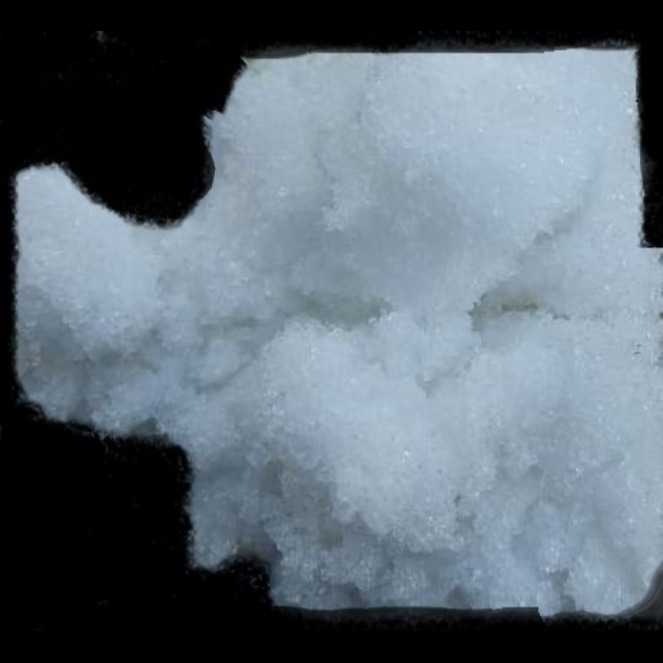
Sodium-nitrate / Potassium-nitrate (NaNO₃–KNO₃) mixture — technical summary
This is the classic “solar salt” family used for heat-transfer and thermal-energy-storage in CSP and process-heat systems. Below I’ve pulled together the key physical properties, operating guidance, materials/corrosion notes, safety/handling, and practical design tips you can use in engineering or procurement.
1) Typical composition & names
Common (industry) formulation: NaNO₃ 60 wt% + KNO₃ 40 wt% — often called Solar Salt.
Other Na/K ratios exist (binary nitrates) but 60/40 is the standard compromise of melting point, stability and cost.
2) Key physical properties (typical / ballpark)
Values vary with temperature and exact composition; these are typical engineering figures for 60:40 NaNO₃:KNO₃.
Melting point: ≈ 220 °C
Recommended operating window: ~250 °C (keep above melt) up to ~565 °C (recommended max ~560–600 °C; decomposition risk increases above this)
Density (liquid, ~300 °C): ≈ 1, 800 kg·m⁻³
Specific heat capacity (liquid, cp): ≈ 1.5 kJ·kg⁻¹·K⁻¹ (range ~1.2–1.7 depending on T)
Thermal conductivity: low, ~0.4–0.6 W·m⁻¹·K⁻¹
Viscosity: low (flows easily above melt) — decreases with temperature
Vapor pressure: negligible at operating temps (non-volatile)
Thermal stability / decomposition onset: decomposition processes accelerate >~560–600 °C; long-term stability better below ~550–565 °C
3) Useful derived numbers (digit-by-digit arithmetic shown)
Volumetric heat capacity (energy stored per m³ per K):
density × cp = 1, 800 kg·m⁻³ × 1.5 kJ·kg⁻¹·K⁻¹
= (1, 800 × 1.5) kJ·m⁻³·K⁻¹
= (1, 800 × 1) + (1, 800 × 0.5) = 1, 800 + 900 = 2, 700 kJ·m⁻³·K⁻¹
Energy stored in 1 m³ for a 300 K temperature difference (example):
2, 700 kJ·m⁻³·K⁻¹ × 300 K = 2, 700 × 300 kJ =
2, 700 × 300 = (2, 700 × 3) × 100 = 8, 100 × 100 = 810, 000 kJ = 810 MJ
(So 1 m³ holds about 810 MJ when cooled/heated across 300 K — useful for rough TES sizing.)
4) Corrosion & material compatibility
Nitrates are oxidizing; corrosion behavior differs vs chlorides/fluorides.
Common compatible materials: Austenitic stainless steels (e.g., 304L, 316L) are widely used for piping and tanks at moderate temperatures and with good design/maintenance. Carbon steels can be used in some cases but risk corrosion.
High temperature or long life: nickel-based alloys (Inconel, Hastelloy) or coated/linered steels for service at upper temperature range.
Industrial Grade Sodium Nitrate
Food Grade Sodium Nitrate
High Purity Sodium Nitrate
Sodium Nitrate Fertilizer
Nitrogen Fertilizer Supplier
Nitrate-Based Fertilizers
Crop Nutrition Solutions
Agricultural Chemicals Supplier
Sodium Nitrate Food Additive
Curing Salt Additive
Food-Grade Nitrate Preservative
Meat Curing Ingredients
Preservatives for Processed Meat
Sodium Nitrate for Explosives
Oxidizer Chemicals Supplier
Pyrotechnic Grade Sodium Nitrate
Blasting Compound Ingredients
Mining Chemicals Supplier
What is Sodium Nitrate Used For?
Sodium Nitrate vs Sodium Nitrite
Is Sodium Nitrate Safe?
Key notes:
Maintain dry, clean salt (water and organics accelerate corrosion and decomposition).
Oxidizing nitrate environment can form protective oxide layers on some alloys but high temperatures and impurities degrade protection.
Corrosion testing (exposure coupons) is recommended for specific alloy selection in your operating conditions.
5) Freeze risk and mitigation
Freeze point ≈ 220 °C — freeze is a major operational hazard (blocked lines, pumps).
Recommended minimum circulation temp: keep bulk salt > 240–250 °C in piping.
Mitigation practices:
Insulate lines + electric heat-trace / steam tracing.
Use a hot storage tank that drains to cold tank on shutdown (drain-back design).
Bypass and recirculation loops to keep critical areas warm.
Design piping slopes and trap-free routing so solid salt won’t block drains.
6) Safety, handling & storage
Chemical hazard: nitrates are oxidizers — keep away from fuels, organics, and reducing agents. Avoid contamination with grease/oils.
Storage: dry, closed tanks; limit moisture ingress (hydrolysis leads to by-products).
Decomposition products: at very high temperatures (>600 °C) nitrates can decompose to nitrites, NOx gases — avoid overheating. Ensure ventilation and gas monitoring in maintenance zones.
Personal protective equipment (PPE): standard chemical handling PPE; handle hot salt with thermal protection and splash protection.
7) Thermal loop design & operational recommendations
Design temperature range: choose a design max well below decomposition threshold (e.g., design ≤ 550–565 °C).
Instrumentation: measure salt temperature at several points; include corrosion monitoring (coupons, thickness gauging) and oxygen/moisture control.
Filtration / conditioning: include debris filters and a plan for salt conditioning/regeneration if contamination occurs.
Thermal expansion: account for ~large volumetric expansion with temperature — include expansion tanks/controls.
Pumps: use pumps rated for high temp, with appropriate seals (mechanical seals with purge) or mag-drive sealless pumps.
8) Typical problems & troubleshooting
Repeated freezing/thawing: leads to mechanical stress, clogged heat exchangers. Solution: avoid temperatures near melting point during cycling.
Accelerated corrosion: caused by moisture, chlorides, or contaminants — monitor salt chemistry and filter.
Decomposition (nitrite formation / NOx): indicates overheating or contaminants; reduce Tmax and flush/replace salt if necessary.
9) Variations & improvements
Adding nitrite (NaNO₂) lowers melting point but adds stability concerns (Hitec family uses nitrite/nitrate blends).
Eutectic blends and additives can lower melt point (helpful where lower freeze risk is desired) but require separate compatibility and stability testing.
Coatings and inhibitors: research exists for corrosion inhibitors and ceramic/metallic coatings to extend component life.
10) Practical checklist before specifying/ordering
Confirm exact operating Tmax and Tmin (including shutdowns).
Decide heat-trace / freeze protection strategy.
Select piping/tank materials and plan coupon tests.
Confirm supplier QA for purity (low chloride, low moisture).
Include instrumentation for salt condition (T, moisture, NOx if needed).
Prepare operational SOPs for heating, cooling, and emergency cooling/draining.
Sodium Nitrate — Storage & Handling Guidance
Below is a compact, engineering-grade guide you can use for safe storage, handling, transport and emergency response for sodium nitrate (NaNO₃). I’ve included practical controls, materials guidance, PPE, spill and fire response, sampling/QA tips and a short checklist you can paste into SOPs or signage.
Quick facts (safety-relevant)
Chemical: Sodium nitrate (NaNO₃) — inorganic salt, strong oxidizer.
Appearance: White crystalline solid or granules; can form dust.
Melting point: ~308 °C (not relevant for ambient storage).
Reactivity hazard: Oxidizing — supports and accelerates combustion of organic/combustible materials.
Health: Low acute toxicity by skin contact but ingestion inhalation of dust/particles should be avoided. May irritate eyes/respiratory tract.
Storage — environmental & location controls
Cool, dry, well-ventilated area — keep away from moisture ingress to reduce caking and contamination. Ideal: indoor warehouse with good air circulation.
Temperature: store at ambient temperatures; avoid extreme heat sources. Do not store near heaters or steam lines.
Humidity: protect from humidity/rain; moisture can lead to lumping and may promote chemical reactions if contaminants present. Use desiccant/ventilated pallets for sensitive bulk.
Segregation: store separately from:
Organic materials (oils, solvents, sawdust, paper, packaging),
Fuels and flammables,
Reducing agents (metal powders, sulfides, hydrogen peroxide, hydrides),
Ammonium compounds and strong acids,
Combustible dusts.
Maintain a physical separation (separate room or bund) and signage indicating “Oxidizer — Keep Away from Combustibles.”
Containment & bunding: for bulk storage, use bunds or trays to contain spills and allow easy cleanup. Slope floor drains to safe collection (not to storm drains).
Storage height & stacking: follow supplier recommendations — avoid crushing bags; stack on pallets to allow inspection under stacks.
Inventory control: practice FIFO (first in, first out) to avoid long-term contamination or moisture uptake.
Acceptable containers & equipment
Packaging: original sealed bags / sealed bulk containers.
Materials of construction: HDPE bags/liners, polyethylene containers, stainless steel (304/316) for hoppers and piping are generally compatible. Carbon steel may be used for bulk tanks if properly coated/maintained, but corrosion and contamination risk should be evaluated. Avoid reactive metal containers (e.g., aluminium) if conditions could accelerate corrosion.
Tools/equipment: use non-sparking tools for mechanical work near mixture of fine dust and other materials; but note the hazard is oxidizing — preventing contact with combustibles is more important than spark control in many cases.
Handling — safe practices
Minimize dust generation. Use closed transfer systems, dust collection, local exhaust ventilation (LEV) where powder handling occurs.
Transfer: where possible use conveyors, sealed pneumatic or screw conveyors with dust suppression. If tipping bags, do so slowly over containment trays.
Avoid contamination. Keep food, oil, grease and cellulose away from handling/transfer areas; do not use organic absorbents (e.g., sawdust) for cleanups.
Static & ignition: while oxidizer itself is not an ignition source, in presence of combustible dusts it will accelerate fire — keep good housekeeping.
Training: personnel must be trained on oxidizer hazards, PPE, spill cleanup, and segregation rules.
Personal protective equipment (PPE)
Eye/face: safety goggles or face shield if dusty or during bulk transfer.
Skin: chemical-resistant gloves (nitrile or neoprene) when handling bags/containers. Long sleeves and coveralls recommended for bulk operations.
Respiratory: N95/FFP2 for nuisance dust; if dust concentrations exceed occupational limits or if there’s decomposition (NOx risk) use an appropriate respirator as per local regs (e.g., half/full face with particulate cartridges or supplied air).
Footwear: safety boots; slip-resistant for areas that may become dusty.
Fire & firefighting
Hazard: oxidizer — will support combustible materials and increase fire intensity. Sodium nitrate itself is not flammable but strongly promotes combustion of organics.
Extinguishing media: water is appropriate and effective for sodium nitrate fires and for cooling nearby packages/equipment. Use copious water to dilute and cool. Do not use dry chemical powders that contain organic substances as primary absorbents for spilled sodium nitrate where they may react.
Prohibited: do not mix with combustible absorbents (e.g., sawdust) to smother — these can fuel the fire.
Firefighting PPE: full structural turnout gear + SCBA. Use water jets from safe distance; apply water to cool containers. Prevent runoff from entering sewers/streams (collect if possible).
Prevention: eliminate nearby ignition sources and combustibles; maintain separation distances.
Spill response & cleanup
Isolate area and stop source of release. Keep people away; restrict ignition sources.
Prevent spread to storm drains/watercourses — dike/contain. Sodium nitrate is water-soluble; runoff can cause environmental nitrate pollution.
Clean up technique: sweep or shovel bulk product into clean, dry containers for recovery if uncontaminated. Use inert, non-combustible absorbent (e.g., sand, clean earth) if necessary. Avoid organic absorbents.
Dust control: lightly mist to suppress dust only if safe to do so. Use respiratory protection.
Disposal: segregate cleanup waste — if contaminated with combustibles or other reactants, treat as hazardous waste per local regulation. Do not dispose by incineration. Coordinate with licensed waste contractor.
Decontamination: wash area with water after removal, collect wash water for appropriate disposal.
Health, first aid & exposure response
Inhalation (dust): move to fresh air; if breathing difficulty, seek medical attention.
Skin contact: brush off dry material; wash skin with soap & water. Remove contaminated clothing.
Eye contact: rinse with plenty of water for at least 15 minutes; seek medical attention if irritation persists.
Ingestion: do not induce vomiting — seek medical attention immediately. Provide water to dilute if conscious.
Decomposition/overheat: if overheated and producing gases (NOx), evacuate and supply fresh air / emergency respiratory equipment for responders.
Transportation & labeling
Labeling: mark packages as an oxidizer with appropriate UN/ADR/IMDG labeling and documentation. Use supplier-provided SDS and UN numbers when shipping.
Segregation in transport: do not load with flammable or reducing cargo; follow local transport regulations (IMDG, ADR, IATA if air).
Packaging: use sturdy, sealed packaging and secure against movement.
Environmental considerations & disposal
Avoid discharge to surface waters or storm drains (nitrates cause eutrophication).
Waste disposal: consult local hazardous-waste regulations; often treated as inorganic oxidizer waste — use licensed hazardous waste contractor. Neutralization is typically not practical on-site.
Prevention: contain and recycle usable spilled material where feasible.
Quality control, sampling & contamination limits (practical tips)
Inspect incoming shipments for moisture, lumps, discoloration or foreign material.
Sample for moisture content, chloride/halide level, iron content and other impurities per your process spec — contamination increases corrosion and decomposition risk.
Sampling method: use clean sampling scoops; avoid cross contamination from previous batches or tools coated with grease. Keep samples sealed and labeled.
Acceptable purity: specify supplier guarantee for low chloride (ppm-level), moisture <1% (typical spec depends on use), and low metal contamination for thermal/chemical applications.
Monitoring & maintenance
Housekeeping: frequent cleaning to avoid accumulation of mixed dusts.
Inspection: regular checks for leaks, damaged bags, corrosion of bulk equipment and integrity of bunds.
Training & drills: emergency spill and fire response drills for staff handling product.
Sample short SOP / sign checklist (pasteable)
Keep sodium nitrate in a cool, dry, ventilated, segregated area.
Store away from combustibles, fuels, organics, acids and reducing agents.
Use closed transfer systems and local exhaust ventilation to control dust.
Use water for firefighting and cooling; prevent runoff into environment.
For spills: isolate, dike, scoop into clean containers, avoid organic absorbents. Collect wash water.
PPE: goggles, nitrile gloves, dust mask (or respirator if exposure high).
Report contamination, decomposition (odor/NOx), or spills to supervisor immediately.
If you want, I can:
produce a one-page printable storage sign (PDF) with the main points above, or
create a detailed SOP / emergency response flowchart tailored to your facility layout, or
generate a checklist template in Excel for daily/weekly storage inspections.
Tell me which and include any facility-specific details you want included (indoor/outdoor storage, bulk tonnage, tank vs bag, or local disposal constraints) and I’ll generate it right now.
Good — I’ll give you a concise, practical guide to regulatory compliance for sodium nitrate in India, plus concrete actions, forms and templates you can use right away. Important: I can’t fetch the very latest statute updates right now because web browsing is unavailable in this session, so treat the legal/regulatory names and requirements below as the standard authorities and typical compliance steps you’ll need to confirm with your local State Pollution Control Board (SPCB) / legal counsel. If you want, I can draft templates (MSDS, storage SOP, signage, inspection checklist) right away from these norms.
1) Key Indian laws & rules you should check (authorities & frameworks)
These are the central acts / rules that commonly apply to manufacture, storage, handling, transport and disposal of oxidizing inorganic chemicals such as sodium nitrate:
Environment (Protection) Act, 1986 — umbrella environmental law.
Manufacture, Storage and Import of Hazardous Chemical (MSIHC) Rules, 1989 (and subsequent amendments) — requirements for storage quantities, safety reports, emergency planning and on-site emergency plans for hazardous chemicals.
The Chemical Accidents (Emergency Planning, Preparedness and Response) Rules, 1996 — risk assessment, off-site emergency planning and reporting.
Hazardous and Other Wastes (Management and Transboundary Movement) Rules, 2016 (and amendments) — controls on waste handling and disposal.
Factories Act, 1948 and state factory rules — occupational safety, welfare, worker training and medical surveillance.
Public Liability Insurance Act, 1991 — financial liability for chemical accidents.
National/State Fire Service Codes and local building/fire safety regulations — for storage layout, sprinklers, firefighting access.
Transport rules & dangerous goods regulations — for packaging/transport; follow UN/IMDG/ADR rules for international transport and the applicable Indian transport rules for road/rail.
Central Pollution Control Board (CPCB) / State Pollution Control Board (SPCB) circulars and guidelines — for consent to establish/operate (CTE/CTO), emissions and effluent controls.
MSDS / GHS conformity — labeling, hazard communication and worker right-to-know via Safety Data Sheet in English (and local language where required).
Action: confirm current versions/amendments with your SPCB, legal counsel or the Ministry website before final acceptance into procedure documents.
2) Which government offices will typically be involved
State Pollution Control Board (SPCB) — environmental consents (CTE/CTO), hazardous-waste disposal approvals.
Chief Inspector of Factories / Directorate of Factories (State) — compliance under Factories Act.
Local Fire Department — fire clearance / NOC, fire safety audit.
District Magistrate / Local Authority — for major accident planning and off-site emergency decisions.
Customs / DGFT — import-export licensing and classification, if you import sodium nitrate.
Rail/Road transport authorities and carriers — for ADR/IMDG class documentation and placarding.
3) Practical compliance items you must have in place (checklist)
Use this as an operating checklist to demonstrate compliance during inspections or audits:
Material Safety Data Sheet (MSDS / SDS) — up-to-date, GHS-compliant, made available to workers.
Hazard classification & labeling — oxidizer class marking and GHS pictograms on containers and storage areas.
Quantity threshold reporting — if your on-site inventory exceeds MSIHC threshold quantities, submit Safety Report / On-site Emergency Plan and notify authorities.
Consent to Establish / Consent to Operate (CTE/CTO) — from SPCB for manufacturing/processing facilities.
Hazardous waste registration & disposal plan — manifest system and a licensed waste disposal contractor for contaminated material or residues.
Fire safety NOC & compliance — fire systems, fire-fighting water storage and trained firefighting team.
Storage design & segregation — dedicated, bunded, dry storage segregated from organics, acids, reducers and ignition sources.
Spill & emergency response plan — internal SOP + link to off-site emergency services; emergency contact list posted.
Training records & operational SOPs — regular training, drills, and documented SOPs for transfer, sampling and cleaning.
Worker health surveillance & PPE — records of fit tests, PPE issue and medical surveillance if required.
Periodic inspection & corrosion/contamination monitoring — sampling of product for impurities that increase hazard.
Public Liability Insurance — evidence of insurance cover for chemical accidents.
Transport documentation & packaging — proper segregation, UN classification, placards, shipping papers and carrier instructions.
Record keeping — inventory logs, purchase orders, disposal manifests, incident logs (retain per local law).
4) Storage & quantity-specific rules to watch for
Threshold quantities: MSIHC/related rules set quantity thresholds which trigger more stringent obligations (safety report, on-site emergency plan, off-site emergency planning). Determine whether your stored mass exceeds those thresholds.
Segregation: store sodium nitrate well-separated from combustible materials, packaging, oils, and strong reducing agents. Have secondary containment / bunding to contain spills and prevent runoff into drains.
Moisture control: protect from rain/humidity to avoid caking/contamination.
Signage/placarding: clear oxidizer signs and emergency instructions posted at storage entrances.
5) Transport requirements (road/rail/sea)
Dangerous goods classification & UN number: follow international LD/ADR/IMDG guidance for oxidizers when shipping internationally. For domestic road/rail, ensure carrier paperwork lists the chemical class, emergency contact, and that vehicles are placarded.
Packaging: certified containers, inner liners if required and sealed on transport.
Carrier training: ensure the transportation provider is authorized to carry dangerous goods and drivers have dangerous-goods training.
Spill kit & instructions: carriers must have a spill response plan and contact numbers.
6) Waste & environmental discharge
No discharge to surface waters — nitrates cause eutrophication. Collect washing runoff and dispose through licensed wastewater treatment or licensed hazardous-waste contractors.
Contaminated material (absorbents mixed with sodium nitrate) may be hazardous — segregate and manage via hazardous waste rules.
Record manifests for transfers to waste contractors.
7) Reporting, incident management & drills
Immediate reporting of major accidents to local authorities as per Chemical Accidents Rules / MSIHC requirements.
On-site & off-site emergency plans must be prepared if your quantities exceed specified thresholds — coordinate with local emergency services.
Annual/periodic audits and drills — keep records to show regulatory compliance.
8) Documentation you should prepare and keep ready
SDS / product certificate from supplier.
Storage layout drawings, site drainage, bunding details.
On-site Emergency Plan and Safety Report (if applicable).
SOPs for handling/transfer, sampling, spill cleanup, and maintenance.
Training records and drill logs.
Consent orders (CTE/CTO), hazardous-waste authorizations and insurance certificates.
Transport documents and manifests.
9) Penalties & enforcement (what to expect)
Non-compliance typically leads to:
show-cause notices from SPCB / factory inspector,
fines or orders to stop operations until compliance achieved,
liability for environmental remediation, and
criminal prosecution in serious cases (depending on incident outcome).
Always assume regulators will expect documentation, training records and an incident-ready emergency plan.
10) Next steps I can do for you right now (no browsing required)
Pick any and I’ll create it immediately in this session:
Draft a GHS-compliant MSDS / SDS for sodium nitrate tailored to Indian requirements.
Produce a one-page storage & signage printable (PDF) for warehouse doors.
Create a site-specific storage SOP or a short on-site emergency plan template you can adapt.
Make a regulatory-compliance checklist / audit spreadsheet (Excel) listing required permits and inspection intervals.
Draft transport packaging & carrier instruction sheet for your logistics team.