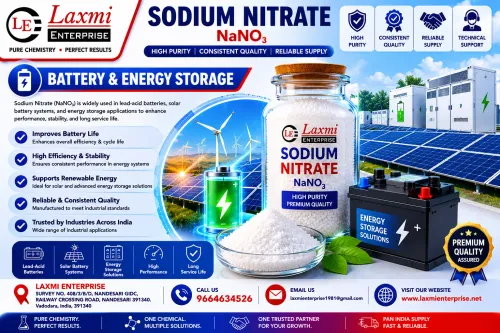


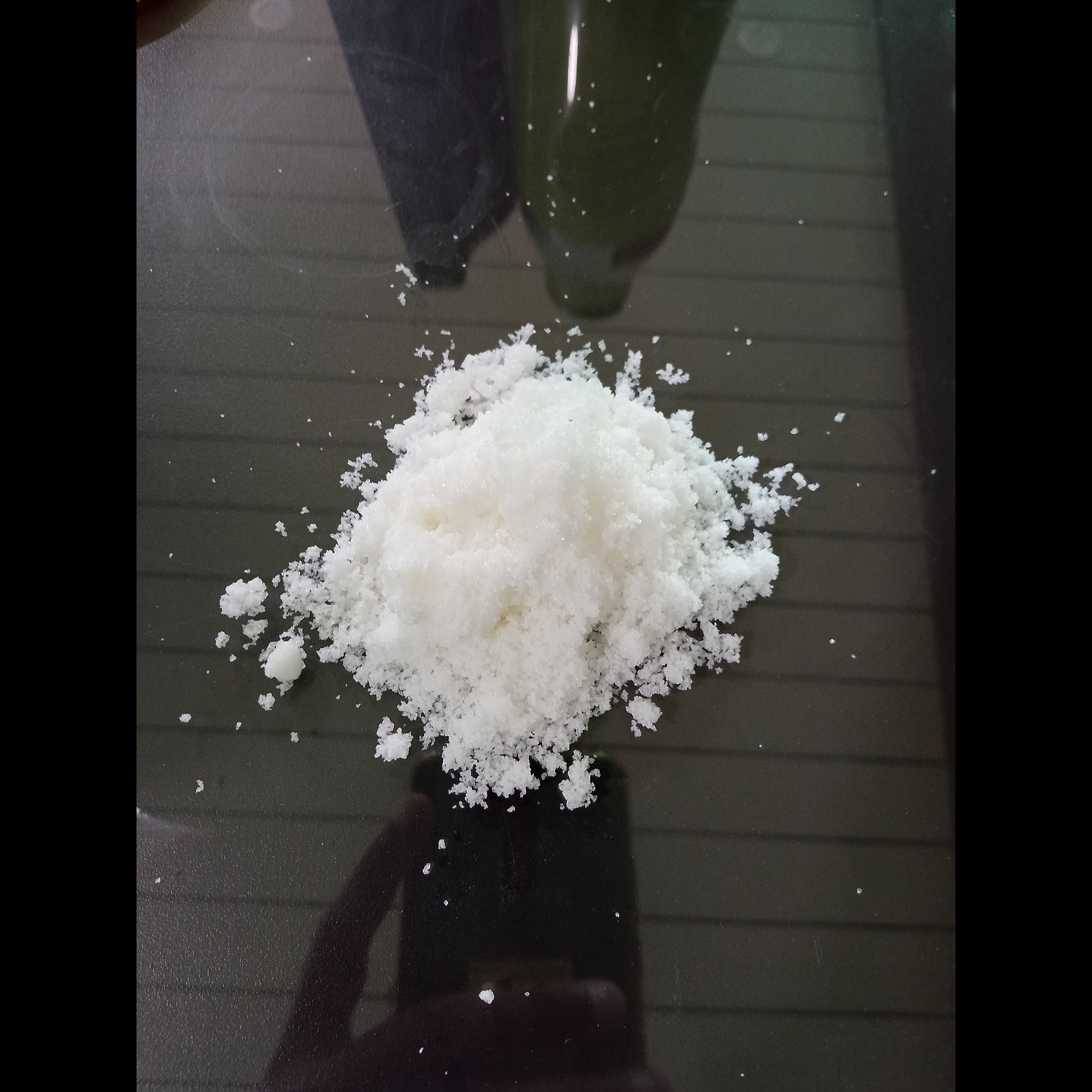
REGULATORY COMPLIANCE FOR SODIUM NITRATE (E251) AS A FOOD ADDITIVE
Sodium Nitrate is approved as a food additive in many countries primarily as a preservative and curing agent. Its use is strictly regulated due to potential formation of nitrosamines.
Heavy Metal Limits in Food-Grade Sodium Nitrate
1. Lead (Pb)
Limit: ≤ 2 mg/kg (FCC, EU)
Some stricter specifications: ≤ 1 mg/kg (Codex)
2. Arsenic (As)
Limit: ≤ 2 mg/kg
In some pharma/ultra-pure grades: ≤ 1 mg/kg
3. Cadmium (Cd)
Limit: ≤ 1 mg/kg
4. Mercury (Hg)
Limit: ≤ 1 mg/kg (often 0.1 mg/kg in stricter specs)
5. Total Heavy Metals (as Pb)
Limit: ≤ 10 mg/kg
Some regions set a combined limit: ≤ 5 mg/kg
6. Insoluble Matter
Not a heavy metal, but part of food-grade quality:
≤ 0.05%
Why These Limits Matter
*If you want, I can also provide:
* A product specification sheet (SDS-style)
* BIS standard summary
* Comparison between food, industrial & fertilizer grades
* Compliance template for food-industry customers
Heavy metals can accumulate and cause:
Kidney damage (Cd)
Neurological toxicity (Hg, Pb)
Carcinogenic effects (As)
Food-grade sodium nitrate is tightly regulated because it is used in:
Global Regulatory Status
◆ Codex Alimentarius (INS 251)
Labeling Requirements
Regulatory bodies mandate:
Additive name: “Sodium Nitrate”
INS/E-number: INS 251 / E251
Purity grade: Food Grade
Intended use: Food processing
Manufacturer address, batch number, manufacturing & expiry dates
Net weight
Country of origin
For export: compliance statement required (EU/FDA code)
Class: Preservative
Acceptable Daily Intake (ADI): 0–3.7 mg/kg body weight
Food categories allowed: Primarily cured meat, some cheese, fish products
Carry-over: Allowed only from permitted ingredients
Meat curing
Preservatives
Pickling solutions
EU (European Union) – E251
Regulation: EU Regulation 1333/2008 (Food Additives)
Specification: EU No. 231/2012
Purity requirements:
Assay: ≥99% NaNO₃
Lead: ≤2 mg/kg
Arsenic: ≤2 mg/kg
Cadmium: ≤1 mg/kg
Mercury: ≤1 mg/kg
Maximum usage levels in food:
Meat products: 150–300 mg/kg (as nitrate, depending on product)
Cheese: 150 mg/kg
Fish roe: 200 mg/kg
India – FSSAI (INS 251)
Standard: Food Safety and Standards (Food Additives) Regulations, 2011
Permitted food categories:
Cured meats
Cheese
Fish products
Maximum permitted levels:
Up to 150 mg/kg (as nitrate) in most meat products
Specification (mirrors FCC/EU):
Pb ≤ 2 mg/kg
As ≤ 2 mg/kg
Cd ≤ 1 mg/kg
Hg ≤ 1 mg/kg
JECFA
Monograph: Sodium nitrate (INS 251)
Sets ADI 0–3.7 mg/kg bw
Reinforces heavy metal limits and purity assay (≥99%)
Mandatory Compliance Documentation
A full food-grade documentation pack should include:
1. Certificate of Analysis (COA)
* Assay
* Heavy metals
* Moisture
* Microbiological limits
2. Material Safety Data Sheet (MSDS/SDS)
3. Food-Grade Declaration
* Complies with FCC / EU 231/2012 / FSSAI / Codex
4. Non-GMO, Allergen, Vegan Declaration
5. Residual Solvent & Contaminant Statement
6. Shelf-Life Stability Data
Industry Best Practices for Compliance
Purchase FCC/EU-spec certified material only
Keep batch traceability
Maintain validation records for nitrate levels in final food
Ensure no unapproved uses (not allowed for general preservations like snacks, beverages)
Regular heavy metal testing
Submit additive reporting where required (e.g., EU QUID rules)
Sodium nitrate — safety considerations & toxicity
Nice — here’s a focused, practical safety & toxicology summary you can use for documentation, training, audits or labels. I’m not pulling new web sources right now (I can if you want), so this is a consolidated, industry-standard summary based on common regulatory guidance (JECFA/FCC/EU/FDA), SDS practice, and toxicology fundamentals.
Toxicity — human health effects
Acute ingestion: Nitrate itself has moderate acute toxicity. The primary clinical risk is formation of methemoglobin (methemoglobinemia) which causes cyanosis, headache, weakness, tachycardia, shortness of breath, and at high levels — loss of consciousness and death.
Infants (<6 months) are much more susceptible (“blue baby syndrome”) because fetal/newborn hemoglobin is more easily oxidized and gastric conversion to nitrite is higher.
Critical exposure controls & PPE
Engineering controls
Use local exhaust ventilation and dust collection for bulk handling and packing.
Store in cool, dry, well-ventilated, fire-resistant areas away from organics and reducing agents.
Personal protective equipment
Eye protection: safety goggles or face shield.
Gloves: chemical-resistant gloves (nitrile/other recommended by SDS).
Respiratory: for dusty operations use N95/FFP2 or better particulate respirator; for high concentrations consult occupational hygienist.
Protective clothing/boots to avoid contamination.
Hygiene
No eating/drinking/smoking in handling areas.
Wash hands before breaks and on leaving workplace.
Storage & handling
Keep away from: organic materials, fuels, sawdust, finely divided combustibles, reducing agents (e.g., metal powders), acids and strong reducing agents.
Containers: non-combustible, dry, sealed—avoid contamination with oils/organics.
Temperature: store cool and dry to avoid caking and decomposition.
Segregation: store oxidizers separately (different cabinet/area) from combustibles and flammables.
. Mechanism of toxicity
Nitrate (NO₃⁻) can be reduced to nitrite (NO₂⁻) in vivo or during food processing. Nitrite oxidizes Fe²⁺ in hemoglobin to Fe³⁺, forming methemoglobin, which cannot carry oxygen. High levels → tissue hypoxia.
Nitrite + secondary amines → nitrosamines (some are carcinogenic) — this is the reason for strict use limits and for adding inhibitors (e.g., ascorbic acid) in cured meats.
Fire & explosion
Sodium nitrate is not combustible by itself but is a strong oxidizer and can intensify fires and cause combustible materials to ignite more readily.
Fire response: Move combustibles away if safe. Use water to extinguish surrounding fire; do not use dry chemical agents that may be incompatible without checking SDS. On decomposition it may release nitrogen oxides (NOx) — firefighters should wear SCBA.
First aid
Ingestion: Do not induce vomiting. Seek immediate medical attention. Monitor for cyanosis and respiratory distress. Medical treatment for methemoglobinemia includes oxygen and, where indicated, methylene blue (administered by medical professionals).
Inhalation: Move victim to fresh air. If breathing is difficult, administer oxygen and seek medical help.
Skin contact: Remove contaminated clothing. Wash skin with soap and water. Seek medical attention for irritation.
Eye contact: Rinse immediately with plenty of water for at least 15 minutes and get medical attention.