
SODIUM NITRATE TEMPERATURE REGULATION TECHNIQUES
Melting point: 308 °C Decomposition onset: ~380–400 °C Decomposition reaction releases oxygen (O₂) → fire & explosion risk Overheating causes: NaNO₂ formation NOₓ gas release Equipment corrosion Product off‑spec Golden rule: Prevent hot spots and uncontrolled heating above 380 °C.
Multi‑Stage Heating
- Gradual temperature rise
- Avoids thermal shock
- Reduces decomposition risk
Used in: Dryers, evaporators, crystallizers
Recommended Dryer Limits
- Operating temperature: ≤250–280 °C
- Residence time control
- Uniform airflow distribution
- Carbon steel at high temperature
- Copper & brass
- Organic linings
Store below 30 °C
Keep away from sunlight
No heat‑generating equipment nearby
Thermal barriers in hot climates
Shut down heat source
Activate emergency cooling
Vent system safely
Evacuate if required
Effective sodium nitrate temperature regulation depends on indirect heating, real‑time monitoring, hot‑spot prevention, and strict alarm limits.
Product formed: Sodium nitrite (NaNO₂)
Gas released: Oxygen (O₂)
Reaction becomes rapid and hazardous at higher temperatures
Oxygen Release → Fire & Explosion Risk
- Oxygen strongly accelerates combustion
- Any contact with:
- Oils
- Organic dust
- Carbonaceous deposits
- can cause violent fires or explosions
Sodium nitrate is not explosive itself, but becomes extremely dangerous at high temperature in contaminated systems.
At very high temperatures:
- NO₂ / N₂O₄ gases may form
- Highly toxic and corrosive
- Causes respiratory injury and environmental hazards
- Oxygen evolution in closed or poorly vented systems
- Can lead to:
- Over‑pressure
- Equipment rupture
- Structural failure
- Severe oxidation of metals
- Accelerated corrosion
- Heater tube failure
- Insulation degradation
- Local hot‑spot formation → runaway decomposition
Formation of sodium nitrite impurity
Yellow discoloration
Loss of oxidizing strength
Off‑spec product (fertilizer, chemical, molten salt)
- Overheated dryers
- Poorly controlled molten salt heat‑transfer systems
- Solar thermal nitrate salts
- Thermal storage tanks
- Accidental exposure to direct flame or hot surfaces
- Scale‑covered heating coils (hot spots)
- Cut heat source
- Activate emergency cooling
- Vent system safely
- Evacuate area if required
Uncontrolled sodium nitrate decomposition at high temperature is one of the most serious oxidizer hazards in chemical plants.
Control temperature, contamination, and oxygen, and the risk becomes manageable.
- Sodium nitrate is a strong oxidizer
- At high temperature it:
- Releases oxygen
- Accelerates metal oxidation
- Promotes hot‑spot corrosion
- Wrong material choice = fire risk, equipment failure, contamination
- Wood (fire load)
- Aluminum (long‑term oxidation risk)
- Copper alloys
Design Notes
- Avoid dead pockets
- Smooth internal finish
- No organic seals or belts
Rubber
Organic elastomers
Carbon steel at hot zones
Used in
- Solar thermal plants
- Heat‑transfer salt systems
- Thermal storage tanks
- Carbon steel
- Copper / brass
- Aluminum
- Organic linings
- NFPA 400 – Oxidizers
- MSDS / SDS – Sodium Nitrate
- ASME material compatibility guidance
- Solar salt design standards (for molten systems)
For sodium nitrate, material selection must assume oxidizing conditions at all times—especially above 300 °C.
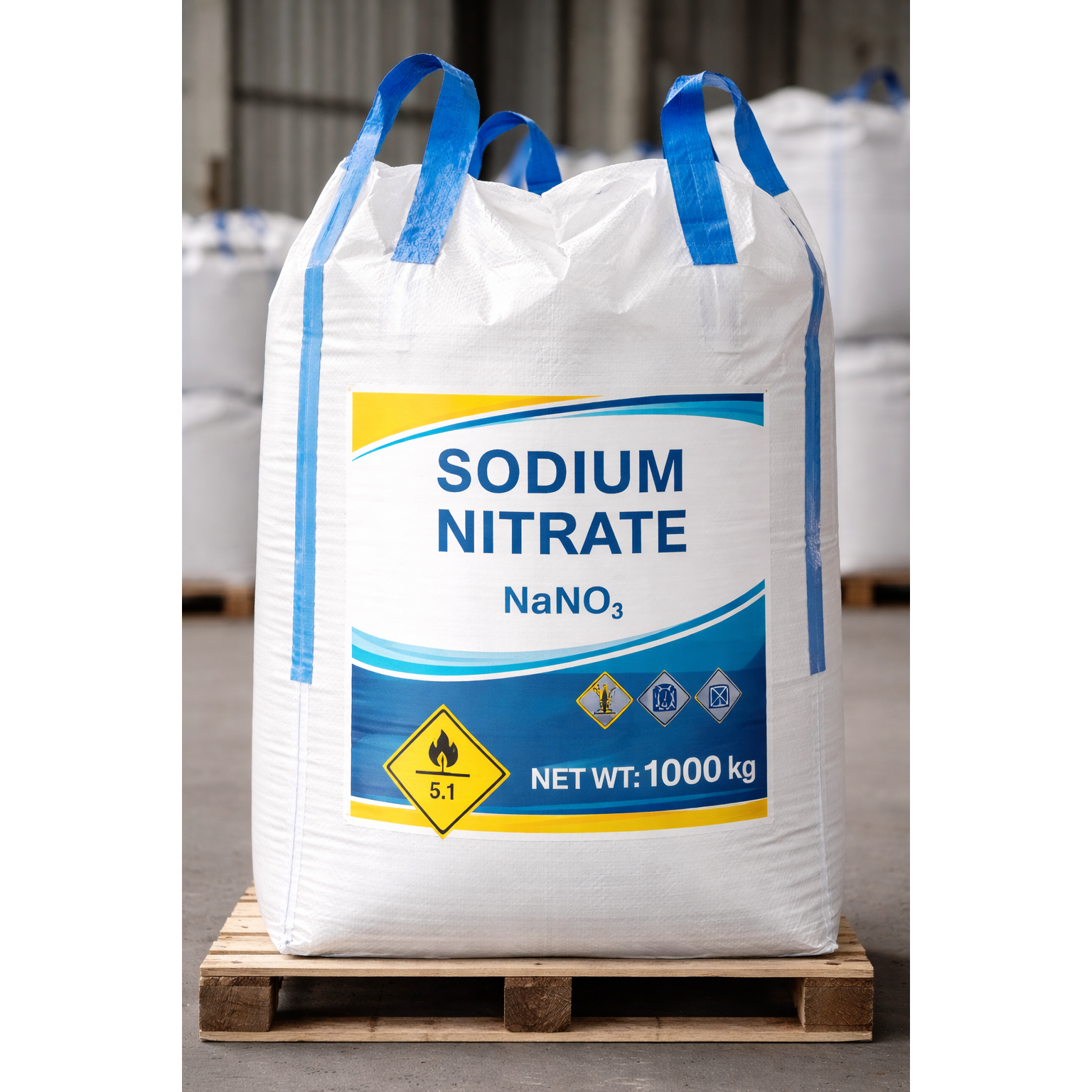
Chemical Name: Sodium Nitrate
CAS No.: 7631-99-4
UN No.: 1498
Hazard Class: 5.1 – Oxidizing Substance
HSN Code: 2834
Odor: Odorless
Appearance: White crystalline powder / granules
GHS Classification
- Oxidizing Solid – Category 3
- Eye Irritation – Category 2A
GHS Hazard Statements
- H272: May intensify fire; oxidizer
- H319: Causes serious eye irritation
Precautionary Statements
- Keep away from heat and combustible materials
- Wear eye and hand protection
Routes of Exposure
- Eye contact
- Skin contact
- Inhalation (dust)
- Ingestion
Health Effects
- Eyes: Severe irritation, redness
- Skin: Mild irritation (prolonged contact)
- Inhalation: Respiratory irritation
- Ingestion: Nausea, vomiting (large amounts)
- Not flammable, but supports combustion
- Releases oxygen and NOx gases when heated
Suitable Extinguishing Media
Fire-Fighter Protection
- Self-contained breathing apparatus (SCBA)
- Full protective gear
Handling
- Avoid contact with:
- Organic materials
- Oils & grease
- Sulfur, carbon, reducing agents
- No smoking or open flames
- Use oxidizer-dedicated equipment
Storage
- Cool, dry, well-ventilated area
- Store below 30 °C
- Segregate from combustibles
- Use plastic, stainless steel, or FRP containers
Stability & Reactivity
- Stable under normal conditions
- Decomposes at high temperature
- Avoid:
- Heat
Contamination
Reducing agents
Acids (violent reactions possible)
LD₅₀ (oral, rat): ~1,200 mg/kg
Not classified as carcinogenic
Not mutagenic under normal exposure
Highly soluble → water contamination risk
Excess nitrate contributes to eutrophication
Avoid discharge to surface water
- Oxygen released feeds combustion
- Fire spreads faster and burns hotter
- Any combustible nearby becomes extremely dangerous
Heat / Overheating
- Dryers >280 °C
- Molten salt systems >380 °C
- Local hot spots on heaters or coils
B. Contamination (Most Common Cause)
- Oil & grease
- Organic dust (wood, paper, packaging)
- Carbon deposits
- Sulfur, reducing agents
. Confined / Closed Systems
- Oxygen build-up
- Pressure rise
- Vessel rupture
Fine sodium nitrate dust
Suspended in air + ignition source
Dust-assisted fire propagation
Fire becomes very intense
Normal extinguishing agents often fail
NOₓ gases released (toxic)
- Sodium nitrate + organic matter + high temperature
- Molten nitrate contamination
- Nitrate-coated combustible surfaces
- Confined oxygen release
Explosions are usually secondary, driven by rapid combustion, not detonation.
- NFPA 400 – Oxidizers
- MSDS / SDS – Sodium Nitrate
- UN 1498 transport regulations
- CPCB / SPCB / Factories Act (India)
Sodium nitrate does not explode—but under heat and contamination it can cause devastating fires and secondary explosions.
Control temperature, keep it clean, and separate from combustibles.
UN No.: 1498
Hazard Class: 5.1 – Oxidizing Solid
NFPA Rating: Health 1 | Flammability 0 | Reactivity 1 | OX
Nature: Not flammable, strong oxidizer
Spill
- Isolate area
- Avoid contamination
- Collect material carefully
- Dispose as per SPCB rules
NFPA 400 – Oxidizers
MSDS / SDS compliance
UN 1498 transport & storage rules
Factories Act
CPCB / SPCB guidelines
Sodium nitrate is a strong oxidizing agent.
When heated to sufficiently high temperature, it becomes thermally unstable and decomposes, releasing molecular oxygen (O₂).
Fire Intensification
- Oxygen feeds combustion
- Fires burn hotter and spread faster
- Non-flammable materials may ignite
B. Explosion Risk (Secondary)
- In confined spaces, oxygen release causes:
- Pressure build-up
- Rapid combustion of contaminants
- Can lead to vessel rupture
C. Toxic Gas Formation
- At very high temperatures, NOx gases may form
- Toxic and corrosive
Overheated dryers
Poorly controlled molten salt systems
Thermal storage tanks
Direct flame exposure
Heater hot spots
Contaminated heating surfaces
- 2 moles NaNO₃ → 1 mole O₂
- 85 g NaNO₃ releases ~11.2 liters of O₂ (at STP)
Even small quantities can significantly increase oxygen concentration in closed systems.
Immediate Action
- Cut heat source
- Vent safely
- Flood with water if fire occurs
- Evacuate area
Oxygen release is the core hazard of sodium nitrate.
Control temperature, contamination, and confinement, and sodium nitrate can be handled safely.
- Sodium nitrate is a strong oxidizer
- Alone it is stable, but with contaminants it becomes dangerous
- Contamination can cause:
- Fire
- Secondary explosions
- Rapid decomposition
- Product degradation (NaNO₂ formation)
Most sodium nitrate incidents are contamination-driven, not temperature-driven.
If contamination is suspected:
- Stop operations
- Isolate material
- Remove heat sources
- Inform safety team
- Do NOT attempt to reuse material
Cleanliness is the most important safety control for sodium nitrate.
Treat it like an oxygen source—keep it separate, clean, and uncontaminated.
· Informational Keywords:
· what is sodium nitrate
· uses of sodium nitrate
· sodium nitrate chemical formula
· sodium nitrate vs sodium nitrite
· Commercial Keywords:
· sodium nitrate price per kg
· sodium nitrate suppliers comparison
· Transactional Keywords:
· buy sodium nitrate online
· bulk sodium nitrate for sale
· Long-Tail Keywords:
· pharmaceutical grade sodium nitrate supplier in India
· sodium nitrate for glass manufacturing
· sodium nitrate for heat storage applications