


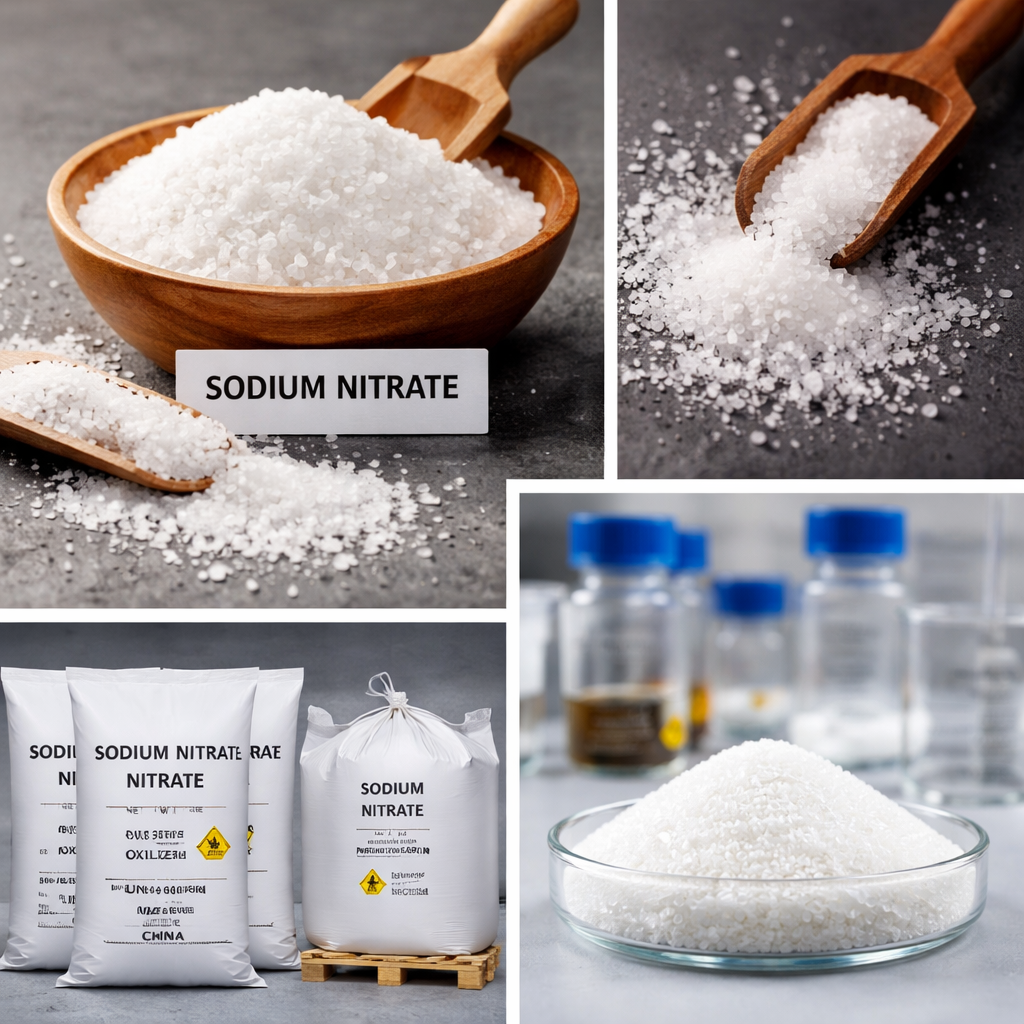
SODIUM NITRATE – PPE SAFETY MEASURES Sodium nitrate is an oxidizing salt that can intensify fires, cause irritation, and release toxic nitrogen oxides under decomposition. Proper PPE is essential during handling, packaging, transfer, or spill management.
- Use local exhaust ventilation (LEV) to control dust.
- Avoid direct contact – use scoops, conveyors, closed transfer systems.
- Prohibit smoking, sparks, fuel sources, or combustible material nearby.
- Keep MSDS/SDS accessible for all workers.
- Train personnel in fire hazards & spill procedures.
Operational Controls:
- Work in dry areas to avoid clumping & reaction.
- Avoid friction and impact that may cause dust clouds.
- Ensure grounding and bonding to prevent static discharge near combustibles.
- Heat-resistant gloves
- Respiratory protection (SCBA)
- Face shield & flame-retardant clothing
- Work under ventilated/contained system only
- Do not eat, drink, or smoke near chemical handling areas.
- Wash hands & exposed skin after handling.
- Remove contaminated clothing immediately & launder before reuse.
- Store PPE separately from regular clothing.
Molecular Formula: NaNO₃
Class: Oxidizer (GHS Category 3)
Key Property: Thermally stable at ambient conditions but decomposes at elevated temperature, releasing oxygen and toxic nitrogen oxides.
Key Decomposition Reaction:
2 NaNO₃ → 2 NaNO₂ + O₂↑
Enhanced risk of fire due to liberated oxygen.
- Maintain operating temp well below 380°C for stability-critical systems.
- If molten handling required, maintain controlled heating & inert atmosphere.
- Use temperature interlocks, alarms & automatic shutdown systems.
- Install NOx detectors + ventilation scrubbers in high-temperature operations.
- Avoid contact with:
- Fuels, sulfides, phosphides, ammonium salts
- Organic materials (sugar, sawdust, oils)
- Reducing agents (metal powders, sulfites)
Temperature Control Measures
- Install PID temperature controllers
- Use dual thermocouple sensing (primary + safety backup)
- Add high-temperature shutdown trips set at 350–360°C
- Maintain heat evenly to avoid hotspots inside reactors/furnaces
- Use insulated vessels to stabilize temperature gradients
Real-time Monitoring
- Continuous temperature logging
- NOx gas monitor for early decomposition detection
- Alarm triggers for >340°C
- Use stainless steel or corrosion-resistant alloys
- Provide ventilation + scrubbing system for NOx gases
- Install automatic quench/cooling injection during abnormal rise
- Heat-transfer salt mixtures (NaNO₃/NaNO₂) should be used only in controlled circulating systems
Shut down heating source
Activate emergency cooling system
Increase ventilation & exhaust
Evacuate personnel from hot zone
Use SCBA respirators for response team
Do not use dry chemical/powder fire extinguishers
- Prefer water spray or foam, considering oxidizer behavior
General Conditions
- Store in a cool, dry, well-ventilated area
- Keep away from sources of heat (>50°C) and direct sunlight
- Prevent moisture exposure to avoid clumping and corrosive byproducts
- Maintain segregated storage away from incompatibles
Warehouse Layout
- Use non-combustible shelves (steel, coated metal)
- Ground and bond storage units to reduce static
- Avoid wooden pallets for bulk storage
Wear goggles, gloves, dust mask (N95) and protective clothing
Use mechanical handling methods to minimize dust (scoops/conveyors)
Do not eat, drink, or smoke during handling
Avoid crushing, grinding, or friction-producing operations
Ensure SDS training for workers as per OSHA HazCom
- Install local exhaust ventilation
- Use HEPA-filtered collectors
- Keep handling area free of combustibles
Automatic sprinkler system recommended
Keep class D extinguishers available for emergencies
Maintain NOx exhaust system for high-temperature zones
- Small spill → gently collect with clean polyethylene tools
- Large spill → isolate area, avoid dust formation, use HEPA vacuum/wet method
- Waste disposal must comply with local environmental regulations
- Neutralize or dilute before disposal in approved chemical waste systems
Nitrate (NO₃⁻) is essential for plant growth but becomes a pollutant when present in excess in water bodies, soils, and ecosystems. Nitrate contamination is one of the most widespread global water quality issues, especially in agricultural and industrial regions.
Nitrogen-based fertilizers (urea, ammonium nitrate, sodium nitrate)
Livestock manure & poultry waste
Runoff from crop fields, greenhouses, horticulture
Over-irrigation causing leaching to groundwater
Chemical manufacturing effluents
Food processing wastewater
Power plant condensate discharge
Explosives, textiles, dye and tanning industries
Sewage, landfill leachate and septic tanks
Atmospheric nitrogen fixation
Soil organic matter mineralization
Forest fires and lightning
Excess nitrate causes eutrophication → rapid algae growth → oxygen depletion.
Consequences:
- Algal blooms (including harmful cyanobacteria)
- Fish kills due to hypoxia/anoxia
- Loss of biodiversity
- Increased water treatment costs
- Disruption of food chain & habitat structure
Soil Health
- Soil acidification over time
- Loss of microbial balance
- Nutrient leaching → reduced fertility
- Increases nitrous oxide (N₂O) emissions → greenhouse gas impact
Atmospheric Effects
- NOx → contributes to smog formation
- Formation of acid rain
Livestock drinking high-nitrate water may show:
- Reduced milk yield
- Weight loss, reproductive issues
- Sudden poisoning at extreme levels
Controlled fertilizer application (precision farming)
Split dosing & slow-release fertilizers
Drip irrigation to reduce leaching
Cover crops to absorb excess N
- Soil organic carbon enhancement
Policy and Management
- Fertilizer use regulation
- Nitrate vulnerable zones (NVZ) classification
- Groundwater quality surveillance programs
Alert personnel and stop operation.
Evacuate non-essential staff from the spill zone.
Restrict access — establish a safety perimeter.
Eliminate ignition sources, heat, sparks, fuels, combustible materials.
Ensure responders wear PPE:
- Goggles/Face shield
- Nitrile gloves
- Chemical-resistant coveralls
- N95/P100 particulate respirator
- Safety shoes (preferably anti-static
Avoid dust generation — do not sweep aggressively.
Use HEPA vacuum or wet sweeping method.
Collect material with plastic/HDPE tools only (avoid metal sparks).
Transfer into a clean, dry, labeled container for reuse or disposal.
- Wash area with water & mild detergent; prevent runoff into drains.
Ensure local exhaust ventilation is ON.
Stop dispersion by lightly misting with water (avoid excess).
Build temporary sand/soil containment berm.
Scoop material into non-combustible containers.
- Move waste to hazardous chemical storage for disposal.
- Initiate emergency response team.
- Isolate area within 25–50 m radius.
- Shut off nearby equipment; prevent sparks and hot surfaces.
- Use mechanical shovels/HDPE loaders (no organic materials).
- Divert away from water drains, canals, soil surface.
- If risk of environmental spread → deploy spill booms, barriers, sand dyke.
- Arrange waste disposal through approved hazardous waste facility.
Do not flush large spills with water — potential contamination and spread.
NOT allow contact with:
- fuels, oils, paper, wood, textiles
- carbon, metal powders
- ammonium salts, sulfides, acids
- flammable organic solvents
In case fire occurs:
- Use water spray / flooding
- Avoid dry chemical/CO₂ alone (ineffective against oxidizer-driven fire)
- Prevent discharge into sewers, stormwater drains, rivers, soil.
- Use bund walls, sandbags, absorbent pads for containment.
- Contaminated soil must be trenched and removed.
- Report major spills to Pollution Control Board/local authority if required.
Wash floor using non-organic detergent.
Inspect area for corrosion or residue.
Log event in spill report register.
- Review cause → update SOP & staff training if needed.