

SODIUM NITRATE TRANSPORTATION AND SPILL RESPONSE
SODIUM NITRATE TRANSPORTATION AND SPILL RESPONSE
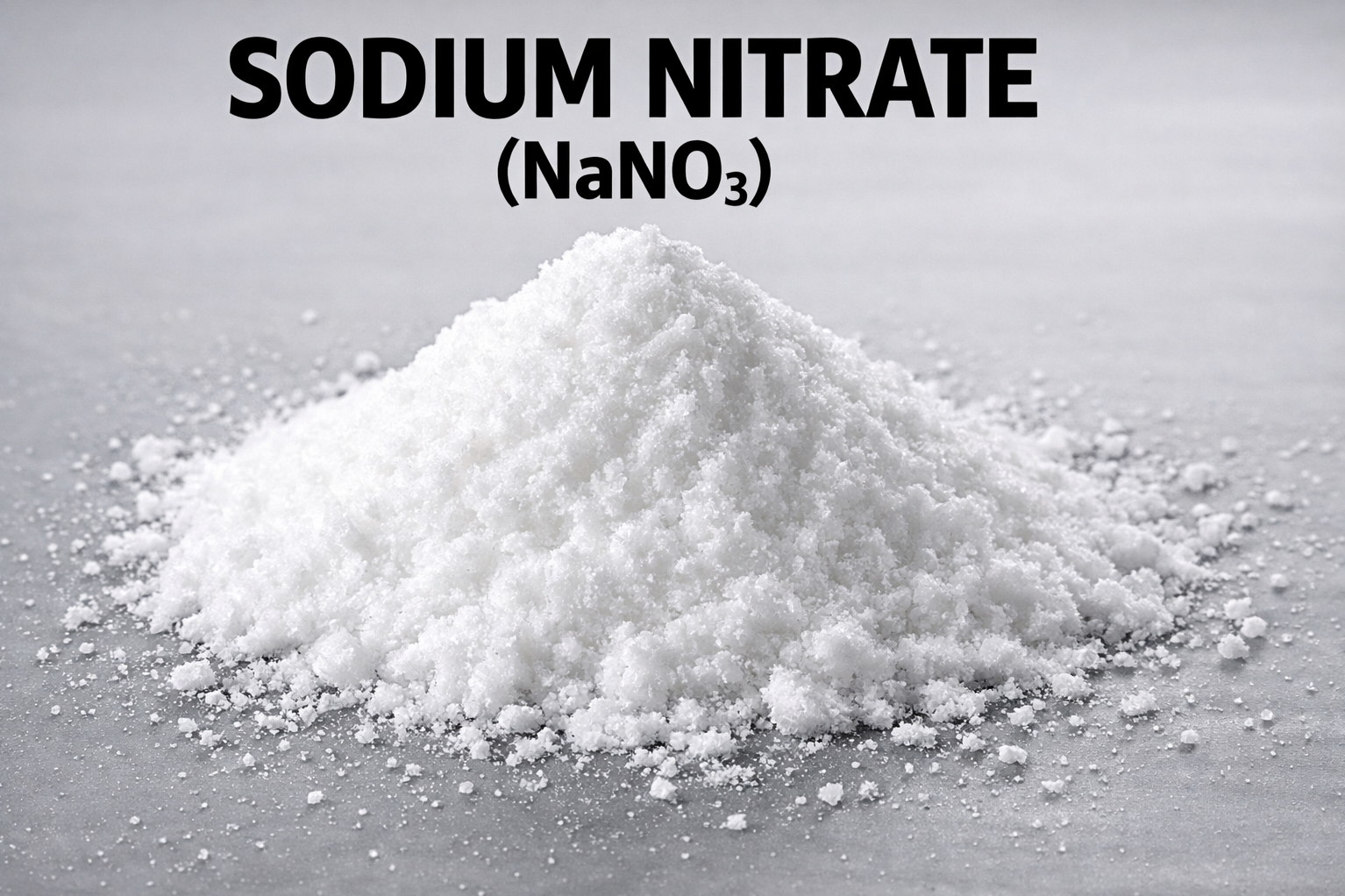
Sodium nitrate (NaNO₃) is a white crystalline oxidizing solid widely used in fertilizers, heat storage salts, explosives formulation, chemical processing, and industrial manufacturing. While stable under normal handling, its oxidizing nature can intensify combustion, requiring strict controls during transport, storage, and spill response to mitigate safety and environmental risks.
Use sealed, moisture-resistant HDPE/PP bags, drums, or lined containers
Avoid contact with organic matter, reducing agents, fuels, combustibles
Maintain separation from heat sources and acids
Transport only in approved vehicles with placards
Load upright; avoid tearing or puncturing bags
No smoking or spark-producing tools during transfer
Keep away from oils, wood, paper, metal powders
Ensure adequate ventilation to prevent dust accumulation
Keep containers dry and protected from rain
Segregate from combustible goods (dangerous goods segregation rules)
Avoid stacking overload to prevent rupture
Carry SDS (Safety Data Sheet) and transport emergency card
Wear PPE: chemical-resistant gloves, goggles, dust mask/respirator
Carry spill kit: inert absorbent, shovel, waste bags, neutralization supplies
Use water spray/fog only (do not use dry chemical or foam)
Remove material if safe to do so
Cool exposed containers with water
Do not breathe decomposition fumes (NOₓ gases)
- Stop material release if safe
- Avoid dust generation; isolate area
- Scoop/collect using plastic/metal shovel
- Transfer to clean, dry container for reuse or disposal
- Rinse area with water to dilute residual nitrate
B. Large Spills (>10 kg)
Restrict entry; notify supervisory personnel
Eliminate ignition sources
Dike area to prevent runoff to drains/soil
Use mechanical removal equipment
Dispose/recover according to local environmental regulations
Wash area thoroughly with excessive water
- Prevent discharge into natural streams or sewers
- Contact local environmental authority for guidance
- Nitrate in water can cause eutrophication & oxygen depletion risk
Inhalation: Move to fresh air, seek medical help if irritation persists
Skin contact: Wash with water and mild soap
Eye contact: Rinse with water for 15 minutes; get medical attention
Ingestion: Do not induce vomiting; give water; seek medical care
Avoid release into soil, waterways, drains
Nitrate runoff may contribute to algal blooms
Contaminated soil must be excavated and disposed responsibly
Evacuation should be triggered immediately if:
- Fire or smoke is detected near sodium nitrate storage
- Spillage exceeds safe handling capacity (>50–100 kg uncontrolled)
- Containers are damaged, leaking, or exposed to moisture
- Uncontrolled chemical reaction or gas release (brown NO₂ fumes) occurs
- Explosion risk suspected due to heat/stress on containers
- Emergency authority instructs evacuation
- Activate facility alarm system
- Inform:
- Safety officer / site EHS authority
- Fire emergency response team
- Nearby departments and security control room
- Provide details:
- Location, quantity involved, nature of emergency
- Presence of fire, smoke, or NOₓ gas
Public address announcement example:
“Attention all personnel: Sodium nitrate emergency in [area].
Evacuate immediately to designated assembly zones.
Avoid the spill area and follow emergency marshals.”
Stop work immediately and shut down equipment if safe
Leave material and exit calmly through predefined escape routes
Avoid routes passing near storage or spill location
Do not touch spilled product or contaminated surfaces
Assist disabled or injured coworkers
Running, pushing, or backtracking
Attempting to recover personal belongings
Using lifts or confined staircases with smoke presence
Once evacuated:
- Report to designated Assembly Point (AP-A/AP-B)
- Conduct headcount using muster roll
- Record missing personnel immediately
- Keep pathways clear for emergency responders
- Stay until official all-clear notice is given
Move exposed individuals to fresh air
If breathing difficulty occurs → Oxygen + medical evaluation
Wash skin/eyes with plenty of water
Suspected inhalation of NOₓ fumes → Immediate hospital referral
Re-entry is permitted only when:
- Heat/fire hazards are neutralized
- Area tested for NOₓ, nitrate dust, and toxicity levels
- Spill fully neutralized, removed, and cleaned
- Fire Safety Officer & EHS Head declare All Clear
- Ventilation completed, no visible fumes
Document incident, corrective actions, and lessons learned.
Conduct quarterly drills for sodium nitrate handling areas
Practice alternate escape path usage
Train staff on alarm systems and PPE recognition
Evaluate drill performance using timing, headcount accuracy & coordination
- Oxidizing Solid – Category 3
- Eye irritation – Category 2A
Signal Word: Warning
Handle in well-ventilated areas
Minimize dust generation; use closed transfer systems where possible
No smoking, open flames, or sparks nearby
Avoid contact with:
- Organics, fuels, wood, paper, oils
- Reducing agents, sulfides, chlorides, metals
Use clean non-combustible tools for handling
Practice good housekeeping to avoid accumulations
Store in cool, dry, fire-resistant warehouse
Maintain away from heat sources & direct sunlight
Keep >3 m distance from combustibles and flammables
Use corrosion-resistant HDPE/PP bags or lined drums
Segregate per dangerous goods compatibility (Class 5.1 oxidizers)
Avoid storing near moisture or water leaks
Although sodium nitrate is not flammable, it accelerates burning.
Fire Response
- Extinguishing media: Water spray/fog only
- Cool containers with water to prevent rupture
- Do not use foam, CO₂ or dry chemical directly on oxidizer fire
- Firefighters must wear SCBA + full protective gear
- Nitrogen oxides (NOₓ – brown fumes)
- Sodium oxide fumes
Response team must stay upwind and avoid fume exposure.
Isolate area & restrict access
Avoid dust; wear gloves + mask
Scoop into clean dry container
Wash area with water
Evacuate non-essential personnel
Stop leakage if safe
Dike to prevent waterway contamination
Mechanically collect material
Dispose per regulations
Warehouse humidity & temperature logging
Integrity inspection of bags/drums
Fire equipment functionality check
Spill response kits availability verification
Staff PPE compliance audits
Annual risk assessment review
Every worker must receive training in:
- Oxidizer material handling
- Spill/fire emergency response
- Safe storage segregation
- Evacuation and muster procedures
- SDS copy accessible at site
- Incident records
- Chemical inventory logs
- Regulatory compliance records
Dispose according to local environmental rules
Avoid dumping into sewer/soil/water
Incineration only under controlled industrial conditions
Waste should be handled as hazardous oxidizing waste
- Use Oxidizer - Class 5.1 signage
- Maintain SDS accessible on site
- Mark segregation zones clearly
- Train staff on compatibility & handling rules
- Conduct yearly safety audit & internal drills
SODIUM NITRATE = STRONG OXIDIZER
Keep away from acids, fuels, organics, reducing agents, and ammonium salts
Use dry storage, non-combustible tools, and PPE during handling
Sodium nitrate (NaNO₃) is an oxidizing inorganic salt widely used in fertilizers, metal treatment, explosives,
food processing, and heat transfer media. Although relatively low in acute toxicity, it can pose health risks through ingestion and inhalation, and may decompose to produce hazardous gases under specific conditions
Converts hemoglobin → methemoglobin, reducing oxygen transport
Symptoms: cyanosis, dizziness, weakness, shortness of breath
High-risk groups: infants, people with enzyme deficiencies, those exposed to high ingestion levels
Sodium nitrate itself is not combustible, but it supports combustion and accelerates burning of organic/flammable materials.
Decomposition Behavior
- Begins releasing gases at elevated temperatures (>380–500°C)
- Violent decomposition possible when mixed with reducing agents or combustibles
Avoid inhalation of dust; use dust-tight PPE and masks (N95/P2).
Prevent contamination with organic materials, metals, sulfur, charcoal, fuels.
Store away from heat sources and strong acids.
Use local exhaust ventilation during transfer or bag opening.
In fire: use water flooding; avoid dry chemical or foam.
Exposure Treatment
- Inhalation → move to fresh air, provide oxygen if needed.
- Eye/Skin → rinse with plenty of water for 15 mins.
- Ingestion → do not induce vomiting, seek medical attention.
- Suspected methemoglobinemia → administer methylene blue (medical supervision only).
Nitrates contribute to eutrophication in water bodies.
Runoff management and proper wastewater neutralization required.
Biodegradable reducing agents (e.g., iron filings, activated carbon) used for nitrate removal.
Chemical: Sodium nitrate (NaNO₃)
Class: Strong Oxidizer
GHS Classification:
- Oxidizing Solid Category 3
- Acute Toxicity (Oral) Category 5
- Eye irritation Category 2
Wear appropriate PPE: gloves (nitrile/neoprene), safety goggles, PPE suit.
Avoid dust generation; use controlled transfer methods.
Ground equipment to avoid static sparks during bulk handling.
Use non-sparking, corrosion-resistant tools.
Prevent contamination with combustible materials at all stages.
Provide local exhaust ventilation when pouring or packaging.
Conduct risk assessment before handling large volumes.
Ensure emergency eyewash and safety showers are accessible.
Maintain spill containment trays for bulk storage.
Avoid open flames, heat sources, and friction near product.
Do not smoke or carry ignition sources in work zones.
Follow FIFO principle to maintain material freshness and avoid caking.
- Sodium nitrate itself does not burn, but accelerates combustion.
- Use large quantities of water as primary extinguishing media.
- Avoid CO₂, dry chemical powders, or foam—they may be ineffective with oxidizers.
- Firefighters must use SCBA due to NOx gas formation.
- Cool containers continuously to prevent thermal decomposition.
Introduce sodium nitrate into systems slowly and in diluted form.
Monitor temperature to avoid decomposition (>380°C).
Avoid mixing with reducing agents unless controlled for process.
Install temperature and oxygen sensors for large reactors.
Follow regulations: UN 1498 – Sodium Nitrate, Class 5.1 Oxidizer
Use ventilated vehicle with no combustible cargo.
Ensure containers remain upright and secured.
Carry MSDS, emergency contact, spill response kit.
· sodium nitrate
· NaNO3
· sodium nitrate CAS 7631-99-4
· sodium nitrate chemical formula
· sodium nitrate properties
· sodium nitrate specification
· sodium nitrate SDS
· sodium nitrate MSDS
· sodium nitrate supplier
· sodium nitrate manufacturer
· sodium nitrate exporter
· sodium nitrate distributor
· sodium nitrate price
· buy sodium nitrate online
· bulk sodium nitrate for sale
· industrial grade sodium nitrate
· food grade sodium nitrate
· pharmaceutical grade sodium nitrate