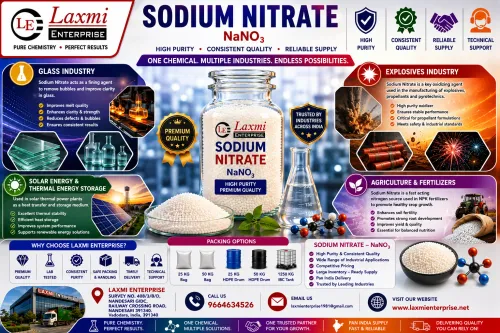

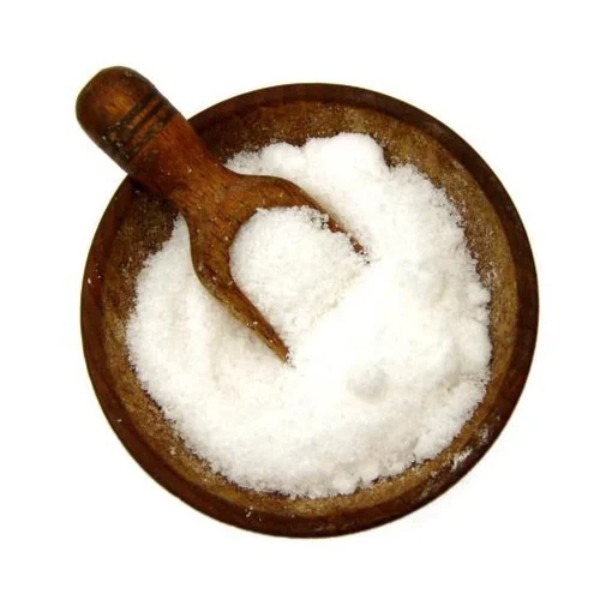
Sodium nitrate (NaNO₃) is not a primary cleaning agent like surfactants, alkalis, or solvents, but it has niche or specialty applications in cleaning and related chemical formulations. Here’s a detailed breakdown:
Sodium Nitrate Supplier
Sodium Nitrate Manufacturers
Sodium Nitrate Wholesale
Industrial Grade Sodium Nitrate
Food Grade Sodium Nitrate
High Purity Sodium Nitrate
Sodium Nitrate Fertilizer
Nitrogen Fertilizer Supplier
Nitrate-Based Fertilizers
Crop Nutrition Solutions
Agricultural Chemicals Supplier
Sodium Nitrate Food Additive
Curing Salt Additive
Food-Grade Nitrate Preservative
Meat Curing Ingredients
Preservatives for Processed Meat
Sodium Nitrate for Explosives
Oxidizer Chemicals Supplier
Pyrotechnic Grade So
1. Oxidizing Agent in Specialty Cleaners
Sodium nitrate is a mild oxidizer.
Can be used in industrial or laboratory cleaners to remove certain stains or residues that are resistant to basic detergents.
Often combined with other oxidizers (e.g., percarbonate, perborate) for enhanced bleaching or stain removal.
Example: Stain-lifting powders for industrial laundry or metal cleaning.
2. Stabilizer in Cleaning Powders
Prevents degradation of other oxidizing components in powdered formulations.
Helps maintain the color, fragrance, and shelf-life of detergent powders.
Example: Stabilizes percarbonate or perborate bleaching agents in laundry powders.
3. Anti-Caking / Flow Agent
Sodium nitrate can help reduce moisture-induced caking in powdered cleaners.
Works by controlling crystal formation and hygroscopic behavior of powders.
Particularly useful in high-humidity storage conditions for bulk powdered cleaners.
4. Industrial or Metal Cleaning
Used in metal surface treatments to control corrosion or oxidation during cleaning.
In some specialty formulations, nitrate ions help prevent rust formation when cleaning metal equipment.
5. pH and Chemical Control
In specialty chemical cleaners, sodium nitrate can act as a buffering or pH-stabilizing agent, ensuring controlled reaction rates in cleaning solutions.
Helps avoid overly aggressive reactions that might damage surfaces.
6. Limitations & Safety Considerations
Strong oxidizer: can react violently with reducing agents or organics in concentrated forms.
Must be used at low concentrations in cleaning formulations (typically <1%).
Wastewater containing nitrate may require treatment due to environmental regulations (to prevent eutrophication).
Summary
Sodium nitrate’s role in cleaning is indirect and niche:
Mild oxidizing/bleaching agent.
Stabilizer for powders.
Anti-caking and flow aid.
Corrosion prevention in metal cleaning.
pH and reaction control in specialty formulations.
It’s rarely a main ingredient in consumer detergents but can be found in industrial cleaning, stain-lifting powders, or specialty chemical formulations
Here’s a detailed overview of analytical methods commonly used for testing sodium nitrate (NaNO₃) in pharmaceutical, chemical, and industrial applications. I’ve organized it by purpose and method type.
1. Identification Tests
Method Principle Typical Use
Infrared Spectroscopy (IR / FTIR) Compares IR spectrum with reference standard Confirms chemical identity; common in pharmacopeial monographs
Chemical / Classical Test for Nitrate Reduction of nitrate to nitrite, then formation of colored complex (Griess reaction) Quick identification in lab or QC
X-ray Powder Diffraction (XRPD) Compares crystalline pattern with reference Confirms crystalline sodium nitrate, differentiates from impurities
2. Assay / Purity Determination
Method Principle Remarks
Titrimetric (Volumetric / Redox) Reduction of nitrate with suitable reducing agent (e.g., ferrous sulfate, zinc) and back-titration Traditional, cost-effective; accuracy ±0.2–0.5%
Ion Chromatography (IC) Separation and quantification of nitrate ions using conductivity or UV detection Highly accurate; separates nitrate from nitrite and other anions; preferred for pharmaceutical-grade material
UV-Vis Spectrophotometry Formation of nitrate-specific colored complex (e.g., via salicylic acid method) Useful for aqueous solutions; less precise than IC
Gravimetric Methods Precipitation as insoluble salt (e.g., AgNO₃ forming AgCl in presence of chloride) Rarely used today due to time and labor
3. Moisture & Drying Tests
Test Principle Notes
Loss on Drying (LOD) Heat sample at 105°C and measure weight loss Determines residual moisture; important for caking control
Karl Fischer Titration Quantitative determination of water Used for trace moisture levels (<0.1%)
4. Impurity Testing
Impurity Analytical Method Typical Limits
Chloride (Cl⁻) Titration (Mohr method) or IC ≤0.02%
Sulfate (SO₄²⁻) Gravimetric or IC ≤0.02%
Nitrite (NO₂⁻) IC or spectrophotometric (Griess reaction) ≤10 ppm
Heavy metals (Pb, Cd, etc.) ICP-MS or AAS Pb ≤10 ppm; other metals as per pharmacopeia
Arsenic ICP-MS or hydride generation AAS ≤2 ppm
Iron ICP-MS or AAS ≤50 ppm
5. Physical Tests
Test Method
pH (1% w/v solution) pH meter at 20–25°C
Melting / Decomposition Melting point apparatus or DSC (≈308°C, decomposes)
Appearance / Color Visual inspection; white crystalline powder or colorless crystals
6. Microbiological / Sterility (if applicable)
Sodium nitrate itself is non-organic, so microbial contamination is usually not a concern.
If used in parenteral or sterile formulations, test per USP Sterility / LAL (endotoxin) methods.
7. Recommended Laboratory Notes
Use high-purity water for solutions to avoid chloride or sulfate interference.
Always calibrate instruments (IC, UV-Vis, pH meters) before testing.
Maintain reference standards of sodium nitrate for comparison in identity and assay tests.
Document batch-wise variations in CoA (assay, moisture, impurities).
Mild Oxidizing Agent
Acts as a bleaching or oxidizing adjunct in specialty cleaning powders.
Enhances stain removal for industrial laundry or hard-to-clean surfaces when combined with percarbonate or perborate.
Useful in removing organic residues or discoloration that standard detergents can’t handle.
2. Powder Stabilizer
Prevents degradation of oxidizing agents like sodium percarbonate or perborate in detergent powders.
Helps maintain color, fragrance, and shelf-life of cleaning powders.
Reduces chemical reactions that could lead to reduced cleaning efficiency during storage.
3. Anti-Caking / Flow Aid
Controls moisture-induced caking in powdered cleaning products.
Ensures free-flowing powders, especially in humid storage conditions.
Works synergistically with silicates or phosphates in detergents.
4. Corrosion Inhibition in Metal Cleaning
Used in industrial metal cleaning solutions to limit corrosion during treatment.
Nitrate ions can help protect mild steel or other metals while cleaning off residues.
5. pH and Reaction Control
Sodium nitrate can stabilize pH or regulate chemical reactions in specialty cleaning solutions.
Prevents overly aggressive oxidation that could damage surfaces.
6. Limitations and Safety
Strong oxidizer: should not be mixed with reducing agents or combustible organics.
Usually used at low concentrations (<1%) in cleaning formulations.
Wastewater containing nitrate must be treated due to environmental regulations (to avoid eutrophication).
Summary
Sodium nitrate’s niche cleaning roles are:
Function Application
Oxidizing adjunct Stain removal in industrial laundry or specialty powders
Stabilizer Prevents degradation of bleaching agents
Anti-caking Maintains flowability in powdered cleaners
Corrosion inhibitor Metal cleaning solutions
pH/reaction control Specialty chemical cleaners
It’s mostly used in industrial or specialty formulations, not in everyday consumer detergents.
Pharmaceutical Industry
GMP / WHO / USP Guidelines:
Dry storage areas: ≤40% RH
Controlled drug manufacturing areas (e.g., powder handling): 30–50% RH
Cleanrooms: RH tightly controlled depending on product sensitivity; typically 45–55% RH
Key documents:
WHO GMP Guide, Part II
USP <659> Packaging and Storage Requirements
2. Food & Beverage Industry
HACCP / FDA / FSSAI Guidelines:
Maintain RH to prevent microbial growth, spoilage, and quality deterioration.
Example targets:
Dry goods (flour, cereals): 50–60% RH
Chocolate & confectionery: 50–55% RH
Fresh produce storage: 85–95% RH (for fruits/vegetables)
Key documents:
FDA Food Code
FSSAI Food Safety Standards
ISO 22000 (Food Safety Management)
3. Electronics & Semiconductor Industry
Cleanroom and ESD-sensitive areas:
Typical RH: 30–50% RH
Prevents corrosion, condensation, and electrostatic discharge (ESD).
Key standards:
ISO 14644-1: Cleanroom classifications
IEC 61340: Electrostatic discharge control
4. Textile Industry
ISO and ASTM standards for ambient conditions in textile processing:
Typical RH: 50–60%
Prevents fiber shrinkage/stretching and static electricity build-up.
Key documents:
ISO 139: Standard Atmospheres for Conditioning and Testing Textiles
ASTM D1776: Standard practice for conditioning textiles
5. Paper & Printing Industry
Humidity affects paper dimension, curl, and ink absorption:
RH target: 45–55% for printing and storage
Key standards:
TAPPI T402: Conditioning paper for testing
ISO 187: Paper, board, and pulps — Standard atmosphere for conditioning
6. Metal and Precision Engineering
Corrosion prevention:
RH: ≤40% in storage areas to prevent rust on steel, iron, and alloys.
Standards:
ISO 9223: Corrosion of metals — Corrosivity of atmospheres
Internal industrial engineering standards for storage and assembly areas
7. General Industrial and Cleanroom Guidelines
Parameter Typical Target Standard / Reference
Temperature Depends on process ASHRAE / ISO 14644
RH control ±2–5% of set point ISO 14644 / GMP / FDA guidelines
Monitoring Continuous, with alarms HACCP, GMP, ISO 14644
Airflow Uniform distribution HVAC design standards (ASHRAE 170)
8. Monitoring & Control
Sensors: Hygrometers, electronic RH sensors, data loggers.
Control systems: PLC or DDC-based HVAC, integrated humidifiers/dehumidifiers.
Validation: Required for critical applications (pharma, food, electronics).
Summary
Humidity regulation standards vary by industry:
Pharma: tight control for product stability.
Food: prevent spoilage, mold, and moisture-driven reactions.
Electronics: prevent corrosion and ESD.
Textiles/paper: maintain dimensional stability.
Metals: prevent rust.
1. Oxidizing / Bleaching Adjunct
Sodium nitrate is a mild oxidizer.
In powdered laundry detergents, it can enhance stain removal and whitening when combined with oxidizing bleaching agents like sodium percarbonate or sodium perborate.
Provides non-chlorine bleaching, gentler on fabrics.
2. Stabilizer for Oxidizing Agents
Helps stabilize peroxide-based bleaching agents in detergent powders.
Prevents premature decomposition of bleaching agents, maintaining shelf-life and cleaning efficiency.
3. Anti-Caking / Flow Aid
Controls moisture-induced caking in powdered detergents.
Helps powders remain free-flowing, especially under high humidity storage conditions.
4. Corrosion Inhibitor (Specialty Formulations)
In metal-cleaning or industrial detergents, sodium nitrate can help reduce corrosion during washing processes.
Acts as a mild protective agent for metal surfaces.
5. pH and Chemical Reaction Control
Sodium nitrate can help buffer or regulate chemical reactions in detergent formulations.
Prevents overly aggressive oxidation that could damage fabrics or surfaces.
6. Usage Levels
Typically used at low concentrations (0.1–1% by weight) depending on the formulation.
Higher concentrations are avoided due to environmental and safety considerations.
Summary Table
Function Role in Detergent Typical Concentration
Oxidizing adjunct Enhances stain removal & bleaching 0.1–1%
Stabilizer Maintains shelf-life of bleaching agents 0.1–0.5%
Anti-caking Ensures powder flowability 0.1–0.5%
Corrosion inhibitor Protects metal surfaces 0.1–0.3%
Reaction/pH control Regulates chemical reactions 0.1–0.5%
Key Notes
Sodium nitrate is mostly used in industrial or specialty detergents, not common household surfactants.
Care must be taken during formulation because it is a strong oxidizer and can react with reducing agents or organics.
Wastewater treatment may be necessary due to nitrate content.