

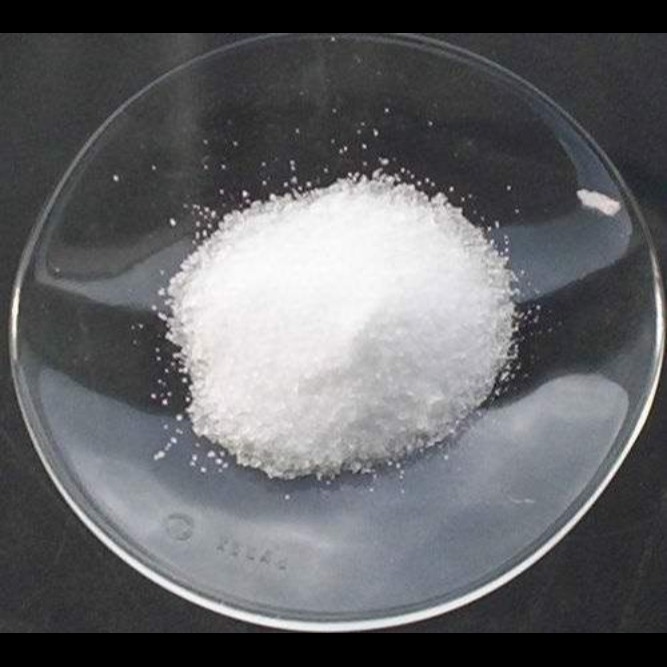
Sodium sulfate interference in water analysis is a common issue, especially in ion chromatography (IC), gravimetric, turbidimetric, and conductivity-based methods. Below is a practical, lab-focused explanation with causes, effects, and proven mitigation strategies.
Why sodium sulfate causes interference
Sodium sulfate (Na₂SO₄) dissociates completely:
Na₂SO₄ → 2 Na⁺ + SO₄²⁻
Both ions can interfere depending on the analytical technique.
Key reasons:
- High ionic strength → suppresses or distorts signals
- Common ion effect → masks low-level sulfate or other anions
- Co-elution in IC → overlaps with target anions
- Matrix conductivity increase → reduces sensitivity
High sulfate causes rapid BaSO₄ precipitation
Non-linear response at high concentration
Overestimation due to particle agglomeration
Co-precipitation of other salts
Incomplete washing of BaSO₄
Positive bias in sulfate results
Sodium sulfate contributes disproportionately to conductivity
Masks presence of other ionic species
Misinterpretation of water quality
Controlled BaCl₂ addition rate
Strict temperature control
Calibration matched to sulfate range
Use IC for samples >500 mg/L sulfate (recommended)
Sulfate level (mg/L)Impact<50Minimal50–250Moderate suppression250–1000Significant IC interference>1000Severe – dilution mandatory
WHO guideline (taste): ~250 mg/L sulfate
EPA SM 300.0 / 4110: IC preferred for accuracy
- Glauber's salt
- mirabilite
- thenardite
- sulfate of soda
- salt cake
- disodium sulfate
Industrial & boiler water: Sodium sulfate often dominant matrix
Sulfate is removed only when it is not the target analyte, to:
- Eliminate IC peak overload and co-elution
- Reduce high ionic strength / conductivity
- Prevent BaSO₄ interference in metals & gravimetric tests
- Protect suppressors, columns, and detectors
Add BaCl₂ or Ba(NO₃)₂ slowly
Adjust pH to 4.5–6.0
Allow settling or centrifuge
Filter (0.45 µm)
Analyze filtrate
Removes sulfate completely (cannot measure sulfate after)
Excess Ba²⁺ may interfere with cation IC or ICP
Partial removal only
- Informational: what is sodium sulphate, uses of sodium sulphate
- Commercial: sodium sulphate price per kg, supplier comparison
- Transactional: buy sodium sulphate online, bulk sodium sulphate for sale
- Long-tail: sodium sulphate for detergents, sodium sulphate for glass industry
Strongly temperature-dependent
Not suitable for trace-level cleanup
Selective
No precipitate handling
Compatible with IC and ICP-MS
Sulfate diffuses across membrane
Smaller or neutral species retained
MethodRemoval EfficiencyBest Use CaseBaCl₂ precipitatio★IC interference removalAnion-exchange resin☆Trace analysisCa²⁺ precipitation★★☆☆☆Bulk reduction onlySPE cartridges★Regulated / validated methodsDialysisContinuous cleanupElectrodialysisHigh-end applications
Recommend a validated sulfate removal protocol for IC
Help design spike-recovery experiments
Suggest commercial sulfate-removal cartridges
Sulfate suppression in anion chromatography (IC) refers to controlling or minimizing the dominant sulfate signal so that other anions can be resolved, detected accurately, and quantified, especially in suppressed conductivity detection. Below is a practical, method-development–oriented explanation.
- Sulfate produces a large, broad peak
- Masks or distorts nearby anions (acetate, nitrate, phosphate)
- Overloads suppressor membranes
Column selection (most critical)
Use high-capacity anion-exchange columns:
- AS11-HC
- AS18
- AS23 (for inorganic + weak acids)
Start with low eluent concentration
- e.g., 8–12 mM carbonate or hydroxide
Increases sulfate retention → narrower peak
- Reduce injection volume (5–10 µL)
- Prevent sulfate overload
- Essential for samples >500 mg/L sulfate
- Rising baseline
- Loss of sensitivity for weak acids
- Broad sulfate peak
Controlled dilution (first choice)
- 10×–100× dilution common
- Maintain analytes above LOQ
Selective sulfate removal
- Ba²⁺-based cartridges or precipitation
- Use only if sulfate is not an analyte
- Sulfate (mg/L)Recommended Strategy<100Standard IC method100–500Column + eluent optimization500–1000Dilution + gradient>1000Dilution + sulfate removal
True sulfate suppression in IC is achieved by chromatography, not chemistry.
- Remove sulfate only when necessary; otherwise manage its elution and detector impact
Purpose of sulfate removal in water testing
Sulfate is removed only as a sample pretreatment when it:
- Causes matrix interference (IC, metals, nutrients)
- Overloads suppressed conductivity detectors
- Masks low-level anions (acetate, nitrate, phosphate)
- Increases ionic strength or conductivity
Barium precipitation (most selective)
Reaction
SO₄²⁻ + Ba²⁺ → BaSO₄(s)
Reagents
- BaCl₂ or Ba(NO₃)₂ (0.05–0.1 M)
Conditions
- pH 4.5–6.0
- Slow reagent addition
- Settling / centrifugation
- 0.45 µm filtration
Quantitative sulfate removal
High selectivity
- Rapid and inexpensive
- Safer than barium
- Simple implementation
Cons
- Incomplete sulfate removal
- Strong temperature dependence
- Not suitable for trace analysis
Clean, no precipitate
Controlled removal
- Compatible with IC and ICP
Fast and reproducible
Minimal operator variability
- Suitable for validated workflows
Slow
Moderate removal efficiency
- Mainly research or specialized use
Electrodialysis
Principle
- Electric field drives sulfate through anion-selective membranes
Advantages
- High removal efficiency
- Minimal contamination
Limitations
- Expensive
- Rare in routine analytical labs
MethodRemoval EfficiencyTypical UseBa²⁺ precipitationVery highIC interference removalAnion-exchange resinHighTrace analysisSPE cartridgesVery highRegulated testingCa²⁺ precipitationModerateBulk sulfate reductionDialysisLow–moderateContinuous systemsElectrodialysisVery highIndustrial / R&D
Why sodium sulfate interferes
Sodium sulfate dissociates completely in water:
Na₂SO₄ → 2 Na⁺ + SO₄²⁻
Ion Chromatography (suppressed conductivity)
Interference mechanisms
- Large sulfate peak masks nearby anions (acetate, nitrate, phosphate)
- Suppressor overload → high background conductivity
- Peak tailing and loss of resolution
Broad sulfate peak
Drift after sulfate elution
Reduced sensitivity for weak acids
Rapid BaSO₄ precipitation at high sulfate
Non-linear turbidity response
Positive bias due to particle agglomeration
Co-precipitation of sodium salts
Incomplete washing of BaSO₄
Overestimation of sulfate content
Sulfate complexes with metals
Matrix suppression in plasma or optical detection
Spectral and ionization interferences
Na₂SO₄ (as SO₄²⁻ mg/L)Interference level<50Negligible50–250Moderate250–1000Significant>1000Severe – pretreatment required
Sample dilution (10×–100×)
High-capacity anion columns (AS11-HC, AS18, AS23)
Gradient elution to delay sulfate
Reduced injection volume
Proper suppressor regeneration
WHO taste limit: ~250 mg/L sulfate
EPA SM 300.0 / 4110: IC preferred for sulfate-rich samples
Common in boiler water, cooling water, industrial effluent