

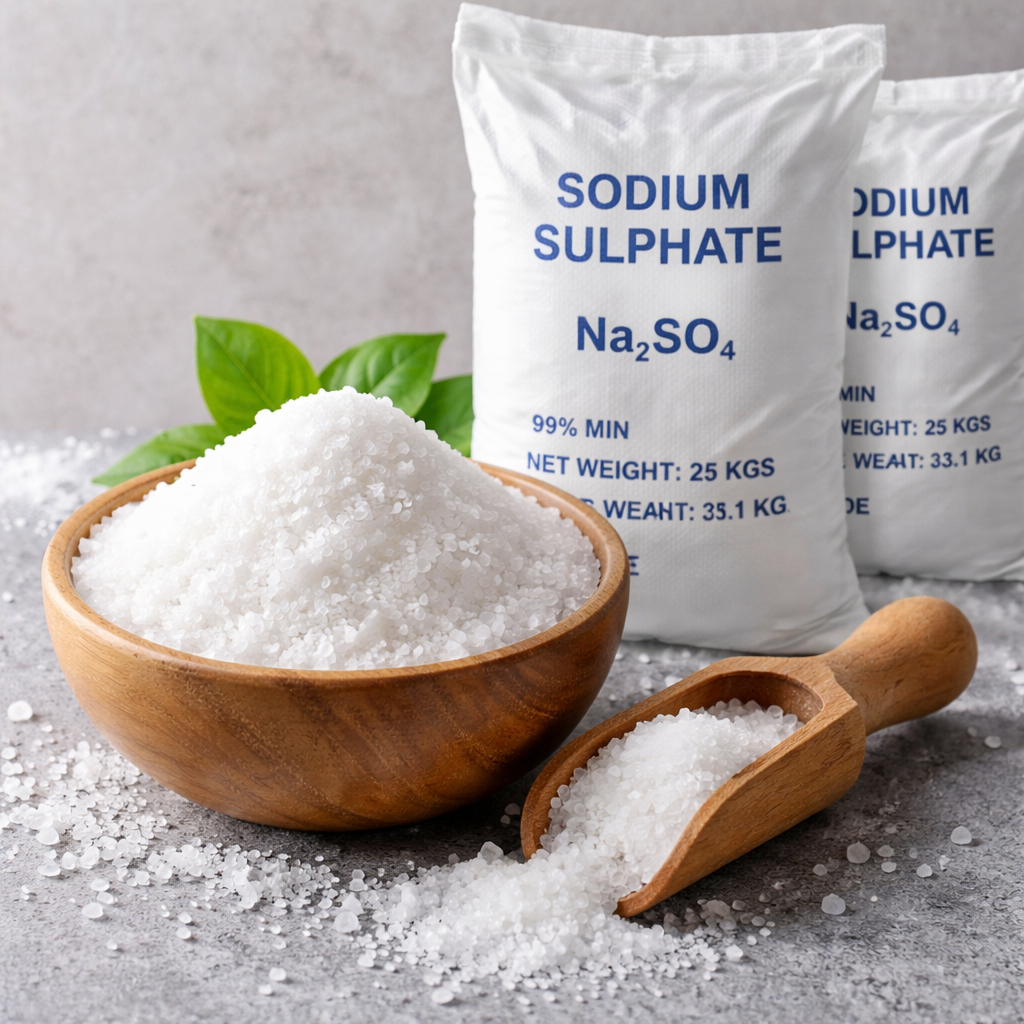
HIGH SULFATE CONCENTRATIONS CHROMATOGRAPHY PERFORMANCE
High sulfate concentrations in samples can significantly impact chromatography performance—especially in.
ion chromatography (IC) using suppressed conductivity detection. Below is a detailed overview of what happens, why it happens, and how to mitigate it.
Sulfate is a strongly retained divalent anion, generating high conductivity signals.
Excess sulfate consumes suppressor capacity → poor suppression efficiency, elevated baseline.
Results in:
- Noisy or drifting baseline
- Reduced sensitivity for low-level analytes (e.g., acetate, formate)
- Inconsistent quantification
Large sulfate concentration can saturate exchange sites on analytical columns.
Leads to:
- Peak tailing/broadening for sulfate and late-eluting anions
- Retention time instability
- Longer equilibration time between injections
- Acetate, propionate, lactate often elute near sulfate or experience competitive retention.
- High sulfate matrix suppresses weak acid signals → recovery loss & lower resolution.
- Higher ionic load accelerates membrane fouling & resin exhaustion.
- Frequent regeneration required → increases downtime & cost.
TechniqueBenefitNotesDilution (10–100x)Quick fix for capacity issuesCheck detection limitsInline/Offline Sulfate TrapsRemoves bulk sulfateCation exchange traps often usedBarium precipitationRemoves sulfate as BaSO₄Requires careful pH controlSPE (anion exchange)Selective sulfate removalUseful for complex matricesDialysis/UltrafiltrationRemoves high ionsUseful for biopharma formulations
- Use high capacity columns (e.g., AS19, AS11-HC for high sulfate matrices)
- Ensure suppressor capacity matches ionic load
- Increase eluent strength or gradient step to elute sulfate more efficiently
- Add a guard column to protect main column from overload
- Suppressor in recycle-regeneration mode for continuous high-load handling
- Use autosampler filtration (0.2 μm) to prevent particulate fouling
- Increase rinse and flush time between injections when sulfate is high
MethodMechanismNotes
Barium PrecipitationBa²⁺ + SO₄²⁻ → BaSO₄(s)Good for bulk sulfate; ensure excess Ba²⁺ removal via cation
Exchange SPERetains sulfate stronglyLoad → wash → elute target weak acids separately
Cation Exchange Resin Pre-Load (Ba²⁺/Pb²⁺)Sulfate conversion to insoluble sulfate saltsOffline cartridge or packed bed
Sulfate-Selective Traps/Guard ColumnsRetains sulfate before analytical columnAdd before injection valve or before suppressor
Matrix Diversion ValveDivert late/high-load portionUsed for gradi
Use high-capacity columns (Dionex AS11-HC, AS19, AS23, or equivalent)
Prefer EG eluent systems for better control & stability
Gradient example (for weak acids + high sulfate):
Increase eluent concentration/gradient steepness to push sulfate out faster
Extend column equilibration time post sulfate elution
Use column regeneration cycles:
- Check capacity rating vs. sample load
- Operate in external water mode for high throughput
- Schedule frequent suppressor cleaning:
- 200–500 mM regenerant flush
- 30–60 min mild conditioning runs post cleaning
- Sulfate solubility with Ba²⁺ extremely low ⟶ Best offline removal
- Weak organic acids co-elute near sulfate ⟶ Remove sulfate first
- Column damage accumulates under heavy sulfate load ⟶ Strong guard essential
- Suppressor overload = fake high baseline ⟶ Indicator of ionic stress
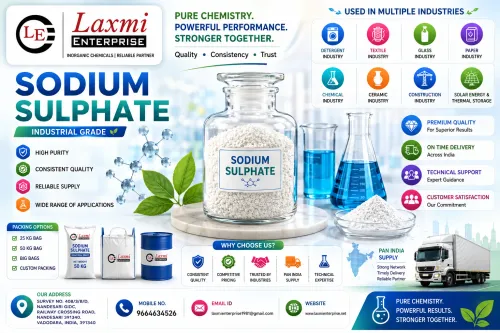
Chemical Formula: Na₂SO₄
CAS: 7757-82-6 (anhydrous) / 7727-73-3 (decahydrate – Glauber’s salt)
Sodium sulfate is a widely used inorganic raw material valued for its low cost, high thermal stability, solubility, and compatibility with alkaline & neutral chemical processes.
- Largest global consumer (~50–60%)
- Used as filler and processing aid in powdered detergents
- Improves granulation flow, reduces caking
- Helps maintain alkalinity in formulations
- Acts as a fluxing agent to remove small air bubbles
- Improves melt uniformity and clarity
- Used in flat glass, container glass, tableware, tiles, sanitaryware
- Part of the chemical recovery cycle
- Reconverted to sodium sulfide in recovery furnace
- Controls liquor viscosity & strength properties of pulp
Promotes dye uptake in reactive dyeing
Enhances color uniformity & depth on cotton fabrics
Used in textile auxiliaries and finishing formulations
Sodium sulfide (Na₂S)
Sodium silicate
Sodium carbonate (via Mannheim process)
Sodium aluminate
Alum production
Decahydrate used as laxative (Glauber's salt)
Excipient for formulations
Used in hemodialysis solutions (high purity only)
- Sodium sulfate decahydrate is an effective phase change material (PCM)
- Used in solar thermal storage & building energy systems
- High latent heat → good for district heating systems
Controls setting time in cement systems
Used in gypsum boards, plastering products
Enhances mechanical properties in certain formulations
Used in pickling and chrome tanning solutions
Controls osmotic swelling in hides
Store in dry, covered environments
Avoid moisture to prevent caking/hardening
Use dust control measures in handling
Weak organic acids such as acetate, formate, lactate, citrate, propionate, and other low molecular weight anions are commonly quantified using Ion Chromatography (IC). However, high sulfate loads severely compromise detectability and accuracy due to both chromatographic and suppression-related interference.
- Sulfate (SO₄²⁻) is a strongly retained divalent anion
- High affinity for anion exchange resin → occupies active sites
- Weak acids (monovalent, lower affinity) elute earlier or distort
- High sulfate ionic load stresses suppressor membranes
- Causes incomplete suppression → elevated baseline conductivity
Saturated column leads to slow desorption of sulfate
Long, smeared sulfate peak masks late-eluting organic acids
- Repeated injection builds sulfate load in system
- Suppressor regeneration becomes less efficient with time
- Barium precipitation → BaSO₄ removal
- Anion exchange SPE → selectively retain sulfate
- Sulfate trap column before analytical column
- Sample dilution (if sensitivity allows)
- Ultrafiltration/dialysis for biopharma buffers
Use high-capacity anion columns (AS11-HC / AS19 / AS17)
Optimize gradient elution
Use suppressor rated for high ionic load
Increase suppressor regeneration frequency
External water mode for continuous loads
Ensure eluent and water purity to reduce background
Below is a commercial-oriented reference sheet for Sodium Sulfate focusing on price benchmarks, supplier comparison, grade availability, and procurement insights. Prices are indicative averages based on recent industrial market ranges (India + global) and may vary by purity, packaging, order volume, and logistics.
- Caprolactam & rayon plant output (major by-product source)
- Soda ash demand & energy pricing
- Container freight from China & MENA
- Seasonal demand from detergent + textile sectors
- Purity level, moisture %, caking resistance, NaCl content
Request COA + moisture spec + NaCl % + Fe content
✔ Prefer anti-caking treated bags for storage > 60 days
✔ Compare CIF vs EXW vs FOB quotations when importing
✔ For pharma/food: require GMP & traceability documentation
✔ For PCM/thermal: ask for supercooling resistance & stability data
- 25kg/50kg HDPE bags
- Jumbo bags (1 MT) for bulk buyers
- Pharma grade often available in inner-lined bags/drums
Sulfate is divalent and strongly retained on anion exchange resins.
Occupies active sites → weak acids (monovalent) are displaced.
Results in:
- Lower peak area for weak acids
- Retention time shift
- Peak suppression or disappearance
- High ionic strength from sulfate challenges suppressor capacity.
- Incomplete suppression → high background conductivity.
- Weak acids, having low signal amplitude, become masked.
- Heavy sulfate load leads to slow desorption from column.
- Tailing sulfate peak overlaps weak organic acids.
- Excess sulfate increases regeneration demand.
- Causes noise, drift, and poor reproducibility.
Weak organic acid peaks reduced or missing
✔ Sulfate peak broadening & long retention tail
✔ Elevated baseline conductivity
✔ Calibration non-linearity at lower ppm range
✔ Carryover with successive injections
- Acetate (especially <1–5 ppm range)
- Formate, Propionate
- Lactate, Pyruvate
- Citrate, Succinate
- Other low-molecular-weight carboxylates
- Use high-capacity anion columns (AS11-HC/AS19/AS23/TAC-LP)
- Apply gradient elution to separate weak acids from sulfate
- Extend post-sulfate flush time to prevent carryover
- Use guard column to protect main column from overload
- Increase eluent strength for faster sulfate elution
- Upgrade suppressor if ionic load is consistently high
- Use external water mode for improved regeneration
- Clean/refresh suppressor more frequently
- Minimize system dead volume to reduce tailing impact
· Certification Sodium Sulphate for Detergents
· Detergent Grade Sodium Sulphate
· Sodium Sulphate in Powdered Detergents
· Laundry Chemicals Supplier
· Sodium Sulphate for Textile Processing
· Textile Chemicals Supplier
· Dye Fixing Agent Chemicals
· Sodium Sulphate in Dyeing
· Sodium Sulphate for Glass Manufacturing
· Sodium Sulphate for Kraft Process
· Sodium Sulphate for Paper Industry
· Industrial Chemicals for Glass Production
· Request Sodium Sulphate Quote
· Bulk Sodium Sulphate Pricing
· Sodium Sulphate MSDS Download
· REACH-Compliant Sodium Sulphate
· Sodium Sulphate with COA and SGS
· · “Get a Free Quote Now”
· · “Download Product Specifications”
· · “Request SDS & COA”
· · “Talk to a Product Expert”
· · “Order a Sample Batch”
· Detergent Industry: As a filler in powdered laundry detergents
· Textile Industry: Dyeing and finishing agent
· Glass Manufacturing: Used in refining molten glass
· Paper Industry: For kraft pulping processes
· Other Uses: Ceramics, pharmaceuticals, and lab reagents