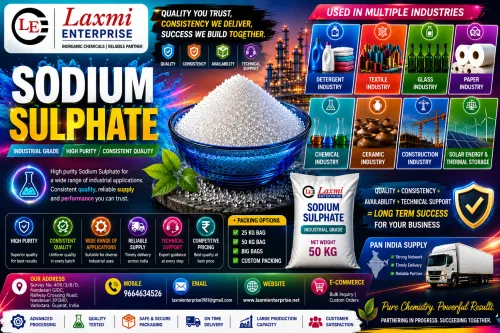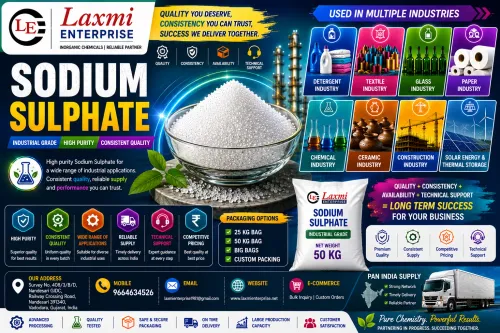

Cost Reduction Role of Sodium Sulfate in Detergent Manufacturing
a. Function as an Inert Filler
Sodium sulfate is one of the cheapest inorganic salts available.
Used as a filler to adjust bulk density and reduce the active matter cost.
Particularly used in powder detergents (up to 40–50% of total formulation).
b. Cost Benefits
Aspect With Sodium Sulfate Without Sodium Sulfate
Raw material cost ↓ Significantly lower ↑ Higher due to higher surfactant and builder usage
Powder flow & drying Improved Risk of stickiness and poor granulation
Energy consumption (spray drying) ↓ Lower moisture retention ↑ Higher energy needed to dry concentrated mix
Shelf life Stable May vary due to surfactant interactions
c. Typical Usage Levels
Product Type Sodium Sulfate % (by weight)
Heavy-duty detergent powder 25–50%
Medium-duty detergent 10–30%
Low-cost laundry detergent 40–60%
Industrial/Institutional cleaners 10–20%
d. Economic Impact Example
If a detergent formulation costs ₹100/kg with 30% actives, replacing 20% of actives with sodium sulfate (₹6–₹10/kg) can reduce cost by approximately ₹10–15/kg, without affecting performance for normal washing conditions.
3. Key Considerations
Maintain balance between performance and cost: excessive sodium sulfate lowers cleaning efficiency.
Ensure particle uniformity to avoid segregation in packaging.
Check moisture control—sodium sulfate can absorb small amounts of water, affecting free flow.
Summary
Parameter Effect of Sodium Sulfate
Compatibility with surfactants Excellent (except cationics)
Compatibility with builders Excellent
Primary function Inert filler, flow improver, cost reducer
Optimum concentration 20–50% in powder detergents
Economic benefit Up to 10–15% formulation cost reduction
Overview of Sodium Sulfate in the Cleaning Industry
Chemical name: Sodium sulfate (Na₂SO₄)
Common forms:
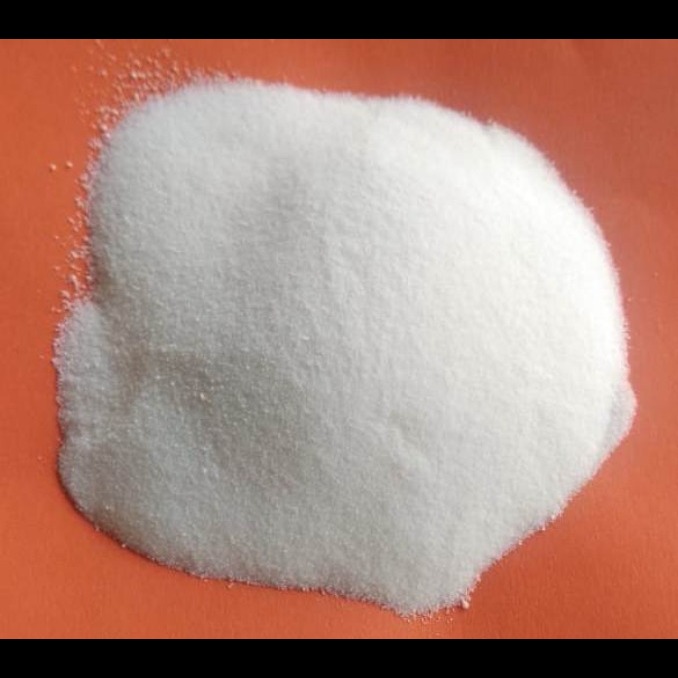
Anhydrous (powdered, granular) – used in detergent powders
Decahydrate (Glauber’s salt) – less common in detergents; used in some liquid cleaner processes
HSN Code: 2833 11 00
CAS No.: 7757-82-6
Primary Use in Cleaning Products:
Filler and volume extender in powder detergents
Flow enhancer for spray-dried granules
Ingredient in laundry powders, dishwash detergents, scouring agents, and soap bars
2. Major Global and Indian Suppliers
a. Leading Global Producers
Company Country Brand/Grade Notes
Tata Chemicals India Industrial grade Major Indian source from soda ash plants
Aditya Birla Chemicals India Technical grade Supplies to detergent and textile sectors
Shandong Haihua Group China Anhydrous sodium sulfate Large-scale exporter
Nouryon (AkzoNobel spin-off) Europe High-purity grade Used in premium detergents
Sichuan Union China Industrial grade Competitive pricing for bulk buyers
b. Indian Market Suppliers (Detergent Industry Focus)
Supplier / Manufacturer Location Form Typical Application
Laxmi Enterprise Vadodara, Gujarat Anhydrous Detergent & textile industries
Nirma Limited Gujarat By-product grade Detergent manufacturing
GHCL Limited Gujarat Industrial grade Glass, detergent, and chemical industries
Brinda Chemicals Ankleshwar Powdered Home care and cleaning formulations
KPL International Ltd. Delhi Imported / domestic Distribution for industrial users
3. Technical Specifications (Typical for Detergent Grade)
Parameter Typical Value Remarks
Purity (Na₂SO₄, %) 98.0 – 99.5 High purity preferred for uniform detergent granulation
Moisture content < 0.5% Ensures good flowability
Insoluble matter < 0.05% Low for cleaner appearance
pH (1% soln) 6 – 8 Neutral; compatible with surfactants
Particle size 100–200 mesh Consistent granule size aids in blending
Bulk density 1.2–1.5 g/cm³ Important for powder formulation balance
4. Sources of Sodium Sulfate Production
Source Type Description Cost Advantage
Synthetic (from HCl + NaOH or Na₂CO₃ reactions) By-product in manufacturing of sodium dichromate, HCl, or caprolactam Moderate
By-product from detergent, paper, or rayon industry Recovered sodium sulfate crystals Low cost, suitable for detergents
Natural (mined from mirabilite deposits) Found in Gujarat, Rajasthan, Turkey, China Stable pricing and supply
5. Procurement and Cost Considerations
a. Price Range (as of 2025, India)
Grade Ex-Factory Price (₹/kg) Bulk Purchase Price (₹/MT)
Industrial (Anhydrous) ₹6 – ₹10/kg ₹6, 000 – ₹10, 000/MT
Detergent Grade ₹7 – ₹9/kg ₹7, 000 – ₹9, 000/MT
High Purity ₹10 – ₹14/kg ₹10, 000 – ₹14, 000/MT
(Prices vary with purity, freight, and packaging.)
b. Packaging
25 kg or 50 kg HDPE bags with liner
Jumbo bags (1 MT) for bulk users
Container loads (16–20 MT FCL) for export
c. Supply Chain
Delivered via truck or rail from Gujarat and Rajasthan to detergent hubs (e.g., Mumbai, Delhi NCR, Indore, Hyderabad).
Export ports: Mundra, Kandla, Hazira
6. Procurement Guidelines for Detergent Manufacturers
Specify Grade Clearly:
Request “Detergent grade anhydrous sodium sulfate, purity ≥99%”.
Test for flow and solubility:
Check for caking or moisture before blending in powder formulations.
Prefer steady suppliers:
Continuous quality is critical for large batch consistency.
Negotiate annual contracts:
Reduces price volatility; typically fixed for 6–12 months.
Evaluate logistics cost:
For low-cost materials, freight can account for 10–20% of landed cost.
Check by-product source materials:
Ensure no contamination from other industrial effluents.
7. Key Import–Export Trends
India: Net exporter of sodium sulfate (mainly to Africa and Southeast Asia).
Top importers: Detergent makers in Bangladesh, Kenya, UAE, and Vietnam.
Export price (FOB India): $80–110 per MT (detergent grade).
Global consumption drivers: Growth in powder detergent demand and paper industry recovery.
Summary
Aspect Details
Use Filler & processing aid in detergents
Preferred Form Anhydrous sodium sulfate
Purity ≥99%
Indian Price (2025) ₹7, 000–₹10, 000/MT
Major Supply Regions (India) Gujarat, Rajasthan, Tamil Nadu
Key Benefit Low cost, easy blending, improves product consistency
Procurement Strategy Long-term contracts, local sourcing, quality certification