


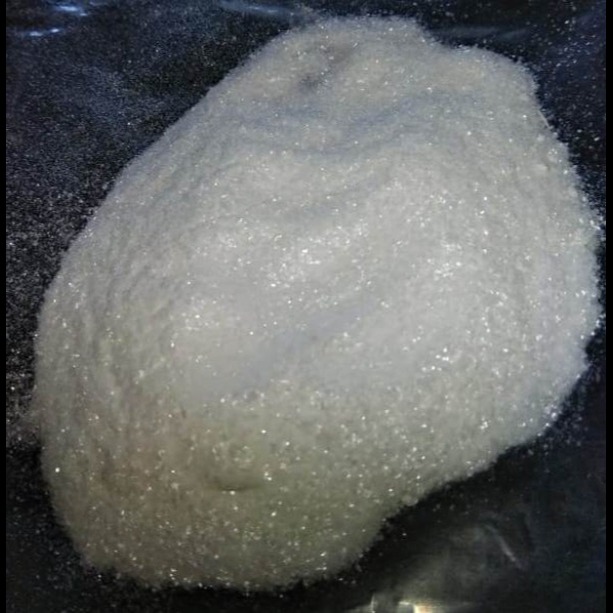
Role of Sodium Acetate Buffer
- Maintains pH in the acidic to near-neutral range (typically pH 4.0–6.0), which is ideal for many proteins and biologics.
- Provides stable ionic environment during purification steps like chromatography and ultrafiltration.
- Acts as a counter-ion in certain chromatographic techniques (e.g., ion-exchange chromatography).
- Concentration: 10–50 mM sodium acetate (common range for chromatography).
- pH adjustment: Usually with acetic acid or NaOH to desired pH.
- Ionic strength: Can be adjusted by adding NaCl (common in chromatography) to control protein binding/elution.
- Temperature stability: Good for room temperature or refrigerated storage (2–8 °C).
Example:
- 50 mM sodium acetate, pH 5.0, 150 mM NaCl — commonly used for cation-exchange chromatography.
Key Considerations
- Avoid high acetate concentrations that may alter protein structure.
- Buffer should be filtered (0.2 μm) and degassed before use in chromatography.
- Monitor pH after adding salts or adjusting temperature, as acetate buffers can shift slightly.
Purpose of Standard Addition
- Used to quantify an analyte in complex matrices where matrix effects may interfere with direct measurement.
- For acetate, interference could come from other anions, salts, or proteins.
- Helps compensate for suppression or enhancement effects in detection techniques like IC (ion chromatography) or UV spectroscopy.
Tips for Accuracy
- Use same sample matrix for standard dilution if possible.
- Ensure linear response of the detector for the concentration range.
- Avoid contamination—acetate is common in lab glassware residues.
- Run replicates for precision.
Ion Chromatography (IC) with suppressed conductivity — most common.
HPLC with UV detection (acetate detection via derivatization).
Capillary electrophoresis (CE).
Enzymatic assays (for acetate in biological matrices).
Ion Chromatograph (IC) with anion exchange column.
Suppressor (chemical or electrolytic) for conductivity detection.
Eluent: e.g., 3–10 mM Na₂CO₃ / NaHCO₃ or hydroxide.
Sodium acetate standard (known concentration).
Sample (buffer, water, or biopharma formulation).
0.2–0.45 μm filter for sample prep.
Sample Preparation
- Filter samples through 0.2–0.45 μm membrane to remove particulates.
- Dilute high ionic strength samples to reduce matrix effects.
- Degas eluent and sample to remove air bubbles.
Inject prepared sample under the same IC conditions.
Observe peaks; identify the peak with retention time matching acetate standard.
Problem Possible Cause Solution
Missing acetate peak Low concentration Increase injection volume; check detector range
Broad or distorted peak Column overload or high TDS Dilute sample; check eluent flow rate
Peak co-elution Other anions present Adjust gradient; use longer column Noisy baseline Suppressor issues Check suppressor efficiency; degas eluent
Retention time may shift slightly depending on matrix and column age—always compare with fresh standard.
Peak identification is confirmed by matching retention time and increase upon spiking.
For very low concentrations, consider preconcentration to improve detection.
Ion Chromatograph (IC) with anion exchange column.
Suppressor (chemical or electrolytic) for conductivity detection.
Eluent (e.g., 3–10 mM Na₂CO₃ / NaHCO₃ or NaOH).
Sodium acetate standard (known concentration).
Filtered sample (0.2–0.45 μm)
Filter all samples and standards to remove particulates.
Prepare acetate standard in the expected concentration range (e.g., 10–50 mg/L).
Degas the eluent and standard to avoid bubbles.
Optional: dilute high TDS samples to reduce matrix interference.
Measuring Retention Time
Step A: Run Standard
- Inject sodium acetate standard into the IC.
- Record the retention time (RT) when the acetate peak appears.
- RT is typically measured from the time of injection to the peak apex.
- Repeat 2–3 times for reproducibility.
- Sodium acetate (NaOAc, NaCH₃COO)
- Acetate ion (CH₃COO⁻)
- Buffer salt
- Sodium salt of acetic acid
- Ionic strength modifier
Run Sample
- Inject the prepared sample under the same conditions.
- Identify the acetate peak by matching the RT of the standard.
- Optionally, use standard addition to confirm: spike sample with known acetate and observe peak increase at the same RT.
Consistent flow rate: Even small variations affect RT.
Column temperature stability: Temperature fluctuations can shift RT.
Eluent consistency: Prepare fresh or degassed eluent; maintain same concentration.
Injection volume consistency: Keep the same injection volume for standard and samples.
Sample filtration (0.2–0.45 μm)
Degassing of eluent
Injection volume optimization
Suppressor troubleshooting
Baseline stabilit
Peak confirmation
Preconcentration techniques
Purpose
- Confirm that a specific peak corresponds to acetate ion in a sample.
- Ensure accurate quantification and avoid misidentification due to co-eluting anions.
Ion Chromatograph (IC) with an anion-exchange column
Suppressor (chemical or electrolytic) for conductivity detection
Eluent (e.g., 3–10 mM Na₂CO₃ / NaHCO₃ or NaOH)
Sodium acetate standard (known concentration)
Filtered sample (0.2–0.45 μm)
Inject sodium acetate standard.
Record retention time (RT) and peak shape.
nject prepared sample under identical IC conditions.
Compare sample peak RT to standard RT.
Always run fresh standard for comparison.
Peak identification is confirmed by matching RT and increase upon spiking.
For ultra-trace concentrations, consider preconcentration.
- ESI Negative Mode: Produces deprotonated molecular ions [M – H]⁻ from acidic or negatively charged species.
- Acetate (CH₃COO⁻) is naturally anionic, making it ideal for direct detection in negative ESI.
- Works well for:
- Organic acids (e.g., acetic acid)
- Small carboxylates in buffer or biological matrices
- Monitoring acetate in formulation or purification samples
- Quantify acetate in complex matrices where direct measurement may be affected by matrix effects.
- Confirm the identity of the acetate peak using a known standard.
A known amount of acetate standard is added to aliquots of the sample.
The analytical signal (peak height, area, or detector response) is measured for:
- Original sample (no addition)
- Sample + known standard additions
Plot signal vs. added concentration.
Extrapolate the x-intercept to determine the original acetate concentration in the sample.
Sodium acetate standard solution
Sample (water, buffer, or biopharma matrix)
Ion Chromatograph (IC) with suppressed conductivity or LC-MS system
Filter (0.2–0.45 μm)
Volumetric pipettes and vials
Filter sample to remove particulates.
Dilute high-ionic-strength samples to minimize matrix effects.
- Aliquot equal volumes of sample into several vials.
- Add increasing amounts of sodium acetate standard to each aliquot (e.g., 0, 10, 20, 30 mg/L).
- Mix thoroughly.
Step C: Analysis
- Inject each aliquot into the IC or LC-MS system.
- Record the acetate peak signal (area or height).
Plot peak signal (y-axis) vs. added concentration (x-axis).
Extrapolate the x-intercept; negative value = original sample concentration.
Verify linearity of response; R² should be close to 1.
Use the same sample matrix for standard dilution to reduce bias.
Ensure detector response is linear over the concentration range.
Run replicates for precision.
Standard addition method
Ion chromatography (IC)
Suppressed conductivity detection
Peak identification
Retention time (RT)
Calibration standard
Sample spiking
Quantification of acetate
Filter and degas both sample and standards to avoid bubbles or particulates.
STANDARD ADDITION FOR SODIUM ACETATE CONFIRMATION.LAXMI ENTERPRISE,VADODRA,GUJARAT.