

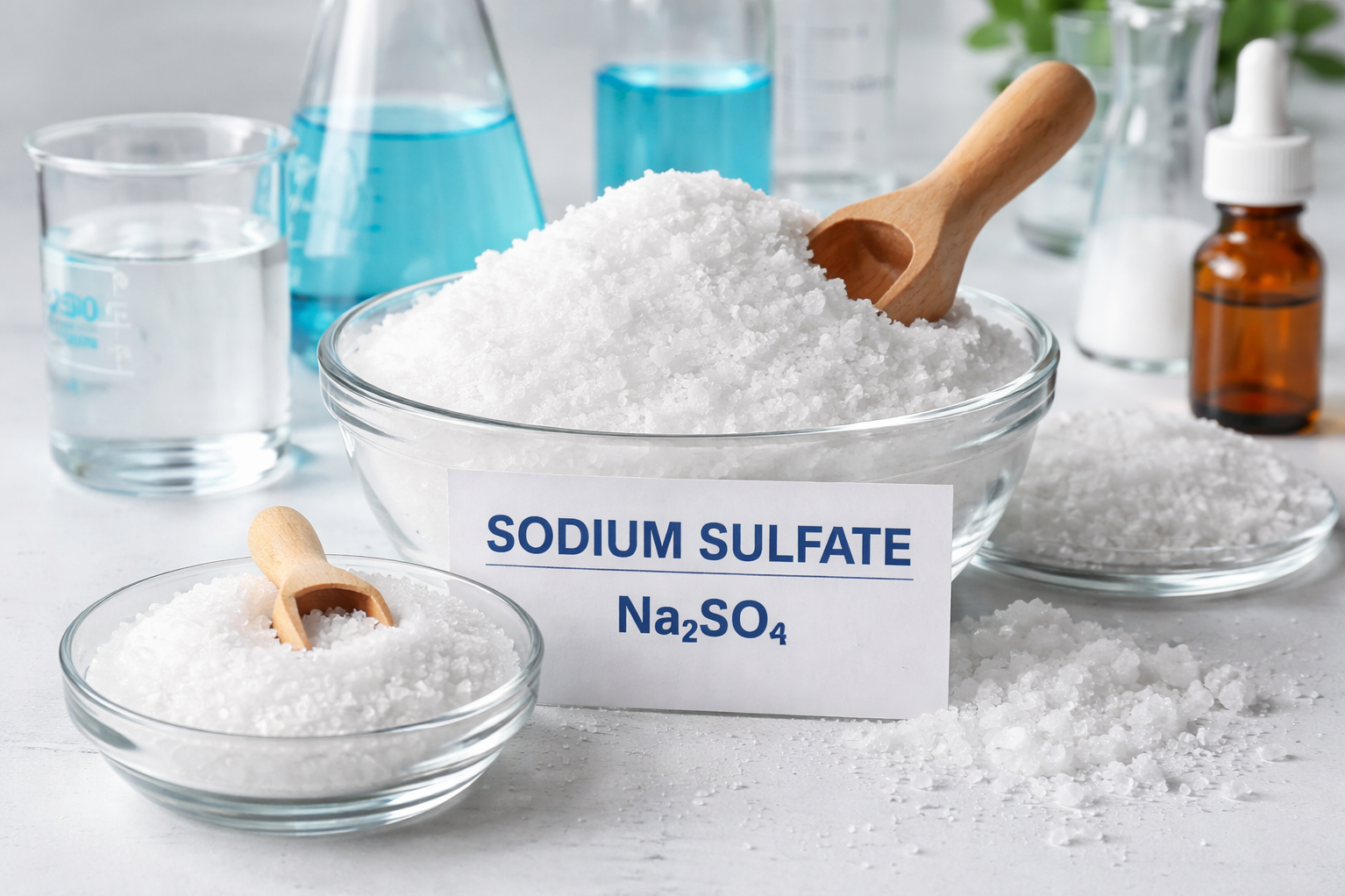
SULFATE REMOVAL MEMBRANE SEPARATION SYSTEMS
Here’s a detailed technical overview on SULFATE REMOVAL MEMBRANE SEPARATION SYSTEMS,
relevant for industrial water treatment, mining wastewater, oil & gas production water, textile effluents, RO brine polishing, and high-TDS water applications.
- Scaling (CaSO₄, BaSO₄, SrSO₄) in boilers, membranes & pipelines
- Corrosion in industrial systems
- Taste & laxative effects in drinking water
- Interference in chromatographic / analytical processes
Total desalination + sulfate removal
| Efficiency | >99% |
| Use Case | High TDS water, zero-liquid discharge systems |
| Pros | Produces high purity permeate |
| Cons | High energy demand, need pre-treatment |
UF removes suspended solids & organics → protects NF/RO
Ideal for oil & gas produced water containing hydrocarbons.
Selective ion transport under DC field
| Pros | Good for sulfate reduction without full desalination |
| Cons | Less effective at very high TDS unless hybrid |
Often paired with NF or precipitation step.
Used for sulfate-reducing bacteria (SRB) converting SO₄²⁻ → S²⁻
Applicable in biological systems like mining wastewater.
Emerging system | good for high osmotic gradient applications
Lower fouling, energy-efficient in brine concentration.
To avoid scaling & membrane fouling:
- Cartridge/Media Filtration (5–20µm)
- Activated Carbon (organic removal)
- pH correction
- Antiscalant dosing
- Softening or Ba/Sr removal if needed
Oil & Gas Produced Water
Power Plants & Boiler Feedwater
Desalination Plants
Textile & Dye Effluents
Mining & Metallurgy Wastewater
Pharmaceutical & Chemical Processing
Fertilizer & Sulfate Salt Manufacturing
Detection range: ppm to ppb
Detector: Suppressed conductivity
Column: AS14/AS19/AS23 (Dionex), Metrosep A Supp series
Requires carbonate/bicarbonate eluent
Suitable for low-level sulfate in complex matrices
- Based on reaction:
- SO₄²⁻ + BaCl₂ → BaSO₄↓ (turbidity measured at 420–450 nm)
- Spectrophotometer or colorimeter used
- Calibration via barium chloride standard curve
Detection range: 5–1000 mg/L
Ideal for field or routine QC monitoring.
- Classical standard method
- Precipitate sulfate using BaCl₂, filter, dry, weigh BaSO₄
- Used for high sulfate concentration samples and reference method verification
- ICP detects SO₄ as S element
- Useful when multiple anions/cations measured simultaneously
- Less common compared to chloride/fluoride ISE
- Used for high sulfate brine and process control applications
Ion Chromatography Calibration
- Flush system with eluent until stable baseline
- Run blanks & standards from low to high concentration
- Plot peak area vs concentration (linear regression)
- Verify with control standard every 10–15 samples
- Acceptance: Correlation R² ≥ 0.995
Calibration Frequency
- Daily or before critical analysis
- Full calibration monthly or when column replaced
- Prepare BaCl₂ working reagent
- Run blank with DI water
- Measure absorbance of standards at 420–450 nm
- Create calibration curve (Abs vs mg/L sulfate)
- Validate using laboratory control sample (LCS)
Checkpoints
- Zero absorbance stability
- Drift < 5% allowed
- Use sulfur multi-element standard
- Apply internal standards (e.g., Yttrium, Scandium)
- Check recovery 90–110%
Filter (0.45µm) to remove particulate matter
Refrigerate if storing >24 hrs
High sulfate brines → dilute appropriately
Acidification usually not required for anions
Column regeneration and eluent preparation weekly (IC)
Light source & cuvette cleanliness check (UV-Vis)
ICP nebulizer and torch inspection weekly
Sulfate (SO₄²⁻) is a key regulatory parameter in industrial effluent due to its impact on aquatic toxicity, corrosion, salinity rise, scaling, and taste/health effects in drinking water.
Regulations vary by region and receiving environment (surface water, inland, sewer, marine discharge).
Collect in clean polyethylene bottles
Analyze within 24–48 hrs
Filter high turbidity samples (0.45 µm)
No acidification needed unless multiparameter
Treatment options include:
- Lime/Alum/FeCl₃ precipitation
- Barium chloride treatment (BaSO₄ precipitation)
- Nanofiltration / RO systems
- Ion exchange with strong-base anion resin
- Biological sulfate reduction (SRB reactors)
- Electrodialysis / EDR integrated polishing
Reports usually include:
- Source of wastewater & flow
- Inlet/outlet sulfate levels
- Method used (APHA/ASTM/ISO ref)
- Calibration records & QA/QC
- Trend graphs (monthly/quarterly)
- PCB/Environmental audit submission format
Industrial effluents from mining, fertilizer, textile, pulp & paper, oil & gas, metal finishing, and chemical plants often contain elevated SO₄²⁻ requiring reduction to meet discharge norms (typically <1000 mg/L or lower in sensitive regions).
The goal is SO₄²⁻ removal or conversion to stable/less soluble forms for disposal or recovery.
High sulfate with relatively moderate hardness streams
Strong Base Anion Resin (Type II preferred)
- Exchanges SO₄²⁻ with Cl⁻ / OH⁻
- Works well for low to medium TDS
- Regeneration with NaCl/NaOH solution
Challenges: High regeneration waste volume, scaling risk
Combines NF/RO + evaporators + crystallizers to convert sulfate to solid form (gypsum or Glauber’s salt) for disposal/reuse.
Good for:
- Power plant FGD water
- Chemical effluents requiring near 0 discharge
- Prevent CaSO₄ scaling in pipelines/RO by softening & antiscalant
- Add deoxygenation to support SRB growth (reducing conditions)
- Sludge handling & disposal planning is critical
- Monitor pH, TDS, sulfate, sulfide, ORP, alkalinity
Inlet/Outlet sulfate records
Monthly PCB reporting logs
Sludge disposal manifests
Calibration certificates of instruments
Trend charts for submission
Ion Chromatography (IC) – Primary Recommended
- APHA 4110 B / ISO 10304-1
- Highly selective for sulfate in mixed ion matrices
- Low detection limit (<0.1 mg/L)
- APHA 4500 SO₄²⁻–E
- Spectrophotometer @ 420–450 nm
- Range: 5–1000 mg/L
APHA 4500 SO₄²⁻–C
High sulfate samples
Used as reference/validation
Measures S element → calculate SO₄
Useful for multi-element surveys
- Prepare calibration standards 1–100 mg/L (or extend as per matrix)
- Run blank, duplicate, spike, standard check per batch
- Acceptance: Recovery 90–110%
- Maintain R² ≥ 0.995 for calibration curve
Reference Standards:
- NIST SRM or certified sulfate standards
Compare pre-monsoon vs post-monsoon
Build temporal trend graphs
GIS mapping for contamination spread
HIGH SULFATE WATER ANALYSIS TECHNIQUES
When sulfate concentrations are >1000 mg/L, standard colorimetric and IC methods may show interference due to turbidity saturation, peak overloading, co-eluting anions, or high ionic strength. Analytical strategies must be adapted for accuracy.
- Method: APHA 4110 B / ISO 10304-1
- Suitable range: 0.1–10,000+ mg/L after dilution
Challenges: Peak broadening, retention shift at >2000 mg/L
Solutions:
- Use matrix dilution 10–100×
- Apply high-capacity columns (AS19, AS23, Metrosep A Supp 10)
- Utilize eluent suppression optimization
- Inject lower volume (5–10 µL)
- APHA 4500-SO₄²⁻-E (BaSO₄ formation)
- Range: 5–1000 mg/L, extendable to 3000–5000 mg/L via dilution
Notes:
- Requires dilution to bring sample into calibration range
- Interference from silica, suspended solids → filtration with 0.45µm
- APHA 4500-SO₄²⁻-C
- Ideal when >3000 mg/L
- Produces BaSO₄ precipitate, dry & weigh for quantification
Pros: Highly accurate for concentrated sulfate
Cons: Labor-intensive, long turnaround
- Suitable for multi-ion profiling in brines
- Converts sulfur concentration to sulfate via stoichiometry
Formula:
SO₄ (mg/L) = S (mg/L) × 3.00
Need dilution for extremely high TDS to avoid plasma suppression.
- Used for real-time industrial monitoring
- Must be calibrated frequently with standard sulfate solutions
Good for: Process control, RO reject streams, ETP online monitoring
Filter sample with 0.45µm membrane
Dilute to working range (commonly 1:10–1:200)
Maintain ionic strength consistency with standards
Store <48 hours at 4°C
Avoid acidification for IC (unless multi-element digestion planned)
MgCl₂ – prevents excess precipitation speed
NaAc/Acetic acid – pH control (4.5–5.0)
Gum acacia/Polymer – stabilizes turbidity suspension
Filter sample with 0.45 µm membrane if turbid.
Adjust sulfate concentration to working range (typically 5–100 mg/L).
For high sulfate, dilute 10–100×.
Take aliquot (10–50 mL based on concentration).
Add conditioning reagent + BaCl₂ as in standards.
Mix for 1 min vigorously.
Allow suspension to stabilize (5–10 min, not more than 20 min).
Measure absorbance at 420 nm.
Determine sulfate concentration from the curve.
- Wavelength: 420 nm
- Cuvettes: glass/plastic (clean, scratch-free)
- Calibration frequency: daily or batch-wise
- QC: Blank, Duplicate, Spike Recovery, Standard Check
Acceptance criteria
- Spike recovery: 90–110%
- %RSD: <5%
Ion Chromatography Calibration
- Prepare sulfate standards (0.5, 1, 5, 10, 25, 50 ppm typical range)
- Use high-purity DI water for dilution
- Run blank → low → medium → high concentration standards
- Generate calibration curve (peak area vs concentration)
- Ensure correlation R² ≥ 0.995
- Run check standard every 10–15 samples
- Prepare BaCl₂ reagent
- Standard sulfate solutions from stock (e.g., 1000 mg/L Na₂SO₄)
- Measure absorbance at 420–425 nm
- Plot Absorbance vs mg/L sulfate
- Calibration validity: R² ≥ 0.990
- Run method blank, matrix spike, duplicate
- Recovery acceptable: 90–110%
- Relative % difference (RPD) < 10%
- Include control charts for trend analysis
Use fresh calibration curves daily for critical measurements.
Store standards in HDPE bottles to prevent leaching.
Avoid sulfate-containing detergents in glassware cleaning.
Regularly verify instrument with external proficiency samples.
Sample Types
- Groundwater, Surface Water, Drinking Water
- Industrial Effluent / Process Water
- Filter through 0.45 µm membrane to remove particulates
- Dilute if >100 mg/L
- For colored/turbid water → treat or filter to remove interference
Soil/Sediment Extraction
- Air dry and homogenize sample
- Add DI water (1:5 or 1:10 ratio)
- Shake/sonicate for 1 hr
- Filter & analyze extract using IC or spectrophotometry
- Column: Anion Exchange Column (AS series)
- Eluent: Carbonate/Bicarbonate mixture
- Detection: Suppressed Conductivity
Range: µg/L to >1000 mg/L
Advantages: High accuracy, low detection limit, multi-ion analysis
- Reagent: BaCl₂ forms BaSO₄ turbidity
- Wavelength: 420–425 nm
- Use calibration curve for quantification
Range: 1–200 mg/L
Advantages: Simple, economical
- BaSO₄ precipitated, filtered, dried, and weighed
- Reference method for high concentration samples
Range: >10 mg/L (best for high sulfate)
Quick indicator-based colorimetric strips
Useful for preliminary screening
Example reporting units:
- mg/L SO₄²⁻ (standard for water)
- mg/kg (soil/sediments) after extraction
Report Includes:
- Sample ID, location, date/time, matrix type
- Analytical method used (IC/spectrophotometry)
- Result with detection limits
- QC data summary
- Observations (color, turbidity, expected sources)
· Buy Sodium Sulphate
· Sodium Sulphate for Sale
· Sodium Sulphate Supplier
· Sodium Sulphate Manufacturers
· Sodium Sulphate Exporter
· Sodium Sulphate Powder
· Industrial Grade Sodium Sulphate
· Anhydrous Sodium Sulphate
· Sodium Sulphate Bulk Supply
· Sodium Sulfate Distributor