

SULFATE CONCENTRATION MEASUREMENT IN EFFLUENT
Measuring sulfate concentration in industrial effluent/wastewater is essential for process control, regulatory compliance, and environmental monitoring. Below is a comprehensive guide covering
standard lab methods, instruments, procedures, calculation formulas, detection ranges, and pros-cons.
- Take known volume of sample (typically 100 mL)
- Acidify slightly with HCl
- Heat sample to near boiling
- Add BaCl₂ solution slowly with stirring → BaSO₄ forms
- Digest, filter, wash, dry at 800–900°C, cool and weigh
W₂ = weight of crucible + precipitate
W₁ = weight of empty crucible
V = volume of sample in mL
411.5 = conversion factor
Pros: Accurate, reliable
Cons: Time-consuming, requires furnace
Best for 1–1000 mg/L sulfate
Commonly used in environmental and effluent testing labs
Principle:
BaSO₄ forms turbidity in presence of BaCl₂ + conditioning reagent and measured at 420 nm using UV-Vis spectrophotometer.
Take 10 mL filtered sample
Add conditioning reagent (BaCl₂ + buffer + stabilizer)
Mix & wait 5–10 min for turbidity to develop
Measure absorbance at 420 nm
Use calibration curve to determine sulfate
Pros: Fast, low cost, suitable for routine analysis
Cons: Interference from silica, chloride at high levels
Best for low detection limits, multi-ion monitoring
Range: 0.1–100 mg/L or higher with dilution
Principle:
Sulfate ions separated on anion exchange column and detected by conductivity detector.
Used when multi-element analysis is required
Sulfate reported as S content then converted
For field testing and preliminary checks
Colour change corresponds to concentration
Range: 10–1000 mg/L (model dependent)
Filter through 0.45 µm membrane to remove suspended solids
For high sulfate samples → serial dilution
Preserve sample with HCl to pH < 2 if storage > 24 hrs
Scaling (CaSO₄, BaSO₄ deposition in boilers, cooling towers)
Corrosion acceleration (especially under anaerobic conditions – sulfate-reducing bacteria)
Taste & odor issues
Environmental discharge compliance
Membrane fouling in RO/NF systems
Process disturbance in chemical, textile, pharma, oil & gas sectors
Barium chloride solution (BaCl₂)
Conditioning reagent (buffer + stabilizer + wetting agent)
Standard sulfate stock (1000 mg/L)
Filter sample (0.45 µm)
Take 10 mL sample in cuvette
Add BaCl₂ + conditioning reagent (1 mL each)
Mix and wait 5–10 min
Measure absorbance at 420 nm
Determine sulfate using calibration curve
Sample Collection
- Use clean HDPE bottles (250–500 mL)
- Store at 4°C, analyze within 24 hours
- For long storage → preserve with HCl to pH < 2
Sulfate removal using membrane separation systems is widely adopted in oil & gas, mining, desalination, ETP/STP reclaimed water reuse, and industrial process water treatment. Membrane-based technologies enable efficient sulfate rejection, scaling prevention, corrosion control, and help industries meet discharge/quality norms.
Below is an expert-level guide to membrane processes, design basis, operating conditions, troubleshooting, and selection criteria.
Nanofiltration (NF)
Most preferred for sulfate removal (divalent ions rejection is high)
- Rejection: 90–99% for sulfate
- Partial monovalent salt passage, pH-stable operation
- Energy demand lower than RO
Suitable When:
- Boiler feed conditioning
- Cooling water reuse
- Softening + sulfate removal simultaneously
High rejection of all ions including sulfate
- Rejection: 98–99.8%
- Used when zero liquid discharge (ZLD) or high-quality permeate is required
Pros: Maximum ion removal
Cons: Higher energy consumption vs NF
Effective for sulfate removal when monovalent ions are desired to pass
- Suitable for low to medium TDS
- Works well in high silica situations
Limitations: Lower rejection than RO/NF, sensitive to organics
Thermal-driven vapor transport; removes sulfate completely
- Used mainly for high TDS brine concentration
- Typically employed in ZLD final polishing stage
Phosphonates (ATMP, HEDP)
Polycarboxylates
Organophosphates
Specialty BaSO₄ anti-scalants (if barium present)
Feed: 1200 mg/L SO₄²⁻, TDS 3500 mg/L, Ca 180 mg/L
Target permeate sulfate: <50 mg/L
Solution: 2-stage NF system
Flux: 18 L/m²·h
Recovery: 75%
Antiscalant: 4–6 ppm sulfate dispersant
Expected rejection → 95–98% sulfate removal
Sulfate removal in power plant wastewater is increasingly important for boiler feed water quality,
cooling tower blowdown reuse, ash handling wastewater, and regulatory discharge compliance. Power plants generate sulfate-rich streams due to
FGD systems, ion-exchange regeneration, coal ash leachate, gypsum handling, and chemical dosing. High sulfate causes corrosion,
scaling, and environmental discharge issues, hence removal is critical.
High rejection of sulfate + total dissolved solids.
Performance:
98–99.8% removal
Requires strong pretreatment to avoid scaling
Use Case:
ZLD plants, boiler feed polishing, FGD wastewater treatmen
Effective for polishing after NF/RO.
Resin Types:
- Strong Base Anion (SBA) resin
- Sulfate-selective resin (high capacity)
Use Case: Boiler feed demin plant effluent, polishing
Energy-efficient for moderate TDS streams.
Best for:
Reuse loops where partial sulfate reduction acceptable
Useful when sulfate > 2000 mg/L.
Reaction:
SO42−→H2S (anaerobic bacteria)SO_4^{2-} rightarrow H_2S text{ (anaerobic bacteria)}SO42−→H2S (anaerobic bacteria)H₂S must be stripped/oxidized afterward.
Applications: FGD wastewater, coal ash pond treatment
Coal-based Thermal Plant – CT Blowdown
- Feed SO₄²⁻ = 1500 mg/L
- After NF permeate = 60–120 mg/L
- Overall removal efficiency ≈ 93–97%
Reject goes to RO/ZLD, permeate reused → ~70% water recovery
Ion Chromatography separates sulfate ions on an anion-exchange column, followed by suppressed conductivity detection. Sulfate peak area or height is compared against calibration standards for quantification.
Overall workflow:
Sample → Filtration → Injection → Anion column → Suppressor → Conductivity detector → Chromatogram → Quantification
Sample Preparation
- Filter sample using 0.45 µm membrane
- Dilute if expected sulfate > calibration range
- Degas if needed
System Setup
- Flush column with eluent until baseline stable
- Ensure suppressor is working/regenerated
Injection & Run
- Inject standards → generate calibration curve
- Inject blanks between runs to check carryover
- Inject sample → obtain chromatogram
Quantification
- Identify sulfate peak using retention time
- Integrate peak area
- Concentration determined from calibration regression
Retention time for sulfate typically 4–8 min
Peaks should be well-resolved
Baseline stable → no drift or noise
For high TDS wastewater → dilute 10–1000x
If organic content present → pretreat with activated carbon
For oily wastewater → pre-filter or DCM extraction
For power plant FGD → sulfate often >5000 mg/L (mandatory dilution)
Biological Sulfate Reduction uses Sulfate-Reducing Bacteria (SRB) under anaerobic conditions to convert sulfate (SO₄²⁻) into hydrogen sulfide (H₂S) using an electron donor
Ethanol
Lactate
Acetate
Glucose / Molasses
Methanol
Glycerol
Industrial organic wastewater itself
- Power plant FGD wastewater
- Coal mining & acid mine drainage
- Metal finishing wastewater
- Oil & gas produced water
- Chemical & fertilizer effluent
- High sulfate RO reject streams
High sulfate brine occurs when water contains elevated levels of SO₄²⁻, often combined with Ca²⁺, Ba²⁺, Mg²⁺, Na⁺ and other salts.
Typical sources:
- Power plant FGD wastewater
- Desalination RO/NF concentrate
- Coal ash/ash pond effluent
- Industrial process wastewater (textile, chemical, mining)
- Brine from zero liquid discharge (ZLD) systems
Moderate: 1000–3000 mg/L
High: 3000–10,000+ mg/L
Very high: >20,000 mg/L (requires specialized handling)
Membrane-Based Systems
- Nanofiltration (NF): 90–99% sulfate rejection, partial monovalent salt passage
- Reverse Osmosis (RO): 98–99.8% rejection, high-purity water recovery
- Pretreatment: Essential to prevent scaling (antiscalants, softening, UF)
Process Control Parameters:
- SDI < 3
- Recovery rate: 50–75% (high sulfate may reduce max recovery)
- Antiscalant dosing based on Langelier Saturation Index for sulfate
- Lime Softening (Ca(OH)₂): Precipitate CaSO₄
- Barium Chloride (BaCl₂): For BaSO₄ removal in trace amounts
- pH adjustment: Optimize for maximum precipitation
- Sludge handling: Required after precipitation
Effective for sulfate >2000 mg/L with organic electron donors
Converts sulfate → H₂S, which can precipitate metals
Requires anaerobic conditions, proper HRT, and H₂S scrubbing
- BSR → NF → RO: Reduces sulfate load before high-pressure RO
- Chemical Softening → Membrane: Minimizes scaling risk
- Evaporation / Crystallization: Final ZLD stage for very high sulfate
Online Instrumentation
- Conductivity / TDS sensors → brine concentration monitoring
- pH meters → real-time adjustment for precipitation & BSR
- ORP probes → anaerobic condition verification in BSR
Automated Dosing
- Antiscalant feed proportional to sulfate & hardness
- pH correction with acid/base control
- COD dosing for BSR systems
Flow & Pressure Control
- Use of control valves and flow meters to maintain target recovery
- Prevent excessive concentrate concentration → scaling
Sampling & Laboratory Analysis
- Routine sulfate measurement (Turbidimetric / IC)
- Total hardness, Ca²⁺, Ba²⁺, Mg²⁺
- COD/BOD in BSR systems
- TSS / SDI monitoring
Always stage concentration: NF followed by RO to minimize scaling
Use pretreatment to remove suspended solids and organics
Monitor antiscalant efficiency using online sensors and periodic visual inspection
Sludge/H₂S handling: Necessary after chemical or biological treatment
Recycle / reuse: Treated brine can be partially reused in cooling tower or process water loops
High sulfate brine requires integrated management: chemical, membrane, and/or biological treatment
Process control is critical: pH, SDI, antiscalant dose, flow/pressure, ORP
Monitoring strategy: online sensors + lab checks (sulfate, TDS, hardness, COD, metals)
ZLD or partial reuse is often necessary for sustainable operation
Here’s a detailed guide on colorimetric sulfate detection methods, suitable for industrial water, effluent, RO permeate/reject, and environmental monitoring.
Colorimetric methods are widely used due to simplicity, low-cost equipment, and portability, though less precise than IC or gravimetric methods at very low/high concentrations.
Sulfate ions (SO₄²⁻) are precipitated or complexed with reagents to produce a colored species.
The intensity of color is proportional to the sulfate concentration.
Measured using UV-Vis spectrophotometer or portable colorimeter.
Turbidimetric (Barium Sulfate) Method
Principle: Sulfate reacts with barium chloride in presence of a stabilizing agent → forms BaSO₄ precipitate, causing turbidity. Turbidity is measured at 420 nm.
- Filter sample to remove suspended solids.
- Acidify to pH 2–3.
- Add conditioning reagent (BaCl₂ + polyvinyl alcohol or gelatin).
- Allow 5–10 min for turbidity formation.
- Measure absorbance at 420 nm.
- Determine sulfate concentration from calibration curve.
Range: 1–1000 mg/L
Pros: Fast, simple, widely used
Cons: Interference from silica, chloride (high conc.), organic matter
Principle: Sulfate reacts with barium chloride to form BaSO₄, then reacts with methylthymol blue to produce a blue complex measurable at 600–650 nm.
Applications:
- Trace sulfate detection (<10 mg/L)
- Environmental water and drinking water analysis
Pros: Sensitive, low detection limit
Cons: Requires precise timing and reagent preparation
- Ready-to-use test kits for field measurements.
- Sample + reagent → color develops → read on portable colorimeter.
- Range: 10–1000 mg/L depending on kit.
Advantages: Quick, on-site monitoring, minimal training
Limitations: Lower accuracy vs lab spectrophotometer
- Sulfate is first converted to chromium-sulfate complex or indirectly via barium precipitation, then reacts with molybdate reagent to form blue color.
- Absorbance measured at 600–700 nm.
Applications: Wastewater, brine, and industrial effluents
Pros: Sensitive and selective
Cons: More chemical-intensive, longer reaction time
- Simple, fast, low-cost
- Portable for field use
- Suitable for routine monitoring of effluent, process water, and cooling tower blowdown
Limitations:
- Less precise than IC or gravimetric
- Sensitive to interference and turbidity
- Requires calibration and QC for accuracy
High sulfate → scaling in downstream processes
Low pH → corrosion
High metals → environmental toxicity
Regulatory limits: often <500 mg/L sulfate in surface discharge (depends on country)
Lime (Ca(OH)₂) addition → forms CaSO₄ (gypsum)
Barium chloride (BaCl₂) → forms BaSO₄, used for high sulfate where Ca is high
Alkalinity adjustment is essential for effective precipitation
- Uses Sulfate-Reducing Bacteria (SRB) in anaerobic reactors
- Converts sulfate → H₂S, which precipitates metals as sulfides
- Requires carbon/electron donor (acetate, lactate, ethanol)
Advantages:
- Simultaneous sulfate + heavy metal removal
- Low chemical input
- Nanofiltration (NF) → 90–99% sulfate rejection
- Reverse Osmosis (RO) → 98–99.8% rejection
- Use Case: When high-quality water recovery is needed, or for ZLD plants
Pretreatment required:
- pH adjustment
- Metal removal (Fe, Al, Mn)
- Suspended solids removal (UF or media filtration)
- Antiscalants (especially for CaSO₄/BaSO₄)
- Chemical precipitation → BSR → NF/RO → Maximum sulfate and metal removal with water reuse
- ZLD option: Evaporation/crystallization after NF/RO
- Coal mining AMD: BSR + lime precipitation + polishing
- Metal sulfide mining: BSR for simultaneous sulfate & heavy metal removal
- Zinc/lead/copper mine wastewater: Chemical precipitation → NF/RO → ZLD recovery
- Gold/silver leach water: pH neutralization + membrane separation
Scaling: CaSO₄, BaSO₄, Mg(OH)₂
High osmotic pressure: Limits RO/NF recovery
Corrosion: High sulfate + chloride combination
Rejection: 90–99% sulfate, partial monovalent ions pass
Suitable for TDS: 2,000–10,000 mg/L
Advantages: Lower pressure than RO, effective sulfate reduction
Limitations: May require staged NF if TDS >10,000 mg/L
Pretreatment: SDI <3, antiscalant, pH adjustment, Fe/Mn removal
Lime softening (Ca(OH)₂) for CaSO₄ precipitation
Barium chloride (BaCl₂) for BaSO₄ removal if barium present
Effective for extremely high sulfate (>5,000 mg/L)
Generates sludge → needs handling/disposal
- SRB converts sulfate → H₂S
- Can handle moderate-high sulfate (~2,000–8,000 mg/L)
- Requires organic carbon source and anaerobic conditions
- H₂S gas must be scrubbed or precipitated as metal sulfides
Chemical precipitation + NF/RO → Reduce sulfate load before membrane treatment
BSR → NF/RO → Evaporation/Crystallization → ZLD for high TDS brine
Electrodialysis (ED/EDR) → Partial sulfate removal with energy efficiency for moderate TDS
Power plant blowdown & cooling tower recycle
RO/NF brine management
Mining wastewater
Chemical and fertilizer industry process water
Desalination concentrate handling
Online: TDS/conductivity, pH, ORP, flow, pressure
Laboratory: Sulfate (turbidimetric, IC, colorimetric), Ca²⁺/Mg²⁺, metals (Fe, Ba, Mn), SDI, COD/BOD (for BSR)
High TDS water requires multi-stage treatment: pretreatment → sulfate removal → polishing
NF/RO: Most effective for recovery and reuse
Chemical precipitation: For bulk sulfate removal or extreme concentrations
BSR: Effective for moderate sulfate with metal co-precipitation
Process control is key: SDI, pH, antiscalant, recovery, monitoring TDS/sulfate
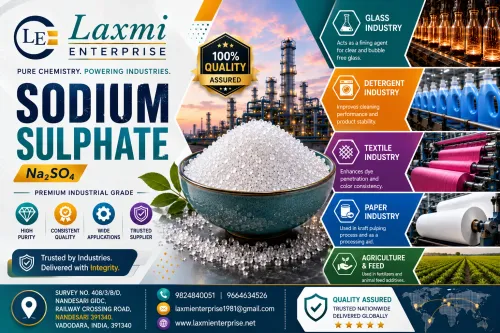
- sodium sulphate
- sodium sulfate
- Na2SO4
- CAS 7757-82-6 (anhydrous)
- CAS 7727-73-3 (decahydrate)
- E514
- EC 231-820-9
- sodium sulphate SDS
- sodium sulphate MSDS
- Informational: what is sodium sulphate, uses of sodium sulphate
- Commercial: sodium sulphate price per kg, supplier comparison
- Transactional: buy sodium sulphate online, bulk sodium sulphate for sale
- Long-tail: sodium sulphate for detergents, sodium sulphate for glass industry