

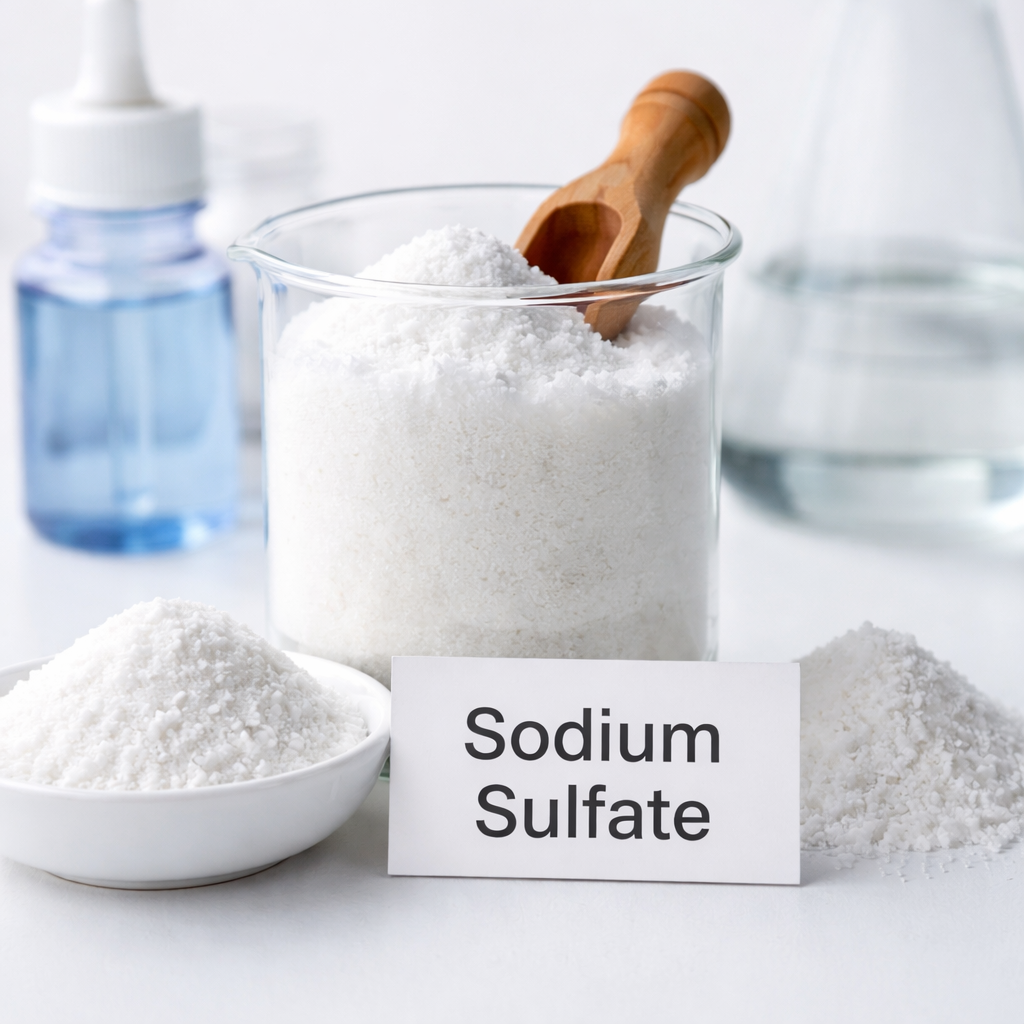
Sulfate removal enhances accuracy and sensitivity in trace metal analysis, especially in ICP-based methods. BaCl₂ precipitation remains the most efficient and selective technique, while ion exchange and membrane filtration serve as excellent follow-up or alternative methods. Proper pH control and QA/QC are essential to prevent analyte loss.
Larger surface area and rugged structure
Better performance in high sulfate, industrial streams
Resistant to fouling and organics
Designed for >10x higher sulfate affinity.
Examples (vendor-generalized):
Strong-Base Anion (SBA) Resins
Functional group: quaternary ammonium –NR₄⁺
Matrix: Styrene–Divinylbenzene (S-DVB) copolymer
Matrix spike recovery target: 80–120%
Method blank <10% of sample concentration
Verify sulfate removal with IC or turbidimetric BaSO₄ test
Use CRMs for metals + sulfate standards when validating
Collect field blanks, lab blanks, rinse blanks
- Maintain pH 4.5-6.0 (minimizes hydroxide precipitation)
- Avoid strong chelators unless metals must remain soluble
- Perform spike recovery to validate recovery efficiency
- Rinse BaSO₄ pellet to desorb metals if analyzing both phases
- Use ultrafiltration > conventional filter for µg/L trace work
Since sulfate removal can unintentionally remove metals, especially Pb, Ba, Fe, and rare earths, precautions include:
Useful for large-volume and continuous treatment.
- Nanofiltration (NF) and Reverse Osmosis (RO)
- Reject divalent ions effectively
- Produces low-sulfate permeate suitable for trace analysis
- Pre-filters to avoid fouling are recommended
Residual sulfate can be polished with a resin column.
- Adjust pH to 4.5–6.0
- Add stoichiometric + 5–10% excess BaCl₂
- Stir 15–30 min → allow BaSO₄ to settle/centrifuge
- Filter using 0.2 μm low-metal membrane
- Acidify the final sample (HNO₃) to pH <2 for preservation
- Analyze for metals
Risk & Mitigation:
Metal co-removal → Add a weak chelator (EDTA/citrate) in trace amounts if metals are not targeted for complexation.
Useful for large-volume and continuous treatment.
- Nanofiltration (NF) and Reverse Osmosis (RO)
- Reject divalent ions effectively
- Produces low-sulfate permeate suitable for trace analysis
- Pre-filters to avoid fouling are recommended
Residual sulfate can be polished with a resin column.
Low-level sulfate detection demands strict contamination control, optimized IC conditions, and proper matrix management. The most effective instruments are suppressed IC for routine trace analysis and IC-MS/ICP-MS when ultra-high sensitivity or co-elution resolution is necessary.
Calibration curve spanning 0.1–5 mg/L (or lower range if µg/L required)
LOD/LOQ determination using signal-to-noise or standard deviation approach
Spike recovery 80–120% for different matrices
Use Certified Reference Materials (CRMs) when available
Include field blanks, method blanks, trip blanks
- Use high-efficiency, low-capacity anion columns
Dionex AS11-HC, AS23, AS19, AS27 for drinking water trace ions
- Start with low KOH eluent concentration (1–3 mM)
- Apply gradient ramping for late anion separation
- Large-volume injection or pre-concentration column for sensitivity
- Ensure suppressor is clean and functioning at full capacity
Capillary IC (~0.4 mm column) improves S/N due to lower background.
- Sulfate contamination from glassware, filters, reagents, air particulates
- Carryover from samples with high sulfate content
- Poor peak definition at low eluent strength in IC
- Co-elution with late-eluting anions (oxalate/phosphate)
- High conductivity background → reduced S/N ratio
Even ultra-pure water systems can contribute sulfate at ng/L to µg/L levels.
Low-level sulfate quantification is required for drinking water, ultrapure process water, pharmaceutical-grade water, and environmental trace monitoring. The challenge lies in detecting sulfate in the µg/L to low mg/L range while controlling background contamination and matrix effects.
High sulfate concentrations in natural water, industrial effluent, and acid mine drainage often interfere with trace metal determination. Effective sulfate removal or reduction is therefore crucial prior to ICP-MS, ICP-OES, AAS, IC, or colorimetric metal analysis.
BaCl₂ Precipitation (BaSO₄)
Most established for matrix reduction.
Reaction:
SO42−+Ba2+→BaSO4(s)↓SO_4^{2-} + Ba^{2+} → BaSO_4(s)↓
Add BaCl₂ solution gradually with stirring
Maintain pH ~4–6 (minimizes metal co-precipitation)
Allow settling or centrifuge
Filter through 0.22–0.45 µm membrane
Forms CaSO₄ s but less insoluble than BaSO₄.
- Suitable for bulk sulfate reduction (>1000 mg/L)
- Often followed by polishing resin/RO step
Mg-Al, Zn-Al hydrotalcites
- Strong anion affinity
- Regenerable with NaCl/NaOH wash
FeOOH, Al₂O₃, MnO₂ nanostructures
- Good for low-level polishing targets
- Can retain trace metals → rinse carefully
- First: SO₄²⁻-specific resin
- Second: General anion scavenger
Used in clean-lab metal analysis workflows
Sulfate rejection >95%
Best for large volume samples
Favors divalent anions → excellent for sulfate
Preserves monovalent ions if desired
Effective for high TDS matrices
Operational complexity higher
Binds Ba²⁺ to prevent metal co-precipitation during sulfate removal.
Use acid-cleaned PTFE/PP labware
Check sulfate blank levels (always run controls)
Analyze filtrate and precipitate for metal loss validation
Spike-recovery test required for method validation
Sulfate is a key anion in natural waters, industrial effluents, and drinking water systems. Detecting sulfate at low mg/L to µg/L levels is critical in environmental monitoring, semiconductor-grade water, biopharma formulations, and corrosion studies.
Major analytical challenges arise due to:
- High matrix ions (Cl⁻, NO₃⁻, HCO₃⁻)
- Low conductivity of sulfate at very low concentrations
- Suppressor overloading in IC when other anions dominate
Routine: 0.05–0.2 mg/L
With concentration + low-noise setup: <10 µg/L
- Advanced preconcentration or sample enrichment: <1 µg/L achievable
- Typically 1–5 mg/L
- With nephelometric enhancement ≈0.5 mg
Less common for sulfate due to weak selectivity
Works best at >10 mg/L levels
- Matrix interferences significant
- ICP-OES DL ~ 50–200 µg/L
- ICP-MS DL < 1 µg/L (with collision cell)
Challenges:
- Polyatomic interference (O₂⁺, NO⁺, SO⁺)
- High chloride matrices generate ClO⁺ mass interference
Solutions:
- Use collision/reaction gases (H₂, He, O₂)
- Dilution + preconcentration balance
- Matrix removal with ion exchange/NF filtration
- Useful for low ionic volumes
- LOD ~ 0.1–1 mg/L
- Requires UV/indirect photometric detection
For sub-ppb detection in ultra-pure water:
Solid Phase Extraction (SPE) (anion exchange)
- Concentrate 10–1000× prior to IC or ICP-MS
Evaporation + Reconstitution
- Risk of contamination; use quartz/PTFE only
Membrane preconcentration
- Nano-filtration or Donnan dialysis for selective sulfate enrichment
- Very low solubility (Ksp ≈ 1.1×10⁻¹⁰) → highly efficient
- Removes sulfate down to <1 mg/L
- Common in sample cleanup for ICP/IC analysis
Procedure notes
- pH 4–7 for optimal precipitation
- Control BaCl₂ stoichiometry (1±10%)
- Filter or centrifuge to remove BaSO₄ solids
Limitations
- Risk of co-precipitating heavy metals
Removes sulfate to <50 mg/L
- Good for mine drainage & refinery wastewater
FeOOH, Al₂O₃, MnO₂, TiO₂
Mechanism
- Electrostatic attraction & surface complex formation
- Surface area 200–350 m²/g
- Good for drinking water conditioning
Improvement:
- Preconditioning to pH 5–7 increases SO₄²⁻ adsorption
Mg-Al, Zn-Al hydrotalcites
Mechanism
- Anion exchange within interlayer spaces
- High affinity for divalent anions
Chitosan, graphene oxide, modified biochar
- Sustainable & low-cost
- Performance varies → surface modification recommended
- (e.g. amine, Fe-oxide doping)
For analytical preparation (IC/ICP-MS):
→ Barium precipitation + polishing resin
→ LDH/SBA resin for trace matrix cleanup
For industrial wastewater:
→ Lime or ettringite for bulk reduction
→ Adsorption column as final polishing
For drinking water standards (<250 mg/L):
→ Activated alumina / LDH hybrid systems
Sulfate (SO₄²⁻) is strongly hydrated, divalent, and difficult to remove relative to monovalent anions. Sulfate-selective resins are specially designed to preferentially retain SO₄²⁻ even when competing anions like Cl⁻, NO₃⁻, HCO₃⁻ are present at much higher concentrations.
Most sulfate-selective anion exchangers are strong base anion exchange resins (SBA) with:
Common Functional Groups
- Quaternary ammonium groups – R–N⁺(CH₃)₃
- Sometimes modified with hydrophobic or bulky substituents
- Tuned to enhance affinity for divalent anions
Polymer Matrix
- Styrene–DVB (crosslinked)
- Acrylic or macroporous variants for faster kinetics
Why SO₄²⁻ is favored:
- Higher valence
- Larger ionic radius & stronger electrostatic interaction
- Lower hydration energy within resin microenvironment
Standard Regeneration
- NaCl brine (10–12%)
- Contact time 30–60 min
Enhanced Regeneration for High Load
- MgCl₂ or CaCl₂ brine
- Stronger divalent competition improves desorption
- NaOH + NaCl mixture
- Improves reaction kinetics
Divalent regenerants (Mg²⁺, Ca²⁺) improve sulfate recovery when resin is near exhaustion.
Used when sulfate interferes with:
- ICP-MS, ICP-OES trace metals
- Ion Chromatography analysis
- Biopharma buffer purification
Workflow:
- Filter sample (0.22 µm)
- Pass through sulfate-selective resin mini-column
- Collect effluent for analysis
- Rinse with DI water
Breakthrough curve follows Langmuir isotherm kinetics.
To extend service time:
- Lower flow rate (2–8 BV/hr)
- Increase column height
- Use two-stage lead/lag resin beds
- Q = flow (L/hr)
- Cin = sulfate concentration
- t = desired service hours
- Cap = resin sulfate capacity (eq/L)
Sulfate often causes challenges in IC due to:
- Peak overlap with adjacent anions (especially nitrate, tartrate, organic acids)
- Suppressed conductivity overload
- Long elution times & poor resolution
- Matrix overloading in trace-level analytical work
- Interference in low-level weak acid detection
Removing sulfate or reducing its load enhances analytical sensitivity.
Sulfate Precipitation
Most direct IC matrix reduction method.
- Reduces sulfate to <1 ppm depending on stoichiometry
- Good for bio/pharma formulations
- Requires filtration (0.22–0.45 µm)
Caution: Heavy metals may co-precipitate if not complexed.
Small cartridges or SPE columns.
- Use sulfate-selective strong-base anion resins
- Removes SO₄²⁻ selectively vs monovalent ions
- Ideal for trace analyte preservation
Workflow:
Load sample → Collect effluent → Rinse → Analyze by IC
- Layered double hydroxides (Mg-Al)
- Ferric/alumina adsorbents
Used as polishing after precipitation.
. Inline Sulfate Trap Column
Installed before analytical column.
- Captures sulfate while allowing target anions through
- Prevents column overload & improves resolution
For complex matrices & trace detection.
System:
- First column separates sulfate
- Valve switches effluent without sulfate to second column
Used in pharmaceutical and ultra-trace IC.
Reduce sulfate interference without removal.
- Start with low KOH (2–5 mM) → increase gradually
- Improves peak shape & separation from nitrate/chloride
Not true removal, but often sufficient.
a. Auto-Regeneration Suppressors
Efficient handling of sulfate-rich samples.
b. Flow Rate Reduction
Increases separation resolution & peak sharpness.
c. Matrix Dilution
Simple and effective when detection limits allow.
Dilution factor = peak height/shoulder improvement tradeoff.
Used when target analytes are low but sulfate is high.
Methods:
- Sample concentration via preconcentrator column
- Matrix elimination cartridge before preconcentrator
- Selective desorption onto analytical column
Example Workflow: High Sulfate Environmental Sample
Filter → BaCl₂ precipitation → Sulfate trap cartridge → IC analysis
Resin cleanup → Inline trap → Concentrator → Analytical column → Suppressed conductivity detection
- Glauber's salt
- mirabilite
- thenardite
- sulfate of soda
- salt cake
- disodium sulfate
sodium sulphate supplier
- sodium sulphate manufacturer
- sodium sulphate exporter
- bulk sodium sulphate
- industrial sodium sulphate
- sodium sulphate price
Informational: what is sodium sulphate, uses of sodium sulphate
- Commercial: sodium sulphate price per kg, supplier comparison
- Transactional: buy sodium sulphate online, bulk sodium sulphate for sale
- Long-tail: sodium sulphate for detergents, sodium sulphate for glass industry