
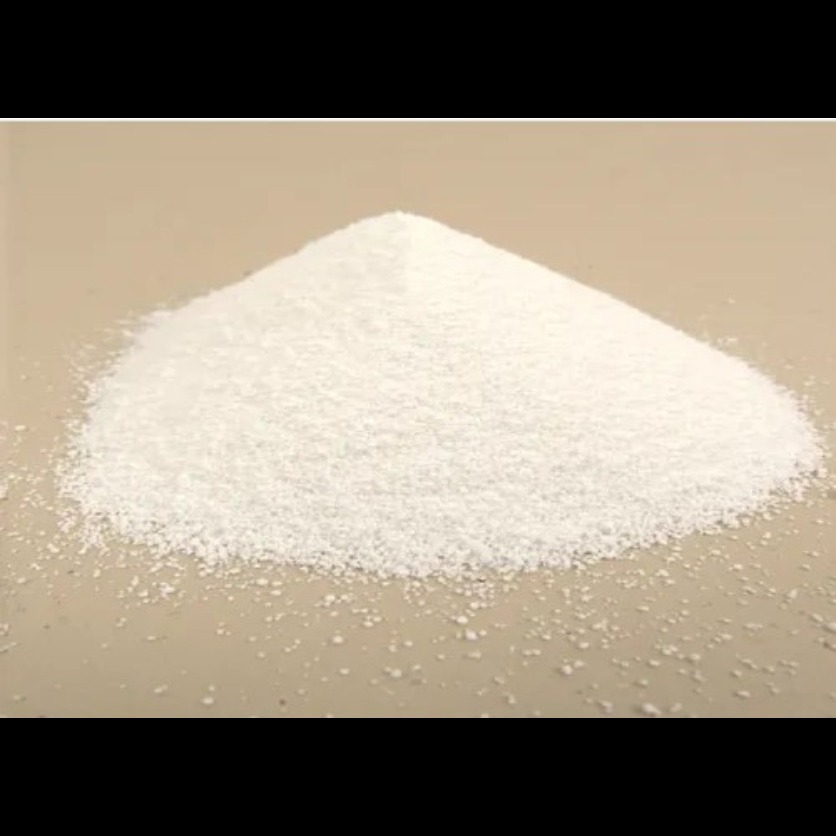
SUPPRESSED CONDUCTIVITY DETECTION SODIUM SULFATE
Typical IC conditions for sodium sulfate
Column
- Dionex IonPac AS11-HC / AS23 / AS19 (common choices)
Eluent
- KOH (isocratic or gradient)
- Typical: 20–30 mM KOH (isocratic)
Suppressor
- Anion electrolytic suppressor
- Suppression current matched to eluent strength
Retention & detection performance
- Retention time: Mid-to-late eluting anion
- (after chloride, before phosphate in many methods)
- Detection limits
- Drinking water methods (EPA):
- ~1–5 µg/L (ppb) with good system
- Routine lab work:
- 0.01–0.05 mg/L
Common interferences & tips
Interferences
- High carbonate/bicarbonate
- Phosphate (can partially overlap if method not optimized)
Best practices
- Use fresh eluent (carbonate contamination = unstable baseline)
- Proper degassing
- Check suppressor health (sulfate peak shrinks fast when suppression is weak)
Retention & detection performance
- Retention time: Mid-to-late eluting anion
- (after chloride, before phosphate in many methods)
- Detection limits
- Drinking water methods (EPA):
- ~1–5 µg/L (ppb) with good system
- Routine lab work:
- 0.01–0.05 mg/L
Why sulfate works so well with suppressed conductivity
- Divalent ion (SO₄²⁻) → higher molar conductivity
- Forms strong acid (H₂SO₄) after suppression
- Extremely low noise → excellent signal-to-noise ratio
What’s happening chemically?
In anion IC with suppressed conductivity detection, sodium sulfate (Na₂SO₄) is separated and detected as SO₄²⁻.
Before suppression (in the column)
- Eluent typically: KOH or NaOH
- Sodium sulfate dissociates:
What “sulfate impurity profiling” actually means
It’s not just measuring sulfate once — it’s:
- Quantifying sulfate accurately
- Tracking trends over time
- Understanding co-existing ions that affect scaling & corrosion
- Linking sulfate levels to process or treatment issues
Why sulfate matters in industrial water
High sulfate can cause:
- Calcium sulfate (gypsum) scaling
- Sulfate-reducing bacteria (SRB) → H₂S + corrosion
- Boiler & cooling tower fouling
- RO membrane fouling
- Interference with zero-liquid discharge (ZLD) systems
Water type Why sulfate matters Boiler feed water High TDS, scaling risk Cooling tower water Cycles of concentration increase sulfate RO permeate & reject Fouling, rejection efficiency DM / UF water Trace impurity control Effluent / ZLD Regulatory compliance
Why IC is the gold standard
- Selective
- Low detection limits
- Simultaneous multi-anion profiling
Target analytes (anion profile)
- Sulfate (SO₄²⁻) ← main focus
- Chloride
- Nitrate
- Fluoride
- Phosphate
- Carbonate (indirect impact)
Typical conditions
- Column: AS11-HC / AS19 / AS23
- Eluent: KOH (gradient preferred)
- Suppressor: Electrolytic anion suppressor
- Injection volume: 10–25 µL
Impurity profiling strategy (best practice)
Raw vs treated water comparison
- Identify sulfate ingress source
- Check RO / softener efficiency
Ratio analysis
Useful indicators:
- SO₄²⁻ / Cl⁻ ratio
- SO₄²⁻ + Ca²⁺ balance (scaling risk)
Speciation awareness
- Sulfate often underestimated if:
- Samples not filtered
- High calcium precipitates sulfate
Regulatory & guideline references
- ISO 10304-1 – Anions by IC
- ASTM D4327 – Water anion analysis
- EPA 300.0 / 300.1 – Drinking & industrial water
- System Sulfate target High-pressure boiler < 5–10 mg/L Cooling tower makeup < 50–100 mg/L RO feed As low as possible (depends on Ca²⁺)
IC with suppressed conductivity = best tool
Sulfate must be profiled with other anions, not alone
Trend + ratio analysis beats single measurements
Early control saves membranes, boilers & money
Method development for high-TDS samples
Scaling risk calculations (CaSO₄ LSI-style)
Troubleshooting unstable sulfate results
Compliance reporting format for plants
What “low detection limit” really means for sulfate
In real-world labs, low detection limit sulfate testing usually means:
- ≤ 5 µg/L (ppb) routinely
- ~1 µg/L with optimized systems
- Sub-ppb only in ultra-clean environments (semiconductor, pharma UPW)
This is far beyond what classical wet chemistry or turbidity methods can handle.
Why ultra-low sulfate measurement is critical
Low-level sulfate matters when:
- High-pressure boilers → CaSO₄ scaling at trace levels
- RO & EDI systems → fouling + poor rejection
- Pharma & semiconductor water → ionic contamination risk
- DM / condensate return → leak detection
- Corrosion studies → sulfate accelerates pitting
- Regulatory compliance → strict environmental discharge limits
At ppb levels, method quality matters more than instrument brand.
Best analytical technique: Ion Chromatography (IC)
Why IC is unbeatable at low sulfate levels
Ion Chromatography with suppressed conductivity detection offers:
- Extremely low background conductivity
- High molar conductivity of sulfate after suppression
- Excellent selectivity even in complex matrices
How suppressed conductivity enables ultra-low detection
Chemical principle (important for understanding sensitivity)
- Sulfate enters column as SO₄²⁻
- Eluent (KOH/NaOH) is suppressed → converted to H₂O
- Sulfate converts to H₂SO₄
- Sulfuric acid has very high conductivity
- Result: Huge signal over near-zero background
Typical IC configuration for low-level sulfate
Column selection
Best columns for trace sulfate:
- IonPac AS11-HC
- IonPac AS19
- IonPac AS23 (isocratic, stable baseline)
Sample handling: where most labs lose sensitivity
Water quality for standards & blanks
- Use 18.2 MΩ·cm ultrapure water
- Never use “DM water” for ppb work
Blank control (CRITICAL at ppb level)
At low detection limits, blank sulfate often dominates results.
Sources of blank contamination:
- Eluent carbonate
- Water system contamination
- Sample vials
- Old suppressor membranes